
(Frangula purshiana)
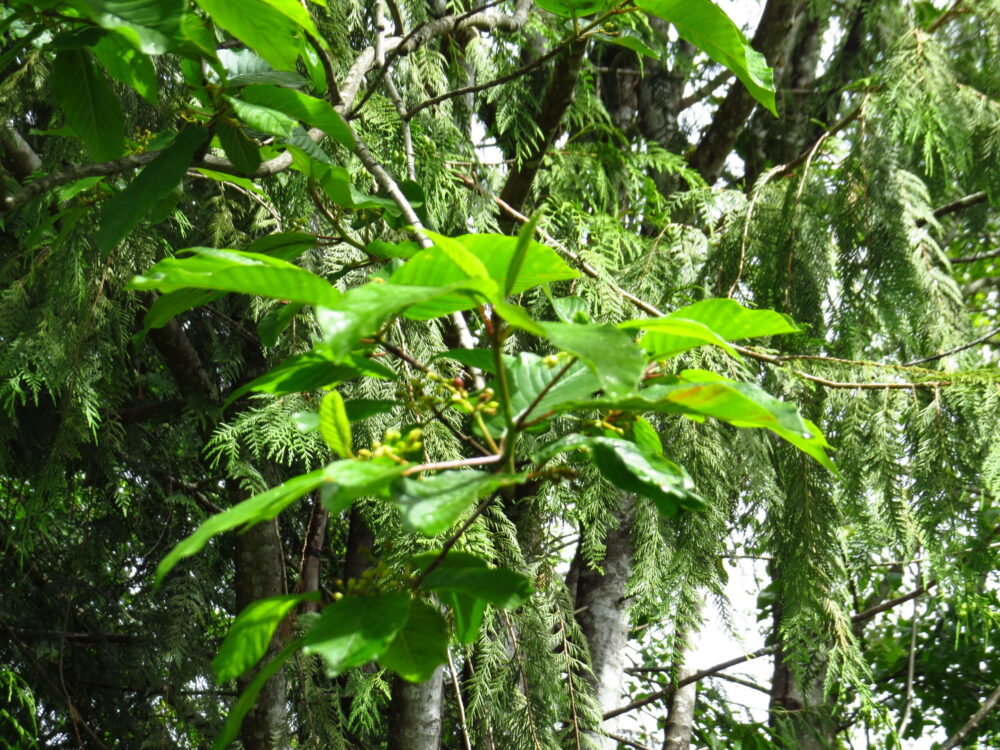
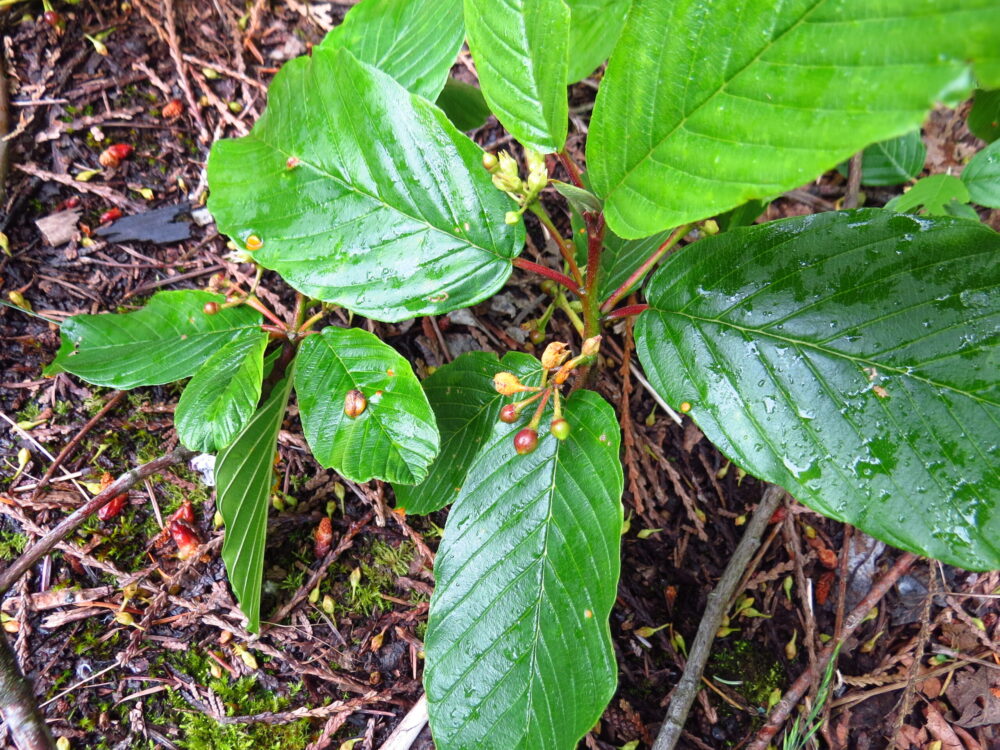
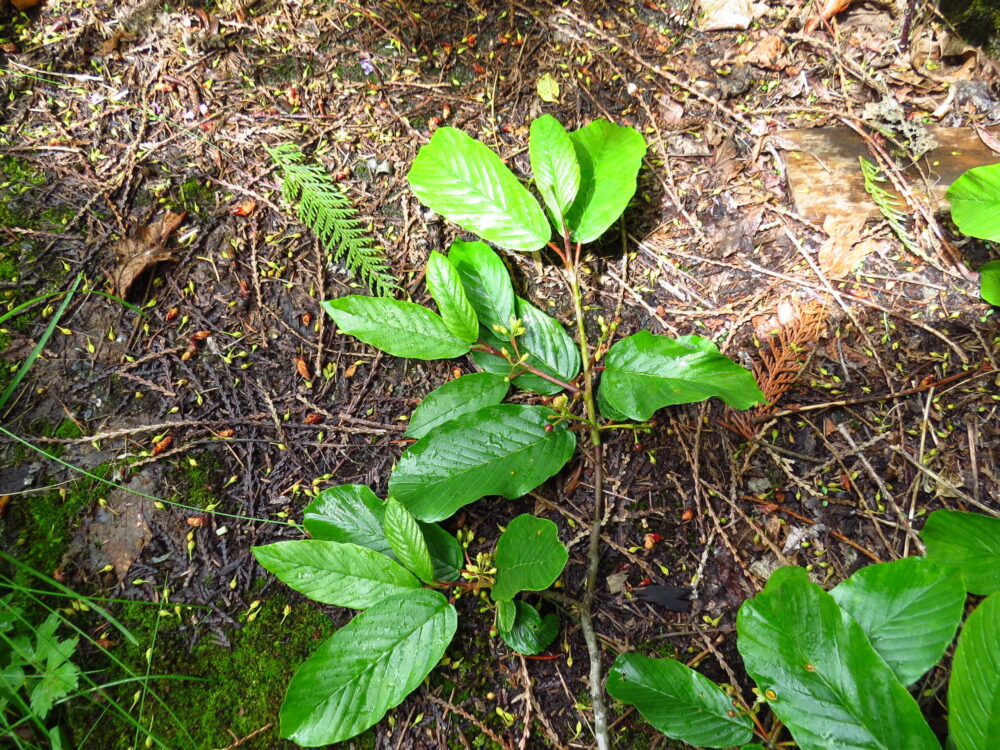
The Cascara Trees are small trees with gray to black bark that can reach heights up to 12 m. The leaves are alternate, and oblong and prominent veins that run parallel to the sides. The flowers are nondescript, greenish, and clustered near the ends of branches. The fruit is purplish to black-coloured berries.
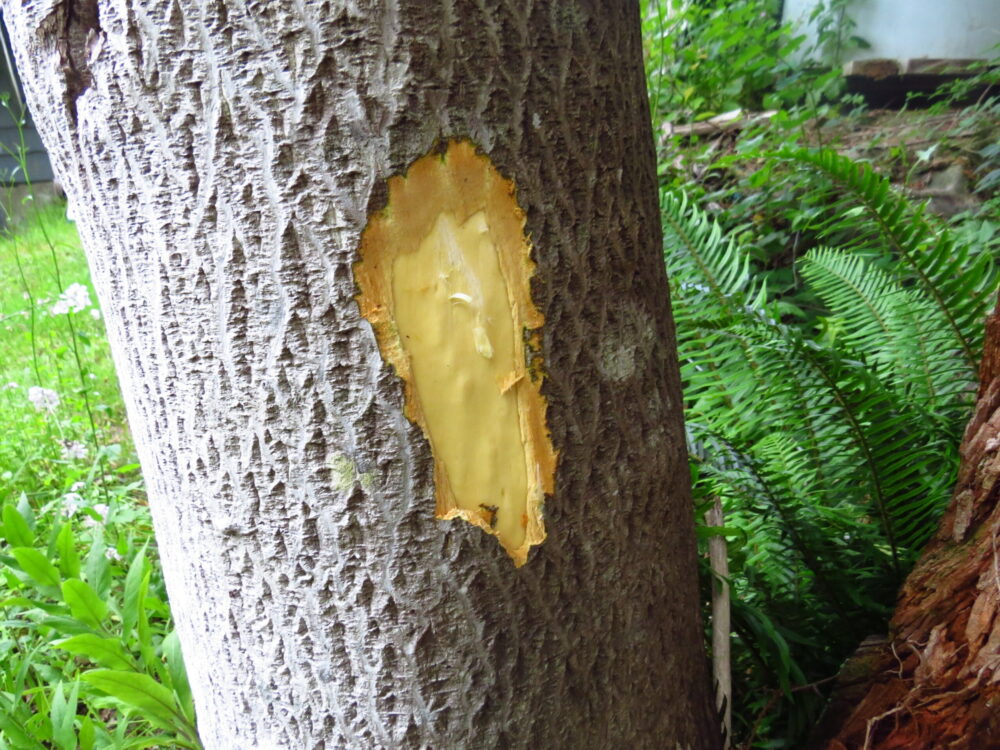
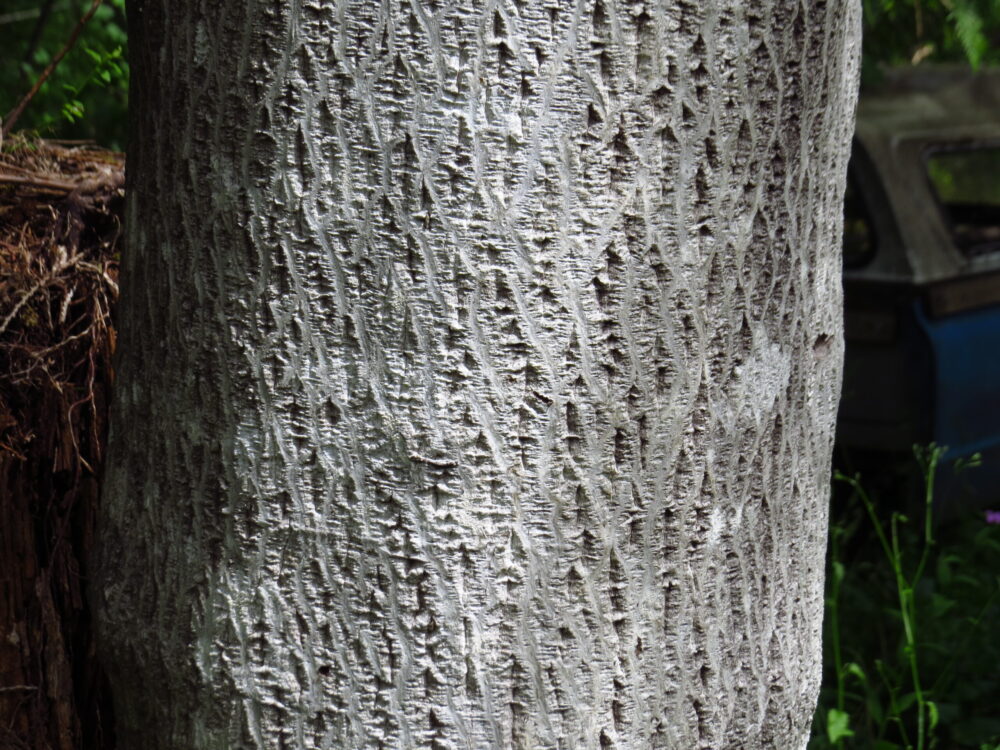
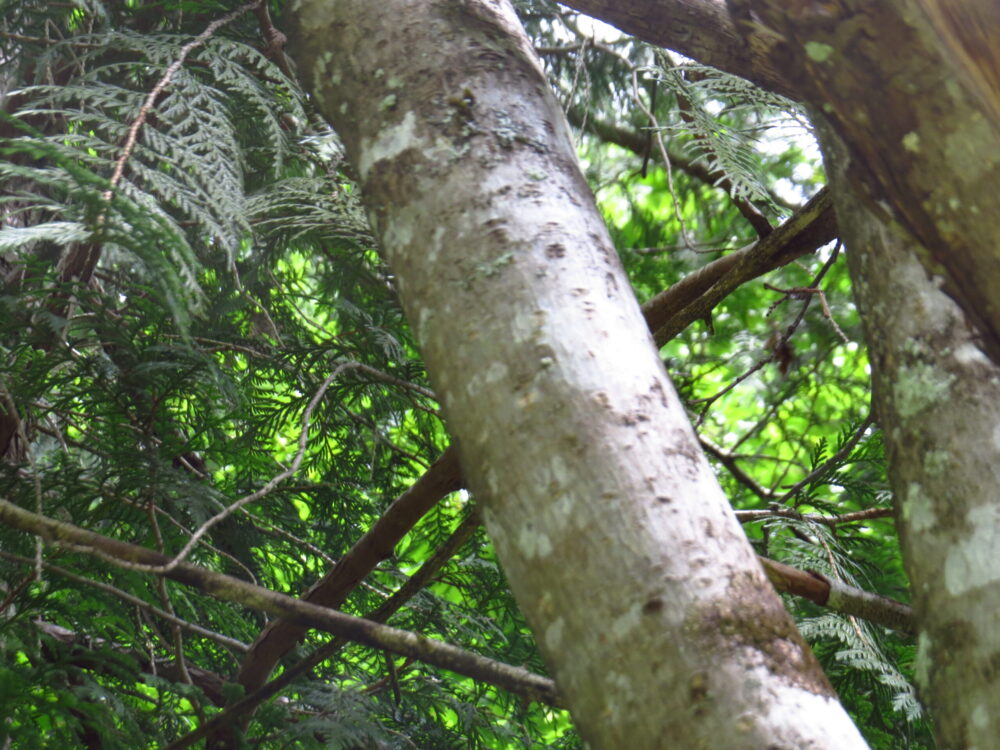
The bark is thin, dark grayish to black, and smooth when young but becomes scaly as it matures. A cut in the bark reveals a bright yellow inner bark that turns dark brown on exposure to air and light.
The cascara tree is found on Vancouver Island, some parts of the southern BC coast, and scattered locations in the Columbia Valley in the Interior. Creek banks and wetlands are favourite locations.
The Nuu-chah-nulth people used the Cascara wood to make chisel handles, and the Skagit people produced a green dye from the bark. Coastal people also knew it as a tonic and a laxative. The honey from cascara flowers is also reported to have a mild laxative effect. Bitter cascara extract has been used in liquors and a debittered extract as a flavouring for drinks and ice cream.
People have used cascara for centuries, primarily to relieve constipation. First people used it to relieve the condition and probably passed the knowledge down to Spanish and Mexican priests who arrived in the Americas in the 1800s. It is still used in herbal medicine for the same purpose, as well as to cleanse the bowels. In modern herbal medicine, it is considered a stimulant laxative and has the potential for abuse.
No one is entirely sure how cascara relieves constipation and cleanses the bowels, but many people believe the herb may irritate the bowel tissue and draw fluid into the intestines. By drawing this fluid in, it produces a bowel movement.
There is some debate over the proper preparation of cascara for medicinal use. Some people believe the bark was scraped from the tree, aged, and then dried for one year. Others believe it is prepared by scraping the bark in the spring or summer, drying it, and then aging it for a few years. It is available today in capsule, tea, or tincture form.