
(Bubo scandiacus)
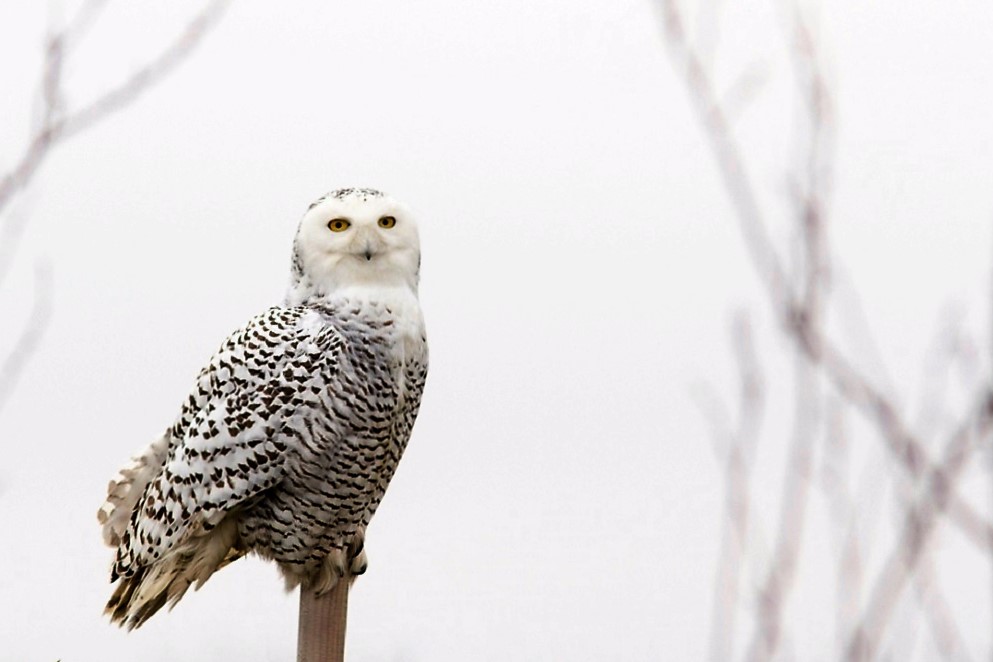
The snowy owl has beautiful white plumage that helps it hunt in its normal winter-like habitat. These large white owls breed on the tundra in the Arctic, where the females lay up to 11 eggs in their nest. The number of eggs depends on the amount of prey that is available in any given year. In some real lean years, these owls may not breed at all. These are tough little birds who will defend their nests against all threats, including wolves, foxes, or other birds of prey.
The Snowy Owl female is the nest builder; she scrapes out a hollow on the bare ground, she will press her body into the depression to shape it, and the owls will quite often use the same nest over several years. The male has the prospect of picking out the area where they will nest. He will try and pick a spot that has an uphill slope to allow the wind to blow off snow and to ensure it remains dry.
Did you know that these owls get whiter as they age? The females, though, will stay darker than the males; they never become white as the males do.
These owls are great hunters. They will sit and wait on a perch and wait for food to show itself before quietly flying off to capture it. The wings of a snowy owl are completely soundless as they fly, so prey never hears them coming. They have keen eyesight and very sharp talons to capture their prey. A snowy owl mostly feeds on lemmings; they may eat up to 5 a day. They will also eat birds, rabbits, or fish.
When times are lean, these great birds will migrate south, and many will show up in the Pacific Northwest. This happens about every 7 years. It’s great to be able to see them, even if you need to wait for 7 years.