

Hiking on Vancouver Island and seeing the meadows, slopes, and trail sides filled with a wide variety of blooming Wildflowers is one of my favourite things to do.
Alaska Saxifrage
 The Alaska Saxifrage (Saxifraga Ferruginea) is a perennial flower found on Vancouver Island and most of BC. I quite often see it in the Gary Oak meadows. The flowers range from white to purple, and the stems are red. Look for it in moist areas, mossy rock outcrops, stream sides, or rocky bluffs. It’s a nice flower to see trailside as you walk in a Garry Oak Meadow. They are quite beautiful. Read More….
American Speedwell
 American Speedwell was introduced to North America by the settlers and is now considered to be an invasive plant. It forms thick mats that spread by vegetative propagation instead of seed, and this means that if you have this speedwell in your lawn, every time you cut the grass, you spread the plant. Read More….
American Vetch
 American vetch is a drought-tolerant climbing vine excellent for sunny and partially shady locations. It is a common plant on the BC coast. You can quite often see it on the ocean beaches. Vetch often can be found growing amongst other tall flowers and grasses. American vetch is a native perennial climbing vine that grows to approximately 60 cm tall. Each plant has a single stem. Read More….
Arrow-Leafed Groundsel
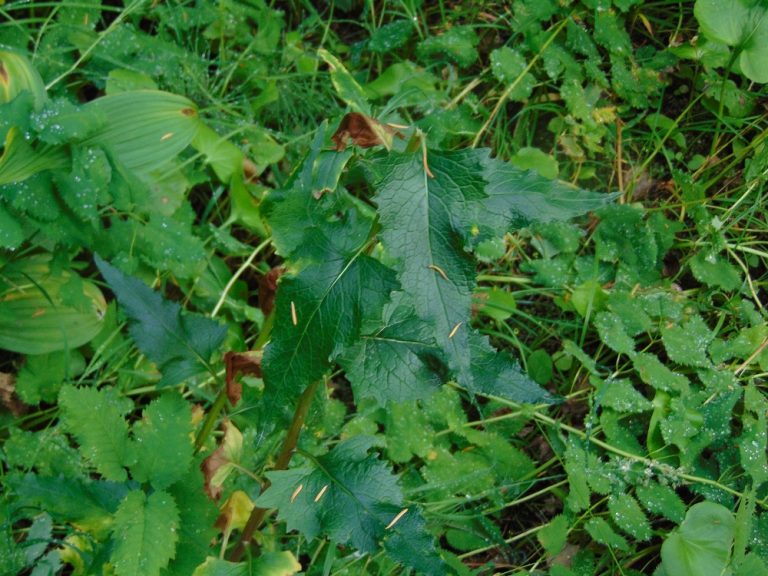 The Arrow-Leaf Groundsel is also known as the old man flower, and the Latin name Senecio means just that in translation. It is also called ragwort by some or spearhead Senecio by others. Arrow-leaved Groundsel is a lush, leafy perennial that can grow up to 1.5 meters tall. You will usually find it growing in damp to very wet open sites. It grows from 300 meters to alpine locations here on the south coast. Read More….
Bald Hip Rose
 The Bald Hip Rose is a spindly shrub about 1.5 m tall with slender stems, usually with numerous soft and straight thorns. Hips were eaten sparingly when ripe by many Northwest Coast Peoples, including the Cowichan, Saanich, Ditidaht, Nuu-chah-nulth, and Makah. The outer rind of the fruit was only eaten because the seeds contain hairs that are irritating to the digestive tract and are said to give one an itchy bottom. Read More….
Birdsfoot Trefoil Plant
 Birdsfoot trefoil is a choice food for many birds and animals. As a ground cover, it provides green cover most of the year and blooms profusely. All parts of the plant are poisonous, containing hydrogen cyanide. In small quantities, hydrogen cyanide has been shown to stimulate respiration and improve digestion; it is also claimed to be of benefit in the treatment of cancer. In excess, however, it can cause respiratory failure and even death. Read More….
Bleeding Heart Plant
 Pacific bleeding heart plants are found all over the Vancouver Island coniferous forests. It is a delicate, pretty, and short plant. It is also known as the Western bleeding heart. Its heart-shaped flowers give it its name. This beautiful plant has small, heart-shaped flowers growing in small groups on top of a long and thin stalk. The dainty, much-divided and fern-like leaves grow straight out of the ground on long and thin stalks. Read More….
Blueberry
 Vancouver Island has wild blueberries growing all over it. These low-bush blueberry plants are primarily spread by rhizomes or underground runners, which produce new roots and stems. All shoots arising from the same root system have similar characteristics and are clones of the original root system. Wild Blueberry plant areas actually produce many different low-bush blueberry clones, and this creates the variations in colour and size that you find in a wild blueberry crop. Read More….
Bracken Fern
 The Bracken Fern grows extensively all over Vancouver Island. It is probably one of our most populous ferns on the Island. It is highly tolerant of urban pollution and will even thrive in inner-city environments. This species is native to parts of North America, and parts of it are known to be toxic to humans and animals, so care should be exercised when it grows where children and pets play. Read More….
Buckbean
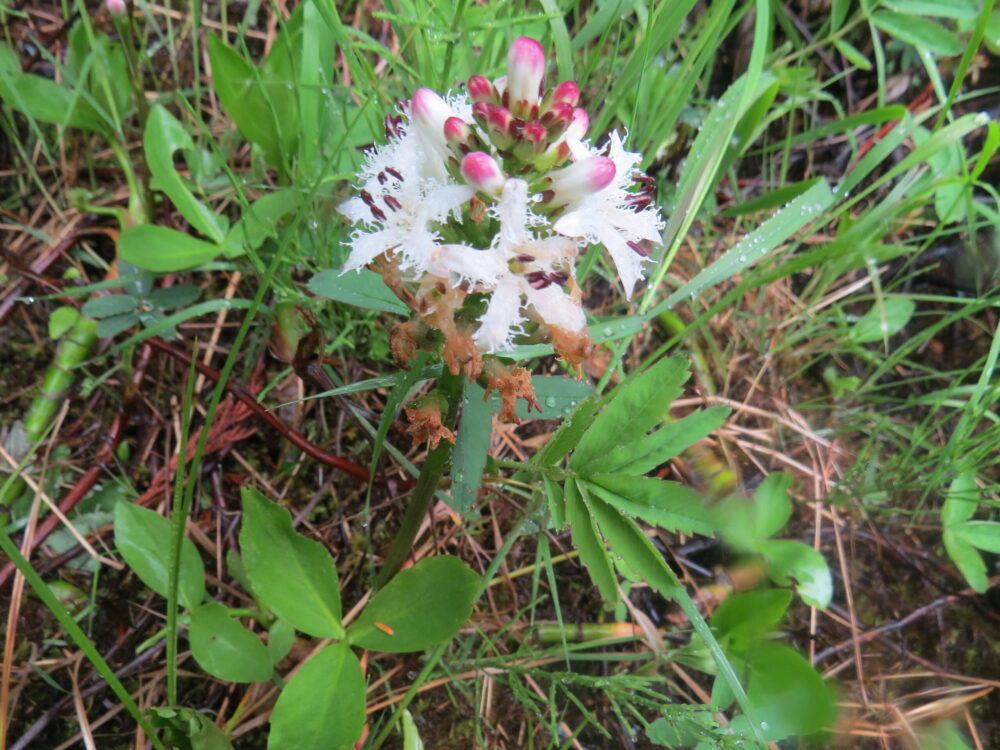 Buckbean is a green, glabrous plant with creeping rootstock and ground-hugging stem, varying in length according to the situation, covered by the sheaths of the leaves, which are long and fleshy, the leaflets being about 5 cm long and 2.5 cm broad. It blooms from June to August on Mount Washington, Vancouver Island. Read More….
Bugleherb
 Bugleherb is also known as bugle, blue bugle, bugleweed, carpetweed, carpet bugleweed, and common bugle. It’s such a beautiful plant. Bugleherb blooms mid-summer. Ajuga reptans is native to Europe but has now populated many parts of the world. It is an invasive plant, but quite beautiful. Read More….
Bull Thistle
 Bull Thistle grows all over the south coast, including all of Vancouver Island, and I am now seeing it in the remotest spots on the coast. This thistle is widespread, originally from Europe and Asia, but has now been introduced throughout North America. Bull thistle is also commonly found along trails, roads, and vacant fields. Read More….
Bunchberry
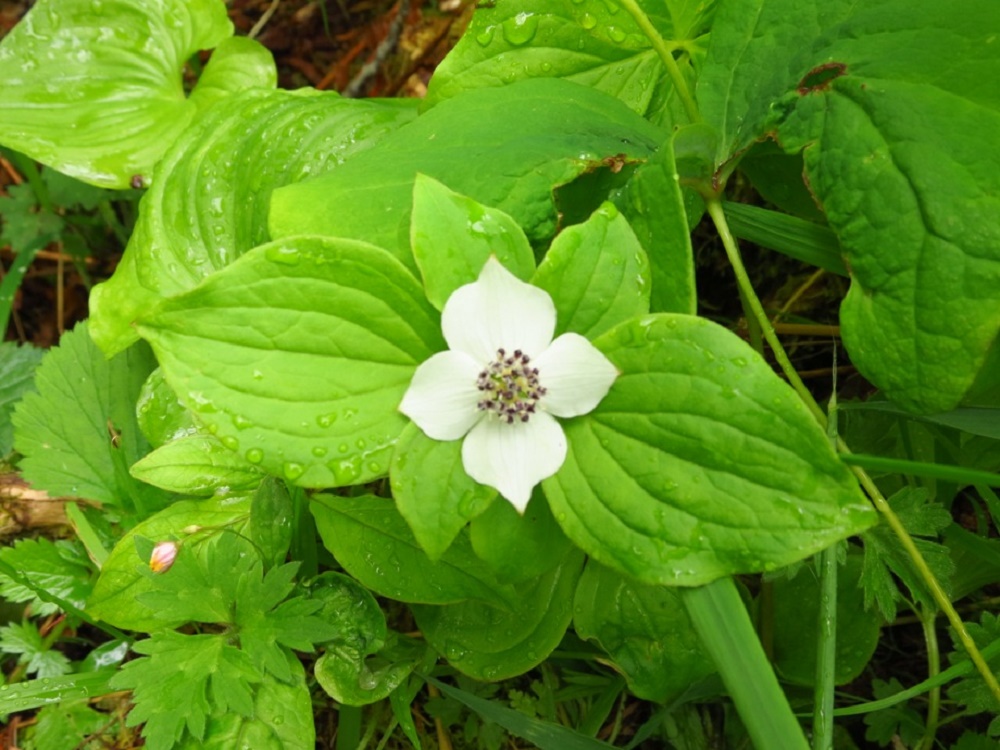 Bunch Berry is also known as the Dwarf dogwood. The Bunch Berry grows in great abundance on the BC coast. This perennial subshrub is a diminutive member of the Dogwood family. Bunch Berry is native to a broad area extending west from extreme southern Greenland across boreal Canada and the Northern United States south down the Rocky Mountains into Colorado and New Mexico, across Alaska to Northeastern Asia. Read More….
Butter & Egg Plant
 Butter & eggs grow all over Vancouver Island and are becoming a common sight. The blooming period occurs from early to mid-summer and lasts about a month, and then intermittently thereafter until the early fall. Some colonies of plants bloom later than others, depending on shade conditions. Read More….
Buttercup
 The Buttercup Flower is a familiar wildflower; it prefers to grow in open waste ground and acidic soils throughout North America, not to mention the middle of my lawn. They grow all over the BC coast. Generally, buttercup flowers have yellow cup-like flowers and deeply divided leaves, which may or may not be fuzzy. Read More….
Canada Goldenrod
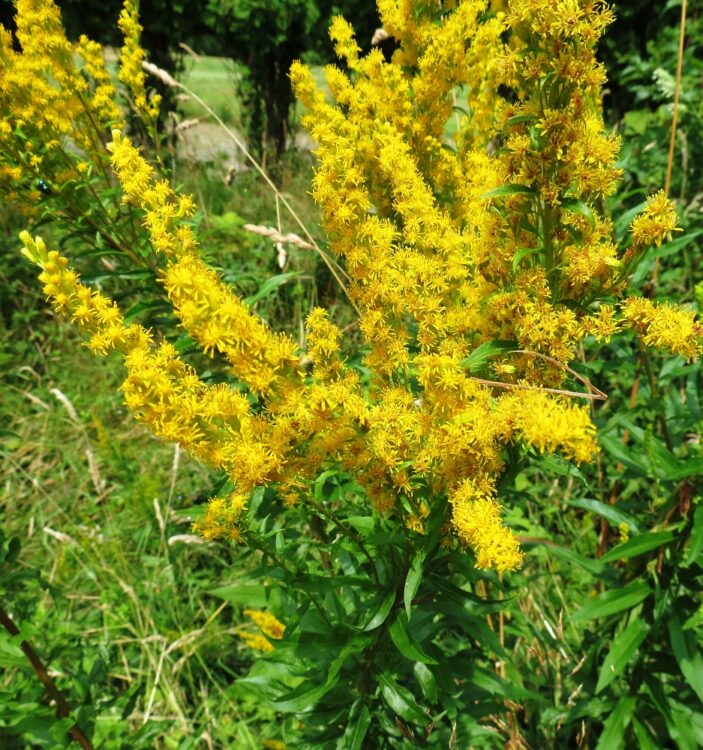 Among mammals and birds, the ruffed grouse, American Goldfinch, and Sparrows eat the goldenrod seeds, while the black-tailed deer occasionally eat the foliage. Sometimes, beavers and muskrats use the stems in their dams or dens. This is a very pretty plant; I always love running into it. Sometimes a ditch will fill with them after water flow has dispersed the seeds along the whole length. Read More….
Candy Cane Plant
 The Candy Cane plant (Allotropa virgata) can be found in the oak, hardwood, and coniferous forests of Vancouver Island. It grows up to 1500 meters in elevation. This is an indicator plant, and if you see it, come back in the fall and start looking for pine mushrooms, as you will probably find them. They feed primarily on pine mushroom mycelium. Read More….
Chocolate Lily
 The chocolate lily was used as food by the Salish people. The Salish boiled or steamed the roots of the chocolate lily for immediate consumption or for drying and storing for the winter months. The cooked roots of the chocolate lily were either mashed into a paste or baked in hot ashes. The chocolate lily likes a habitat of open woodland, meadows, coastal grasslands, and thickets. Read More….
Clasping Twisted Stalk
 The Clasping Twisted Stalk was used as a food plant by the First Peoples of the Pacific Northwest and as a medicine. The entire plant is sweet with a cucumber-like flavour. The berries are juicy and sweet, with a cucumber-like flavour. The plant was referred to by early settlers of the Pacific Northwest coast as the wild cucumber and as scoot berries for the mildly laxative effects of the plant’s berries if they are eaten in excessive quantities. Read More….
Cleavers
 Cleavers has a long history of use as an alternative medicine and is still used widely by modern herbalists. It is used both internally and externally in the treatment of a wide range of ailments. Dried or fresh herbs are alternative, anti-inflammatory, and astringent. It is often taken to treat skin problems such as eczema and psoriasis, and it is used as a detoxifying agent in serious illnesses such as cancer. The seeds are a coffee substitute. Read More….
Common Camas
 Camas begin to flower in March in Victoria. Flowers open progressively up the stem, extending the blooming interval into April and May. In colder inland locations, bloom time extends from May to June. The fruit matures during the summer into an elongated rattle-like capsule full of shiny black seeds. The range of the camas extends from Vancouver Island across southern B.C. to Alberta and south to California. Read More…
Common Sorrel
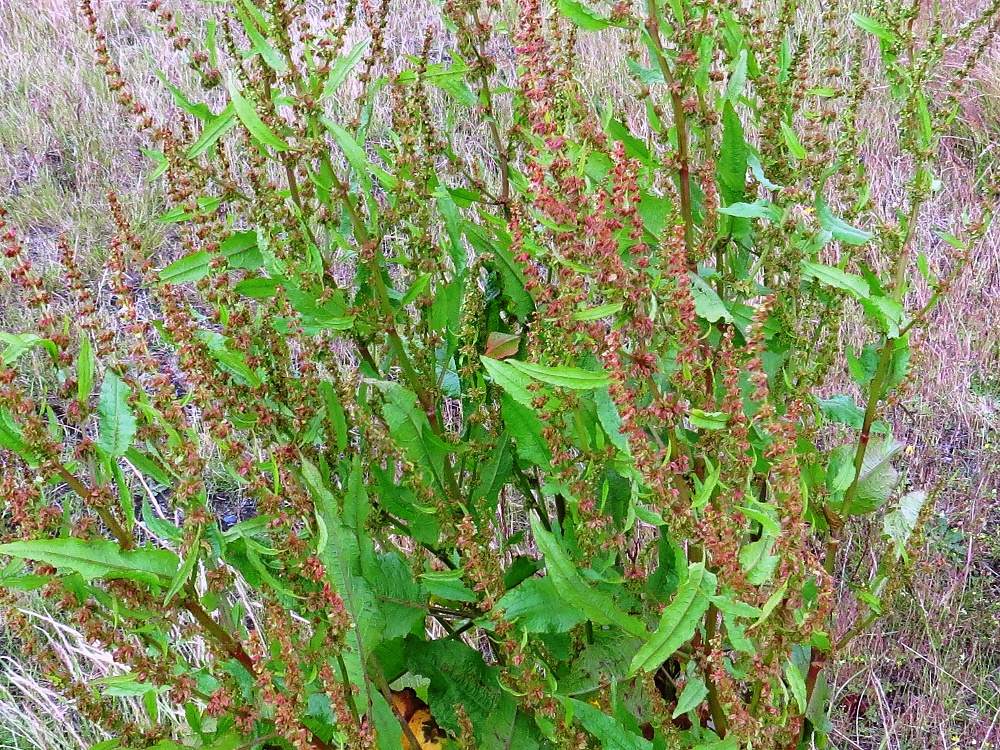 Common Sorrel is a great medicinal plant. The entire plant may be harvested to be used, or just the leaves and stems may be harvested, which allows the plants to re-grow to be harvested again. The plant portion of the Common Sorrel may be harvested throughout the spring, summer, and fall. Harvest on a sunny day after a few days of no rain, as this is to ensure that the plant is dry. Read More….
Common Tansy
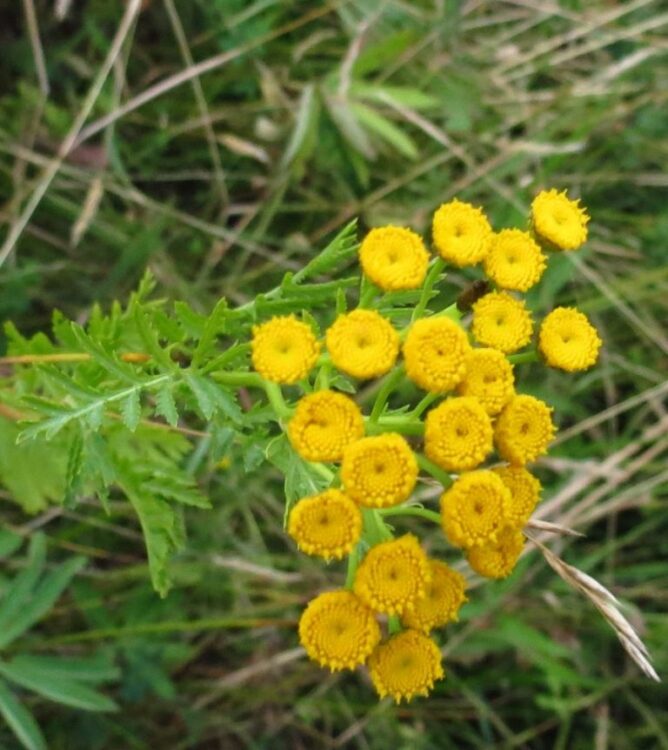 Common Tansy has yellow disc flowers that resemble buttons in a flat-topped cluster at the top of the plant. Although a pretty plant, this plant can do serious damage to our island’s natural habitat and needs to be controlled. It prefers sunny areas with well-drained soil and often infests stream banks, fields, and disturbed sites such as roadsides and logged-over areas. The common Tansy plant can be toxic to livestock and to humans if large quantities are consumed. Read More….
Cotton Grass
 Cotton grass is not grass at all, although they are close relative. They are, in fact, sedges. There are about 25 species of cotton grass, all of which grow in boggy conditions. The cotton grass gets its name from the fluffy white fruiting head that appears in June and July. This fluffy white cotton was once used to stuff pillows, as an alternative to goose down. Read More….
Creeping Spike Rush
 Creeping Spike Rush grows in all regions of the BC Coastal Region. It can be found growing in most wetlands, ponds, and shallow lakes. You can see it in the shallows of slow-moving streams and even in the estuaries. This plant provides a service as wildlife food and cover. The dense root system of rhizomes is great at stabilizing stream banks and pond shores. This plant is an excellent choice to be used for wastewater treatment ponds. Read More….
Dames Rocket
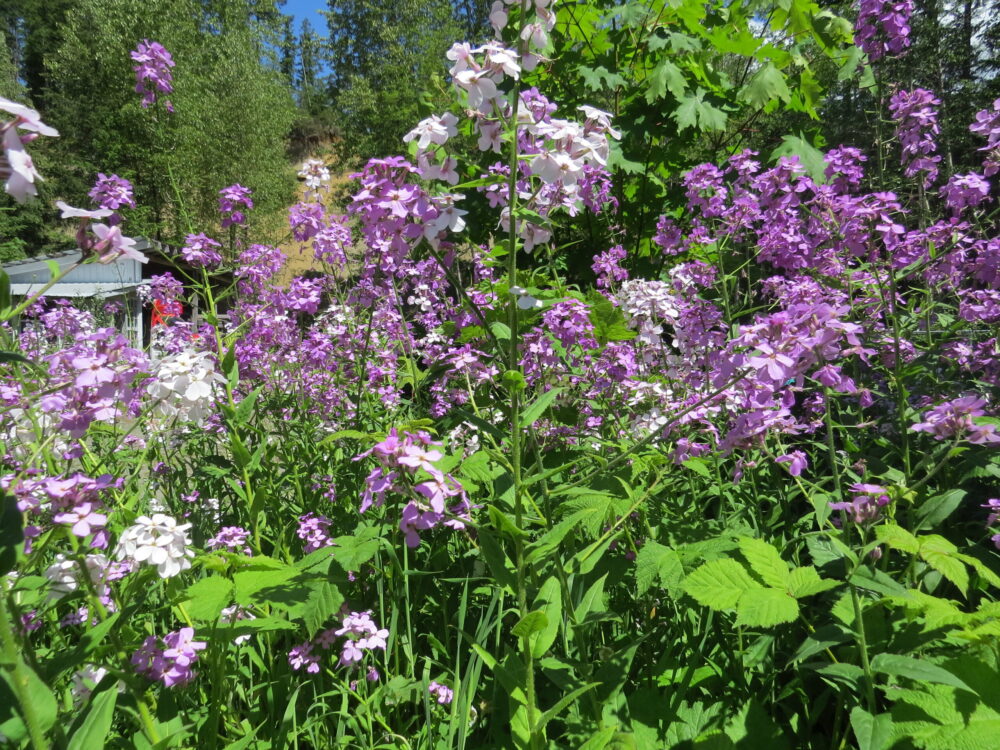 The Dames Rocket Plant, also known as Sweet Rocket or Dame’s Violet, is a very pretty weed that grows all over North America, including all of the BC coastal region. This plant is often mistaken for Phlox, but Phlox has five petals while Dame’s Rocket has just four. The plant is part of the mustard family, which also includes radishes, broccoli, cabbage, cauliflower, and mustard. Read More….
Deer Fern
 The Deer Fern is a Northwest native fern; it is a beautiful forest fern that provides winter forage for deer, elk, and other animals from Vancouver Island to Alaska. The Deer Fern is very attractive. I love hiking around on the Island and walking through an old-growth forest that has a moss and fern understory. This plant can be grown as a home garden plant and does best in partial to deep shade. If it outgrows a location, the spreading clumps can be divided in the spring. Read More….
Deltoid Balsamroot
 In Canada, the Deltoid Balsamroot only occurs on the southeastern portion of Vancouver Island. Balsamroot habitat destruction and aggressive invasion of exotic species are the main threats to the balsamroot plant. These threats are real; we could lose this plant in the next few years if we don’t protect it. No government legislation exists to protect rare and endangered vascular plants in British Columbia. Read More….
Devils Club
 The stems and roots of the devil’s club plant are the primary medicinal parts, and both can be used, but the roots are more concentrated and easier to use. I use the stems, as using the roots can kill the plant. The dried bark can be brewed into a tea or made into a tincture. It also works as a great spring tonic. The active constituents may be saponins and substances with insulin-like activity, but research is still ongoing to identify these medicinal components. Read More….
Douglas Aster
 The Douglas Aster has green foliage and inconspicuous purple flowers, with an abundance of conspicuous brown fruits or seeds. The greatest bloom is usually observed in the late summer, with fruit and seed production starting in the summer and continuing until fall. Leaves are not retained year to year. This plant is native to the Pacific Northwest and has its most active growth period in the spring and summer. Read More….
Douglas Spirea
 The Douglas Spirea grows in great abundance all over the coast of BC Although a wild plant, it is considered a wonderful addition to any garden. I have one growing in my front yard, and it draws butterflies and birds to my garden. The feature that most people recognize when they see this plant is the tall spikes of clustered, tiny pink flowers, which grow on the ends of the branches. Read More….
Evergreen Violet
 The Evergreen Violet is a low, trailing plant that puts down roots along the extending stems just like strawberries do. Leaves are small, almost round, and deep, dull green. Bright yellow flowers rise to 5 cm above the leaves. Stems creep across the ground, rooting as they go, producing mats of thick, leathery, broadly heart-shaped leaves, and beautiful little yellow flowers that face outward, hanging on short stalks barely as tall as the leaves. Read More….
Fireweed
 Fireweed, also known as Willow Herb, can be found in every Canadian province and territory. It is usually one of the first plants to grow and bloom on land devastated by logging or fire. It is a 1.5 m tall perennial covered with 2.5 cm pink flowers. The name originated because it’s a pioneer plant that grows first on a fire-burnt area. It has been found to contain several chemical compounds with anti-inflammatory and antibacterial properties. Read More….
Foam Flower
 The western Foam Flower grows primarily along the BC coast into Washington and on all of Vancouver Island. Foam Flowers are a source of food for Canadian wildlife. Their seeds and leaves feed birds, such as the ruffed grouse, while flowers offer pollen and nectar to local pollinators. The Foam Flower is a pretty woodland plant that has inspired gardeners to grow it at home, for its blooms, and for its ability to provide good ground cover. Read More….
Forget Me Not
 They say Forget Me Not’s got its name from a medieval knight who had just returned from battle. He was walking by a raging river with his beloved wife, whom he had missed dearly. The knight held a bouquet in his hands that he had just gathered for her. As they walked along, the knight leaned over the edge to look into the water, and because of the weight of the armour, he fell into the water. According to the legend, he threw the bouquet at her, shouting Forget-me-not, and then disappeared into the water and was never seen again. Read More….
Foxglove
 The foxglove flower itself is an elegant, very beautiful flower. All colours are accented by a freckled pattern scattered upon the pale interior of the bell. The trumpet-like blooms cluster together on the tall stem in a dramatic presence that hummingbirds and bees find irresistible. Despite its beautiful appearance and appeal to hummingbirds and bees, foxglove has another feature that must be acknowledged before being included in one’s garden plans. Every part of this plant is highly poisonous. Read More….
Fringe Cup
 The Fringe Cup grows all over the BC coastal region, as well as from Alaska down the Pacific coast to Oregon, including all of Vancouver Island. These pretty flowers grow in moist forests, along stream banks, and in meadows. In my area, the wild spaces come alive with masses of fringe cups in full bloom. The Fringe Cup begins flowering around April. It’s always a treat to see these plants covered in fragrant blooms. Read More….
Giant Horsetail
 Giant horsetail is the largest of the common horsetails, explaining its common name. Giant horsetail is found at low to middle elevations, usually near standing or flowing water. Dense colonies often form in moist forests and meadows, stream banks, swamps, seepage areas, and gullies, giving the landscape a prehistoric look. This species is found in the Pacific Northwest from Alaska to southern California. On the Pacific Coast, including all of Vancouver Island. Read More….
Gnome Plant
 There is only one species in the genus that grows in the Pacific Northwest, it’s the Gnome Plant, and it can be seen from southwestern British Columbia, Vancouver Island, down as far as California. They are very rare, and if you do see one of these tiny little jewels, then you are indeed a lucky one. The Gnome plant is a monotypic genus of plant that contains the single species Hemitomes congestum, which is known as the gnome plant or cone plant. Read More….
Goats Beard
 A graceful member of the Rose family, Goat’s Beard grows freely in the Pacific Northwest, including all of Vancouver Island. It’s a beautiful flowering plant. Goatsbeard, also sometimes called Bride’s Feathers, is found in moist woodlands of Europe, northern Asia, and North America. In the woodlands, it usually grows as randomly spaced individuals and not in large colonies. Read More….
Great Mullein
 Bumblebees are the most important pollinators of the great mullein, where they seek nectar and pollen. The seeds of Great Mullein are too small to be of much interest to birds, while the hairy foliage is not eaten by deer or elk, making it a great plant for gardeners who deal with browsing deer. The blooming period usually occurs during the summer and lasts about 1½ months. Only a few flowers are in bloom at the same time. Read More….
Harebell Flowers
 Harebell Flowers are bell-shaped and are easily identified by these fragile blue flowers, shaped like bells and heart-shaped basal leaves, which are usually slightly toothed. The foliage dies back in the spring as the flowers emerge on their erect stems with lance-shaped leaves along the stem. Harebells grow in clumps, flowering in the Islands’ forests from July to September. Read More….
Henderson’s Shooting Star
 Henderson’s Shooting Stars is a Pacific Northwest native plant that grows on South Vancouver Island as far north as Campbell River on the East side of the Island and Tofino on the west side. It also grows on the Washington, Oregon, and northern California coasts. Read More….
Herb Robert
 Herb Robert is a therapeutic herb; although very little information is available on the constituents, this herb’s action is one of the best herbs that can be used regularly, as a boost to the immune system. Research has revealed that herb robert is a source of germanium, a valuable element to the body, as it can make oxygen available to the cells. With more oxygen being received at the cell level, it means the body has the opportunity to fight disease by its own powers, and healing can take place quickly. Read More….
Indian Paintbrush
 All spring, summer, and fall, the West Coast is ablaze with Indian Paintbrush. It can be found throughout all of British Columbia and the greater Pacific Northwest. Plus all of Vancouver Island. It grows all over the Campbell River area. They grow in groups with long, tube-like stems, pointy leaves, and bright red blooms at the end. Read More….
Indian Pipe Plant
 The Indian Pipeplant is a unique and strange plant that grows solitary or in clumps, both small and large, from a very dense root system. They occur in moist, dark, deep-shaded woods that have rich soil. Indian Pipe Plant. It is fairly rare, and it is said to appear almost overnight, just like a mushroom. The plant gets all its nutrients from dead plant or animal matter. Other common names are Ghost Flower, Ice Plant, and Corpse Flower. Read More….
King Gentian
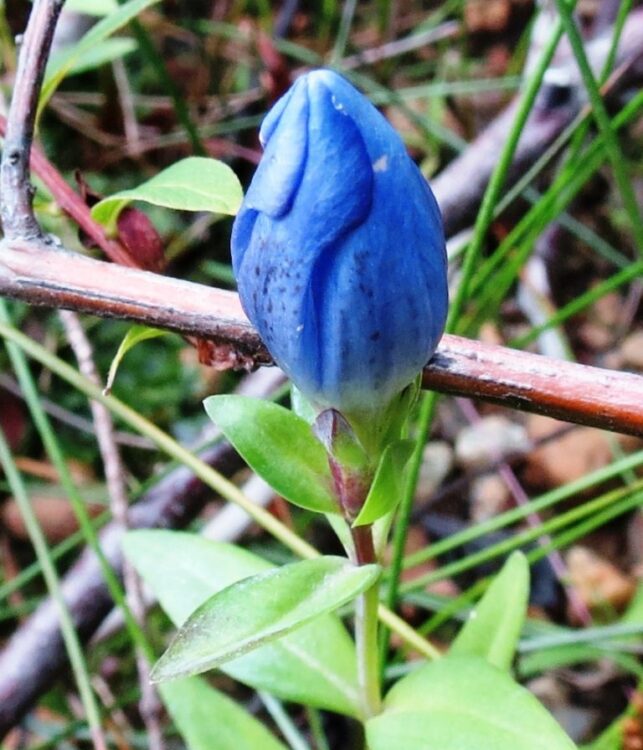 This plant is one of my favourite plants, King Gentian is a beautiful flower that grows in bogs, wet meadows and along lakeshores at higher elevations on Vancouver Island. Paradise Meadows on Forbidden Plateau is covered in them. The plant may have one too many flowers on stems that are from 10 cm to a meter tall. The flower gets its name because it looks like a sceptre, a staff that was carried by kings as a symbol of sovereignty. Read More….
Kinnikinnick
 The Kinnikinnick plant is a trailing dwarf shrub that has long, flexible, sprawling branches that form a green mat, sometimes several meters wide, over its preferred dry sandy habitat. The leafy stems are covered with soft, white hairs. With its evergreen leaves and bright red berries, it brightens up winter woodlands and meadows. Read More….
Lady Fern
 In the wild, Lady ferns can be found growing in meadows, open thickets, moist woods, and along stream beds. They also grow in the cracks of rocks. On Vancouver Island, it usually grows in the understory of Cedar, Douglas fir, and Western Hemlock. Lady ferns will grow in a group in the shape of a circle. As they grow farther and farther outwards, the centers die away, leaving a ring of Lady Ferns. Read More….
Large Leave Avens
 The Large Leaved Avens plant is a hairy perennial with short rhizomes and big leaves topped by small yellow flowers. This plant grows all over the southern BC coast and all the Gulf islands. The Pacific Northwest peoples had numerous medicinal uses for the leaves and roots. They would crush the leaves to make a poultice for wounds and would steep the leaves for tea to dull stomach pain. Read More….
Little False Solomon Seal
 False Solomon Seal grows abundantly in all of North America. This plant sometimes forms loose vegetative colonies. The preference is a light shade to partial sun, moist to slightly dry conditions, and fertile loamy soil with abundant organic material; sandy and rocky soil can also be tolerated. False Solomon’s Seal is a common plant that occurs in every part of the BC coastal region. Read More….
Lupine
 Lupines thrive in dry open fields and woodland areas. You can see them along all the highways of Vancouver Island in very thick patches. It is poisonous to many animals. Poisoning varies depending on lupine species and varieties, and it is difficult to pinpoint a specific plant or animal since different animals become susceptible in different ways under varying environmental conditions. Read More….
Maidenhair Fern
 The Maidenhair Fern grows all over the coast of BC look for it around small streams and moist, shady areas. Look in your garden, mine has lots of maidenhair ferns that have colonized themselves into my yard. These ferns are leafy, non-flowering plants. They are very delicate and require good wind protection to grow nicely. They are slow-spreading and non-invasive. Maidenhair ferns are deciduous in colder climates. Read More….
Marsh Marigold
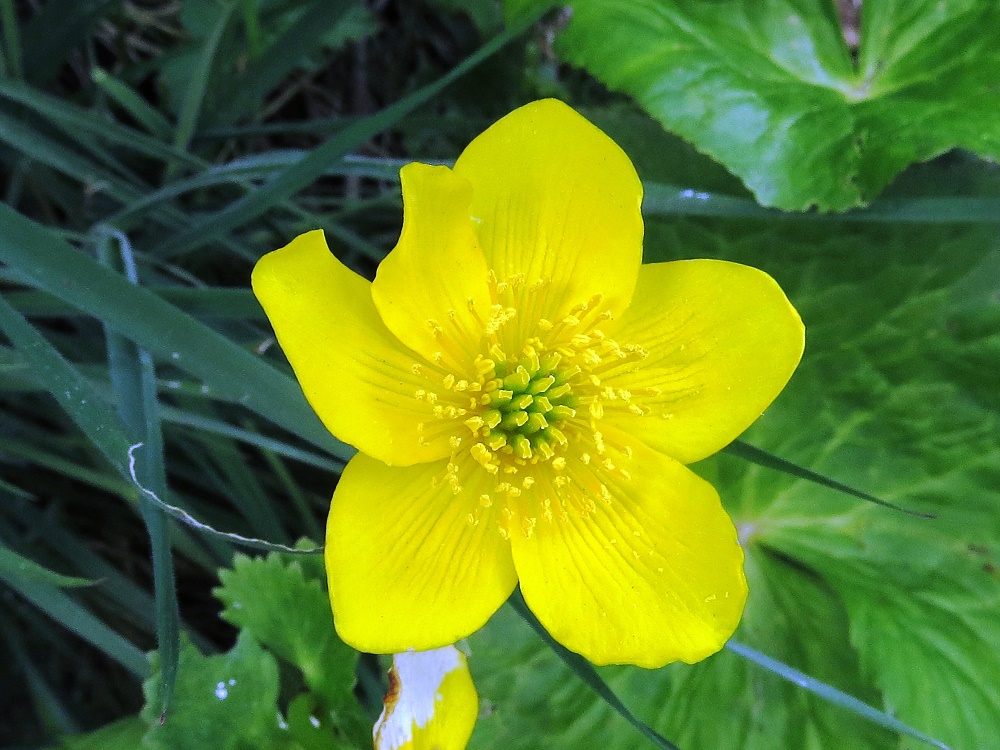 The Marsh Marigold grows all over the BC coastal region. The plant is a herbaceous perennial and is found in wet woodlands and damp meadows as well as along stream banks. It also makes a beautiful addition to a garden pond. The Marsh Marigold is one of the first wetland wildflowers to bloom early in the spring. This makes it a welcome early source of pollen and nectar for many insects, such as the honeybee. Read More….
Marsh Speedwell
 The small, wispy stature and sparse floral array make Marsh Speedwell a very inconspicuous species in its swampy habitats. A circumpolar species of both the eastern and western hemispheres, it is widespread throughout the upper part of North America, preferring wetter locations at higher elevations in its southern range and extending north beyond the Arctic Circle. Read More….
Northern Red Currant
 The wild northern red currant bush and its berries are a tasty treat indeed. If you’re lucky enough to find a big haul of them, they can be used in any recipes for cultivated berries. If you find only a few, then they make a fine addition to summer puddings or wild fruit salads. The Northern red Currant grows all over North America at higher elevations. I always enjoy finding them on a mountain hike, sweet and sour at the same time, but quite refreshing. Read More….
Orange Honeysuckle
 Orange honeysuckle favours the southern parts of British Columbia, ranging from southeastern Vancouver Island, from Campbell River south, onto the mainland as far east as Creston. First people from the Interior of B.C. would weave the stem fibres of orange honeysuckle with other fibre materials into blankets and capes. The south coast has only a handful of true climbing vines, and the Orange Honeysuckle is the prettiest of them all. Read More….
Oregon Stonecrop
 The beautiful Oregon Stonecrop grows in all of the BC coastal regions and is a pretty sight to see. The plant is a sprawling succulent that has ascending flowering stems. The leaves form a crowded rosette. They have fleshy and somewhat flattened leaves that are green but often turn bronze. Grows on rocky ledges, gravelly places, and talus slopes, from sea level right up to the alpine areas of the coast. Read More….
Ox-Eye Daisy
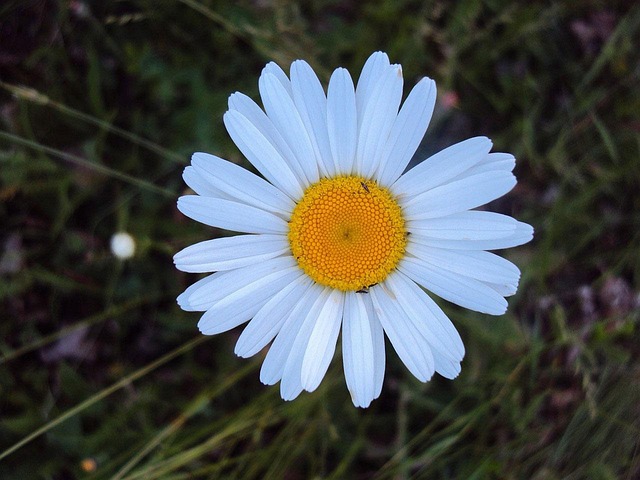 Oxeye daisy is widely planted and easily escapes cultivation. It is an invasive exotic that can displace native species. Due to its unpleasant taste and odour, most grazers avoid this plant, leaving it to spread easily within grazed grasslands, pastures, and rangelands. It smells like baby vomit. Very unpleasant. Read More….
Pacific Rhododendron
 The Pacific Rhododendron Bush on Vancouver Island is very rare, with only a couple of areas where they grow. I am only familiar with the Parksville site at Rhododendron Lake and on the shores of Antler Lake. This plant is a perennial tree or shrub. This shrub is native to the Pacific Northwest. It has its most active growth period in the spring and summer. Read More….
Pearly Everlasting
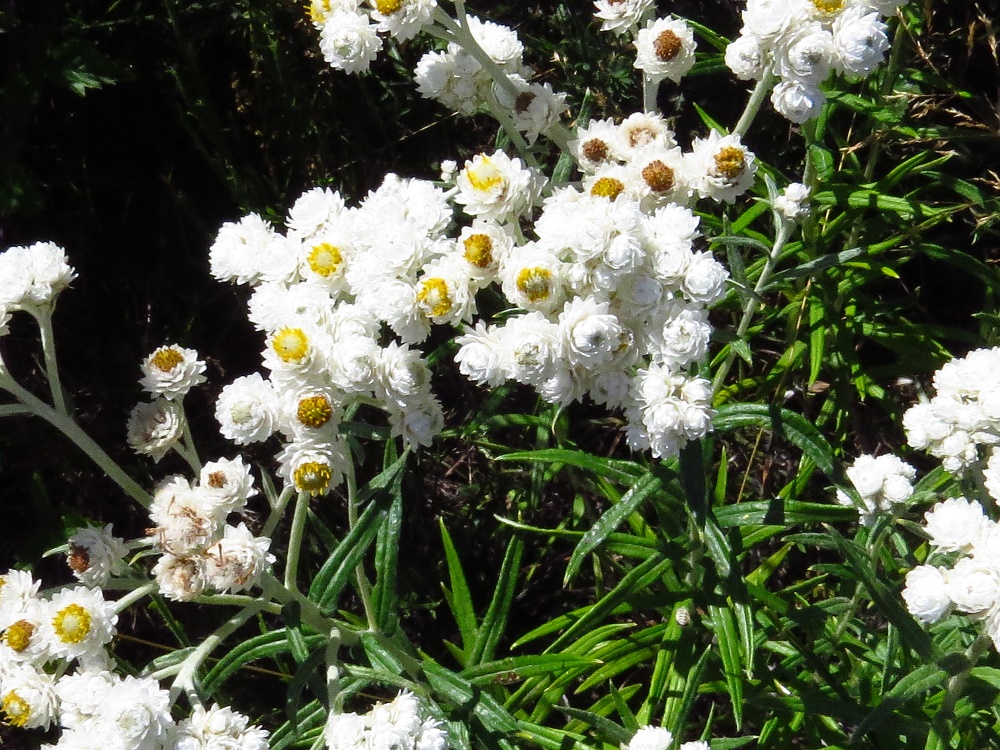 The Pearly Everlasting plant is native to every province in Canada, as well as the Yukon and the Northwest Territories. Its unique look and tolerance for poor soil and cold temperatures mean it can grow almost anywhere. Many types of butterflies use it as a source of food, and some use it as a host plant for their young. The flowers are magnets for bee pollinators. Read More….
Piggyback Plant
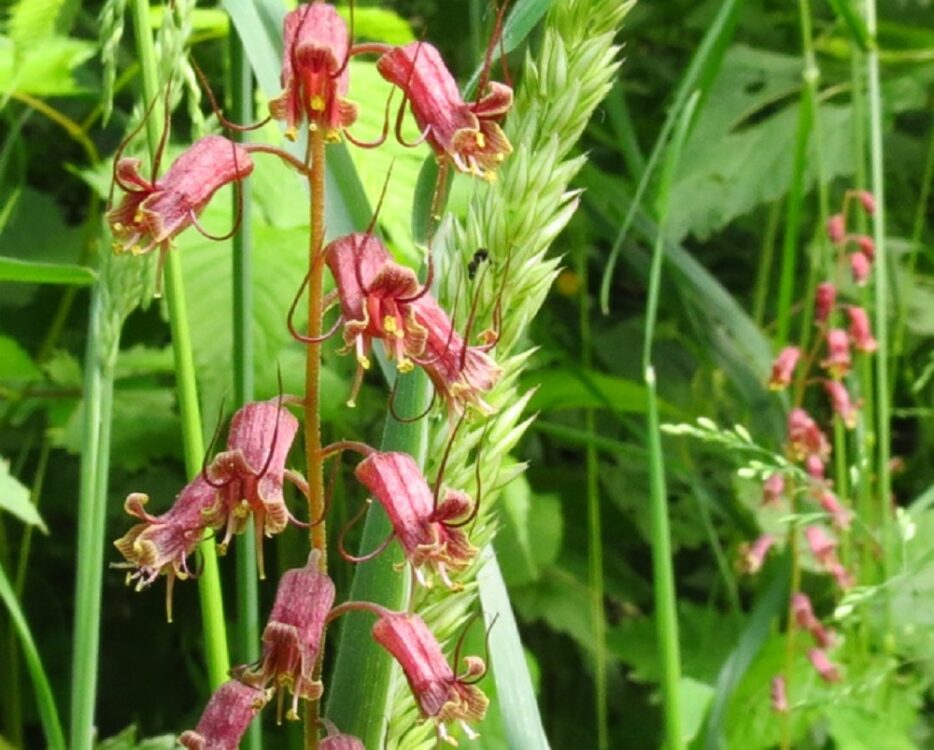 The PiggyBack Plant’s natural habitat is an area with cool, moist soil that is protected from bright sunlight. They commonly grow under the canopy of tall trees. While each plant is under a foot in height, it can slowly spread, forming a large colony. Read More….
Pineapple Weed
 Pineapple Weed is a very common annual broadleaf plant. It is found all over North America and even in all of Greenland. Pineapple weed inhabits agricultural land, turf, and other disturbed areas. When crushed, the leaves and flower heads smell similar to pineapple. You can find it growing in fields, orchards, nurseries, pastures, sand bars, riverbanks, roadsides, gardens, turf, landscaped areas, and other disturbed places. It makes a nice tea. Read More….
Pink Fawn Lily
 Found commonly on Vancouver Island. It occurs in wet maritime to sub-maritime climates. Occurrence decreases with increasing latitude and elevation. The first people ate the bulb. The bulbs were dug when they first sprouted in the spring and eaten raw or steamed in tall cedar boxes and served with large quantities of grease. They could also be dried in the sun and then boiled in water or baked and served with grease. Read More….
Pink Wintergreen
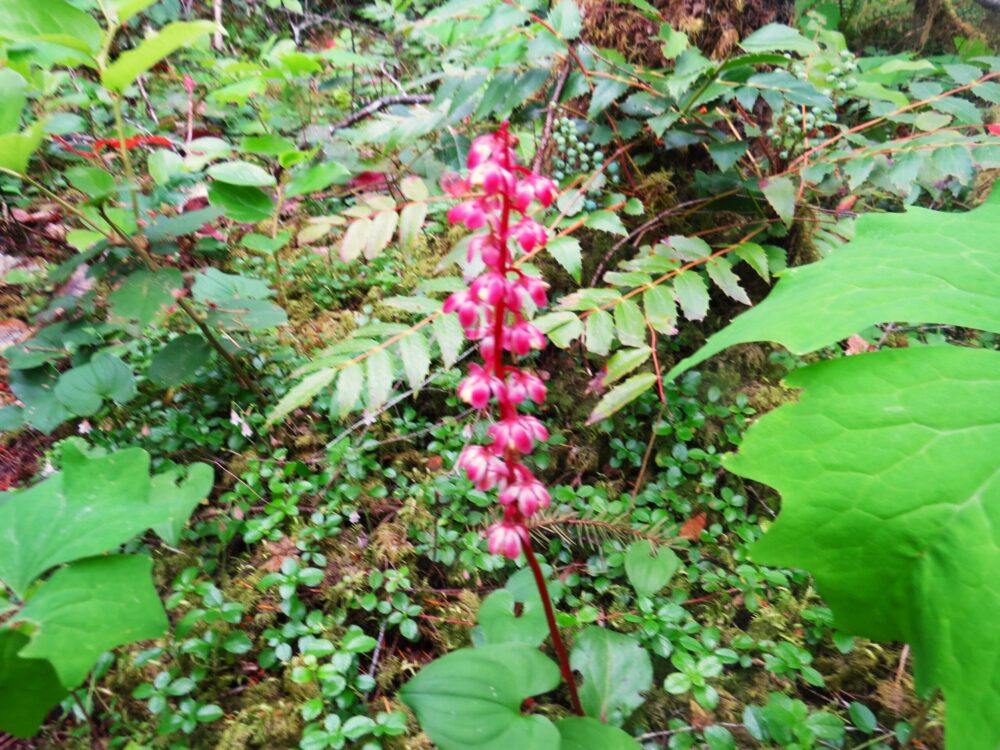 Pink Wintergreen has a tall single stock with alternate pink flowers growing along its length. Its leaves are pear-shaped and basel in a rosette, bright green and leathery to look at. The leaves of this plant stay green throughout the winter, hence its name. The flowers are shaped like inverted cups that are nodding, are waxy-looking and are light pink to dark purple in colour. Look for this plant in forest settings from sea level up to sub-alpine. Read More….
Red Columbine
 Red Columbine is found in Cedar groves, Maple forests, and mixed conifer hardwood forests. It grows in thin soils over bedrock, steep hillsides of thin soil over bedrock, and on gravelly glacial marine soils. Because of highly variable genetic plasticity, populations can occur in a wide range of habitats from rich woods to rocky cliffs. Read More….
Red Flowering Currant
 The Red flowering currant inhabits the drier portions of the south coast of British Columbia and also lurks in scattered localities in the interior of the province. It grows all over Vancouver Island, and I must say, it is one of my favourite flowering shrubs in my area of Campbell River. Its distribution extends southward along the coast into northern California. Read More….
Red Huckleberry
 The red huckleberry plants’ bright green and thin crooked branches hang laden with red berries in the late spring. These delicate translucent berries have been a source of food for generations of Northwest First Peoples, animals, and settlers alike. They are rich in vitamin C, available sugars, and minerals like manganese. Read More…..
Salal
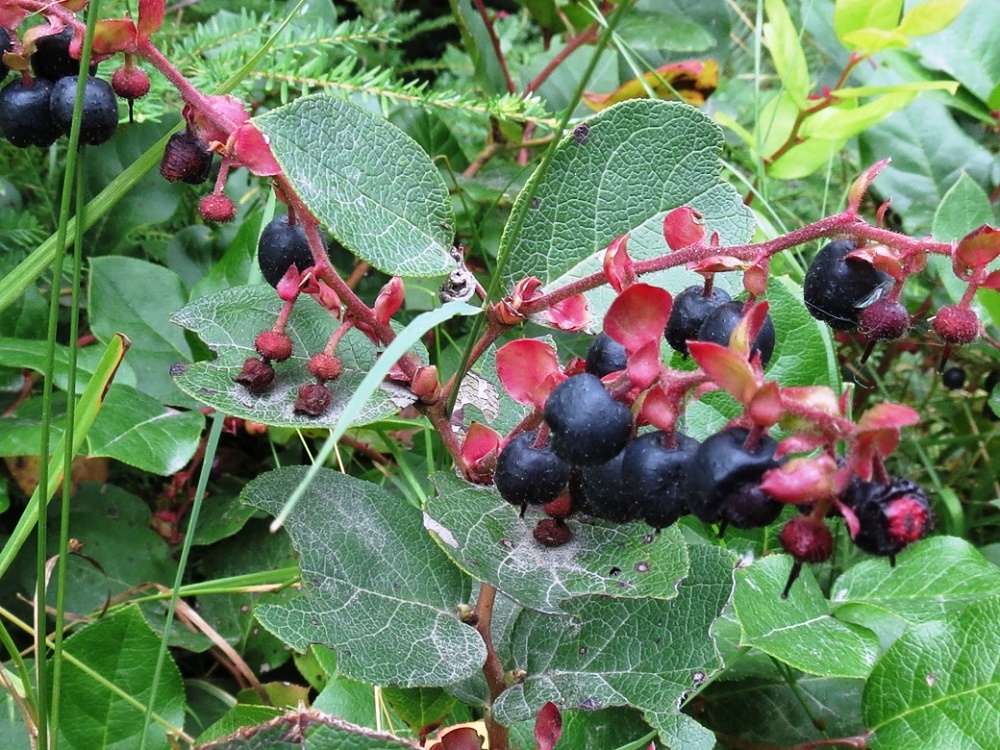 The Pacific Northwest Salal plant can be upright or ground-crawling and grows from 0.2 to 5 meters in height. Its growth can be sparse or form a dense barrier, almost impossible to penetrate. It spreads by suckering layer upon layer and is the most dominant shrub in the coastal forest area. It grows from sea level to mid-elevations. It is found in coniferous coastal forests all over the BC coast. Read More….
Salmonberry
 The Salmonberry Bush grows in dense, thick, raspberry-like thickets. The canes arise from a woody crown, often buried in a moss-covered mat. On dry sites, the bushes reach 1.5 meters tall, but sometimes, in the rainforests on the coasts of Vancouver Island, monster salmonberries can reach more than 4 meters high. My wife and I love riding our bikes in the spring ( although we ride year-round) and stopping to eat these sweet, delicious berries until we can eat no more. They are absolutely delicious. Read More….
Sea Blush
 Sea Blush grows from Coastal BC, including all of Vancouver Island, down as far as Northern California. The flower has erect, slender stems with clasping leaves; the leaves are widely oval with pointed tips. The flower is a round cluster of dark pink flowers that bloom on the top. Read More….
Self Heal
 The Self Heal Flower grows on the BC coasts. This plant is known as a heal-all plant. Self-heal is related to the mint plant, and like any of the mints, once you plant it, you never have to plant it again. The plant spreads by underground stems that spread in every direction. It grows like a weed, but it’s far from being a problem; it is one of nature’s great plants. Read More….
Silverweed
 The dried roots of silverweed were ground into a kind of flour and used in bread making. The leaves were used to soothe aching feet. Silverweed was made into a tea-like infusion and used to cure menstrual cramps and indigestion, and if honey is added, it can be used as a gargle for the easing of sore throats. Silverweed has also been used to treat mouth ulcers, toothache, jaundice, stomach problems, piles, eye inflammation, and many other medical conditions. Read More….
Skunk Cabbage
 The Skunk Cabbage flower is a perennial plant up to 50 cm tall, a member of the arum family. It has large, cabbage-like leaves that surround a bright yellow flower, and it has a disagreeable smell. The large tuberous rootstock produces fleshy roots and heart-shaped, cabbage-like leaves on thick stalks. Numerous small, purple flowers grow on a small, oval, fleshy spike covered by a purple and yellowish-green hood. Read More….
Small Ground Cone
 Small Ground Cone plants look just like pine cones, and that is why they are called ground cones. It is common on the BC coast. I have seen them growing out on rocky coastal bluffs, in coniferous forests, and in alder groves. They can be from yellow to purple in colour. Lacking chlorophyll, it cannot synthesize carbohydrates for itself, so the plant is entirely parasitic, getting its nutrition from other living plants, preferring alders and the salal plant, but also feeds on other types of plants. Read More….
Snowberry
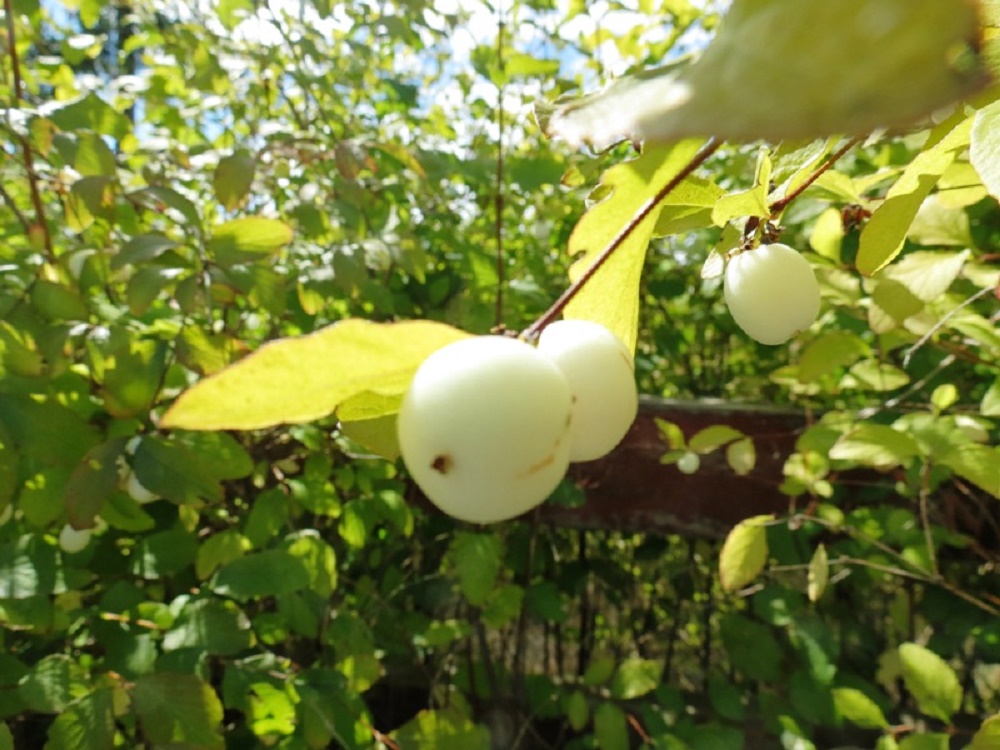 There are a few plants, like the Snowberry Plant. They are laden with such beautiful white berries. It is a beautiful-looking plant with an enchanting quality about it. The small clusters of pink flowers that bloom in the spring will become the snow-white berries that will last on the plant until near spring. In this way, they offer great fall and winter interest. The berries are quite fetching; they seem to float lightly in the air, all about the plant. Read More….
Spanish Bluebells
 One of the spring wonders of the Vancouver Island coastal region is the Spanish Bluebells. This flower grows everywhere here on the south coast, and it is truly a beautiful flower. I love walking in the forests in the spring, and one of my favourite sights is this flower. It is also called the fairy flower, and one can almost see the fairies dancing around these bluebells. Read More….
Spotted Wintergreen
 During the winter months in the northern hemisphere, there is still plenty to see while you wander in the woods. There are many beautiful plants amongst the decay of late fall. Spotted Wintergreen is one of the most beautiful. It can be seen almost floating above the fallen leaves as you walk along, then look closer at the beautiful striped leaves hugging the ground. Read More….
Spring Gold
 Spring Gold is a flowering plant in the carrot family. Its common names are spring gold and fine-leaf desert parsley. Its Latin name is Lomatium utriculatum. It is native to western North America from British Columbia to California. First Nations would dig up the roots right after flowering and steam them in pits to eat. Read More….
Stinging Nettle
 Stinging nettle Bush is the name given to common nettle, garden nettle, and hybrids of these two plants. Originally from the colder regions of northern Europe and Asia, this herbaceous shrub grows all over the world today. The entire plant is covered with tiny, stiff hairs, mostly on the underside of the leaves and stem, that release stinging chemicals when touched. Read More….
Sword Fern
 The Sword Fern is a large perennial that grows from a crown to form a spread-out clump of ferns. The crown consists of a mass of rhizomes buried in reddish-brown scales. Roots explore the soil from the rhizome. In a mature, well-established clump, the mass of the crown may reach 0.5 m or more in diameter. On Vancouver Island, the sword fern is dominantly a coastal species, occurring on the whole Island. The range extends across extreme southern B.C. and adjacent Washington, Idaho, and the southeastern part of the province. Read More….
Tall Oregon Grape
 The Tall Oregon Grape Plant has good autumn leaf colour, abundant clusters of yellow flowers, and dark, black, edible fruits that have made this handsome, spiny-leaved evergreen shrub a widely promoted ornamental, especially in the American West. The Tall Oregon Grape Plant is a wonderful coastal landscape shrub. It’s attractive all year round and produces edible berries, which make an excellent wild jelly. Read More….
Thimbleberry
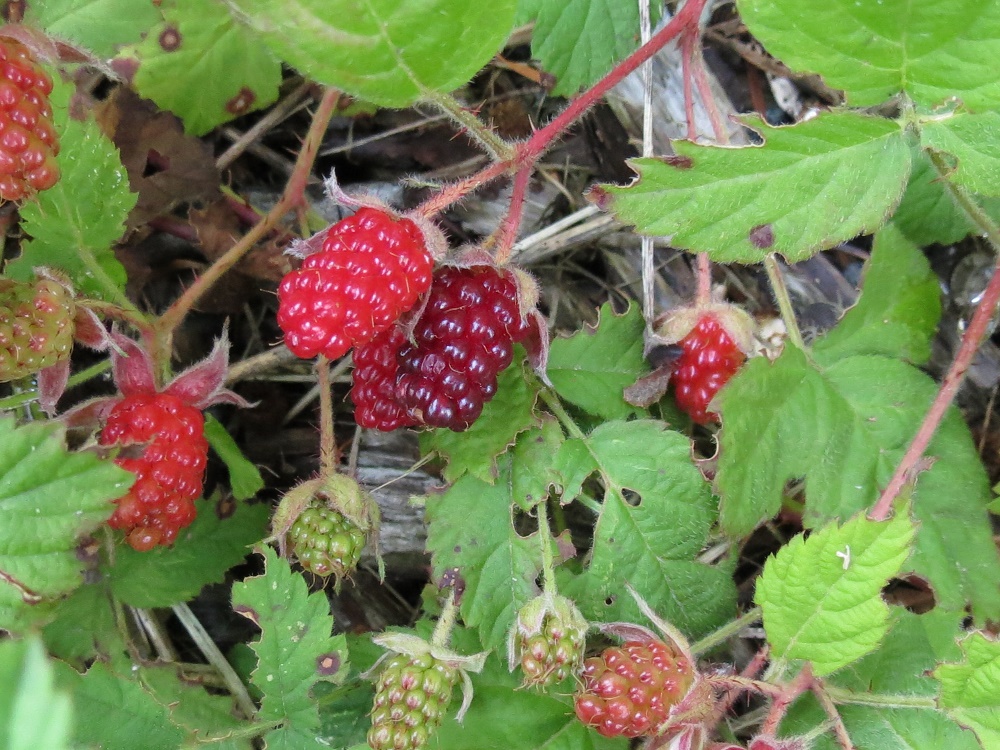 Slipping easily off into your hand when ripe, this ruby-red berry is aptly named for its pronounced cup shape. This is the best-tasting and least-appreciated berry. Thimbleberries are a little bit sour, but not too much, which gives them a bit of pizzazz.” Read More….
Tiger Lily
 The Tiger Lily is a beautiful native plant that blooms profusely during late June in the native forests of the southern BC Coastal Region. This lily has a huge range, being found in open areas from Quebec to southern British Columbia and southward. It’s quite beautiful to observe in the wild. The Tiger lily is often grown in the flower garden, but in the Orient, it is cultivated for its edible bulb. Read More….
Trailing Blackberry
 This is the only native blackberry species in British Columbia. The Trailing Blackberry is a low, trailing plant with deciduous leaves and white to pink flowers that produce small blackberry fruits. This is a very tasty berry; my wife and I love to pick them. The fruits are best eaten fresh. The leaves can be used as a medicinal tea for stomach aches, and the roots can be used as a medicinal tea for diarrhea. Read More….
Twinberry
 The Twinberry plant is a long-lived deciduous shrub that grows up to 4 m in height. Leaves are bright green, elliptical, and paired opposite each other on the stem. The flowers are small, tubular, and yellow; they grow in pairs that are surrounded by leaves. The plant flowers in June and July. The leaves turn from green to a striking dark red in late summer as the fruit ripens. Read More….
Twinflower
 This beautiful plant has two pink bell-like flowers on a slender stem, and a thicker stem below, which creeps along the ground, forming small mats of the plant. It is one of our smallest and most beautiful native flowers. Twinflower occurs all around the world in the boreal forest zone of the northern hemisphere. It grows in all of BC. Twinflower is a small plant belonging to the honeysuckle family. Read More….
Vanilla Leaf
 The Vanilla Leaf plant grows from a slender rhizome and often forms huge stands in forests and woodlands. This plant sends up tall stalked leaves directly from a rhizome just under the surface of the ground. At the tip of each leaf stalk sits a three-part leaf, each hairless leaflet shaped like a broad fan, its edges coarsely toothed. The main leaves of a vanilla leaf stand are often arranged horizontally, presenting a pleasing flattish surface. In the shade, the leaves are a soft, warm green, often in contrast to the predominantly dark green within the forest canopy. Read More….
Wall Lettuce
 Wall Lettuce is a plant that loves the cold northwest growing conditions; it grows all over the BC coast. You can also find it from Alaska south to Oregon and as far east as the Rockies. It flowers from June to October. Look along shady roadsides, open fields, logged-off areas, and other disturbed sites. Although native to Europe, it is now fully established on the coast. Read More….
Western Lady Slipper
 These delicate pink and white western lady slipper flowers are common orchids found along the carpeted floor of the BC coastal region forests. Western Lady Slipper orchids are circumpolar in range and found across most of Canada from British Columbia and Alberta, east to Newfoundland, and south to California, Colorado, New Mexico, and Arizona. Read More….
Western Peppergrass
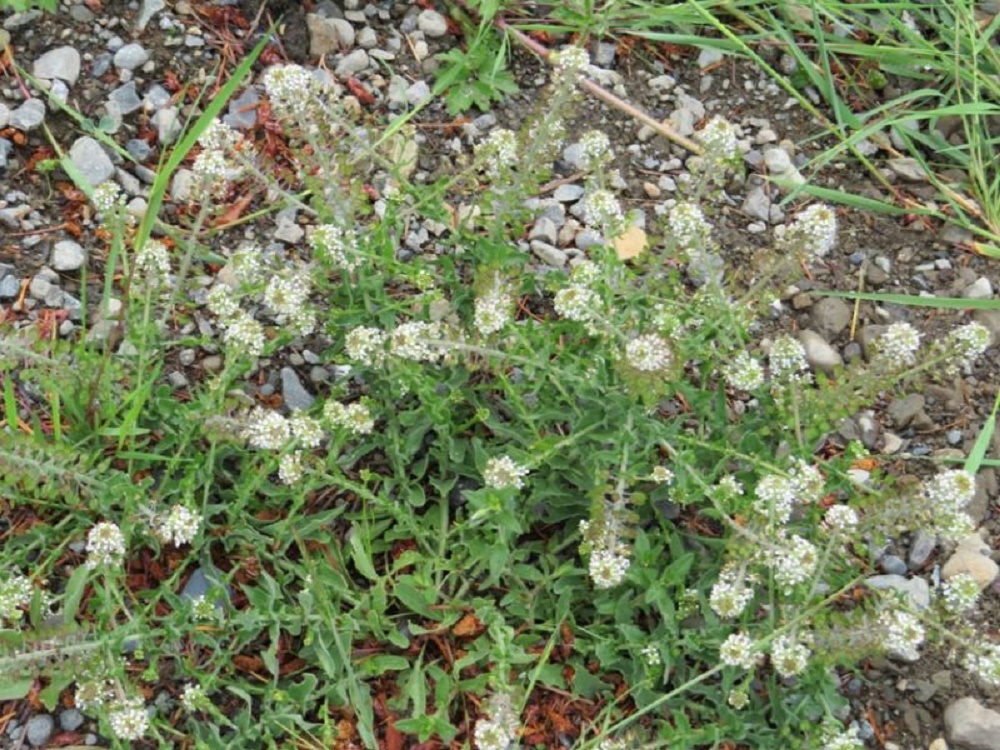 Western Peppergrass is a round plant formed by many slender branches, each branch has a short, dense raceme of tiny white flowers at the end. This plant flowers from March to August; sometimes it will push out a second flowering after heavy rain in the fall. Some of its common names are Western Peppergrass, Pepperweed, and Pepperwort. There are 12 varieties of Peppergrass. They prefer to grow from full sun to partial sun. It grows all over Vancouver Island. Read More….
Western Starflower
 The Western Starflower is a member of the Primrose family. It is also called the Pacific Starflower. This beautiful little flower grows all over the south coast of BC and blooms from late May to early June. The Western Starflower is one of the more common spring wildflowers on Vancouver Island, occurring in both deciduous and coniferous forests. Depending on latitude and elevation, Starflowers generally bloom from mid to late spring into early summer. Read More….
Western Trillium
 The Western Trillium is a protected flower in BC. It is illegal to dig up Trilliums or pick flowers in the wild due to the protection act. The reason for the importance of protecting the trillium is that once it has been picked, the flowers grow stunted for years. The trillium, in reality, takes up to fifteen years to flower, and once it has been picked, it dies, and the entire process has to begin again. Read More….
White Fawn Lily
 The White Fawn Lily is native to the Pacific Northwest, from Oregon to British Columbia. They grow in shallow moss-covered forest soils that have accumulated on rocky outcroppings. The flower stalk grows between 18 cm and 30 cm tall. The white flower heads hang downward with the petal tips curved up. After the flower is pollinated, the stalk straightens, and the flower head turns upward. Read More….
Wholeleaf Saxifrage
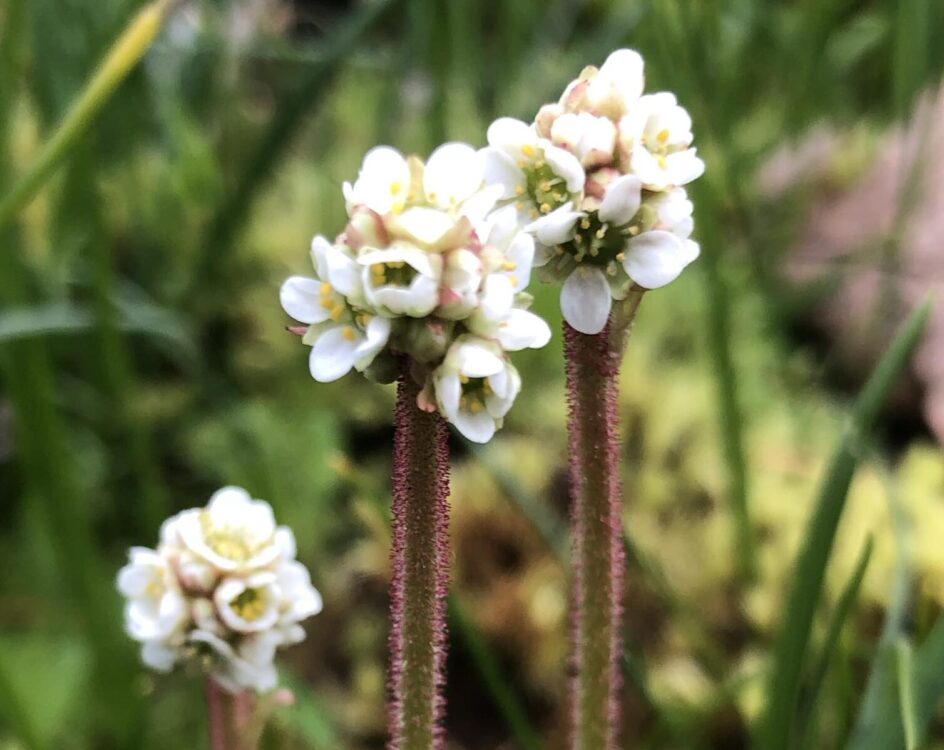 Wholeleaf Saxifrage is a flowering plant species found in many places, including Southern Vancouver Island. Its Latin name is Micranthes intergrifolia. It is a native plant from British Columbia to California. You will find it growing in moist locations such as meadows, grassy bluffs and trail sides. The flower in the above photo was shot in the Harewood Meadows in Nanaimo. Read More….
Wild Ginger
 The Wild Ginger Flower is a native North American perennial found growing in moist, rich soils in shady woodlands on Vancouver Island. They grow along the shore of the Ralph River. It prefers a rich, moist, neutral to acidic soil in a shady woodland setting. Wild Ginger contains the constituent aristolochic acid, which is a naturally occurring toxin that is suspected of causing cancer, human cell mutations, and end-stage kidney failure. Read More….
Wild Strawberry
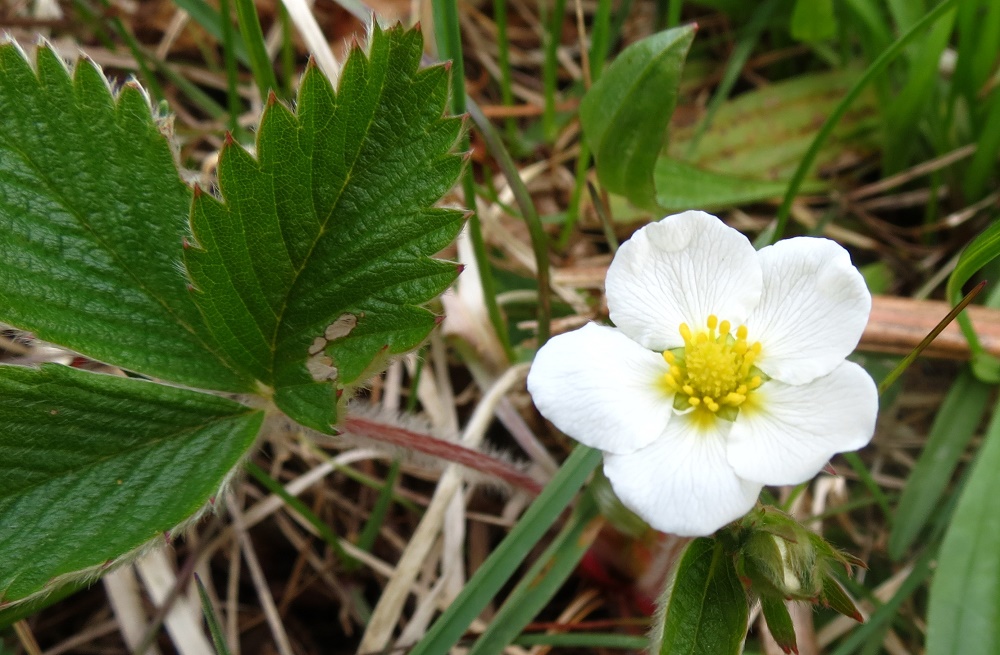 Of the wild foods on Vancouver Island, the wild berries rank as the most popular, and of the berries, the Wild Strawberry is the best. Like many wild and cultivated fruits, the Wild Strawberry Plant belongs to the Rose Family. These perennial herbs form loose, bluish-green carpets speckled by clean white flowers. Read More….
Yarrow
 Many native elders of B.C. value yarrow as a medicine, especially to treat sores. First, people soaked the leaves in hot water, then used them in a poultice for sore muscles. This same poultice could be used to treat saddle sores on horses. Washed and crushed roots were recommended for toothaches. Various teas and concoctions were prepared for internal problems and as a general tonic. Read More….
Yellow Monkey Flower
 You can encounter yarrow throughout B.C. from sea level to mid-elevations. Natural habitats tend to be moist for at least part of the year. On bedrock surfaces, typical situations include wet ledges and seeping rock faces as well as crevices. Other habitats include gravel bars, streamsides, springs, and damp clearings. On the South Island, plants bloom in local ditches after the water has dried out. Read More….
Yellow Water Lily
 The Yellow Water lily thrives throughout British Columbia and all of the coast. It and its botanically close relatives range across Canada and much of the U.S. and throughout northern Europe and Asia. It is commonly found in the shallow water of lakes, ponds, and slow rivers. On British Columbia’s coast, almost every lake margin supports a zone of pond lily. It even thrives in small pools within coastal acid bogs. They bring such beauty to our Island lakes and ponds. Read More….
Yellow Wood Violet
 The Yellow Wood violet prefers a habitat that consists of moist woods and especially likes the edges of streams. The species grows abundantly in moist sub-alpine environments. At mid to low elevations, the violet is particularly common where deciduous trees form a major part of the forest canopy. In BC, you can find this violet almost anywhere in the southern portion of the province, including all of Vancouver Island. Read More….
Hiking on Vancouver Island and seeing the meadows, slopes, and trail sides filled with a wide variety of blooming wildflowers is one of my favourite things to do. While we all appreciate the beauty wildflowers give us, we hardly consider the magic at work to create this show year after year. Annual wildflowers must grow each year anew from seed, while perennial wildflower plants can last for several seasons but ultimately must also produce enough new plants from seed to maintain the population.
Seeds formed after pollination must be carried from the mother plant to places where they can germinate. Some wildflower seeds have varying amounts of chemicals that inhibit germination in their seed coats. Some seeds germinate with just a small amount of rainfall. Others won’t sprout until the spring rains come and soak the seed. Some seeds remain viable in the soil for decades before conditions are just right and they can grow. This is insurance against all the seeds sprouting at once in unfavourable conditions and not reproducing.
There are so many fascinating plants on our Island that one could never learn about them all, but one can try, so get out and see for yourself just what wildflowers live in your area. Take your camera to bring home memories of where you went.

loved canada, love the canadians!! on the way from whistler down to vancouver, kept seeing bushes
with pink drooping sprays of flowers, can’t figure out what this is….. and the blue skeleton weed, with
the yellow tansy, is absolutely gorgeous. thanks! and this is the year for fireweed, glorious!!
julie
This was just awesome. Thanks for putting this all together!!
thanks Jake
Wildflower I.D. help, and thanks.
I also have seen a cluster of purple flowers growing on dark reddish purple stems growing in Nanaimo. No leaves except maybe on new flower buds. They grow about 5~10 cm high in the damp shade of the forest like the Indian Pipe does. The flower faces down with the petals growing upwards. I have a couple of photos and have seen the same flowers for at least a couple of weeks now. The lack of any visible parts other than the flower and stems makes me think they live on dead plant and animal matter.
Please send me the photos, askbud@ymail.com, bud
Hi there., I was just in the Tofino area and saw lots of shrubs growing along the many hiking trails and along the road. It almost looked like a rose bush of some sort. They were a bit spindly and quite large about 8’ x8’… Pink starlike flowers. Can you tell me the name of this one please. Thank you!!
sounds like a Nootka Rose
My daughter lives in Nanaimo and has sent me a photo of a wildflower in bloom there. It’s a cluster of purple flowers on a dark reddish-purple plant. I haven’t found a name for it. I can send you the photo.
Send me the photo, but I suspect it could be herb robert.