
(Tipula paludosa Meigen)
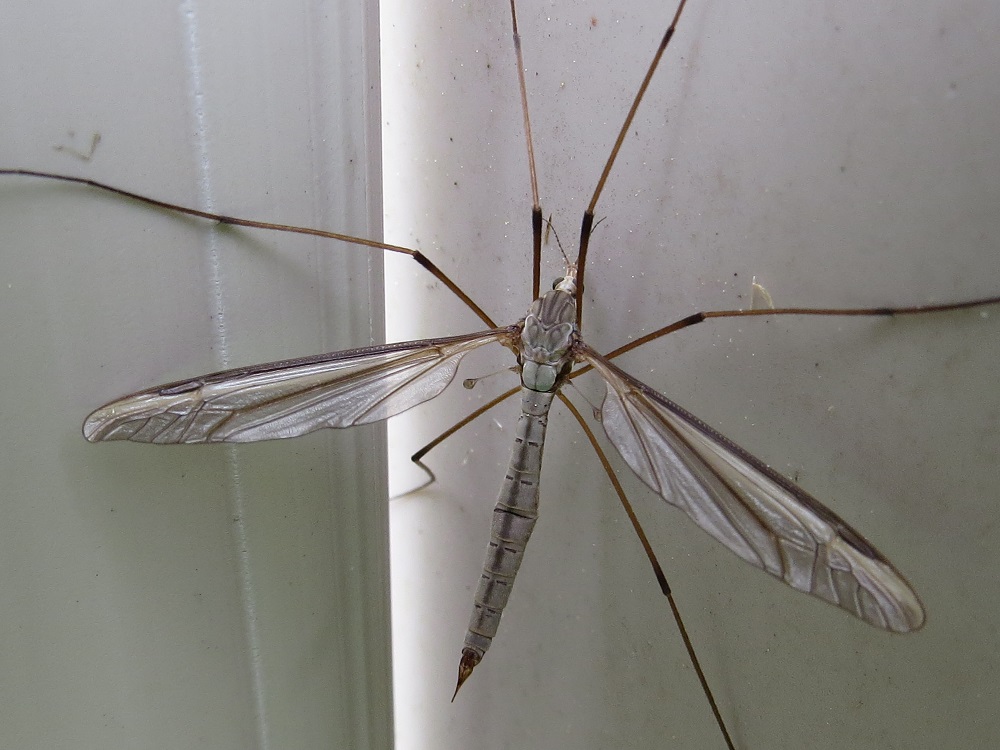
The European crane fly is about 1 cm long, with six long legs. The adult European cranefly has a dark-coloured band on the leading edge of the wing next to a lighter band. The rest of the wing has no other highlighted markings, which helps distinguish them from some native species. European crane fly eggs are black and oval-shaped and can be found near the soil surface. The larvae are light brown and look like worms. Larvae have a tough skin with visible veins. The empty pupal cases look like twigs.
The European crane fly thrives in moist soils and prefers mild winters and cool summers. They have been found in many different types of turf grass (at homes and golf courses), sod farms, and grass fields. The flies also gather in areas with thatch buildup.
The European crane fly can have a major impact on the turf industry. The larvae can harm upper lawns during foliar feeding, and this can damage the root systems as well. Damaged lawns may appear yellow or have bare spots. Crane fly larvae have been known to harm grain and produce crops, nursery plants and flower crops as well. They do the most damage during the spring.
The European Crane fly was first found in North America in 1955 in Nova Scotia, then in 1959 it arrived in Newfoundland, where over 4 years it destroyed food crops and destruction of most area lawns. In 1965, it arrived on the west coast of North America, first in British Columbia, then down into Washington. It is now firmly established in BC and Washington. It has not shown up in Oregon, and it is proposed that the summers are just too warm there for them to survive. These flies are invasive.