
Heading West

My twin sister and I came into this world on April 29, 1955. We were the youngest of seven siblings (four boys, three girls). Right from the very start, it had been a rough pregnancy for my mom. There were plenty of health issues that developed during the first trimester, and then more serious problems began manifesting during her second trimester. After a series of tests, the doctors told her that she would need a cesarean birth as soon as possible. One of the fetuses was not doing well; they were afraid of complications with the birth if Mom went full term. This fetus was me.
The closest hospital was in Chilliwack, and when they brought my mom into the hospital for surgery, she was almost two months short of full-term. My sister came out at a healthy 6.9 pounds, but I was just over 2 pounds. So I spent my first six weeks on earth in an incubator. Basically, a mechanical womb where they had to continue to grow me. No one expected me to survive. But it seems the universe smiled on me, and survive I did.
According to my mom, my dad didn’t take to me very well at first. Mom said he thought I was broken. But after watching me struggle to live, seeing the doctors strive to save me through medical crises time and time again. Dad began to admire my ability to keep going; he started to call me little cub. He named me Maiingaans (Small Wolf) after I came home from the hospital. It is a good name.
It would be safe to say that my sister had sucked the life right out of me during our time together in the womb, but she would make up for it during our childhood years. You see, she was so much stronger and far fiercer than I was, and she protected me passionately. What I remember most is how she would stand in front of anyone picking on me, give them that look, and, if needed, land a pretty wicked right hook. Sometimes she would put her arm on my shoulder and just smile down at me. Funny to look back now, but it was moments like this that made me feel safe. She was a pretty cool twin sister. I loved her in that way only a twin can fully understand. She may have been my sister, but she was also my best friend.
At the time of our birth, our family was living on the CFB Chilliwack Army Base in Vedder Crossing. Dad was a military man and a member of the Essex Scottish Regiment. We used to have this outstanding photograph of Dad in our house. The photo was taken when he was young. The photo was in an oval frame. It was of a native man in full military uniform and wearing a kilt. It was my dad, and he looked pretty cool.
Long before Dad joined the military and while he was still a teen, he had worked as a deckhand with my granddad on his tug. Grandpa’s name was Robert Jamison Logan, but everyone called him Mr. Jamison. He was a third-generation Highlander. My Grandpa owned a tug that he chartered to various businesses on the St. Clair River, hauling barges and other cargo. He was married to Elizabeth Johnstone, although everyone just called her Lizzy. She was Aamjiwnaang. She was born in Sarnia in 1881. Gramma and Grandpa moved around and spent time in Windsor; then they moved to PEI, where my dad was born. Sometime later, they lived in Sarnia on the St.Clair River, where they bought a tug.
When the American and Canadian prohibitions began in 1920, it proved to be a lucrative boost for tugboat operators on the St. Clair River and for Canadian brewers. You see, in the States, prohibition included not just the bars but all breweries. In Canada, there was an exclusion that allowed our brewers to continue brewing alcohol as long as it was not sold in Canada.
A section of the border between Canada and the USA was located in the centre of the St. Clair River. It was a perfect place to smuggle alcohol into the States. So my granddad became a rum runner. He was just one of many boat owners who took on the rum runner role. The St. Clair River allowed the USA to become the main buyer of our country’s products. It was a free-for-all in the beginning, but by the late 20s, it had become far too dangerous.
As teenagers, my dad and his brothers worked the tug alongside Grandpa, and I had, over the years, heard some of the tales regaling their escapades in delivering the booze while dodging the American Authorities. Eventually, the USA put into use high-speed armed boats to try to stop these smugglers. Grandpa quit at this time. A short time later, Prohibition was lifted, and it was all over. Dad shared a few stories with us kids. Were they true accounts? That did not matter, as they were such incredible tales.
In 1956, the year following the birth of my sister and me, our family moved to Camp Borden. It was an army base in Ontario. Military families tended to move around a lot. I have but one good memory from living at the Camp Borden base due to being so very young. I remember being in a bobsled that was being pulled around an outdoor rink by my eldest brother Bob. I can still see my brother’s double-blade skates and the Montreal Canadiens hockey jersey he was wearing as he raced around the ice, pulling me behind him. I was laughing almost hysterically from the thrill of it all. Bob was wearing bob-skates, which seemed appropriate for a boy named Bob. It was all very exciting.
Dad finally retired in 1959 and joined civilian life. We headed back out west and into the setting sun. Dad had this 1950 Plymouth five-door Suburban that had sunshades over the windshield; it was green with wood panelling on the doors. It was a big car. There was plenty of room. My older siblings were in the back seat, with my eldest sister sitting up front with Mom and Dad. My twin sister and I were in the back. On top, we had a big army bell tent and all our camping gear. Our household belongings were being shipped by a transport company, compliments of the military. It took us all of two weeks to get across Canada, as we had taken the less-travelled routes, and we camped all the way. It was an incredible journey. Mom had taken photos of the trip. She and I used to go through an old suitcase where she kept the photos; this has helped me to remember so much of our journey West.
The wildlife we observed on this expedition was pretty cool; every pond and lake we passed seemed to have moose feeding along the shore. They were so majestic-looking, standing knee-deep in the water. As we drove by, they would lift their heads to keep a wary eye on us as we passed, with their antlers decorated with plants torn loose from the bottom. These animals were massive, as large as horses.
The magic of the natural world had begun to enchant me. It was during this trip that I first felt the draw of the wild places. The need to be beyond the areas most people frequent would only grow stronger as I grew older.
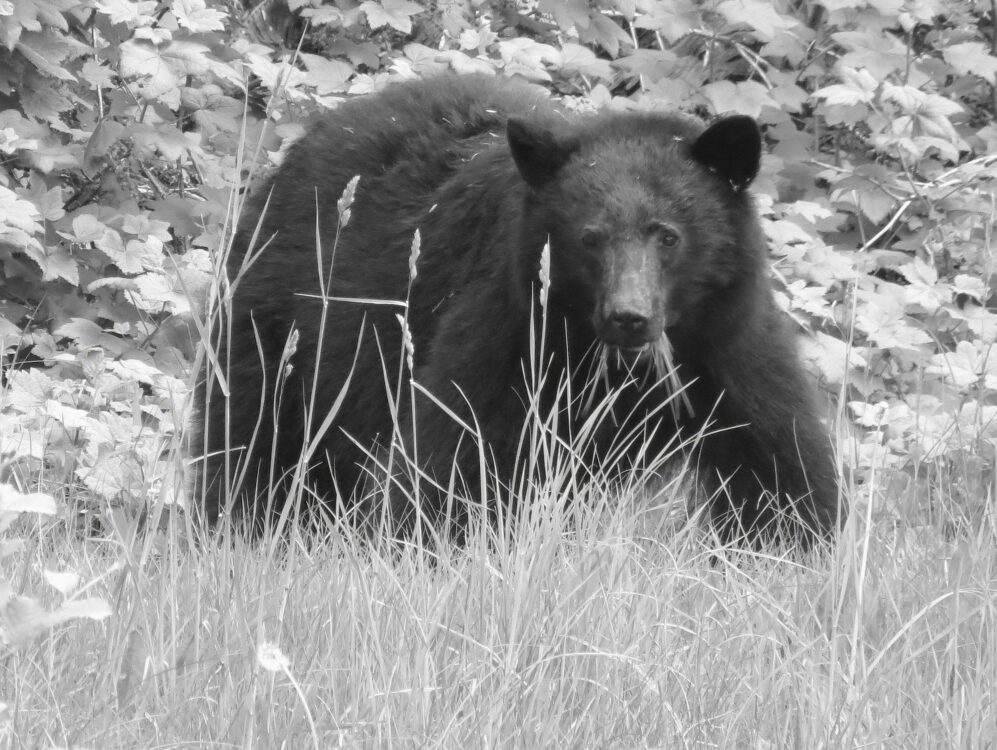
As we travelled through the prairies, we often saw enormous black bears, although most were, for some reason, brown. One day, we came upon a sow with three offspring. Dad pulled over so we could watch the antics of these little ones as they tumbled about, playing with each other on a grassy slope just by the edge of the road. Mom was keeping a close eye on them as she fed on roadside grass. The cubs were playing just like children do. One of them stopped to smell a small flower just as the other two flattened him from both sides. Then all three rolled down the roadside embankment to land in a pile. You could almost hear their laughter. Suddenly, animals became more than just animals to me, and it was enlightening.
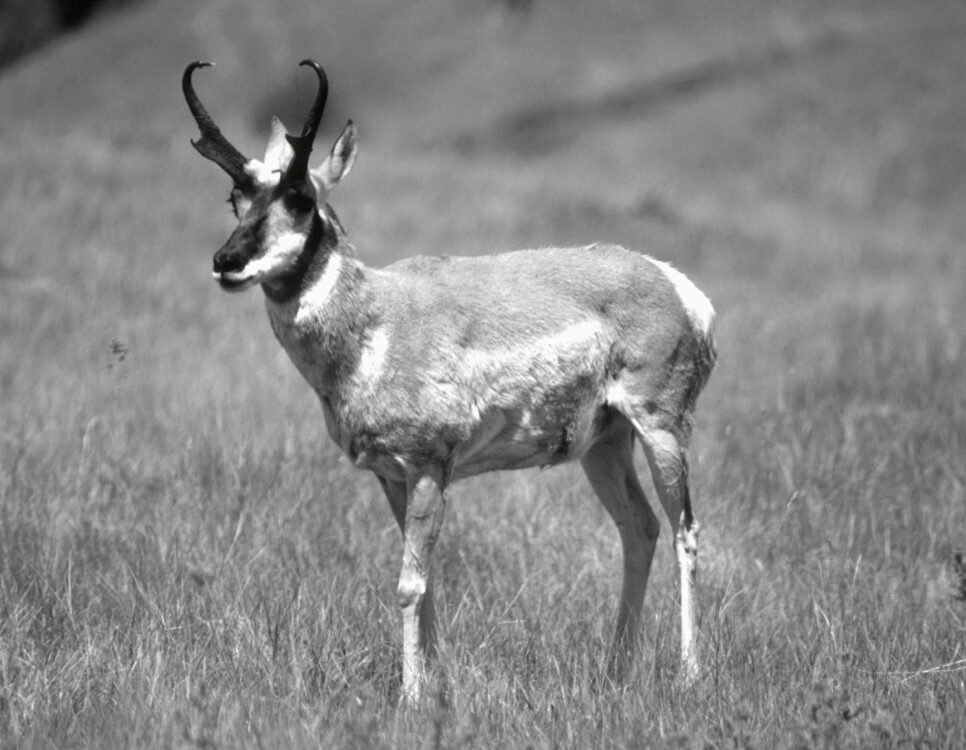
As we were going through the prairies, we began to encounter pronghorn antelope. They could jump much higher than the white-tailed deer that seemed to leap across the roadways around almost every corner. I had never heard of these creatures before and found them intriguing. They looked like they were right out of the plains of Africa. You would hardly notice them in the grass as they ran along, as their colouring hid them well. When they leaped across the road, though, they seemed to come right out of the grass at full speed, in a long curved arc, landing on the other side and disappearing back into the tall grass.
Each night, we would camp beside a lake or river, where the fishing always seemed to be good. Mom would cook up some grub on the Coleman stoves while Dad set up the big bell tent. After eating, we would sit around the fire for a bit, talking about the day. There is something about a crackling fire, joined by the hiss and snap of the Coleman lantern, that would lull both my twin and me to sleep.

As we were driving through Saskatchewan, Dad took us on a side trip to a couple of strange places. The first was a large saltwater lake that was also a bird-nesting area. We camped close by and walked a series of trails along the lake shore. It was weird visiting a saltwater lake, dab nab in the middle of Canada, almost like seeing a small ocean. The birdlife was cool and varied, with many shorebirds, all calling by the thousands. The trails along the shore were a great way to get out and stretch. There were grasslands, shaded by big trees, where you could see deer and rabbits. All in all, it was worth the visit. I would like to return someday.
I don’t remember if there was any sea life that resembled what one would see on the coast and in real oceans. The lake was very salty, so I suspect there was not very much that could live there. People come here to float on the lake; they say it has healing powers. The Cree have used the waters of the lake for centuries to heal various ailments by soaking in its waters.
Then we went to a forest of aspen trees, but unlike the tall and stately aspens you usually see. These trees were twisted in all directions, a lot like our coastal Garry oaks or black hawthorns that grow in our estuaries on the BC Coast. I believe it was even called the Twisted Forest. This forest scared me. Almost like there was an evil presence or a windigo spirit that had made everything unhealthy. I was glad when we left this place. I made a mental note never to come anywhere near this forest again.
I learned that day from Dad that a grove of aspen trees is just one plant that lives below ground, and the trees are shoots of this plant. This whole part of Saskatchewan is covered in aspen trees, along with poplar trees and Norway spruce. Did you know there is a grove of Aspen in Utah called the Pando Grove, which is considered the largest living organism in the world? It is 1 tree underground with about 47000 stems, and it is approximately 80,000 years old.
As we approached the Rockies, we saw great gatherings of Elk. Once, we were driving above a river valley that was flat and fairly wide. Along the shore of the river was a series of large meadows of bright-green grass. The river’s course travelled back and forth across this green bottom land. The meadows were intersected by beautiful, tall Rocky Mountain fir trees growing on the banks of small streams that flowed into the main watercourse. These meadows were filled with Elk; there must have been at least 500 of them, maybe many more; they filled the grasslands. As a herd, they were moving up the river. This assembly of elk was pretty impressive to see.
Once we were in the mountains between BC and Alberta, the roads got scarier fast. Some spots were so rough that Mom and all of us kids would get out and walk, watching, while Dad, at high speed, would drive through them. The roads in 1959 were not the superhighways of today; even the good roads were iffy then. Dad preferred to take the roads less travelled. He had hunted in these areas back in the early 40s, but these roads had become pretty rough since then. Sometimes it required us to backtrack to find another route. It was all very exciting.
We saw incredible snow-covered mountains and lakes that were so blue and deep that it was difficult to believe you were not looking at a painting. Waterfalls and wild rivers were everywhere, glaciers sparkling in the sun on all the mountains. I was spellbound by the beauty. That’s when the whisper in the deep part of my brain fully awakened, and I knew I would spend my days hiking into the wild lands to search for the hidden places of wonder. As I look back on the many adventures we shared, navigating the less-travelled roads, always face-to-face with life at its rawest. I came to see that my dad was constantly looking for these same things. Those wondrous vistas of nature. It would seem that, in truth, the apple doth not fall far from the tree.
When we finally reached the Fraser Canyon, we found ourselves driving on well-built but narrow roads that had just been paved, although there were still a few unpaved sections. The drop-offs into the canyon were pretty intimidating. Crews were busy putting up barricades along the road edges, with many sections waiting to be completed. Along our way, Dad made a stop at Boston Bar for food. After lunch, he took us across a ferry that was in the air, suspended on cables. This took us across the Fraser River to North Bend. I seem to remember it only had room for one car. It was an unexpected but exciting adventure. I have heard they have put in a bridge to replace the ferry now. After crossing back to Boston Bar, we continued driving south until we reached Hope and then on to Chilliwack. From there, we drove due east through Sardis to reach Vedder Crossing, the place of my birth.
We made a stop at a motel in the crossing, where we spent the night. It was our first night in real beds since leaving Ontario, and we all showered the trip off our bodies. We had done wash-ups in gas station bathrooms for most of the trip. The motel was a nice place just up from the shores of the Chilliwack River. All the cabins were surrounded by tall trees, along with flower beds and grassy areas. We would return to this motel numerous times when Mom and Dad would visit friends in Vedder Crossing. The next day, we headed down the road and finally reached the Coast of BC. This trip had been such a wondrous adventure; it was, by far, the best road trip I’ve ever gone on. As I look back on it, I realize everything my sister and I saw was viewed through the rear window of the car.
Burnaby
We spent the next year living in Burnaby, out by Deer Lake. The area is all city now, but it was farm country when we lived there. Our home was quite close to the Oakalla Prison Farm. We lived right beside a creek that flowed into Deer Lake; it was one of the tiny creeks that fed it. I cannot remember its name; perhaps it was nameless. I do remember gathering stinging nettles along this watercourse with my dad, and how long it took me to learn not to touch them.
Though it was a small, treed area where the creek flowed, it felt like a vast tract of wilderness to me. I can still smell the mustiness that seemed to permeate the whole creek bed. It was a wonderful smell of decay and rebirth. Salamanders and snakes moved about beneath the forest ground cover, while frogs seemed to fill the calm creek waters. Flying insects swarmed in the air. I found my love for insects in this creek, as it was alive with them. The sounds of these creatures were a constant hum, a melody of the hidden ones. There were so many dragonflies of such beautiful colours and designs flying all around me. They looked like little sky jewels. When they would land on me, I would freeze in excitement until they flew off again. It was absolutely wonderful.
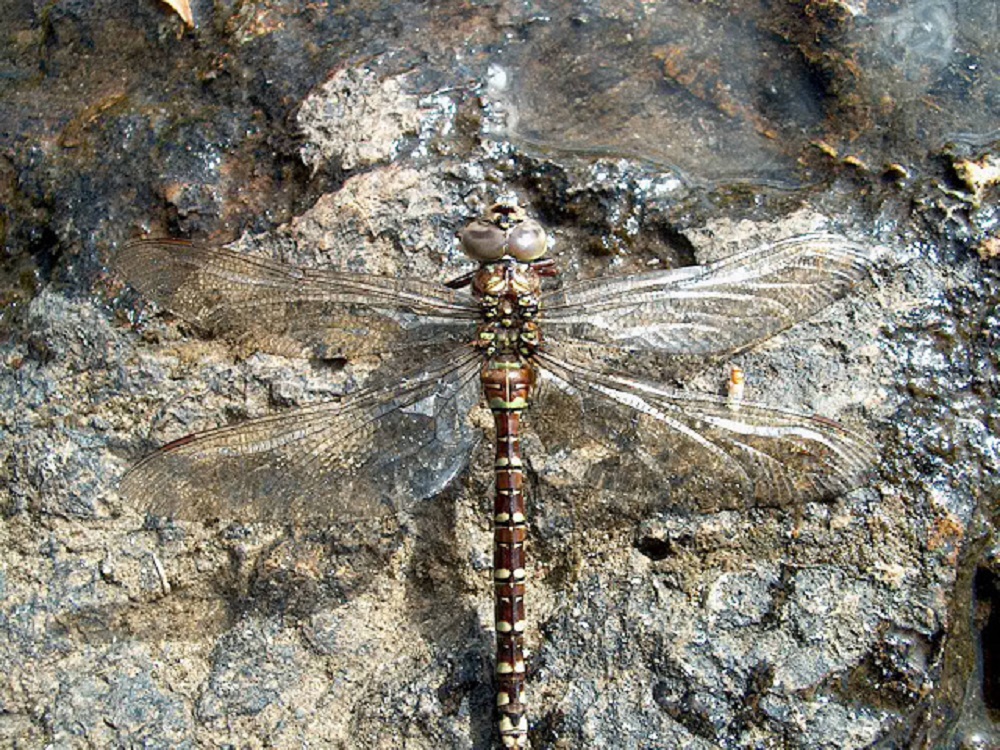
In those early years, I could sit in wonder, watching the ballet of these beautiful beings of the small world for hours. While all around me, the sunlight danced on the forest floor and sparkled through the trees as they swayed in the soft summer breeze. The background music being provided by the babbling creek.
The forest seemed to talk to me in a language only known to the innocence of youth. I knew unquestionably that if I sat quietly in the shadow of the trees, I would feel an almost mystical connection to everything around me. It was like an invisible force binding all things together. I felt the magic of the woodlands in a far more profound way back then. Although sometimes, even now, when I am deep in the forest, I can still sense this magic that now lies just beyond my adult reach.
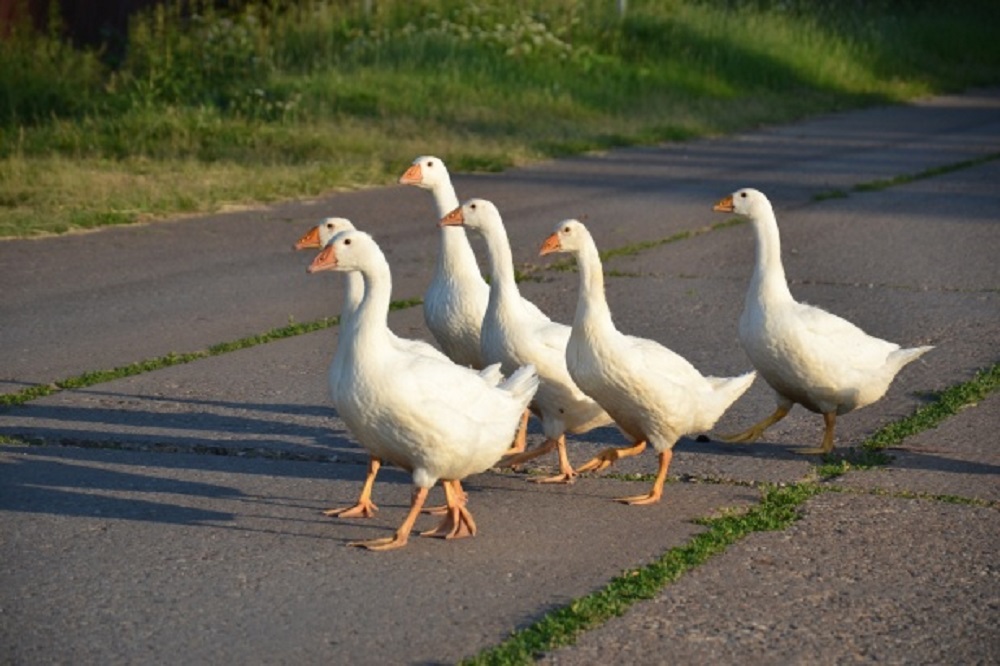
On one side of our yard was a farm where we would buy our milk, butter and eggs. Some mornings, Mom would ask me to walk over to this farm for one thing or another. She would always tell me to take the road, as going through the farmer’s fields was too dangerous. I would always cut through his fields to get there. Occasionally, it required me to run past farm animals. Never had much trouble dodging the big ones like goats and cows. But his geese were another thing; they would come at me like an angry flock of little demons. They had no teeth, but they could deliver pain with those beaks; teeth seemed not to be needed. I was afraid of them, and my fear was well-placed. They were not easy to outsmart.
Living close to a prison was scary sometimes. One time, prison guards showed up to warn us that an inmate had escaped, and a guard was left to keep watch until it was deemed that the inmate was no longer a threat or that they had been captured again. This was both alarming and, at the same time, quite exhilarating.
I was young during this time of living in Burnaby, and I have only a few memories, but one of them is a very vivid memory. It involves the first puppy I ever had. He was a cute little one, with light-brown fur all over, except at the base of his tail and around his left eye, where he had perfect circular black patches. He went everywhere with me. He was a happy little critter who seemed to just love life. I named him Spot. A few months after getting Spot, he was run over by a car on Royal Oak Ave, right in front of me. We had been crossing the road to reach the creek. He died in my arms as I hugged him tight. I was sobbing uncontrollably with sorrow. It was the first time my heart had felt such pain, such loss. He had been hit by a mom with kids in her car; she pulled over and sat in her car with a horrified look on her face while her kids were crying. For a moment, I hated her until I saw how this had affected her. Other traffic had come to a standstill. I was standing in the middle of the road holding my pup tight and crying my eyes out. My heart was so sore.
Mom and I carried Spot out along the brook by our house, where she helped me to bury him. All the while telling me that ”God would lift Spot up to heaven”. I had my doubts. I mean, how could he just do that? It seemed strange because the animals we hunted for food never got taken away by god. So the next day, I went out and dug up his grave to ensure god had indeed taken him, but to my horror, my pup was still there. So I picked him up and ran crying to my mom, yelling that god did not take him, that god did not want him. Mom was appalled at the sight of her 4-year-old child holding tight to this small, bloody, dirt-encrusted, dead creature. She did her best to explain the concept of the soul to me as we reburied my pup. I tried to believe her, but in the back of my mind, I found that I did not think much of this God she put her faith in so strongly. If you had asked me if I believed in God, I would honestly have said no. He felt no more real than Santa Claus. Sometimes I would try to believe in him, but I always thought that if he were real, he could not be a good god. He always seemed to be looking to his followers to prove their devotion; was he this insecure? This vain? This did not seem very godlike to me. But then again, I was very young back then.
I had a strange upbringing as a child; my mom was a full god-fearing, church-going catholic woman who was constantly trying to get me to go to church with her. My dad, on the other hand, was a man who had no use for the Christian religion or any religion for that matter. He had his reasons, but that is his story. Dad would always say that the forest was his church. I tended to agree with my dad. My dad was a man of the forest; he understood the ways of the plants and animals in a way that was beyond my grasp. He would say that all things had a spirit, and you needed to show respect for everything, even the very stones of the earth. He would point to the sun and tell me, “That is the father.” he would put his hand to the earth and say, “This is the mother”. To him, this was something you could see and feel, unlike this god that Mom worshipped; her god was an invisible friend who lived in the clouds.

In 1960, we moved out of Burnaby to Vancouver. Dad had just been posted to a position at the Canadian Consulate in Vancouver; he was a limo driver. A few months after we had settled in, Dad decided to take us boys fishing. No matter how hard Dad searched, he could not find a place to cast our rods among the factories and pollution that seemed to be everywhere. Every time Dad thought we had found a spot, the no-fishing signs would be out.
Dad finally found a farm. A trout farm. This was not a normal farm; it was a farm where you could fish for trout in big, round, black container ponds. There were a number of these containers, and many people were fishing in them. We did not fish there. We went home. That was it for Dad; he said we were going to move.
Moving To The Island
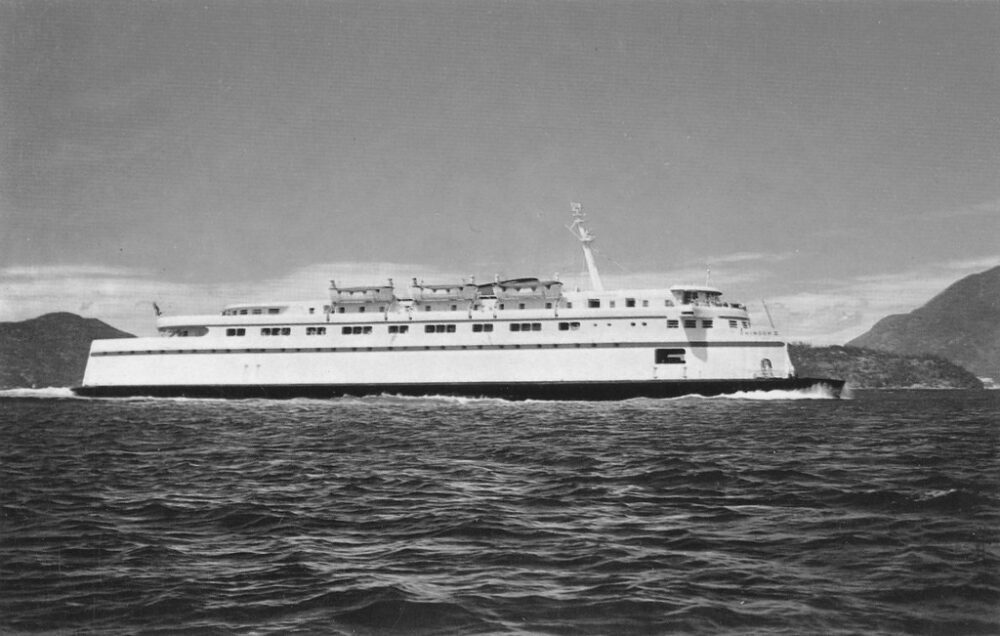
He set a plan in motion that had us headed for a small Vancouver Island community named Campbell River. I was quite excited about this unexpected turn of events. It took time, but we finally packed up our stuff and arranged for a transport company to move it. Before we left, Dad had secured a job as manager of the EB Horseman wholesale electric supply store and lined up a house in Campbell River. All that was left was to load up the car with us kids and drive us all out to Horseshoe Bay in the Plymouth. This was where we would catch the ferry to Vancouver Island.
This was a new ferry service for the BC Government; they had just purchased this run, along with five ships, from the Black Ball Shipping Company. I had never been on such a big boat, but looking back now, I realize that they were small compared to the ships that are in service on these runs now. I think I explored every inch of that boat. I had only seen the ocean in books, and coming across the strait to reach the island was incredible. From the boat deck, I saw my first whale or at least a puff of whale breath from its blowhole, which might even have just been ocean mist. To me, though, it was like seeing the mighty Moby-Dick.
As we drove off the ferry and began to make our way up the island to our destination, I could not help but press my face against the window, taking in the sights of the island. I believe we were all pleased to be leaving the big city. At least Mom, Dad, and the younger kids. My older brother Bob had just signed up for the army and was posted in Germany, and my brother Joe had joined the Navy. They would not be joining us, and my older sister, Peachy, who had just gotten married a year back, would not be with us as well. It was a strange feeling not having your siblings constantly around you. My twin sister and I, along with my sister Penny and my brother Howard, were the only kids still at home.

When we finally reached our new town, we had to find Rockland Road, where our house was located. It was an old logging road, gravel and very steep. As we reached the top where it flattened out, we discovered the whole area had been logged. You could see three homes, two at the crest of the hill and ours at the end of the road. You could see big stumps sticking up out of the debris. It was like a wasteland with our house in the middle. As we pulled up to the house, we could see two of the walls were covered in black tar paper. It was just getting dark, and from out of a broken-down shed in the yard, bats were pouring out and flying over our heads. The house was ancient.
Mom informed Dad that we would not be staying here, not now, not ever. There were bats here; Mom hated bats. So into town we went to find a motel and to find a better place; our stuff was going to be a few days before it arrived, so we had time. The next day, they found a great place. It was right in town on St. Ann’s Road. It used to house the hospital staff and was a big house. Dad contacted the shipping company to give them our new address. One more night at the motel, and we moved in.