
Paradise
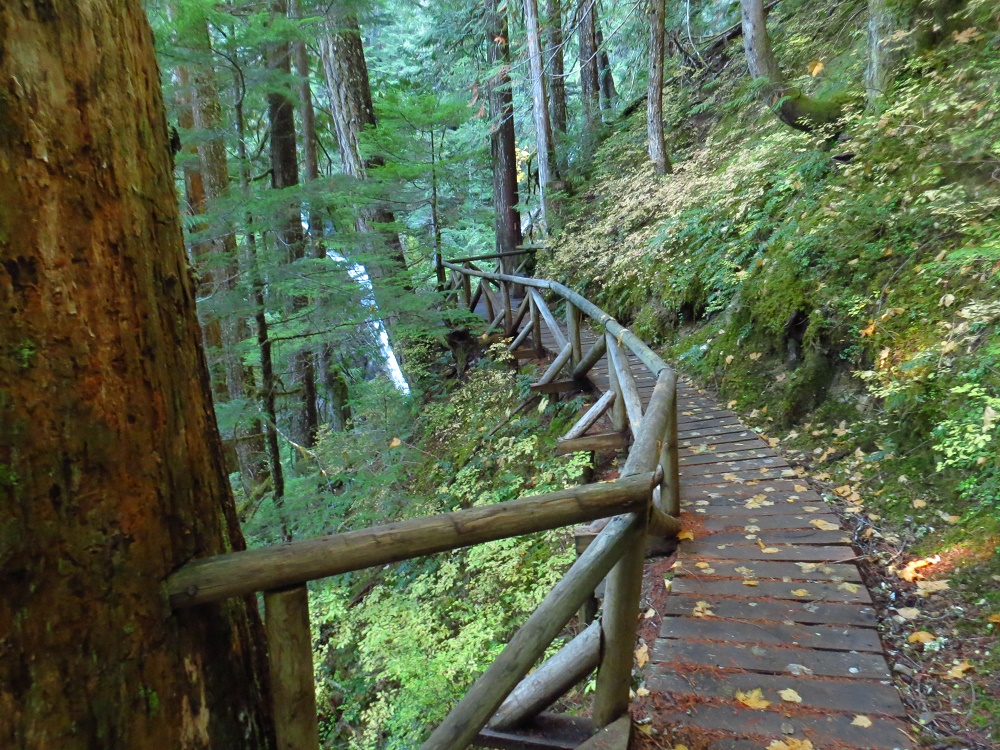
The village of Campbell River was still just a speck on the map of the world and was located in a vast hinterland of wonder. In those days, the forest that began at the edge of the village seemed to go on forever. This woodland was composed of ancient old-growth fir, hemlock and giant red cedar trees, speckled with giant maple trees. The shadows that filled the spaces between these giants highlighted the wonderful colours that are hidden in the gloom except when they are emblazoned on the beams of sunlight that penetrate the canopy of green. If you were to look closely, you might see various small creatures scampering about the mossy ground, while the tree branches were filled with birds of all kinds and colours. Many small streams run through these woods, and some are studded with beaver ponds where, during the winter months us local kids would ice skate.
The ocean shores and tidal pools at the boundary of this forest of green were full of a dazzling array of fascinating creatures. I could spend all day looking into these little tide pool gems of wonder. They were like tiny little oceans full of life. Sometimes I would lie at the edge of the forest and the sea, listening to the voices of the animals, trees and rocks for hours. It was a melody of breathtaking beauty. To this young lad, it seemed I had landed in a place of wonder. Some might say I was in paradise.
Back in 1961, the community of Campbell River was just a small fishing and logging village on the east coast of Vancouver Island; it was not very big. That being said, there was a large fishing fleet with quite a few piers to hold them all. It was just a short walk to the harbour from my house, and I spent most of my time hanging out on the docks. Some of the old fishermen who had boats here were born in the last century. They had stories to tell, amazing stories. I enjoyed listening to their tales. The narratives they told were always grand illusions of behemoth fish that got away or of the mighty Pacific storms that they had survived against all odds. Many more tales were told of lost loves in distant villages. There were tales of homesteading up various inlets of our inside coast. I would sit immersed in these chronicles all the while watching them mending their nets and gear with their old and gnarled hands. I am quite surprised I did not become a commercial fisherman myself, although I did spend a few weeks on a west coast trawler.
Across the road from the wharves was the police station. I think we had six members plus the bylaw officer/dogcatcher. Up from the beach was the main road that ran through town. This road held most of the businesses that were in town. Plus the theatre where, for a quarter, we could go and see a movie along with a drink and popcorn on Saturdays. This is still a theatre, but for live shows only.
A big section of the area down by the shoreline was owned by the Thulin Brothers, Fred and Charles. They built the Campbell River General Store right in front of the main wharf. You could buy most anything in this establishment. It had two floors with a wide stairway between them. It was sold twice over the years, with the Lavers Family buying it in the late 40s, and renaming it the Lavers Department Store. As a young man, I shopped here all the time.
After selling Lavers, the Thulin bros built a builders hardware store across the road where you could buy all manner of hardware, plus a big supply of camping and fishing gear. I was a regular shopper here. Over the years, it morphed into a Home Hardware Store. The store still bears this name, but its location has moved, and it is still owned by the Thulins to this day.
Our New Town
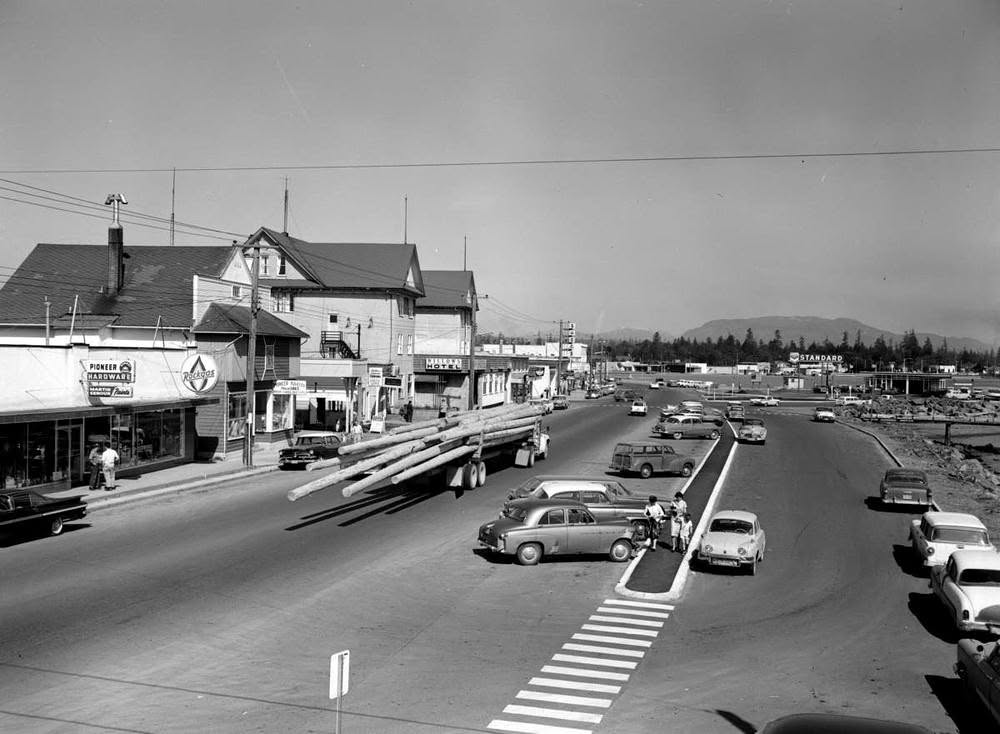
We spent our first night in a motel, and Mom found a house right in town the following day. It was located right behind the Willows Hotel. It was 1962. Our home was just a block from the hotel. There were three rooms along a hallway with a door at the end. Dad sealed this off from the rest of the house, and Mom rented these rooms out to old loggers.
My mom would try to keep me away from these old timers, but I always found a way to sneak in a visit. There was a bench outside their door where they would sit. I would sit up against an alder tree in the yard and listen to the tales of adventure that they would tell. These were tales of high-rigging spar trees, or of the steam donkeys that were built on skids that would pull themselves up the hills. Other stories told of oxen roads that would run for miles, and of the high riggers. Some narrations told of the men who built the rail trestles and how dangerous the job was. There were epic tales of trains that ran away and of the hidden hospitals up the coastal inlets that would repair these old loggers when they were broken. Local logging companies mostly funded these hospitals. One of the biggest was in the community of Rock Bay; the town was built by the Hastings Mill Company to house and heal its workers. At one time, Rock Bay had a population of more than 500.
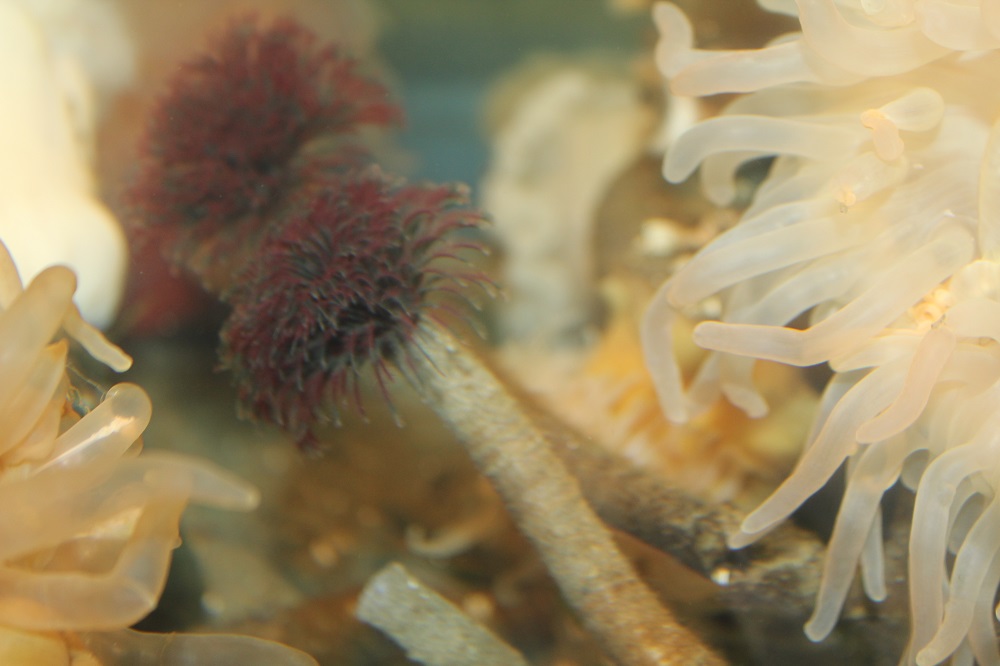
Most of the kids that I hung out with had rowboats, or at least access to one, including myself. When we were young, we would row around the local wharves, exploring the sea life found beneath the array of boats and docks. Out past the breakwater was the net loft pier. We loved fishing there. The rock cod and sea perch hid out deep along the pilings, which were like vertical reefs covered with a myriad of sea life. My friends and I would gather Feather Duster Tube Worms from the edge of the floats and use them for bait when fishing from the high pier. This sounds simple enough, but in practice, not so easy. You could find them by the thousands, growing just underneath the wharf fingers. To harvest them for fishing bait, you had to kneel on the dock and slowly ease your hand towards the worms without touching their feathery plumes; if you did, they would shoot back into their tubes. When you were within striking range, you would lunge your hand forward before the worms could retreat and grab hold of one and pull it out, while at the same time, deftly cutting a portion of the worm loose. All without pitching headfirst into the chuck. Most times you got a worm, sometimes you got wet. We would cut the worms up into small bait-size chunks. The cod and perch would go nuts for these.
The fishing was always better outside the breakwater, but trying to lift the cod to the high pier was a fool’s quest; fish would usually shake off the hook. So we would use the ramp. The ramp was used to pull up nets. It was covered in industrial canvas and was very steep, extremely slippery when wet, and it was always wet. One had to be careful. Once, as I was going down the ramp, I slipped and began to slide. I tried to stop, but damned if I didn’t just go right into the chuck. Looking up, I could see my friends up on the wharf watching me and laughing. Most of my friends took their fair share of falls off the end of the ramp.
When it was a successful fishing adventure, I would take my catch home for my mom to cook up. This gave me a sense of independence, a feeling that manhood was now within my reach. I felt that I could look after myself and provide for those I loved if needed. Of course, I was only 8 years old, and my manhood was still only a perceived conception, and in truth was still far off in the future. These feelings of masculinity were always tempered by my mom’s teaching on how to be a good and gentle person. My Mom had a way of using her grace and tenderness to teach compassion and empathy.
The Hill
We lived in that house on St Ann’s Road for 3 years. It was right above the post office and Overwaitea Store. Above us was the old St. Ann’s Hospital. I think our house might have been built as a home for nurses who worked in the hospital. The St. Ann’s Hospital first opened in 1914 with 22 beds. Like most of the coastal hospitals in those days, it was funded by various logging companies, but it closed its doors in 1924 due to a lack of funds and was much missed. Efforts were made to bring it back into operation. They were successful. It reopened again in 1926, operated by the Sisters of St. Ann under the name Our Lady of Lourdes, but everyone just called it St. Ann’s. It closed its doors in 1959 when a new modern hospital opened up on 2nd Avenue, and the St Ann’s facility was turned into Campbell River’s City Hall.
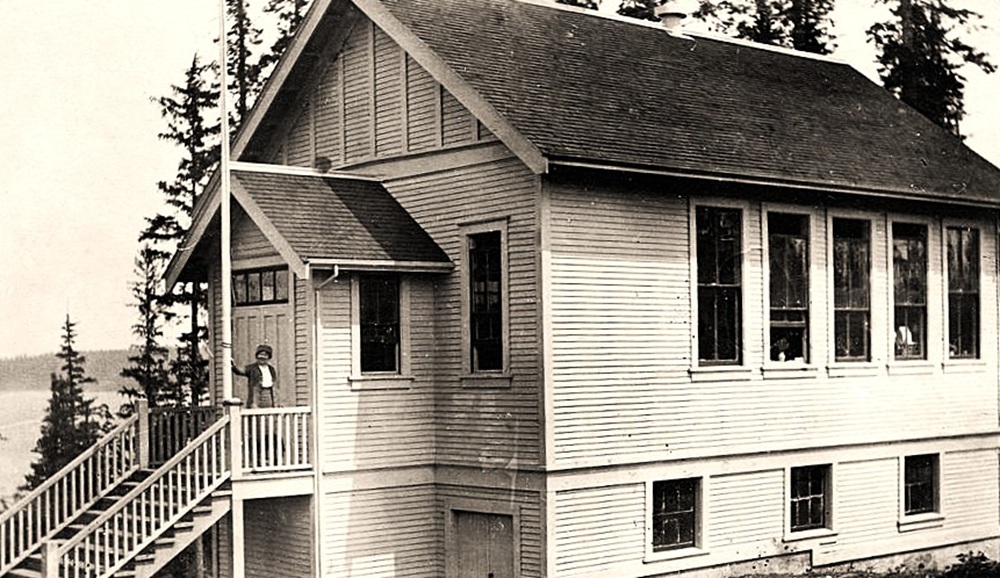
Behind the post office and the Overwaitea Store was a hillside covered in a forest of big trees. Our house bordered this forest. At the top of this hill was Campbell River’s original schoolhouse that was now a private home. My sister Peachy and her family lived here in the early 60s.
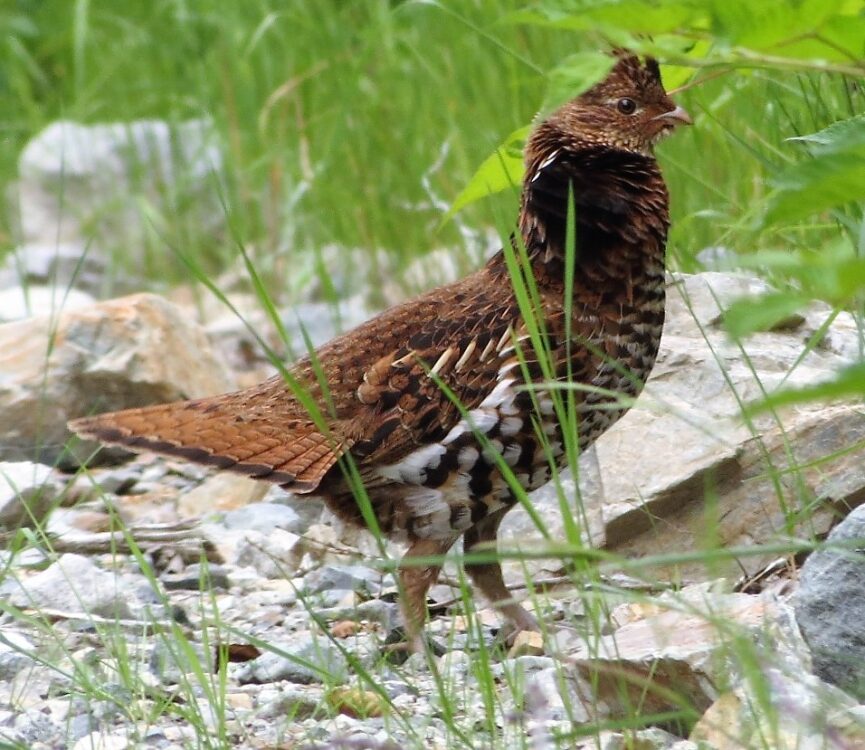
The forest below the old schoolhouse was my playground. I called it the hill. It’s where I acquired a taste for grouse. I used to hunt ruffed grouse with a homemade slingshot among the trees; my dad always called them forest chickens. I would just take the breast; it’s the only part that can be easily eaten. The rest I would leave as a gift to other forest creatures. Sometimes, when out camping, I would take some grouse breasts, cut them into bacon-like strips, and fry them with eggs in the morning. This was so good.
I was always on the lookout for licorice fern and clasping twisted stalk when I was in this forest. The forest consisted of big fir trees at the upper part of the hill and mixed red cedar and giant maples growing on the lower part. Licorice fern could be found growing up in the old maple trees, in the crotch of the branches. I could chew on this all day. It was so good. Clasping twisted stalk could be found in spaces where the sun shone through. The tender young shoots of this plant can be eaten as a salad green. The entire plant is sweet with a watermelon-like flavour. The berries are juicy and sweet. Early settlers of the Pacific Northwest called the fruit scoot berries for the mildly laxative effects of the plant’s fruit when they are eaten in excessive quantities. As a boy, I would pick a stalk and chew on it just for the flavour. The juice of the berries was used as a soothing treatment for burns. Just pick and squeeze directly on a wound.
At the bottom of the hill were some swampy ponds where I would chase frogs and salamanders, and then come home covered in mud. My mom would just shake her head as she cleaned me up. I was one of those boys who always came home covered in whatever the universe put in my path. It’s how it was.
Our house was a big place with a large yard that bordered this forested hillside. My brother Howard and I used to dig up worms at the edge of the forest, down by the ponds. We would use them as bait on our many fishing adventures. One day, I dug up a monster-sized worm. I mean, it was a giant. It was at least three feet in length and almost as big around as a garden hose. It was so big, I thought it was a snake, scared the hell out of me before realizing it was a worm. We went fishing that day up at Gooseneck Lake, and that one worm lasted all day; we would only need to cut a small piece off each time we re-baited our hooks. The worm had a sweet smell, and the fish might have liked this. We brought home a good feed of fish for dinner and many more for the freezer. I still wonder to this day why this worm was so big. I have never seen another like it.
The Beach
When we were little, my buddies and I used to go down to the beach just below our house when the winter storms blew in. We would put a few logs together with found boards, bent nails and rocks for hammers and ride the waves as they rolled in over the sandbars. By the end of the day, we would be soaked to the bones and cold as one could be, but to us young lads, it was like riding the surf on California beaches. My friends and I hung out at this beach quite often. It was our ocean playground. That is, until the beach was filled in to create more land. It is now a shopping mall.
Sometimes when the southeaster winds would blow, we would find thin plywood or even cardboard that we could place on our backs while riding our bikes. We would ride to the south end of town by the wharves and then put the board on our backs, where the wind would keep it in place. Then we would race through town at breakneck speed; it was spectacular.
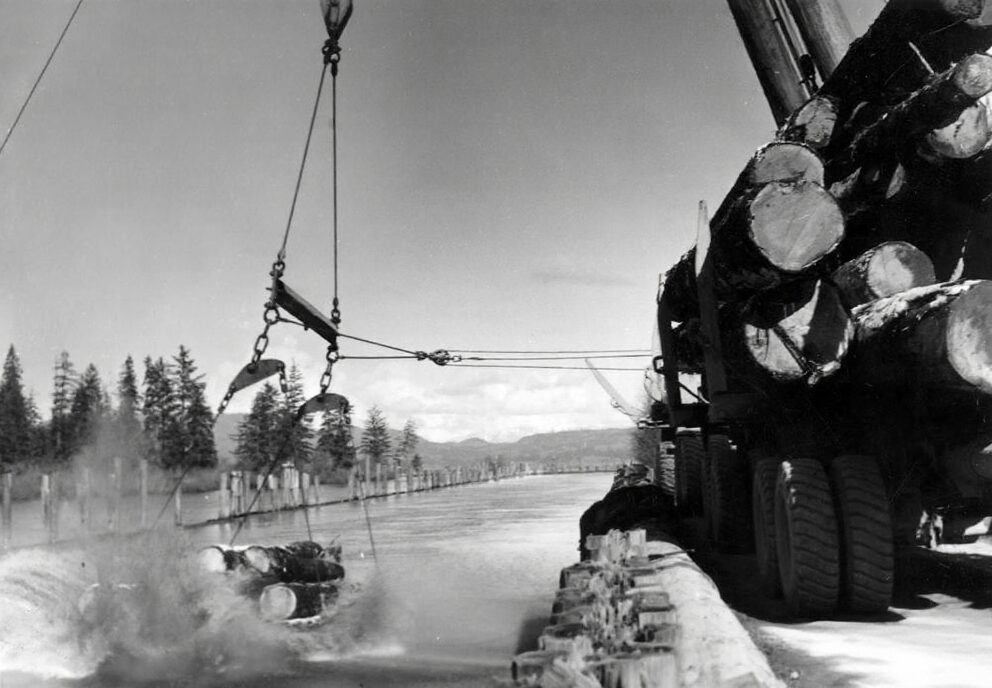
Out behind the beach on the north side of town was the estuary, a place of twisted trees, bogs, and giant thatching ant nests, a place of fascination and magic. In the middle of the estuary, right on the river, was the Elk River timber log dump. It was a massive A-frame built out of logs that could lift huge loads off the fat boy trucks and deposit them into the river. Not very long ago, just before we moved to Campbell River, trainloads of logs would roll through here with the A-frame, dumping load after load into the river. Sometimes the trains were quite long and would block the Island Highway where it went through Campbellton. Traffic would have to wait until the trains were unloaded. When I was a lad, it was fat boy logging trucks that got their loads slung into the river. We would often ride our bikes down to watch this.
On the weekend, during the summer, we would go down and swim here. One of the people who swam here was this guy named Charlie, who was quite a bit older than us kids, but he had a childlike demeanour. He would climb to the top of the log dump A-frame, stand on the top and dive straight off. It was so far down to the river, and only about ten feet of water to land in. I thought he was crazy. He popped up every time unhurt. In our later teen years, he was our bootlegger. His older brother Jim used to manage the Marina Hotel Pub; he would allow us underage kids to drink there. There were windows where he could see if the cops were coming; if he spotted them, he would yell out a warning. We would all run into the washroom, get in a stall, lock the door and climb on the seat so our feet were not visible. We would wait there till we got the all clear. None of the other folks drinking ratted us out, not ever.
Across the river from the A-frame was the mill pond, a log storage pool and channel leading from the river that had been dredged out. It was created to feed logs into the Raven Lumber Sawmill. In this pond. There was an old pile driver, which was stored there. There was a gangplank used to reach it from a small wharf. We would occasionally hang out there in the summer. You could dive off into the twenty or so feet of water or just swing out on the cables and back. One day, as I swung out, the whole cable, winch, and all came loose and down I went. All the cables came with me. I was lucky it was a muddy bottom, as I went into the mud almost to my waist. As I pulled myself loose, a thought came into my head of all the cables landing on me. I swam away from the pile driver as I headed back to the surface. Just as I reached the air again, all that cable and machinery came down where I had just been. Quite likely, this cable would have pushed me back under and pinned me to the bottom. The old pile driver was pretty cool, but I never hung out there again.

Out behind the dump was the Lane Field ballpark. It had a covered two-story bleacher and a concession stand where you could buy hot dogs, hamburgers and other goodies during various events. The community would gather here not just for ball games but to do all kinds of picnics and special occasions. The spring fair was always lots of fun. They used to play donkey baseball here. They would actually ride donkeys in this game. No one really ever won, but fun was had by all.
Just beside the park, on the western side, between the park and the logging road, there was an old diesel storage tank. The remaining contents of the tank had turned to wet tar. An inspection cover had been removed some time in the past, with an opening just large enough for a kid to get inside. There were no trespassing signs attached to the tank; I went in anyway. As I entered the tank, I could see some boards on the floor that looked solid, but unknown to me, they were actually floating. I thought I could jump from one onto another one, but I slipped and fell on the first board, getting myself covered in this foul-smelling black goop. I only went in once. At seeing me, my Dad said: “Now ya dunit”. Dad had to shave my head and use gasoline to get me tar-free; it burned my skin. He kept hollering at Mom to get a feather pillow so he could see me tarred and feathered. He was joking, at least I hope he was. They removed this tank not long after. I carried remnants of this adventure for some time, before it finally all wore off.
Campbellton
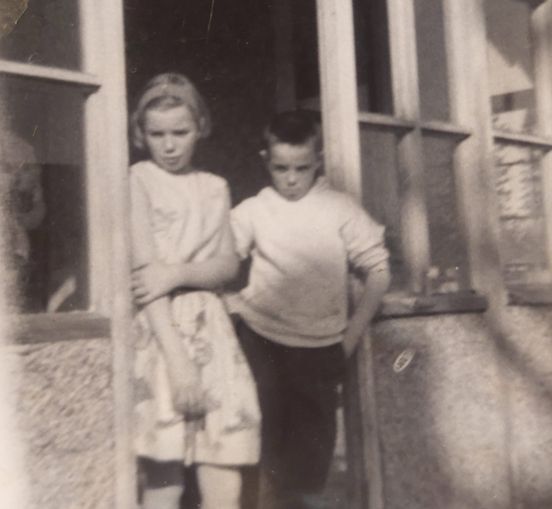
In 1964, our family moved into the Campbellton area. It was still part of Campbell River, but somehow it felt like a community of its own. We leased an old farmhouse with about half of an acre of land and a fruit tree orchard. It was the remains of a much larger farm that had been hewed from the forest when the area was being settled. The house was pretty old and was poorly electrified with only 30 amps, and it had wood heat in the form of a fireplace. It had been built in 1888.
The fruit orchard in our yard was full of apple, plum and cherry trees. I would spend hours out there eating whatever fruit was in season. I would climb high into the trees in pursuit of this feast. One late afternoon, I was going up an apple tree when I managed to get my left knee stuck in the crotch of the tree. I could not get it loose. I was in the farthest apple tree in our yard and not visible from the house. I struggled to get loose and called for help for more than an hour, but no one heard me. No one missed me. Finally, Mom noticed that it had turned into night, and I was not home yet. She came out on the porch and began to call for me. I called back to say that I was stuck in a tree. It took forever for Mom and Dad to get me free. Finally, two of my older siblings had to help free me. When I was eventually pulled from the tree, my knee was twice its normal size. That knee gave me trouble for the rest of my days.

Living on the river meant riverbank access, which allowed us kids to fish whenever we wanted. The fishing was great in the river. You were guaranteed to catch a fish just about anywhere you dropped a line. Sometimes we would fish off the logging bridge, where we could access both shores. Good fishing there, but when those fatboy trucks crossed the bridge, you had to run like hell to get off. This was an issue with the empty trucks heading back for more logs; the approach to the bridge was a steep hill ending with a sharp corner onto the bridge. So we mostly fished from the Silver Bridge, but it was difficult to get the fish up to the bridge, with plenty of them shaking loose on the journey up. So I got this grand idea that if I tied one end of a long rope to the bridge and the other to a big inner tube, I could float out right into the middle of the river and fish to my heart’s content. I had not thought this through very well, but as I was only 8, it’s understandable. One thought should have been, how in the hell would I get back to shore? The next thought should have been just where the tube would end up; it happened to be right in a set of small rapids, and as the tube reached the end of the rope, it started to dive under, then shoot up over and over, with me going half underwater each time. I could not let go of the tube as I did not know how to swim. My tackle box and rod were gone, and I was screaming for help. It took the Campbell River Fire Department to save my ass. Sometimes my stupidity amazed even me. My dad would always say that one day I would wind up dead from my crazy-ass foolishness. I have had many close calls, but I always seem to squeak through. I always think of my dad’s words in times like that; he would say, “dammit, boy, you’ve got to think things through”.
Our neighbourhood was a great place for kids to grow up. There were school-age children in most of the homes found along our street. I had many friends here. Unfortunately, there was this one oversized, loudmouthed, obnoxious kid who was a bully. Picked on all the kids. You always had to be on the lookout for him. He had discovered that if he punched me in the breadbasket, I would not be able to catch my breath. I would wind up on the ground, gasping for air. He took great pleasure in this. The first day we moved here, he threatened to beat me up if I didn’t go into a yard and get him a container of raspberries. When I brought them to him, he gave me a black eye and left me lying on the ground, gasping for air. He told me that if he ever caught me stealing berries from his cousin’s place again, it would be worse. I was 8, and still pretty frail from being a premie. Years later, in a camp up the coast outside a small community called Fair Harbour, I ran into him. When he realized who I was, he tried to bully me again. I was crossing from the washhouse to my bunkhouse on a wooden gangplank that let you walk without getting muddy from the wet ground. He figgered he would push me off into the mud; he was not successful this time, and he found himself lying in the mud crying. I had beefed up a bit, and I had learned some fighting skills over the years since we last met. He left camp the next day.

Most of us kids had become accomplished fishers by the time we were leaving our childhoods behind us and were very much at home on the water. During our early teen years, many of us worked as summer fishing guides for the local boat rental companies or commercial fishing on the Johnstone Strait. All of us would try to get a logging job during the winter months. There was always a short supply of loggers in those days, so we young ones could usually get chokermen jobs on the rigging. I was 14 the first time I hired out as a logger.
When we were not working, we would be out exploring. At first, we stuck pretty close to home, but as we grew older, our trips took us further away. One of my pleasures was heading out when the weather was stormy. I would head over to Quadra Island to fish in the protected bays and inlets. I would be wave riding the storm, giving it gas as I rode the tops of the waves and backing off the throttle as I dropped into the trough between. It was like surfing, and it was awesome. Sometimes Jim Morgan or one of the Parrish boys would race me across. It was always exhilarating. Our boats were usually open 16-footers with 20-horse Johnson motors. We must have looked like dolphins as we leaped out of the trough between the waves, over and over.
Davy Parrish and I owned Estero Guiding; we had a Chuck Chairiot, a Boston Whaler and an 18-foot cruiser. We were booked constantly; money was coming in steadily. Our Chuck Chairiot had a 20-horse pull-start Johnson outboard. This motor could be troublesome to start on occasion. We purchased a brand new electric-start 20-horse Johnson Outboard. It was awesome; I only used it once. Davy took it out one morning to fish the tide and hooked into a big one. He locked the motor to the transom (this makes fighting a big fish easier) and fought the fish for 20 minutes before it shook itself off the hook. He put his rod down and headed home. He hit a submerged log and tore the motor right off the transom. As he was looking at the motor sink, the battery shot past his head, just grazing it. He had not unlocked the motor. He got towed in, and we put the old one back on. It was nice to just turn a key and off you go.

During these days of ocean-going fishing adventures, I would often see pods of Orcas sliding under my boat or sea lions running alongside to get a view of me. Sometimes we would make eye contact, and that was always a fantastic experience. Or perhaps I would see dolphins in the hundreds, all leaping out of the water as they swam by. The sea was my playground, and I was very comfortable out there.
My friends and I would go salmon fishing, clam digging, crab and prawn fishing or oyster gathering and have a seafood feast around a beach fire. We ate from the sea regularly, and the eating was good. Sometimes we would head to Open Bay on Quadra Island, where the oysters were so thick that you had to break loose a big chunk containing many of them. We would place this on a bed of coals, and as the oysters began to cook, they would open up. We would jostle each other to eat as many as we could before the others got them first. The smells were incredible, and they tasted awesome.
Canoeing became A Passion

I was introduced to canoeing at an early age, and I was hooked from the first time my paddle hit the water. Canoeing allowed me to travel without the noise others make. There is nothing like silently gliding along in the early light of a fall morning, sunbeams shining through the morning haze. You can sense the haunting pull of all things to nature, and it is very humbling. It is a magical experience that can bring balance to your very soul.
I have had many grand adventures canoeing the rivers and lakes on Vancouver Island. Along with many places along the coast and throughout the Chilcotin Plateau. One of my pups, named Cody, grew up in my canoe; he could leap into the water while barely rocking the canoe and swim along for a while, or go to shore to take care of business. When he was ready to get back in, he would come up and put his front paws on the edge of the canoe. I would place my hand behind his head, and he would press back while at the same time pulling himself up and over the edge, again, barely rocking the canoe. Of course, he still had to shake the water loose and give me a bit of a shower. When I allowed others to join me in my canoe, quite often they would tip us over, an event that never happened with Cody. I had this 14-foot canoe, which was just right for the both of us.
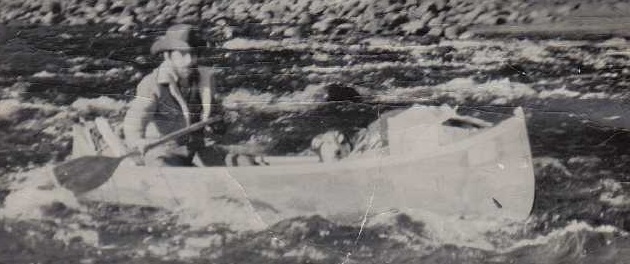
I remember a winter trip down the Salmon River with a few friends. It had been raining for weeks, and the river was quite full. We had stopped above a wild-looking set of rapids. My pup Cody decided to go across the river. As he reached deep water, he lost his footing and started to tumble down the rapids. My friend Dick started running down the river, actively attempting to rescue him. I hollered out that Cody was fine and that he, himself, could get into trouble trying to save him. As Cody hit the bottom of the rapids and climbed ashore. He just ran back up the river and went in again, but this time he made it across. He loved getting out on the water. He was the best bush buddy one could ask for. Cody and I were inseparable. He was a big shepherd cross malamute.
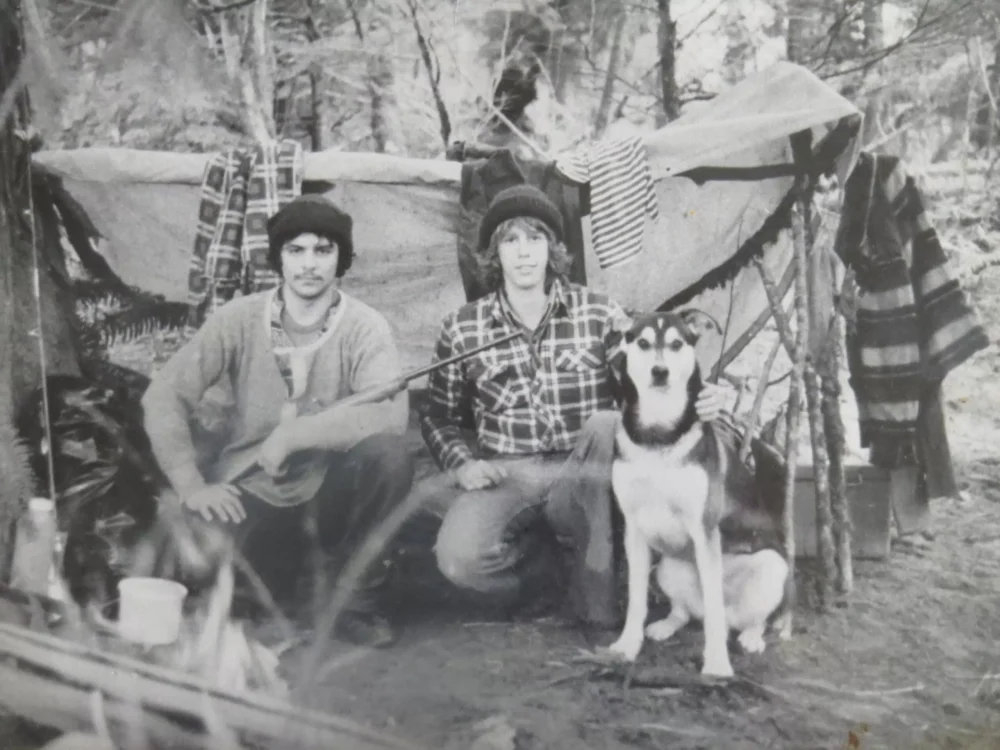
When we were out canoeing or just camping, we seldom took a tent; a tarp was all that was needed. Mostly, we would eat fish or grouse gathered along the way. In those days, fishing was good in most places, and there were always lots of grouse. A few cans of beans, some potatoes to roast in the fire, and bacon and eggs for mornings. You could buy canned bacon, which was great for longer trips. Some salt and pepper to season meals, along with some coffee for the morning, were all that was needed. I used to mix instant coffee, sugar and coffee mate in a container. So morning coffee was easy. It was a great time to be a kid.
As a teenager, if I were not out on the sea, you could find me canoeing our islands’ rivers and lakes, or hiking into the forest. Hiking in the high country was of particular interest to me. I still love getting out in the mountains, and hardly a week goes by without finding myself on a mountaintop. High-country hiking is more than a passion to me; it recharges my system, and it grounds me.
The Logger
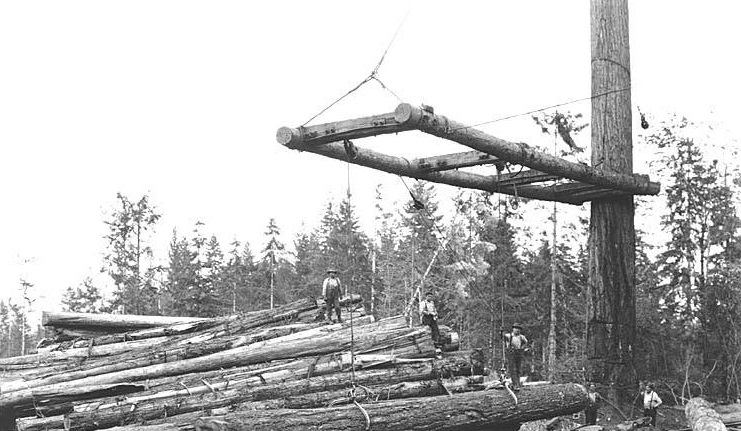
My very first job was delivering newspapers in the Campbellton area, and one of the homes on my route was occupied by a man in a wheelchair. I used to walk up on his porch and put his paper where he could reach it easily. Sometimes, if he was sitting on his porch, he would ask me to sit and chat. I think he was lonely and felt the need to know he was still visible to the world around him. He lived in a small house just about where the White Tower Restaurant stands today, just across the street from the Pallan Timber office. He was a nice old guy. I would spend many afternoons sitting on his porch while he regaled me with fantastic tales. It was time well spent. I can’t remember his name; I have always thought of him simply as the old logger.
I can still picture myself sitting on his porch in Campbellton, watching the traffic go by, knowing the occupants of these autos were totally unaware of the astonishing stories I was hearing. He had so many narratives of wonder, I don’t think I ever heard any account more than once. I learned the old timer had started logging as a highball rigging rat in his youth and over the years had earned the right to call himself a bull of the woods. He would recount tale after tale in a deep and raspy voice. Sometimes he would get a gleam in his eyes as he recounted these chronicles. Sometimes he would stop talking mid-sentence with a faraway look in his eyes, and then, with a smile on his face, he would just continue the narrative. I would close my eyes and envision his telling of how life was for this logger in the twenties. His voice would create movies in my mind that were quite creative in form; his words were always spoken in such an articulate fashion. His tales were descriptive in such a way that it made you feel like you were there.
He told me he had begun logging back when he was a teenager, back at the turn of the century. From what I remember from his narratives, he was from a logging family. He reminisced about topping trees to rig as spar trees, and there were tales about working on the steam engine trains. I would sit in awe, listening to these captivating recitals about logging.
He had worked his whole life in the Mohun Lake area, employed by the Lambs Lumber Company. Their main camp was in Menzies Bay, at the north end. They logged in the Mohun Lake area, and lots of the names of other men he had worked with and the places they logged were from families known to me. This made the recitals so much more interesting in my eyes. I never tired of hearing these stories.
When I met him, he was missing one leg above the knee, and the other was missing below the knee. He had told me it was due to having diabetes. Even after I had stopped delivering papers, I would still stop by for a chat on his porch whenever I saw him sitting there. Over the next couple of years, I watched him lose his legs right up to the top. Then one day, the house looked empty, and a woman was cleaning the place. She told me that her brother had passed away. I would miss this man and his stories. I enjoyed sitting on his porch, watching the traffic go by as he told his tales of logging on the coast. Could you imagine if his stories were put down in a book? What a glorious book that would have been!
The Flag

Sometimes my escapades could be on the more dubious side; sometimes they involved the police. This would become a pattern for a while as I grew older. There was this one time, while I was maybe 8 or 9, when I was visiting a friend in town. My friend and I had been playing outside, down by his house, and we found ourselves behind the Safeway store. It was just across the street and up a sandbank from his house. While we were playing around, we discovered a way to climb up onto the roof by using a drain pipe attached to the back of the building. Once on the roof, you could see so much more of our town. It seemed so much bigger from the roof. As we were looking around, we noticed a group of flags blowing in the breeze. We stole a Union Jack from the group of flags. Not sure what we were going to do with it, but when we climbed back down the pipeline, laughing about it all, we began to run towards my friend’s house. As we rounded a corner of the building, we came face to face with two young police officers. The sight of them stopped us in our tracks. There we were, flag in hand, guilty as hell. They promptly arrested us. We were put in the back seat of their black and white police car. Sitting in the car while the cops slowly drove us through town was quite frightening. We could barely see over the window sills, but watching the buildings go by was pretty scary. We had no idea what was going to happen. They took us to the little jail building that was across from Fisherman’s Wharf, hauled us upstairs and put us in a cell. It was my first time behind bars.
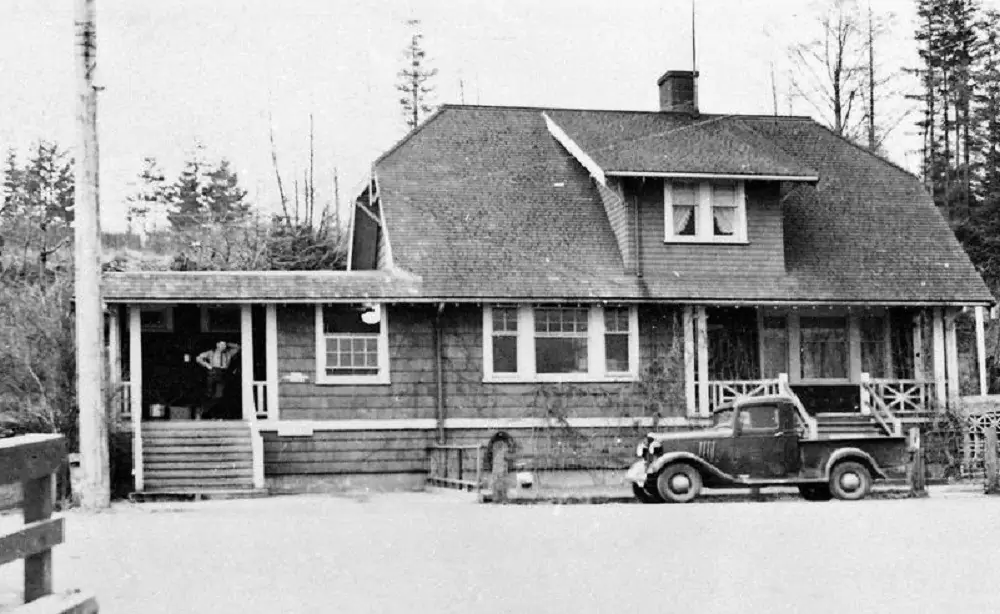
It wasn’t often that I would guess that they had children in jail, and I think in all likelihood, we might just have been small enough to squeeze through the bars. After locking us up, the police called both our dads to come down. Our dads arrived, and they were pretty upset, not at us being in jail, but for why we were there. My dad frowned on stealing. I knew I was in for a sound beating once I got home, as Dad told me as much from the other side of the bars.
Our dads and the police had a long chat just outside our cell. We were listening with all ears. The police were saying that they needed to keep us locked up for the crime we had committed. Stealing a flag was a federal offence with severe penalties. Our dads were telling them that if they released us into their care, they would make sure we kept our noses clean. The conversation went back and forth for quite some time. We sure were hoping our dads would be able to get us free in the end, beating or not. After some deliberations and agreements from us to keep our noses clean and not steal again, our dads convinced them to let us go, and we were released. Of course, it was all a ploy to teach us to behave, and you know what, it worked for a while; that’s for sure.
The Boat
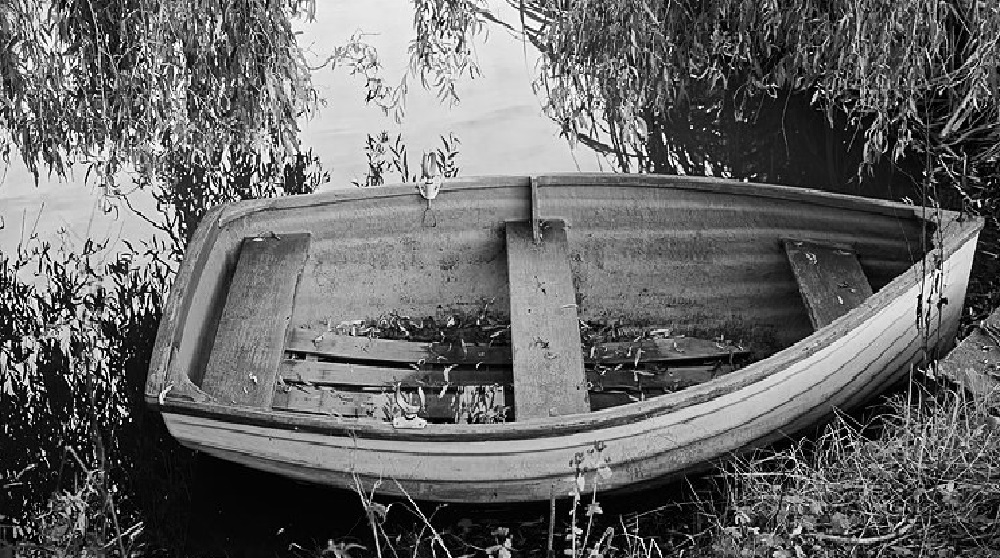
As I said, I was always getting way over my head with my exploits, and although I would become an ocean-going youth by the time I was hitting my teens. This knowledge was quite lacking during my time as a 9-year-old. One spring day, a friend and I were playing along the bank of the river in front of my house. We were having a great time doing what kids do: chasing frogs, investigating the many different insects that were all around us. Eating saskatoon fruit, huckleberries, and salmon berries. Towed along behind us was this little blue tub, just big enough for one to sit in while the other pulled. As we were enjoying our day, we happened upon a possibly abandoned wooden boat, although that may be debatable. It was maybe 10 feet long. It was tied to the shore. It would hold us both.
We played around this little boat for a while to see if anyone came to claim it, but no one came. It looked pretty solid, so we got in, but we left the boat tied to the beach. Still, no one came. So we decided to untie the boat and float down the river like Tom Sawyer and Huck Finn, just like in the book. We tied our blue tub to the stern to be used as a lifeboat, and off we went.
At one point, we were opposite the Elk River Timber “A” frame log dump. A big Fatboy truck was being readied to have its load lifted off and dumped in the river. The load was lifted up and over the side of the truck, and then the load of logs hit the river with an enormous splash. We watched as a big wave headed our way, and we rode it like river champs. This was all very exciting to both of us young lads.

The river was moving slowly as it worked its way into the estuary, and we pretended to be in the wilderness. There were no paddles or life jackets, but we had our lifeboat. We had lots of fun as we slowly drifted down the river. We planned to just go ashore when we reached the sea at the river mouth. We had been floating for a while, but no sight of saltwater yet. I had no idea that the estuary was so large. There were plenty of birds. I like birds.
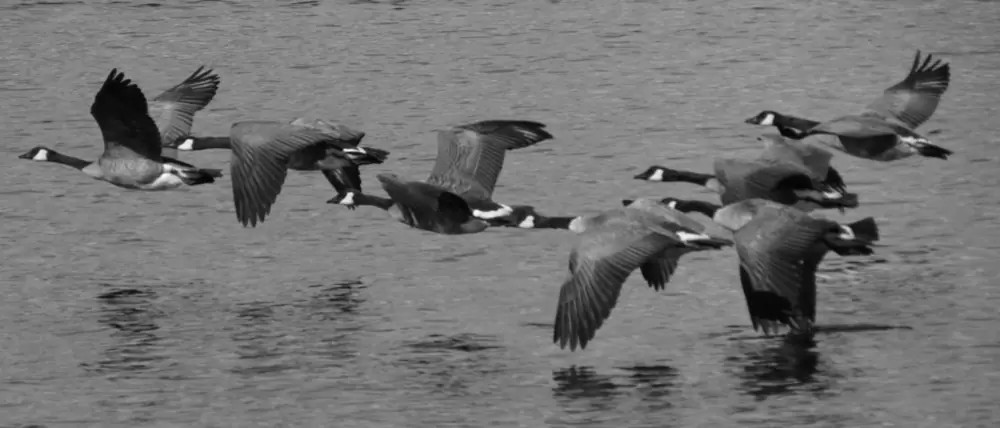
Around every corner was something new to see: ducks of all kinds, sporting bright colours, taking flight as we floated towards them. Canadian geese by the hundreds, honking loudly to warn us to keep off their nests. Deer were feeding along the shore while eagles soared on the air currents.
The E.R.T. booming grounds were downriver from the dump, and the gentle river current was used to guide the logs into the various booms. Most of these would be towed to mills around the island, but some would be towed up a channel to the mill pond at Raven Lumber. Here, they would await the journey up the green chain that was used to feed the mill a continuous supply of logs. The mill ran 24 hours a day, and I grew up to the sounds of the green chain rattle. As we coasted past the log booms, we got some weird looks from the men who worked there; perhaps they could see what was coming.
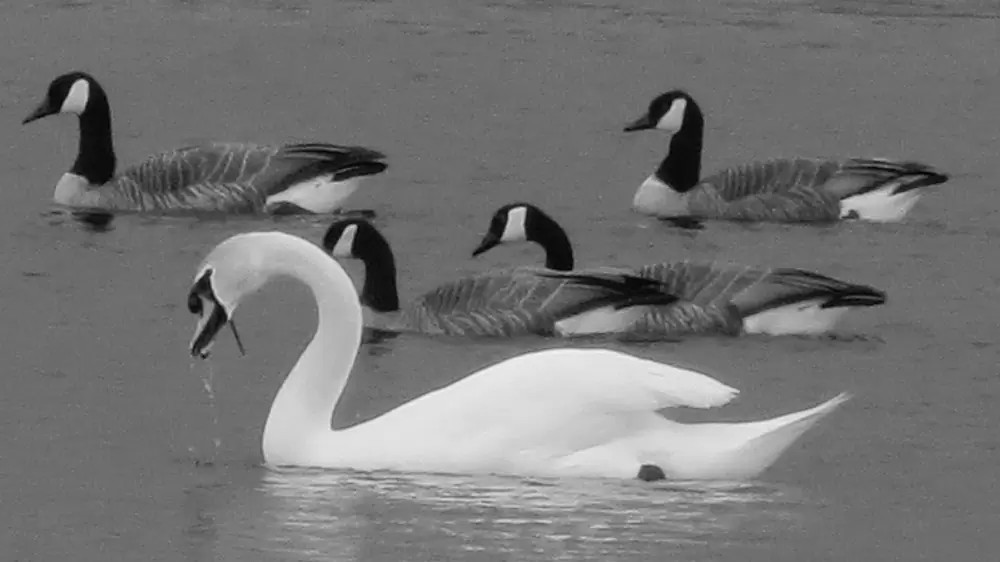
On the lower river, we saw many trumpeter swans that hardly moved as we drifted through them; they are such magnificent birds. The sounds of seagulls in the sky were like a song of the sea playing in the background, while we watched great blue herons feed at the edge of the river. They were beautiful, standing knee-deep in the river with their eyes fixated on the fish in the water. I never knew there was such an abundance of deer in the estuary, but we saw many. It was a warm sunny day, and we were having so much fun.
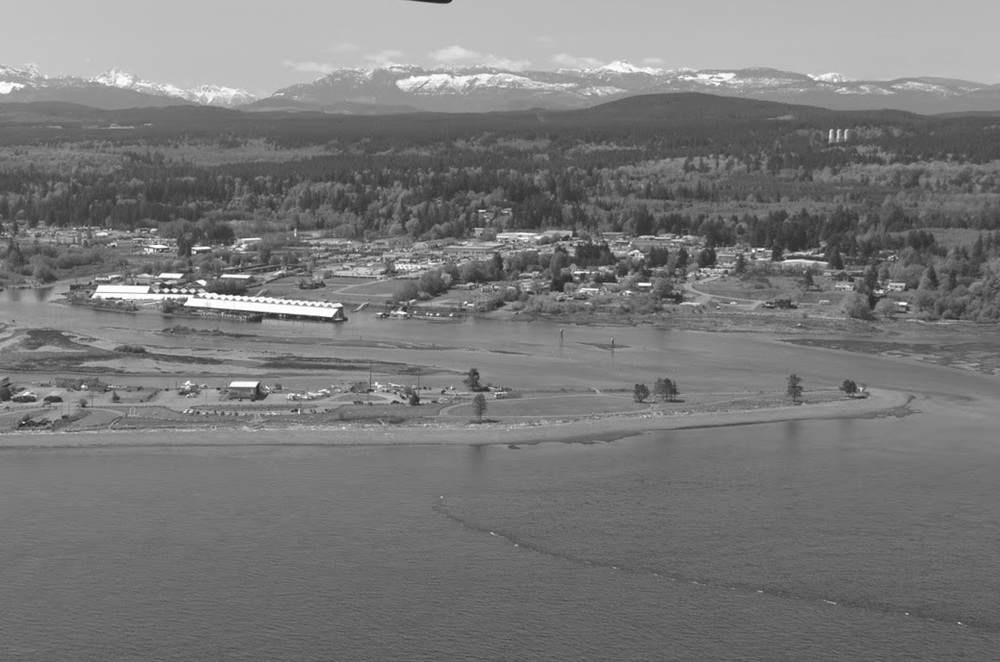
As we arrived at the edge of the ocean, we saw that it happened to be low tide, and the river was flowing pretty fast. To our total dismay, we just shot out into the strait between Vancouver Island and Quadra Island. Two boys, both 9 years old, in a very small 10-foot boat with no paddles or life jackets, out on the waters between these Islands, is bad enough. Things were about to get much worse; unfortunately for us, the outgoing tide was pulling us towards Seymour Narrows, located just a few miles up the inside passage from us. Up until the 50s, Seymour Narrows had an underwater mountain that at low tide was only 3 meters below the surface. Many ships and 114 lives were lost to the turmoil that was caused by this underwater mountain. Then, on April 5, 1958, that all ended when approximately 635 tons of rock were removed from the mountain in a huge explosion.
The threat of striking the underwater mountain is now gone, but it is still a narrow channel filled with back eddies, giant whirlpools, and the tides can run at 28 knots. This is still a very dangerous piece of water. If we were not rescued before we reached the narrows, we would, beyond any doubt, be pulled down by one of these monstrous swirling maelstroms. Or perhaps flipped over by a massive back eddy, and that would be that.
We started to cry out for help, but for all our shouting, no one heard or saw us. We drifted past the painter’s subdivision, crying out for help, then past the pulp mill, yelling for help, past race point, still hollering out, past the entrance into Menzies Bay, crying out fearfully for help, and then we were in the narrows. We were no longer crying for help; we were holding on for our lives. There were boiling back eddies and monstrous whirlpools all around us; things were pretty grim, and we were sorely afraid for our lives. We were terrified.
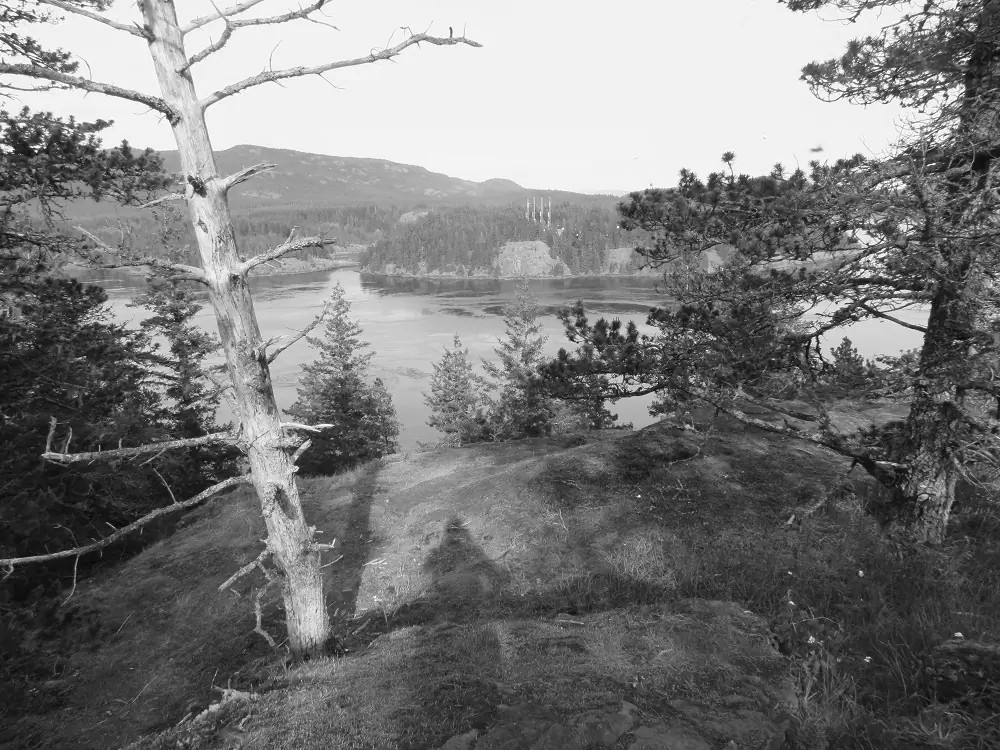
Suddenly, out of the blue, a seaplane comes flying in and lands right in the narrows, amongst the tumultuous vortex of the waters. As it pulled up to our little boat, dodging all dangers on its way, the back door flies open and a young girl, 7 years old, hollers at us to get in the plane. She looked like an angel to me. We got in, and off the pilot flew, taking us back to town. The pilot was pretty mad at us. Yelled at us until we reached the harbour. He said our stupidity could have been the death of not just us boys, but the pilot had to risk the lives of himself and his daughter.
Our dads were called, and everyone yelled at us. I was smiling through it all. All I could think of was that my feet were on the ground, and I was safe. I often wondered who had tied that little boat up and what they thought when it was found gone. I wondered how it and the blue tub fared after we left them in the narrows that day. Do I feel guilty about it, ya, a bit? I had no right to take that boat, and I almost killed a pilot, his child, myself and a friend doing it. A fear of drowning would persist in me for years.
Echo Lake

There was a family who lived across the street from our house in Campbellton. They had a son, whom I occasionally hung out with; we were both 9 years old. He was an only child, a bit spoiled, and his parents fiercely protected him from all dangers. Whenever he was injured, even if it was nothing more than a bump, he would run home crying that he had broken something. He was quite pampered, so different than the way I grew up. I can’t remember his name.
One day, this family invited me to go swimming up at Echo Lake with them. There was one stipulation, and that was that I needed to be able to swim. I could not swim, but I assured them that I could. Getting to the lake was fun; the old general hill was steep and quite curvy. We finally arrived and set up just below the Echo Lake Lodge. This lodge had, at this time, been turned into a private residence. Two of my schoolmates, siblings, lived there with their family. I have tried to find information about the original lodge, but have not been successful. It is no longer there, not sure when it disappeared, maybe heard it burned down.
The lake is a very pretty lake surrounded by forests with some mighty big trees along the west side, where the highway runs. This was not always so. When Elk River Timber’s Camp 8 was going full steam, the west side of the lake was logged right to the lake. Rail trestles crossed the east side of the lake, and the camp was on the north-eastern shore.

This was a big camp that even had a school. But by the time I was a lad, all the crew accommodations and infrastructure were gone, or at least most of it. The only stuff left were the offices and the mechanic shops. All that was visible of the trestles were some pilings that remain to this day; the forest has grown back around the lake. Nature has begun the journey to heal the land around the lake.
Echo Lake would freeze up in the winter, and when I was a teen, we used to go ice skating there. Sometimes it froze so thick that you could drive your car out onto the ice. We had a steel barrel that was cut in half, and we would set this up on a log support and build a fire in the barrel. We could skate over and warm up when you get cold. Someone would have an 8-track stereo blasting out tunes. It was lots of fun. We could camp at the lake in the summer, and we would catch some good-sized trout. There is no camping allowed now, but the fishing is still good, and there has been a fishing float has been added that is wheelchair friendly. Echo Lake is fed by numerous springs that bring in nutrients. It’s not a big lake, but trout up to 15 pounds have been caught there.
There have been smallmouth bass illegally transported into Echo Lake. Smallmouth bass are an invasive species that prey on smaller fish. These fish are threatening native fish populations like salmon and trout, which could worsen if introduced into the Campbell River watershed.
At the lake, my friend pulled out a snorkel, mask and flippers that he said I could try out; he had 2 sets. I had never used these before, but found that with my face down and breathing through the snorkel, I could just float around. I was fascinated by the wonders that were visible to me for the first time. The dark green colours amid the shadows, and the incredible array of life. Seeing this breathtaking underwater world was beyond awesome. The bottom was covered in sunken logs from the logging days, and you could see fish of all sizes swimming among them. To my surprise, there was also a variety of insects, both at the surface and within the water column itself. For the first time in my life, I was swimming in water that was over my head, and it was all very exhilarating.
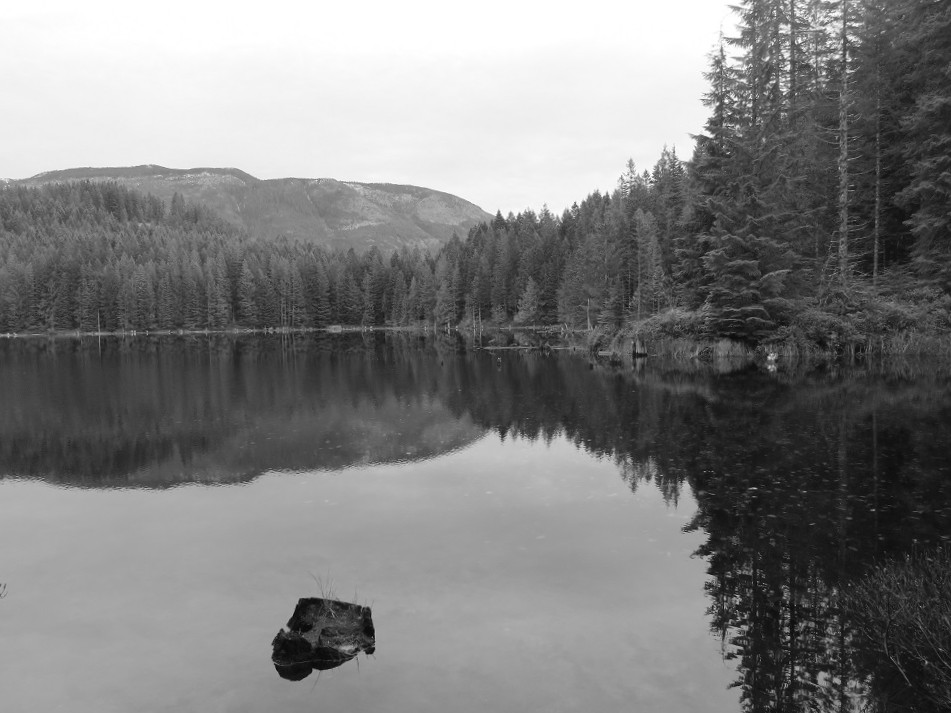
Then, all of a sudden, I dipped the snorkel end into the water, and with water flowing down my throat, I began to panic. Reality came rushing back, and I became hysterical. I called out for help as I struggled to keep afloat, but they were just looking at me. Suddenly, the realization that no help was going to come, and whether I drowned or not was going to be up to me. I got hold of myself, held my breath, put my face down, and swam for all I was worth and made it to shore. Once there, my friend’s parents were quite angry with me and were saying, “What if you had been really drowning and not just pretending?” I said I was sorry. This was the day I almost drowned, and no one but me knew it. They never took me swimming again.
The Big Black Car
When I was 10, my mom suffered another heart attack and was in the hospital. My mom had been an ambulance driver during the Blitz in London during WWII. She would attend to the injured and use an ambulance to get people to the hospital; she was a badass young lady, helping people while bombs were falling all over. During one night of bombing, one came close to where Mom was as she was looking after a victim of the bombs. The force from it threw her up against her ambulance; she lost all her teeth and a lung that night. After a stay in the hospital, she was back out driving an ambulance. She has suffered heart attacks numerous times since then. My mom was the oldest child in her family.
While Mom was in the ICU, my twin and I were being cared for by my oldest sister, Peachy, who had come down from Sayward to help. My sibling was so much older than I that she seemed more like an auntie than a sister. When I was very young, she had pretty much been my primary caregiver. Our mom was busy looking after our home, my siblings and working a full-time job.
One afternoon, I was playing in our alley just up from our house, where there was a great big willow tree growing in the corner of the yard. This tree played a major role in my growing up; it was in an empty lot, next to a sturdy wooden fence. The giant tree, with its branches cascading right to the ground, was like a fort within the confines of this beautiful old mother tree. I kissed my first girl here. All the neighbourhood kids hung out in this lot. There were fruit trees and raspberry bushes that we all ate from.
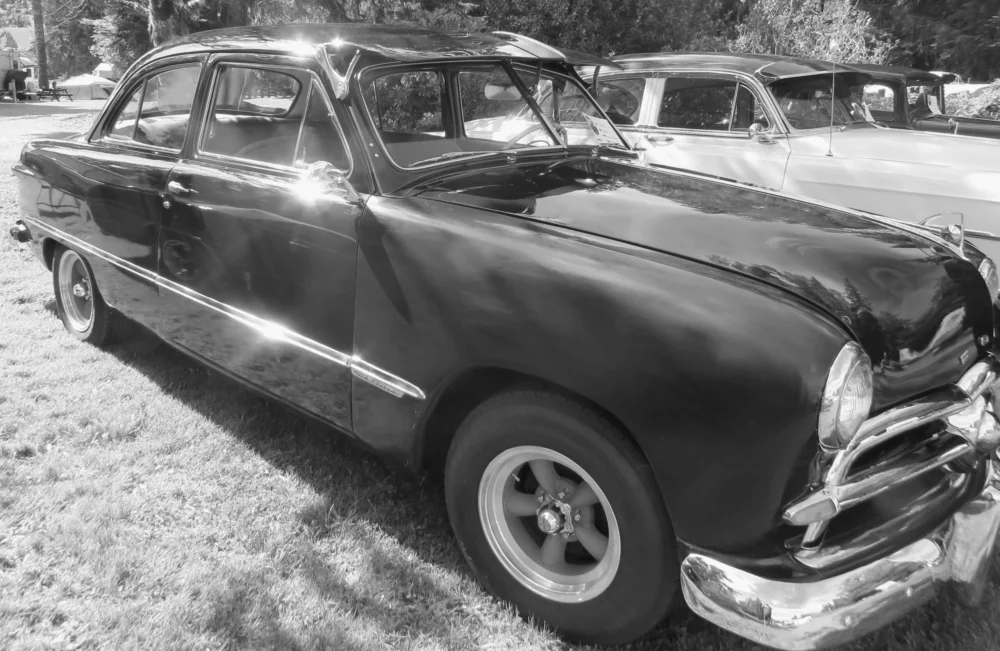
The fence was well built, and we could run down the top of it, holding onto the willow branches; then, as we reached the corner of the property where the fence ended, we would swing off over the alley and back down to the ground. It was great fun. Anyway, there I was, running along the fence top; just as I reached the end, I noticed a car. A big black car, slowly driving down the alley. There was an old guy at the wheel. I thought it would be fun to see if I could swing right over his car. I ran as hard as I could, and I was really getting height in my arch. Then suddenly, the branch broke, and I was heading straight at the car.
When I connected with the windshield, my right leg went right through, hitting the old guy with both glass and my foot, slicing my leg right to the bone. I pulled my leg out, most likely doing more damage, and half ran, half crawled the short distance to home. I was a ghastly mess. I was in shorts, and as I looked at the wound, I could see the bone, along with a steady flow of blood. My last sight of the old guy showed he was stopped, the car stalled, and he was blankly staring out through the blood-smeared hole in his window. I hope he got over it all. It must have been quite a traumatic experience for him.
By the time I got in the house, I had bled pretty badly and was covered in blood; my sister screamed at the sight of my leg. Then she just wrapped my leg in a big green bedspread, scooped me up and rushed me off to the hospital. She was pretty upset and worried. I bled all over her car.
At the hospital, they were taking me directly into the O.R., but my mom was also in transit from one hospital area to another. At the time, our hospital was not very big. Dr. Margetts, our family doctor, hoped to avoid running into Mom and having her see me covered in blood. I was bleeding so badly that there was a steady flow of blood from the gurney, leaving a red trail behind me. We ran into my mom in a hallway, and she saw it was me. They whisked me right past her, and all I can remember hearing was her screaming my name. I was just rushed into the operating room. The doctor got all the glass out, connected the arteries and stitched me up. I required a transfusion to replace the blood I lost and a few days in the hospital. All ended well with Mom and me going home together a few days later. Today, the scar on my leg looks like a scorpion.
The Gatekeeper

Not long after we arrived in Campbell River, my mom and dad met an old couple who had settled here back at the turn of the century. His name was Patty, and his wife was Hazel. Patty was the Gatekeeper to the North Island.
He took a shine to us all and began to take us to his hidden fishing holes. One of those fishing spots was up on Gooseneck Lake. The road to reach the lake was the old Argonaut mine road; it was pretty rough going with washouts and huge potholes. This was crucial to how good the fishing was, as not many fished here due to the road conditions. The washouts along this road (and there were quite a few) could be pretty big. I can remember my brother and me stacking up rocks to allow Dad’s car to get over. Then my dad would drive across at high speed, bouncing over to the other side. Sometimes his rear wheels would be caught on the edge, and Dad would just gun it. He would get across mostly through determination and the momentum of high speed. I sure miss those days of such grand angling crusades with my dad. Sometimes, Dad was pretty cool.
One day, Dad bought my brother Howard and me new rods and reels, which were pretty nice setups. Then we headed out to Gooseneck for a day of fishing. These new rods allowed us to get our bobbers quite far out into the lake. Dad, on the other hand, had his old rod, and he was getting disappointed at not being able to reach as far as we boys. So he gave it his all with a mighty cast. It was a herculean effort, but as the hook ran past my dad at a high rate of speed, it caught him in the ass, and it went deep. Dad was dancing on the trestle, growling like an old grizzly bear, holding onto his butt cheek. We tried to remove it, but could not get it out. So into town, we went, but as my dad sat in the driver’s seat, he realized that he could not drive. So my brother, at 13 years old, had to get us into town and get Dad to the hospital. He was not a good driver, grinding the gears on Dad’s old car. We were flying down the logging road like some rum runners from Dad’s stories, hardly slowing down for the washouts. My brother could barely see over the dashboard; it was a wild ride. Dad was lying in the back seat, yelping in pain with every bump, and I was riding shotgun and hanging on for dear life. We arrived at the hospital alive, Dad got the hook removed, and all was good. He bought himself a new fishing rod and reel before the next fishing adventure on the trestles of Gooseneck Lake.
Up until the 50s, this lake was being used as a booming ground; there were still train trestles running all along one side of the lake. The old wharf has mostly crumbled into the lake now, but back in the 60s, you could drive right out on it and fish right beside your truck. There were two wharves on the lake. The first one was used to offload the logs from trains into the lake. After offloading the logs, they would be sorted into booms and towed over to the second wharf, where they would be loaded back onto trains, all sorted and sent to various mills. You could still see the remains of one of the old steam boilers on the wharf and the remains of shops on the shore. My friend’s Dad used to run the dump out on the wharf back in the day, so on occasion, we got to hear stories about his job.
Most log hauling on the island was done by train back in the day; steam was the power that drove not only the trains but all the other equipment that was used. Steam donkeys for logging were phased out in favour of fuel-driven engines before my logging days began, although my older brother Joe worked on one of the last in operation, out in the Port Renfrew area.
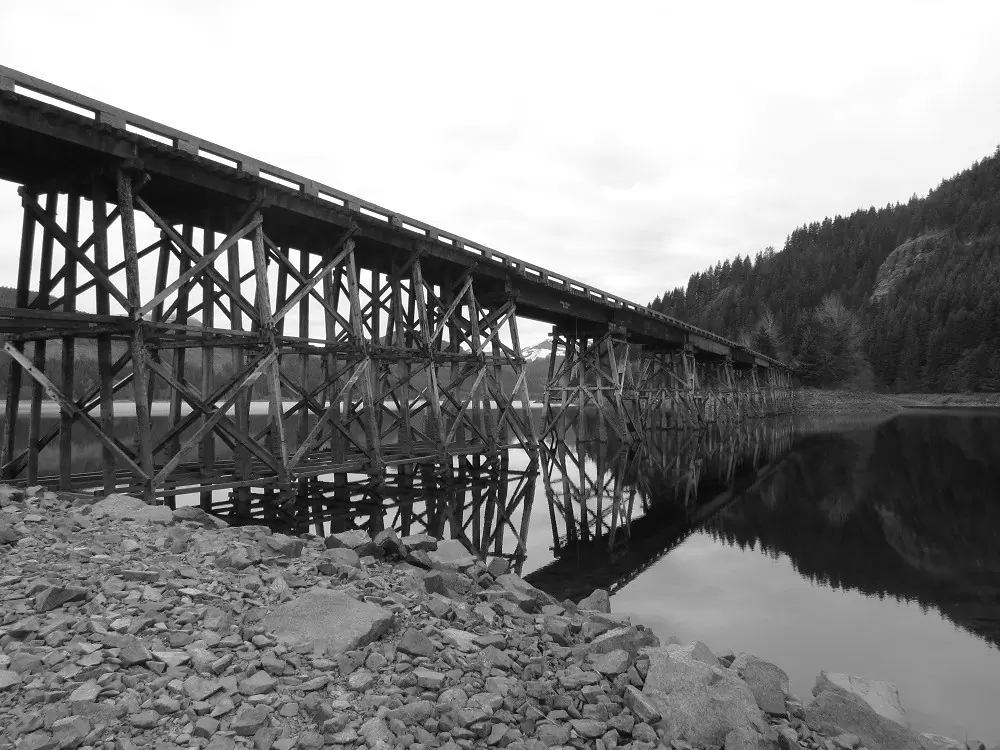
Back in the early ’60s, when we met Patty, he was the gatekeeper up at the upper Campbell Lake trestle. If you were travelling on this road between 6 am and 6 pm, you had to get a pass, and it was Patty who gave them out. This logging road was the only road to the north island, as the new Highway 28 that ran to Gold River along the eastern shore of the lake would not open until 1970. The inland island highway from Sayward north would not open until the late 70’s. So in the 60s, you either took the logging road that went through the Gold River area and then, back across the island to Woss, or you took the ferry out of Sayward that took you to Beaver Cove to reach the north island.

When you took the ferry, you would go right by Robson Bight, where Orcas would gather to rub on the beaches. Sometimes you get to see them enjoying this. This behaviour is only observed in the northern resident whales. It would appear that it is a social activity passed on from generation to generation. All the various populations of these Orcas along the western shores of North America have their distinct languages and do not communicate with other populations in any meaningful way.
On the logging road route, there are plenty of spots to fish and camp. The scenery is quite impressive. The trestle that crossed Upper Campbell Lake was pretty cool as well. This bridge and logging road are now closed and are impassable; you must take the highway to Gold River now. The road from Gold River to Woss is still open and is labelled as a highway, although it is a gravel road. I remember we took a visitor from Holland on this highway. The rest of his time here, he would chuckle to himself as he said highway. There is now another logging road from Gold River to Sayward that is open, but can only be travelled during the summer months due to heavy snowfall from winter storms. This is a rough road. To find it, just follow the blue dots.
I remember the first time I travelled on the Campbell River to the Woss logging road. I was with my favourite cousin, Jack, who was on his way to visit his son John, who worked in Port Alice. I was just 14. As we drove along, we came upon a forest fire that was burning on both sides of the road just past Muchalat Lake. We were required to follow a pilot truck to get past the fire. This was my first close-up of a forest fire; there were flames right up to the road. Occasionally, we would see the fire crews at work. It was all quite exciting. I thought it would be a magnificent job.
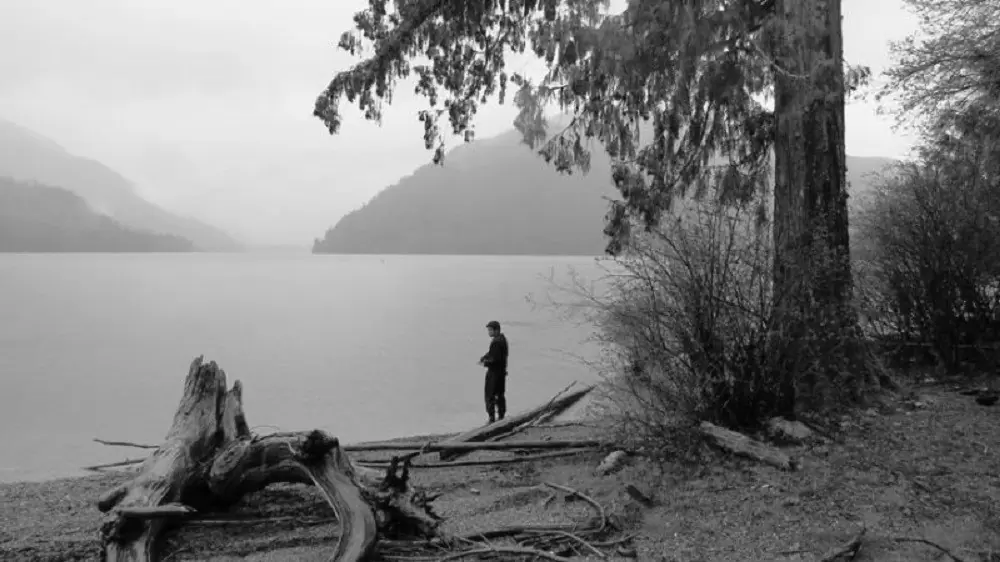
After we finally arrived in Port Alice, we were quickly hustled into the lobby, where we got to watch Neil Armstrong walk on the moon. The Delta Hotel manager had set up a TV, and everyone gathered around to watch this amazing event. It was July 24th, 1969. All in all. Quite a day for a young man.
Patty would stay in the gatehouse located close to the trestle from 6 am to 6 pm, then head home. He had an old truck that he used to go back and forth with. This was a real old truck, a 1940s corn binder. It had a split windshield, fold-up engine covers and headlamps on the fenders. Hard to tell if it had started life as a green or red truck; both colours were present. A few times, I got to ride with him to the cabin where he and Hazel lived, which was on Paterson Lake. The drive over the Greenstone road was always epic. I loved to visit them at the cabin with my family, and fishing was always good at the lake.
The drive to the cabin was always, without fail, an adventure where we commonly saw deer, black bears, and many smaller creatures. I never grew tired of the trip. After a day of fishing, Hazel would fire up an awesome meal on the wood stove, then Patty, by the light of the lanterns, would spend the evening telling us stories of the pioneering days of living on Vancouver Island. At times, you had to wonder where the truth stopped, and his passion for storytelling would take over. It mattered not to me, though; I could sit for hours listening to his tales. Quite often, I would fall asleep in front of the fireplace, as I imagined living through the times of his stories. Their log cabin was quite old; it had been built when Patty was a young man. It was like two cabins; there were 2 sections with a deck between them. One side was where Patty and Hazel lived; it was quite a large dwelling on this side. The other side was much smaller; it was where they kept their gear. The deck between the two extended out from the front, and there was a peaked roof between the two. The inside of their living quarters was really cool. They had a river rock fireplace, a big old wood cookstove, and a wonderful living room full of furniture and knick-knacks. There was a large window that overlooked the dock and the lake. The cabin was beautiful.
It was always late when we left Patty and Hazel’s place to head home. I would try to stay awake to see the nighttime wildlife, but hardly ever did.
Patty’s health had begun to deteriorate over the time we knew him, and eventually, they had to move into town. They still spent lots of time out at the cabin, though, and they gave us a key so we could use it as well. It was 1965.
The Lake is like a jewel, with a big island set in the middle. I have explored this area for years and hiked in the high country above this lake. I have found many caves to venture into. At the time of this story, the lake was surrounded by giant trees and plants of all descriptions. When you were walking in this vast forest of green, you could imagine how it was before first contact; it was still possible to feel the oldness of these incredible giants, and you could not help but be in amazement at the glory of this. The forest was filled with wildlife, and hiking here was awesome. This has mostly been logged now, and it is a far inferior forest these days.
One time, we went to the cabin to do some hunting and fishing. After we arrived at the lake, Dad and my older brother, Howard, went hunting, leaving me alone at the cabin. I was given very specific orders from Dad not to go anywhere; if I wanted to fish, I was only to fish from the wharf. He made me promise. But you know, there was this boat and motor at the wharf, and as the fish were not biting here, that boat and the motor began to look pretty good. I figured that I could go down the lake and find some fish, and get back before my dad and brother did. So into the boat, I hopped, fired up the motor and headed down the lake. I got to a favourable-looking spot, anchored the boat, and sure enough, the fish were hitting my line with every cast. I nailed a couple of nice ones.
I then decided to head back to the cabin. I started the motor and quickly realized it was stuck in one position, and all I could do was go in big circles. I tried everything I could to get the motor loose to no avail. Eventually, I found that by tying one of the paddles to the side of the boat and sticking it into the water, I could steer the boat somewhat to get it going in a sort of straight line. It was slow going, and it had been quite some time since I left the cabin. When I came around the corner, I could see my dad and brother standing on the wharf, and knew I was in shit. Dad was pretty mad; it seemed Patty had told him there was a problem with the motor getting stuck sometimes, and said that we should not use it. He was coming up in a few days to take it to town for repairs.
Dad gave me a talking-to then and there, and later, my brother told me that Dad had been very worried about me being out in that boat. He also told me that he, my older brother, was impressed that I had figured out how to get the boat back, which helped cheer me up. I was 10 years old.
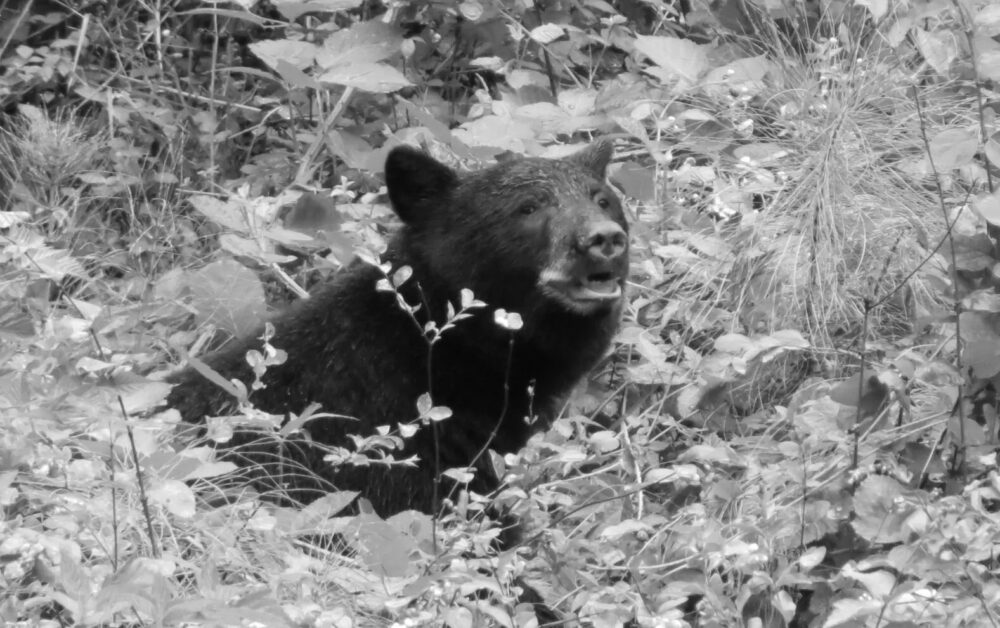
My whole family was into fishing, and there were many lakes that we would fish in during my youth. One such lake was Fish Lake (probably not its real name). This lake was named appropriately, as the fishing here was incredible; it is located in the Sayward Forest. The road was very rough, and this kept most fishermen away. From where we would park, you still had a fairly long hike over a hidden trail to reach the lake. As a young man, I just loved fishing here. It was a beautiful little lake; it had two big sections with a narrow area in between. The far side of the lake had some impressive rock bluffs.
I remember one time when we were hiking in to do some fishing, I was running ahead and had reached the lake before my dad and brother. I took off along the trail that followed the shore. This path led to our favourite fishing hole. It was right at the narrows. Fish travelling from one part of the lake to another had to pass through these narrows. Partway down this trail, there was a small hill, not much higher than 3 or 4 meters. The brush at the top of the hill was pretty thick, with the trail cutting through it. I was running up the one side, going full tilt. I was unaware that there was a young black bear, which was also running up the other side, full tilt. The black bear must have heard our sounds echoing on the bluffs on the other side of the lake and was running away from it. We met at the top of this little hill, and as we slid to a stop, we were nose to nose with just our heads sticking out of the brush. We both took one long look at each other for a moment and then turned and ran in the opposite direction.
My dad and brother could only see us from the shoulders up. They could not stop laughing at this. On the other hand, I had almost soiled my shorts, and it took me a while to find the humour in the whole affair. It must have looked pretty funny, though.
Demons

In 1965, we moved back into town, into a house with central heating. Just move a dial on the wall, and no more cold mornings. Another bonus was that Elm School was right across the road. I would head to school when the bell went off and always ate a warm lunch at home. Out behind our new house, there was a small woodland of trees. These trees were pretty big, and it felt like I was out in the forest. It was a great place to hang out as a kid. One day, I was playing in this forest with a friend. We found an old, overgrown logging road that we had never noticed before. This road went through the forest right about where the courthouse is now located.
On this old road, we found a real ancient logging truck. This truck was pretty old; I mean, it was mostly rust held together by moss and vines. To us boys, though, it was a majestic log-hauling machine. One could just imagine this truck when it was shiny and new, and how thrilling it would have been driving it through the giant coastal trees as you made your way to the log dump.
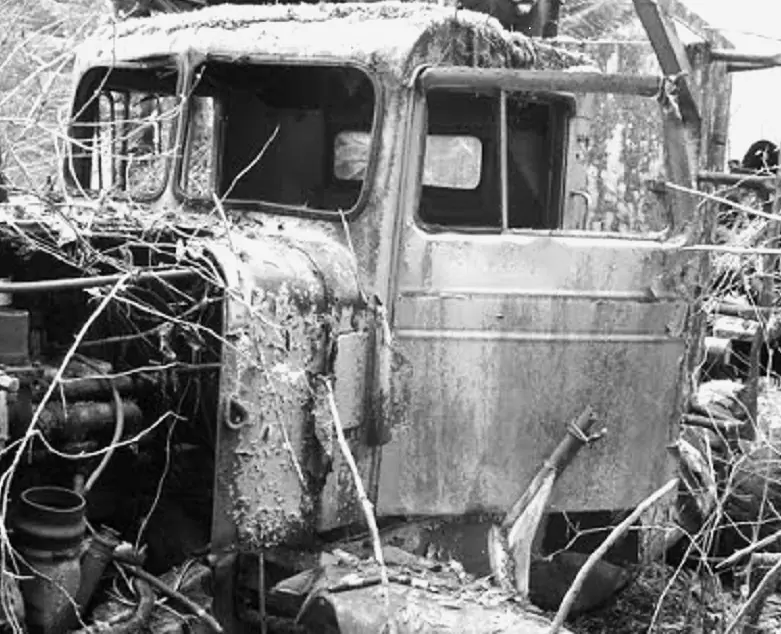
It seemed to us to be a good idea to climb into the cab and pretend to be logging truck drivers. The doors were closed and jammed pretty tight with rust, and we struggled to open them. We looked around for something to pry them open with. We found an old board, and by pulling on the handle and prying with the board, we got it to open; at least we opened the passenger door this way. We could not budge the driver’s door. It took both of us pulling and pushing on the passenger door to open it wide enough for us to get in; the hinges were so rusted up. It made a hell of a squeal, but we got it open. We got in, forcing the door closed again, and I was in the driver’s seat, and my buddy was riding shotgun. We began to bounce up and down on the old spring and horsehair seats and act like we were travelling down a bumpy logging road. This activity was very upsetting to the wasp nest and its inhabitants that were attached to the underside of the seat springs. If you have ever had an encounter with wasps, you will know what happened next. They came forth like an angry mob; they were like tiny little demons, banishing thin blades that dripped poison, stabbing you over and over again and again. Before we knew it, we had hundreds, if not thousands, of them stinging us everywhere. It was like a horror movie.
We sure had a tough time getting the door open again, and by the time we got out, we were screaming in pain. You could hardly see a spot on our bodies that was not stung. I was stung on my lips, eyelids, and in my nose, everywhere, and it hurt. It felt like fire. Once out of the truck, we had to run, brushing wasps out of every spot they could be; they were even in my shorts. I was spitting them out of my mouth. The angry terrors from hell chased us halfway to my house. By the time we got there, my eyes were nearly swollen shut. My lips were so swollen, I could hardly talk. I felt like I was on fire.
My friend’s parents were called, and they came and picked him up. My mom then ran a bath with oats and salt in it, and had me soak for an hour, as she continually added more warm water. It helped. I looked like hell and missed a few days of school. Mom took me to see Dr. Margetts to be checked out, and all was normal considering. At least I found out that I was not allergic to wasps. To this day, I still have a huge respect for wasp nests of any size. I give them a wide berth during any encounter.
I have over the years had other run-ins with these tiny horrors. When I was felling trees during fires, I would sometimes find them nesting in the ground at the base of the trees. The noise of the saw and the sawdust chips flying made it hard to realize the danger until they had already made their way up your faller’s pants. Your only choice at this point was to run away and drop your pants to brush the demons away. Your saw might still be idling in the cut. Because you had already started to fall the tree, you had to complete the job. Run in to do a bit of cutting, run out when they swarmed; you would do this until you got the burning tree down.
My Twin Sister

When we arrived in Campbell River and got set up for school, my sister was to be in grade two. I had not passed grade one the first time around in Vancouver. I would be in grade one. You see, I stuttered quite badly, and teachers seemed to dislike that. My grade one teacher hated me for this. She would sit me in a corner during class time with my back to the other students. She would mock my stuttering while the class laughed. It sucked having to start grade one again.
Every weekday, my sister and I would walk across town to reach Elm School. I had not yet learned to tell time, so when my sister and I walked past the old post office, she would use the big wall clock to teach me. Thanks to her, I finally got it.
Although she was my twin, my sister Patsy was at least a foot taller and far smarter than me. I had been sickly for most of my life due to my birth issues. I was still pretty frail in those days, so she looked after me like an older sister would. We fought as siblings do, but I loved my sister deeply. There was this connection between us, more so with her; she would always know what I was up to.
Later in our lives, my sister was married to Bruce Stad, a military man, and in 1979, they were living in Beausejour, Manitoba, which was a radar base in the NORAD defence system. One winter, I was visiting a buddy in Edmonton, and on the spur of the moment, I decided to travel to the base to surprise my sister. I planned on going by train to Winnipeg and then hitchhiking up to Beausejour. My sister had had another child since I last saw her. His name was Cory Eddy Stad. I was very much looking forward to meeting my new nephew.
When the train reached the station and I was disembarking, my brother-in-law was waiting for me. I asked him why he was there, and he said that my sister told him I was on the train. I had told no one, and my friend in Alberta did not know my sister.” She did this all the time.
I have many fond memories of my sister Patsy. One of my favourites is watching her roller-skating in our local parades. She was a member of the Campbell River rolling skate club and would be out in front with several other young ladies, on their skates, twirling their batons, tossing them high into the air and catching them again. All the while spinning around, followed by a marching band and the rest of the parade. She was incredible. I was so proud of her.
When my sister was due to give birth to her first child, her husband, Bruce, was up north working on a section of the Dempsey Highway on a military project and could not be there for the birth. My sister asked me to come and stay with her on the base so I could get her to the hospital when the time came. They were stationed in C.F.P. Chilliwack. I had not seen my sister for several years, and the thought of hanging out with her for a few weeks was pretty exciting.
When the day came, I was marching back and forth outside the OR, worried almost to death over the whole ordeal. When the doctor came out and said it was a healthy girl child, I was so thrilled that I must have been smiling like a cat chewing a bumblebee. The doctor broke out laughing at the look on my face. He allowed a few minutes to see my sister and meet my new niece. My sister asked me to name her. As I had just finished a book about Princess Natasha of Russia, I got to welcome my niece Natasha into the world. She was born in the same hospital as my sister and me.
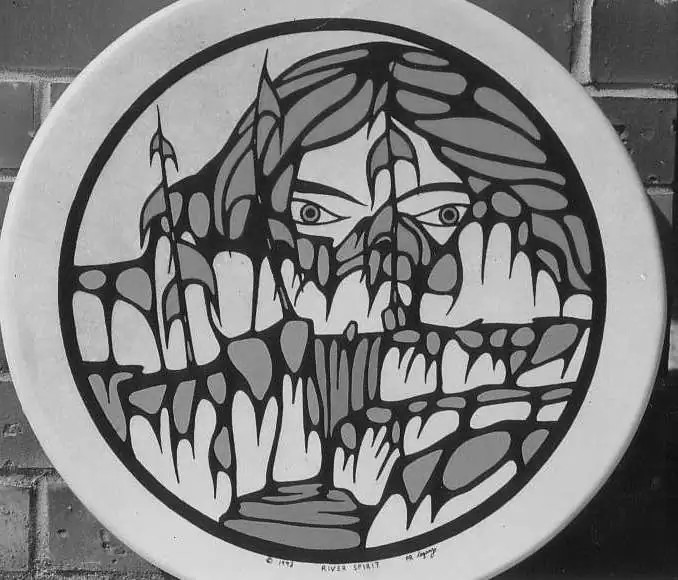
My sister is no longer with us; she was in a car accident on June 10th, 1988. Patsy and her husband, Bruce, had separated, and she had been hanging out on Denman Island with some friends. They were all drinking, and during the night, they put the truck in the ditch. While they were pushing it out, my sister fell forward just as the truck rolled back, trapping her underwater, where she drowned. I still have nightmares about this. I woke up in turmoil the day after her death, not able to get my shit together. I had no idea what was going on. Then I got a phone call from the police, telling me of my sister’s death the night before. I cried for days, and still do sometimes, when I am alone, and thoughts of my sister float to the surface of my mind. When I walk in the forest, I can sense my sister all around me.
She came to visit just a few days before her death. I was at work and would be gone all day. My sister wanted to get to know my wife, Gina, without me being there. So they spent the whole day together and, according to my wife, Georgina, they had an awesome visit. I do regret not being home that day, but I can look back on my wife and sister hanging out all day, sharing stories. Gina told me it was cool to hear the narrative from my sisters’ point of view of the events of us growing up.
My niece Natasha recently passed away from a brain hemorrhage. I struggle with this, as we were very close and talked weekly on the phone. I loved her very much and miss her dearly. She would say I was her connection to her mom. That worked both ways.
Mom
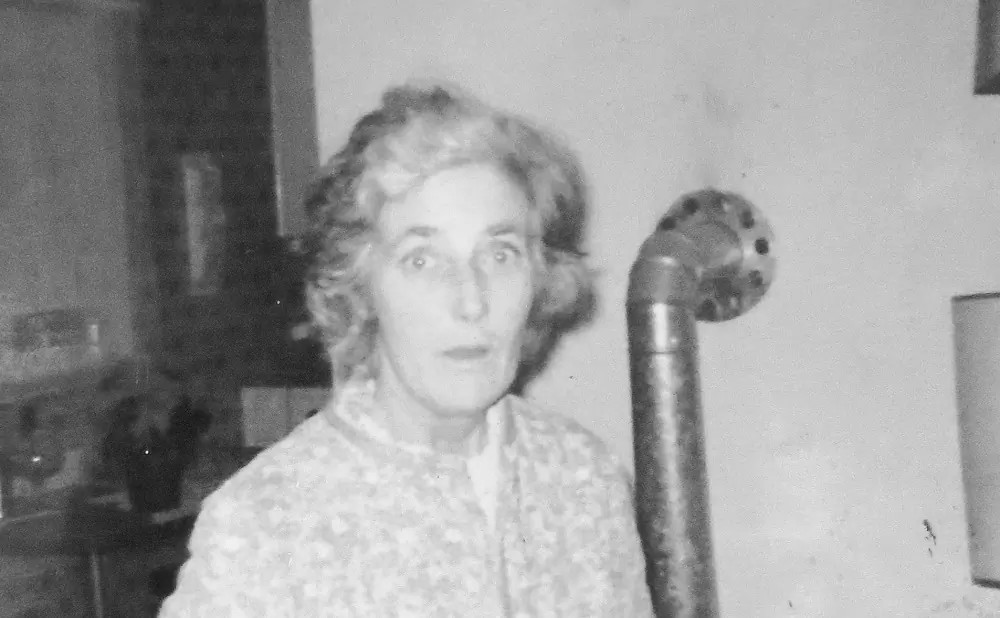
When I was born, I was only just over 2 pounds, and everyone thought I was not long for this world. I was placed into an incubator where they continued to grow me for many weeks. From what I was told, my Mom only left her position at my side to feed and care for my twin sister. Throughout my childhood years, I was a sickly boy with many return visits to the hospital. My mom was always there, like an angel looking after me. There was something about my mom, something innocent. She emanated goodness and treated everyone with kindness. I could not have asked for a better mother.
My mom and dad met during the war years when my dad was stationed in England. Seems my mother loved to sing, and one evening, while she was singing in a local tavern, in walks my dad. They fell in love and, in just 2 weeks, they got married. I have on occasion heard my mom sing; she sounded quite like Edith Bunker, so it must have been love at first sight.

Mom was one of those people who loved everyone and always had a kind word or a helping hand for friends and strangers alike. She was highly respected within the community, and this was well deserved. She was always baking goods for one fundraiser or another, and she could bake all those little English cakes and tarts. I enjoyed her treats. They were always the first to go to these events. The funny thing is, she was a bad cook, and her suppers were bad; I can’t believe I am saying this, but that is how it was. So during the week, we suffered through hard potatoes and leather-like liver. Potatoes mashed with turnips- God, I hated that; I never understood why she did it. Her timing was always off; the meat was cooked, and the vegetables were just starting to boil. On the weekends, though, my dad took over the kitchen, and we ate like kings. We fished and hunted for most of our meat, and Dad would cook up something wild like a goose or deer roast, mashed taters, vegetables from our garden and the best gravy ever. My dad made the best baked beans, hands down. He would bake them for 9 hours, and man, were they good. I always looked forward to the weekends and always helped my dad. He taught me to cook. Mom was pretty cool in other ways; she taught me how to knit, and I would make my toques and scarves. This was something I kept to myself, though. I think my buds would find it a strange thing to be doing. Odd or not, these became cherished memories for me. Mom was always knitting blankets and outfits for all the new family members, from my older brothers and sisters, and when she had time, she would make them for other families. My mom loved kids and would always break out with joy when she held a new baby in her arms. She had a soft spot for young mothers and was always helping them out. Mom had 7 children of her own, plus 22 grandkids. Somehow, she made you feel like you were her favourite one.
Mom and I did all the gardening, and she was quite capable at canning. We had a big garden, and I would help Mom look after it. She would spend weeks during harvest, jarring all kinds of stuff that would last us all winter. Mom was pretty awesome. Her jarred pickled beets were my favourite. When you walked into our larder, you would see shelves stacked high with jarred goods. There were vegetables and fruits. Plenty of dried products were included. Spices hung from racks, and containers of dried beans and onions were on a table in the middle.
Families don’t do this anymore, and I think that is a real shame. Mom and I bonded as we cared for the garden; she taught me so much about building up soil and when to plant. These lessons have been passed down through the generations. Thanks to my mother, I have always found enjoyment in gardening.
I must admit that I quite often went too far in playing tricks on Mom. I remember a time when Mom was out shopping. I decided to play one of my stupid tricks on her. I cut a potato into a slab and placed it inside my T-shirt. I then stuck a knife through my shirt and put ketchup around the blade and lay on the floor in the kitchen. When Mom came in, she screamed and clutched her breast right over her heart. I had to leap up so she could see it was a setup. I was afraid that Mom might have had another heart attack because of my trick.
Another time, Mom chased me out so she could scrub the floor. She always got down on her hands and knees to do this. As I was playing in the yard, I found a huge garder snake. I instantly took that snake and went quietly into the house to come up behind my mom without her seeing me. I placed it on the floor right behind Mom and gave it a directional push to ensure it came out right under Mom’s face. The guilt I felt after Mom freaked out over this made me make a mental note never to do these stupid stunts again, and I never did.
I loved my mom with all my heart. When Mom passed away, I was cowboying on a remote ranch up in the Chilcotin. There was no way to contact me. I liked drifting for the most part; I seemed to go where the wind blew me. I never knew where I would wind up. After my Dad left, my siblings wanted nothing to do with me, so there was no reason to keep in touch. I was not reachable. Mom passed on in the late fall, and even if they could contact me, as the winter snows had begun, getting out in the snow and mud would be pretty dicey. My oldest siblings tried hard to get hold of me, but they did not even know which ranch I was working on. I missed the funeral. I left the ranch on a spring supply run. I phoned my sister Penny to see how the family fared through the winter. She told me Mom was dead and the family wanted nothing to do with me. This was in the spring of 1979.
It was not long after this that I finally left the ranch and moved back into society. I was finding it hard to deal with people and getting myself into lots of trouble with the police for fighting. I was hurt and feeling like some kind of prick for not keeping in contact with my family. This not only stopped me from saying goodbye to my mom, but also cost me my family. I would not talk to some of my siblings ever again; they have passed away. I did connect with several of the others, but it took 50 years.
Grandma Lizzie
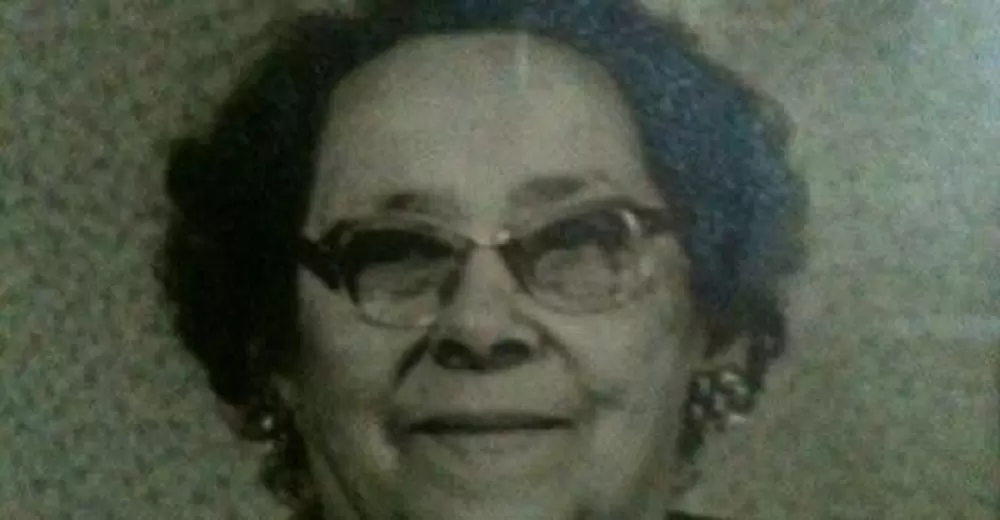
Dad’s mom was Aamjiwnaang. I only met my grandma once, when she came out west for a visit. I truly remember very little of her. On her visit, I do remember listening to Dad struggle to speak Grandma’s language. As he had no one to speak his first language with, it had drifted away from him. Gramma Lizzy was upset that he had forgotten so much. I saw my dad cry that day, the only time I saw him cry. I was only 7 or 8, and I wish he had taught me Gramma’s native tongue. That would have been good.
Shortly after Georgina and I married in 1985, I received a phone call to inform me of my grandmother’s death. She was 104 years old. She was born in 1881. This blew me away.
After my Grandfather married Lizzy, they had quite a few children. When Dad was not quite a teenager yet, he began working with Grandpa on his tug, as did most of my uncles. Then prohibition began in both Canada and the USA; it was the start of a lucrative 13-year period for tugboat captains. It was not just tugboats, though; all manner of watercraft were used to cross the St.Clair River. When the river froze, they would use horse- and human-drawn sleighs; some would drive across the ice in automobiles. Many old cars and trucks on the river bottom tell how dangerous this was.
In the United States, the Volstead Act made alcohol illegal, and it could not be brewed or sold in the country. It was also illegal to sell in Canada, but could be brewed and sold outside the country. The tugboats of the St. Clair River found new customers, the Americans. The Canadian/American border was the center of the river. All they had to do was run across the river in the dark of night, drop off the load and get back to the Canadian side before the feds got them. Most of the Rum Runners painted their boats black, making them virtually invisible at night.
It all started on January 17, 1920. In February 1920, the North West Mounted Police set up a headquarters in Sarnia to get control of these rum runners. The Americans also created a special force to hunt down these smugglers. They brought in six boats for patrols. These boats were the fastest on the river, they declared. They also began nightly patrols along the river shore. But the money was good in a time when times were tough. So Grandpa set about being what they called a rum runner. My dad and uncles worked on the boat with him. After the patrols were beefed up, the price per load was increased, and my Granddad would be the owner of several tugboats by the time this all came to an end. It must have been very exciting for my dad and his brothers.
My dad came from a very different time than I did; he had walked an old trail. He came from a place in time where you hunted for your meat, grew a big garden, and your medicines came from the forest. He gained much of his knowledge from his mom and grandmother when he was a boy. They taught him everything from animal husbandry to gathering edible and medicinal plants and foods. Dad shared some of their knowledge with me whenever we were out on the land. Sometimes it seemed you could sense their presence, whispering through the mist as we walked in the forest. It was in those moments that I felt most grounded, not just to the earth, but to the ancestors, and it was a comfortable feeling.
My dad, without knowing it, was an environmentalist. Sometimes, as we walked among the giants of the woodlands, he would tell you to stop, put your ear to the ground, and ask you what you hear. It was always the sound of a drumbeat. As you listened, he would say. That is the mother’s heartbeat. Look after her, and she will look after you. I was young and impressionable then, and now realize that it was my heartbeat echoing in my ear. Long before we knew that the mother needed our protection, my dad was instructing us to do just that. That is pretty awesome. I do try to look after the mother.
Got lucky
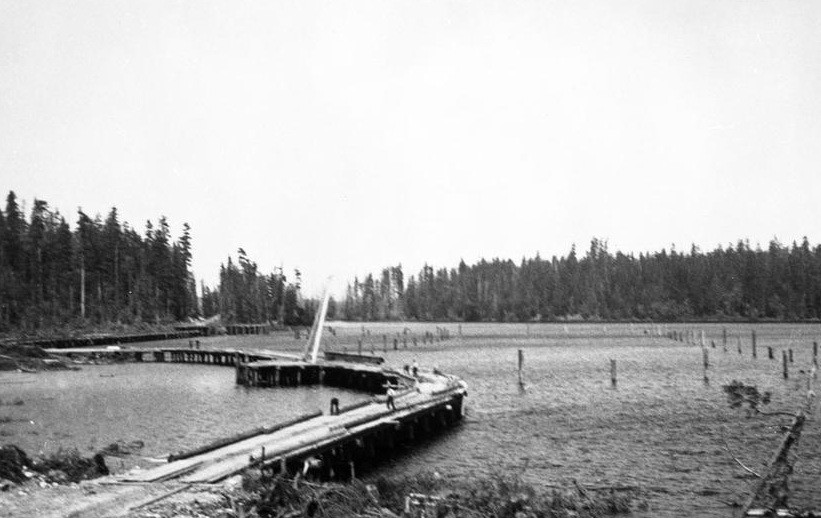
I loved fishing, hiking, caving, canyonering, canoeing, kayaking and mountain hiking, and spent most of my youth doing those activities. I would jump at any chance to get out camping. One time, my friend Jim and I had gone to Gooseneck Lake to camp for a few days, and we were both 11. My dad drove us up in the morning and helped us set up our camp before he took off. We spent the day fishing and hiking about. We found a bunch of old railroad ties that we carried back to camp. We set them around the fire 4 high and used a couple more for seats. This was pretty cool; it was much warmer inside this windbreak.
As evening was setting in, our thoughts turned to supper. It consisted of beans, corn, and trout, cooked on the fire in our improvised outdoor kitchen. A bit after dinner, I started to feel sick with nausea and had a bad pain in my tummy. Thought maybe it was the food combination. Then I began to vomit. I told Jimmy that I needed to go to town. It was just getting towards dusk. There happened to be a man fishing at the lake, and we caught him just as he was ready to drive out. I asked if he could take us into town, and he agreed to give us a ride.
We left the gear there, thinking maybe we would be back out tomorrow. The man took us home, and I am always so grateful for that ride. Later that night, as I was lying in my bed, sometime around 3 a.m., I started to hurt really badly. My mom and dad came into my room to see what I was moaning about. My dad pushed on my tummy slowly, then released the pressure quickly. The pain was agonizing, but my dad knew what it was and rushed me to the hospital. Our family physician, Dr. Margetts, was on call when we got there. He took one look at me and immediately told the nurses to get me ready to be operated on. I did not quite make it into the O.R. before my appendix ruptured and filled my gut with poison. The doctor removed this organ, patched me up, and I spent the next 2 weeks in the hospital. There was a rubber hose sticking out of my belly. Every day, they would pull that tube out an inch or two. Awful shit would leak out from the end, and this smelled pretty bad.
If we had stayed out camping, I would have died with Jimmy looking on, helpless to do anything. Jim and his mom Betty went out to retrieve our gear the next day. For some reason, they lost my tent. This was not a big deal; we had others. The funny thing, though, is that in 2021. Jim’s mom and I reconnected in a grocery store lineup. She informed me that she had found that tent again shortly after she lost it and had kept it for 55 years, waiting to see me again. She gave me the tent. It was funny to see that old tent again, sealed in a big garbage bag, sitting in her trunk. One day, I will write a full story about this tent.

This was not my first bout with my appendix, though. Last year, when I was 10, my parents sent my sister and me to a summer camp in Nanoose Bay. It was a church group that ran this camp. A few days into the 2 weeks I was to be there, I woke in the middle of the night with a bad ache in my tummy and began to vomit on the floor. The camp head guy was summoned, and he said he would take me to Nanaimo, to the hospital emergency ward, but only after I cleaned up my mess. So there I was, on my knees, at 3 a.m., wiping up vomit, feeling really sick and in pain. After the mess was gone, off we went. He made sure I knew how mad he was for getting him up in the middle of the night as we drove to the hospital. When we arrived, they took one look at me and admitted me right away, with acute appendicitis.
My parents were called, and after they arrived in the early morning, I told Mom how I was treated by the camp leader. On our way home, she had Dad stop at the camp. She gathered up our stuff, collected my twin sister and then went into the office to chat with the head guy. When my mom was mad, she was a formidable force, and I am sure that he knew how mad she was. She was in there for quite some time and was pretty red in the face with anger when she came out. My understanding is that they said they would fire the head guy and refund Mom all the fees my parents paid. Never went to any summer camp again. This suited me fine.
Tahsis

I had a dog when I was 12. His name was Boots, and he was a Pomeranian who thought he was a wolf. Boots and I were connected at the hip, and I went nowhere without him. Boots would think nothing of facing off against a much bigger dog to protect me. Sometimes he could get aggressive with people he did not like. He had bitten a few people. I felt most of them deserved it. But I might have been a bit biased, as he was my best friend. If I bent forward with my upper torso and told him to watch someone, he would jump on my back with front paws on my shoulder and growl. He was pretty cool.
One day, Boots bit a girl, and she had to get stitches. She had taken a swat at him for barking at her, and he caught her finger as it went by. Understandably, her parents were pretty upset. She told them she had only tried to pet him. Perhaps she had; I can’t say for sure. A few days after this, my parents sent me on a trip out to Tahsis to visit my sister Peachy, who had recently moved there from Sayward. I asked Mom to please look after Boots while I was gone, and she assured me that she would.

I enjoyed the flight in; it was on a Grumman G-21 Goose, which had seating for 8 passengers. It was like a flying boat. These planes were first put into production in 1937, and they were Grumman’s first commercial airliner. They are still common on our coast. We took off on a runway at the Campbell River Airport, but we landed on the water before driving up a paved ramp for disembarkation in Tahsis. The water outside the window was halfway up the sides of the plane as we landed. It was a very loud and slow plane, and that allowed me to take in the sights.
The island was much larger than I had thought. I observed many lakes and rivers from the plane, each one more enticing than the last. Where there wasn’t water, there were forests of giant trees growing up the sides of mountains topped by rocky, snow-covered crags. This primeval forest seemed to go on forever, and it was beautiful. Even at 12 years old, I had already developed a love of the island’s backwoods. Now I was seeing this grand forest filled with lakes and meadows, topped by craggy mountain peaks, laid out before me. I knew then that I would spend my life hiking the backwoods and high country of our incredibly diverse and wondrous island just to see these valleys, rivers and mountains.
After leaving the small Campbell River Airport, we flew up along the center of the island until we reached Woss Lake. Once we were over the logging camp at the community of Woss, we turned left to fly above the lake and onward to Tahsis and the west coast.

Woss Lake is about 11 km long and is set in a narrow valley that is no more than 1 km wide. It is a deep lake. From the west end of Woss Lake, it’s just a short run into the town of Tahsis. In 1995, the southern end of the lake was made into the Woss Lake Provincial Park. This is a total wilderness park where the only access is by trail from Tahsis or by boat on Woss Lake. To hike the trail from Tahsis, you drive up Tahsis Road as it follows the Tahsis River until you reach the trailhead. It is only 12 km from there to the lake. Most people go this route and come out the same way. The trail originally was an ancient trade route used by the Namgis and Mowachaht First Nations. It is called the Woss Lake Grease Trail.
It was amazingly scenic as we flew between the Rugged and McKelvie Mountains, both located in the Haighte Mt Range. The Haighte Mountain range is referred to as Patagonia North. The pass between these mountains is only 500 meters above sea level. You could see the ocean and Tahsis from the mountain pass. I could see it was a beautiful little village, located on the west coast of Vancouver Island. It is at the head of the very long Tahsis Inlet. There is a fairly well-maintained gravel road from Gold River that runs into town now, but when I was a boy, there was no road; the road from Gold River did not open to the public until 1972. To get there, you either flew in or took the Uchuck Freighter that sailed from Gold River. The Uchuck was a cargo boat that served the communities and logging camps from Gold River to Fair Harbour. Many times I sailed on her as I went to one camp or another.
An interesting fact about this boat was that the Uchuck cargo hold had a rather small opening, and when someone wanted to transport a private vehicle to Tahsis, it had to fit through this opening. Otherwise, it needed to be barged from Gold River, which was not cheap.
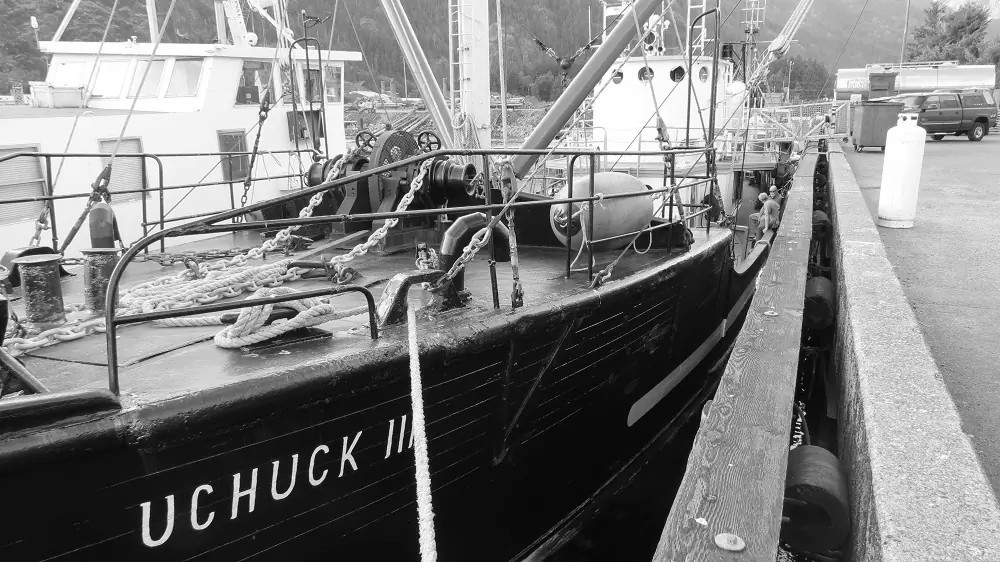
There was only one brand of tiny car that fit in the hold that was available in BC. They were tiny German-made cars. There were many of them in town. None had licence plates, as the roads were private and there was no way to leave the area. Hell, you did not even need a driver’s licence to operate them. I must admit, I was taken aback by these little bubbles of transportation. I still laugh about them today. The horn on these cars sounded like a circus clown’s horn.
When you talk to people who live in Tahsis today about these little cars, most have no idea what you are talking about. It’s funny how something so iconic could disappear from the memory of the world. I remember them. I thought they were awesome.
My sister and her husband, Pete, had found their way here via Sayward. Pete was in culinary school in Vancouver when we first moved to Campbell River. Not long after that, he finished up at school and took a job cooking in the M & B camp located on the shores of Kelsey Bay. It was a big camp, and Pete worked his way up to head cook. There were several 3-story bunkhouses where the loggers who came here to work were put up, and they all ate in camp. Back in those days, you paid 2.50 a day for room and board, and this got you accommodation and food, and when I say food, I mean food. Loggers ate like kings. As more and more of the loggers began to buy homes in the village being built just back from the bay, and production began to slow, the camp began to wind down. The old bunkhouses are now gone, leaving an empty lot where they once stood, and the cookhouse is no more.
In 1966, Pete was offered a job as head chef in the new Delta Chalet in Tahsis. The hotel flew them in and put them up for the night so Pete could decide on accepting the job. They saw it was such a pretty little town, and it would be a great place to raise their kids. Pete took the job.
After I arrived in town, I began exploring the area, at least as much as a 12-year-old kid could. Mind you, I was pretty independent even at that age. There was so much to see; the Liener River estuary was a wonder to behold. I did have a good time. Tahsis is such a beautiful area.
I spent as much time as I could with my sister’s girls, Ronny (the oldest) and Theresa; they were pretty awesome. The youngest was a pretty cool kid; she was so much like me. She was pretty young, but she grew older. I remember how she would hop up on my lap and say, “When I grow up, Uncle Bud, I want to be a hippy just like you”. I lost track of this little one when she was about 10, after my sister and I had a falling out. Have not seen Theresa for close to 60 years, but I do search for her on occasion. One day, I might just find her.
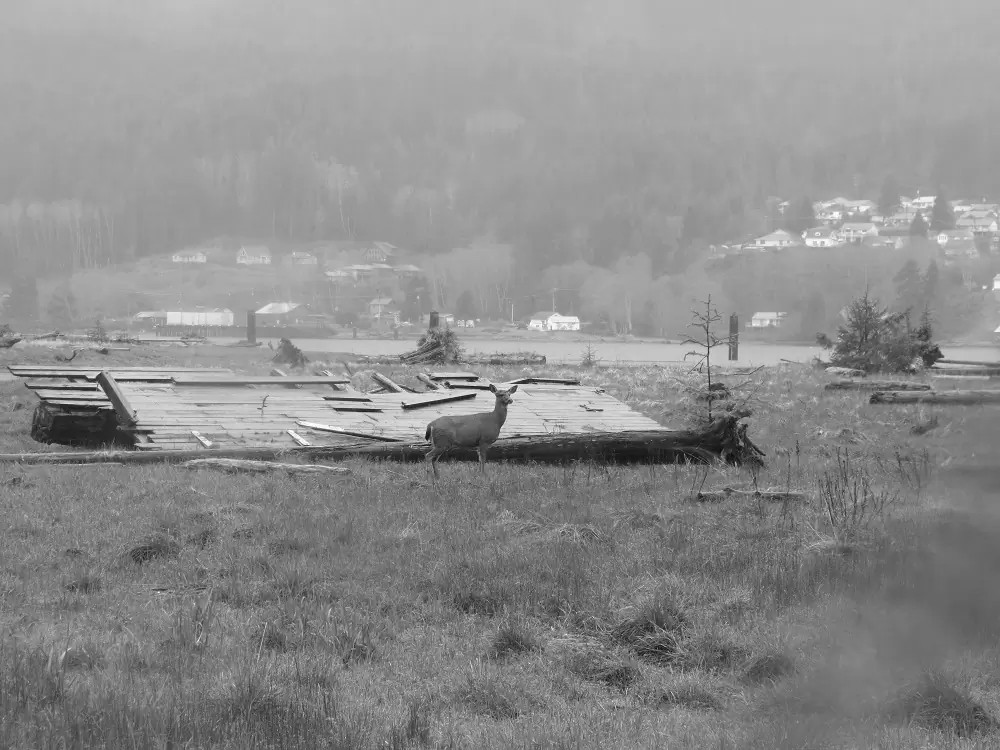
The wildlife in the area was stunning; you could see black bears, cougars, wolves, deer, elk, raccoons, pine martens and mink in spring, summer, and fall. Migratory hummingbirds gather in great numbers in Tahsis, usually from March until late June. According to oral history from the First Peoples, the hummingbirds have been doing this for thousands of years. Many other birds live or visit the area, enough to satisfy even the most dedicated birder. I was enthralled with this abundance.
It was awesome to spend some time with my sister and her family, but after a week, I was missing the rest of my family and was very much looking forward to going home. As I got on the plane, I could hardly contain my excitement at the thought of seeing my pup again. I had missed him so much.
Mom and Dad met me at the airport, and the first words out of my mouth after not seeing my pup were, “Where is Boots?” Mom’s face went ashen before she told me that the day I flew out, Boots had leaped out of her arms and run after the plane; they watched him disappear down the runway. Apparently, they looked all over for him, but he was gone. She told me I should be proud to have had a dog that loved me that much.
It was not until I was 64 years old that I had an epiphany about the whole damn thing and realized that she had lied to me. Sending me to Tahsis was the way they could put boots down for biting that girl without my knowledge, and my sister Peachy was involved. I can’t believe it took me all those years to figure out the truth. I have had many dogs and cats since then, but Boots still holds a special place in my heart.
School Sucked

School was not a place I liked to be; it seemed I was always in trouble, and then I would find myself sitting in the principal’s office waiting to get the strap. For those who do not know what that is, it was a heavy leather strap about 12 inches long and 3 inches wide, with a wooden handle. They would make you hold out your hands while they swung it hard, repeatedly against your palms. Hurt like hell. Flinched but never gave them the satisfaction of seeing me tear up. It always seemed to be one thing or another at school. As I said, School Sucked.
One day in grade 4, I was walking out to the backfield. When, unknown to me, someone had bounced a superball onto the school building’s roof. These balls were made of a very hard rubber with spectacular bouncing ability. One of the boys had climbed up to retrieve it; he threw it hard onto the paved tetherball blacktop below, and it went out in a great arc towards the backfield, right towards me. The other kids began yelling at me to run, and run I did, not knowing why, though, and I ran right into that damn ball; it hit the top of my head with such force that it drove my head into the ground, where I received a split lip, bleeding nose, and two eyes already turning black. This seemed to be very humorous to the whole damn school. As I said, I did not like school.
Never did too well in school, not because I was not smart enough; you see, I stuttered badly. I failed grade one because of this. While in grade one, they sent me to a place in Vancouver to check me out. They thought I might have developmental issues from my preemie birth. It was to test my IQ. They ran a series of tests that showed my IQ was above normal.
My stuttering was so bad that the teachers would make fun of me and fake stutter back at me. All the kids would laugh at me. The following year, I was tested again with the same results. Yet all through school, I did badly. When I was talking to teachers, my stuttering was really bad, and you could tell they just wanted to slap me to make it stop. This just made me stutter worse. At home, where no one could see me, I would stand in front of a mirror and practice talking without stuttering. I found that by tapping my fingers on my leg with one hand and pulling at the material of my pants with the other, I could control the problem. Not sure why this worked, but it did. By the end of grade school, I had my stuttering under control and no longer needed to use my finger-tapping. My grades had improved as well. These incidents with teachers did create a problem with a dislike of authority, though. This strong hostility to authority would play a major role in my life.
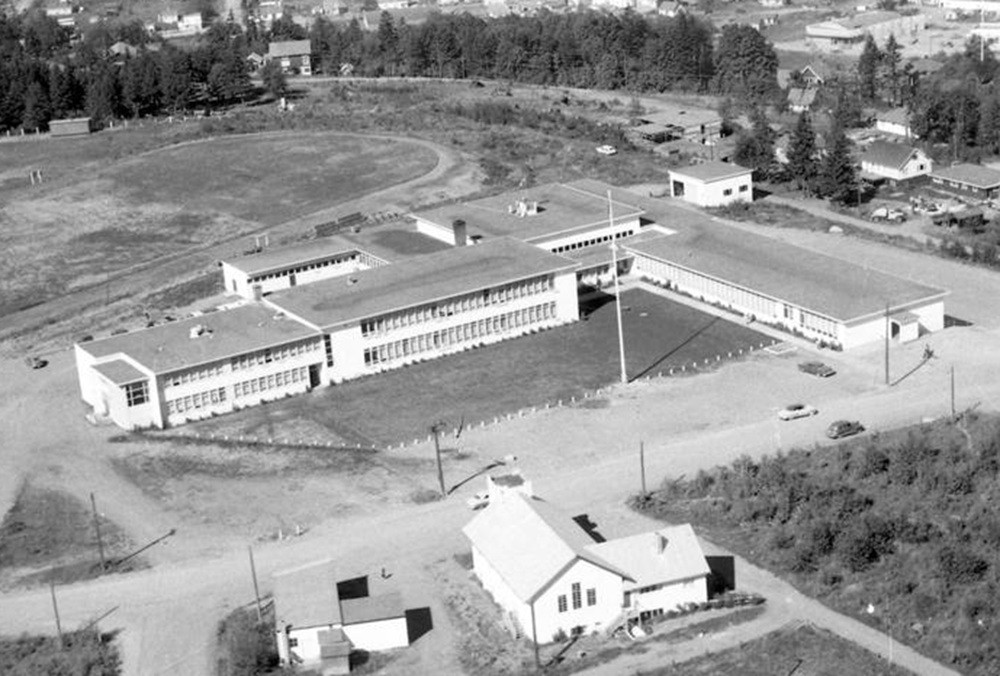
After moving up to junior high and grade 8, I was in academics. During my first month, I argued with a French class teacher about talking in class. It was at the start of class, just as we were getting seated, a friend asked me a question, and I answered him. The teacher told me to be quiet and to take my seat. I turned to look at him with a pissed-off look on my face. He did not like this, and he threw a book at me, with it hitting me in the head. For a moment, I thought about his actions before picking up that book and throwing it back at him, and shit, but I wound up hitting him in the head as well. It was spectacular.
This pissed him off big time; he dragged me down the hall and into the principal’s office by the scruff of my neck, screaming at me like some sort of demon. He was brutal, but seeing that book hit him in the head made it all very much worth it. The principal gave me 2 choices: move to the vocational department of the school or leave. So I did a stint as a student in vocational school. I learned the basics of carpentry, auto shop, welding skills, English, and math during this period. These skills were the best schooling I got.
The vocational department had its own principal; I believe his name was Mr. Sibling, or something like that. Mostly, I remember him grabbing your shoulder with 2 fingers and pushing down as far as you could go, all the time having you swear that you would never do whatever it was you did this time ever again. This guy was brutal. The pain from these encounters would last for hours. He was a martial artist with a black belt. He was brutal.
Although I did have one teacher who wanted to see me succeed, I did not listen to him, but I wish I had. He was always telling me that I was smart and bright and that I could make something of myself. His name was Bill Mountain, and he only had one eye. I remember how, when he was talking with you, he would pull his eye out to polish it. He saw something behind my bravado that was not visible to me at the time. I regret not listening to him.
I was in the occupational unit until I had another altercation with a teacher, with the outcome being that he needed to get stitched up; he needed 4 stitches to stop his forehead from bleeding. The last I saw of him, he was running after me with murder in his eyes; his whole shirt front was soaked with blood. Yelling that he was going to kill me. He looked like a wildman.
I can’t remember his name; I think it might have been Mr. Sherret. He looked just like Schultz on Hogan’s Heroes. So that’s what I always called him; he did not like this. I regret what I did to him, but to be honest, he brought it on himself. He used to walk around the classroom with a small paperback in his hand. Behind his back, he would carry a much bigger book. When he felt like it, he would hit you with that bigger book. Sometimes, knocking you right out of your chair, and I was getting pretty tired of it all. Just before we were to do sports outside one day, he had hit me once again with that big book. Once we were outside, I picked up a rock and, before throwing it his way. I was about 100 feet from him. I hollered to him to make sure he could see it was me. Darned if that rock didn’t just fly in a line right to his forehead. Splitting it wide open. Personally, I hope he still has nightmares from this.
This class had been my last chance to stay in school. They kicked me out and told me not to come back, not ever. That suited me just fine.