
Logging
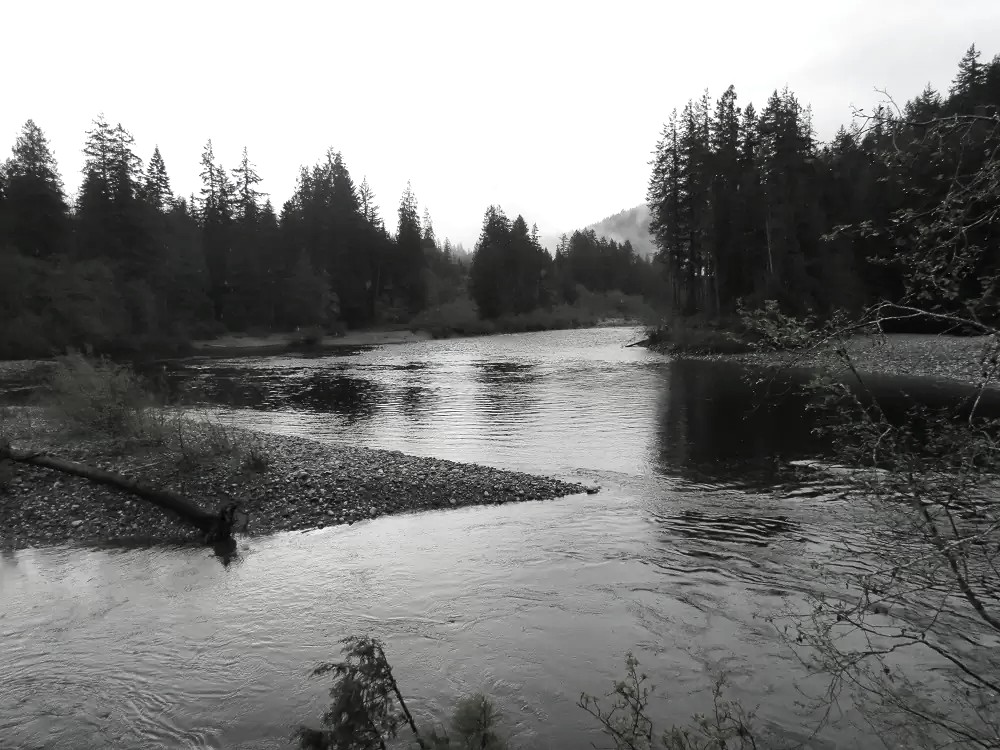
I started working at a real job when I was 15 years old. It was logging for Elk River Timber as a chokerman. Pay was $1.98 an hour. I was nothing more than a kid, so they just called me the kid. Hell, all you could see of me was my hard hat as I moved through the fireweed. I was quite small, but I was hired for the job because of my puny size. You see, the company had felled trees right into the Elk River. None had been bucked, and the winter rains had washed them downstream to form log-jams of logs made up of full-length trees and broken tops. Fisheries wanted them removed. They hired me because I was light enough to get out on the logs in the river to set chokers.
I worked alongside another young fella who was the same age and as small as I was. We were like hobbit loggers. I was happy to have the job. The camp I stayed in was called Camp 10. It was just past Drum Lakes, in between Crest Lake and Mud Lake. There was no highway in those days; the only road was a logging road running along the north side of Upper Campbell Lake. Although Gold River was a modern community built in 1965 to house and care for the pulp mill employees and their families, the highway to the town was not opened until 1970. It ran on the south end of Upper Campbell Lake.

I owe a lot to this logging company for giving me that first job. I did not stay working there for long, but I did learn the basics of being a chokerman. After this, I began hiring out to gyppo outfits up and down the coast. The work was tough, and I bulked up over time. I spent more time in camp than I did in town, but even on my days off, I was hardly ever home. I would only come home to see my mom, give her some money and make sure she knew I loved her. I quite often booked a room at the Rainbow Motel. This was located just across the alley from our house, and the owners knew me and the troubles with Dad’s drinking. So even though I was just a young teen, they would rent to me. They treated me like I was one of their kids. It was good to be on my own.
Over the next couple of years, I logged for various outfits up and down the coast. I went from being a snot-nosed kid to being well on my way to becoming a man. Seems I was raised by loggers. I learned what it was to be a rigging rat, and loved the job. They taught me to drink, cuss like a man and fight. I found I did enjoy a good fight.
Our family was a logging family. My 3 brothers all became loggers; even my brothers who were in the military became loggers when they left the service. One of my sisters was married to a camp cook, another sister was married to a logger who died on the job up in Call Inlet. My brother Howard was one of the best grapple snappers on the Island. My brother Joe was a driller/blaster on the south island area for 40 years.
In those days, my Dad drank quite a bit and would get to beating on us boys when he was drunk. This was the reason I was glad to be on my own. My mom, on the other hand, was a wonderful lady, and as sweet as pie. She always had a smile for everyone and treated everyone as if they were the most important people in her life. But when my dad was drinking, she was more like a sow grizzly bear, protecting her young from harm. She would stand her ground between us kids and him; most times she could stop Dad in his tracks with just a look. Other times, Dad was like a raging bear who struck out at everyone, Mom included. We learned to just try and not get in his way. But my dad drank a lot, and once in a while, Dad would lay a beating on one of us boys. Even from a very young age, I had been looking forward to leaving home and getting away from my dad’s bouts of drunken anger.
When I think back on how life was during my pre-teen years, I remember those times of celebration: Christmas, Easter, birthdays and so forth. They would start as joyful times, but after the beer and whiskey got flowing, Dad would start up fighting with one of my brothers, and it would become a brawl of fisty cuffs with tables overturned and things broken, with my mom sitting in a corner crying. I would run off and come home after the fight. I can tell you, there is not one time that I can remember when there was no fight. Every bloody time, it was the same damn shit. Holidays were never holidays.
I’m not here to bash the dead, though, and to be fair about it all, I must truthfully say that when my dad was sober, he was pretty cool. Everything I know about the forest I learned from him. He would take us boys fishing and hunting all the time and was always teaching us about the ways of the animals. My dad had such an understanding of the forest and its inhabitants. It was amazing how he could just look at the forest and tell us whole stories about what he was seeing. He would say it was like reading a book, written in another language; all you had to do was learn the language. He had such knowledge of the plants and animals, and how they lived. He knew many of the healing plants, and just how to use them, when to harvest, and how to prepare them. When you were in the forest with him, he was always telling you what was good to eat and what was not, or what could be used for medicine. I still remember how our table at home was always full of meat from hunting and fishing, along with my mom’s reserves.
Roberts Lake
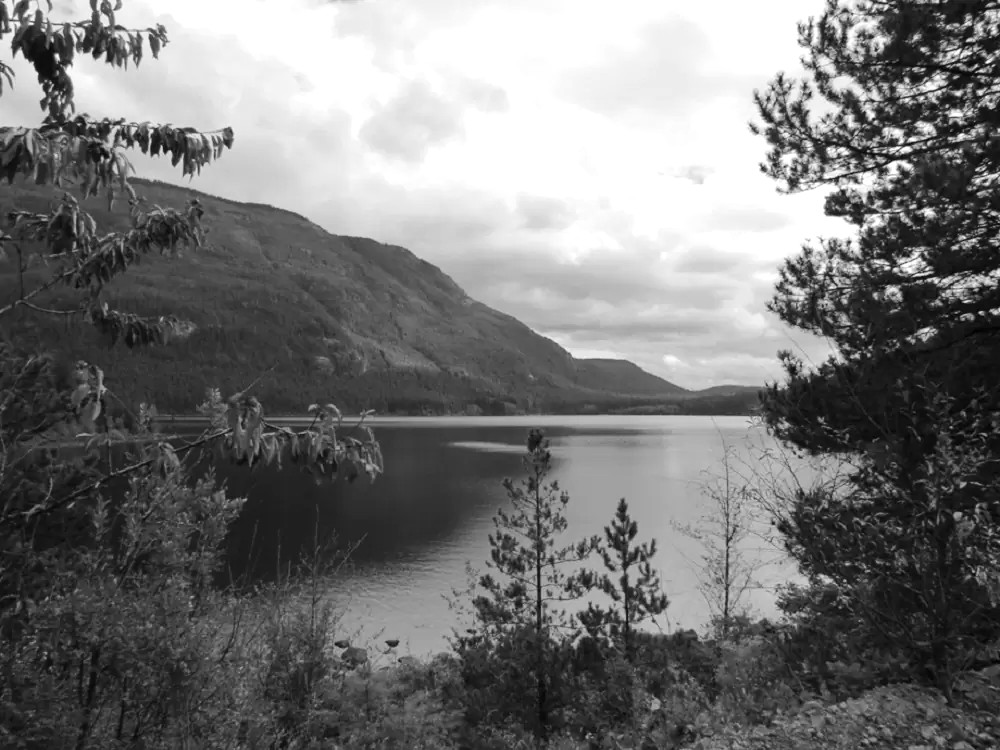
After my first year of logging, I spent the winter back at home. I had not been called back to work yet due to a snowy spring, and was told it would be at least another month before we could get logging. So I contacted some buddies to see if they wanted to go camping at Roberts Lake; it was early March. We planned on being there for a week or 2. My dad had given me the big bell tent we had used when we drove across Canada. It would fit all of us with room to spare. It was a ten-man tent. The center pole had come up missing, so we tied a long pole between two trees and threw a line over it to hold up the tent. Having no center pole and a floorless tent was a bonus. This allowed us to build a stone ring in the middle of the tent, where we would pile up rocks we had heated up in the fire outside. These hot rocks would warm up the tent nicely and last most of the night.
It took about a week to get the camp looking cool. Then we thought we might climb up Menzies Mountain. The top half of the mountain was snow-covered, the type of snow that has a very hard crust on it. This allowed us to walk on top. We headed out in the early morning. It took us 7 hours to reach the summit. The only wildlife we saw on the way up was Ruffed Grouse on the lower part of the mountain and Sooty Grouse up at the summit. Plus some early arrivals of songbirds. We had carved some wooden staffs a few days back, and these were used to help us on the way up.
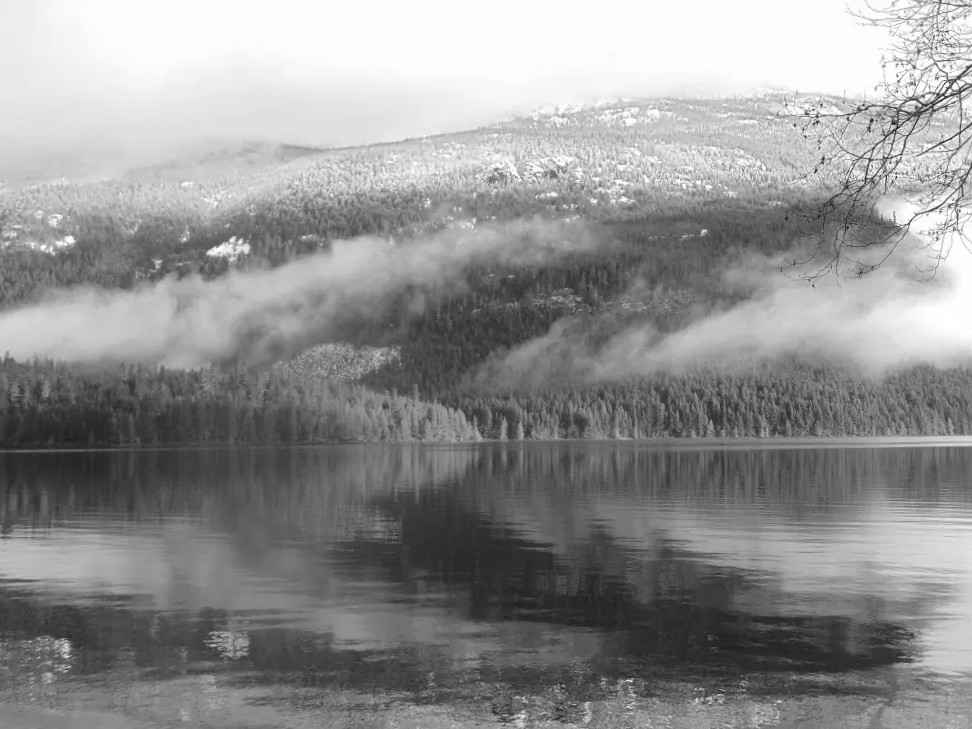
When it came time to head down, we came up with a plan to slide down on the hard-packed snow. We took our day packs and put our legs through the straps, with the pack now acting like a seat. Then, using our staff as a rudder, we began to slide down the snow-covered, steep mountain at a high rate of speed, and it was frightening and exhilarating at the same time. For brakes, we used our feet. On one occasion, my boot dug in, and I did a complete somersault, landing back on my pack as if it was done on purpose. Once in the timber, it got pretty wild. We had to swerve around trees and rock bluffs using our improvised rudder system. It took us about an hour to reach the bottom of the snow-covered areas. It scared the shit out of me, and yet it was quite mind-blowing. The first time we went down was so much fun that over the next few weeks, we did it several more times. Eventually, the snow melted. I would think that if you were across the lake at the resort, and things were quiet. You might have heard us, way off in the distance, hooting and hollering, as we flew down the mountain.
We had planned a short camping trip, but sometimes plans go awry. We were enjoying ourselves; fishing was awesome, and before we knew it, summer was on us. We had outgrown the army bell tent and built ourselves a temporary home of logs, driftwood, and plastic sheeting, with a wood-burning 45-drum stove and homemade furniture. We kept the bell tent up, and friends who would come for a few days could use it. We created a gravity-flow water system from the creek, set up a sink, a tap, and a drain. Running water was pretty cool.
We hiked every inch of that mountain, gathering wild onions, herbs and other various edible plants. We explored the lake by canoe, gathering up wood that over the years has slowly piled up on the shores. We used the wood to build a wharf that we could fish from. We built a table with benches. In the construction of our home, we added bedrooms where we used the gathered boards to build beds.
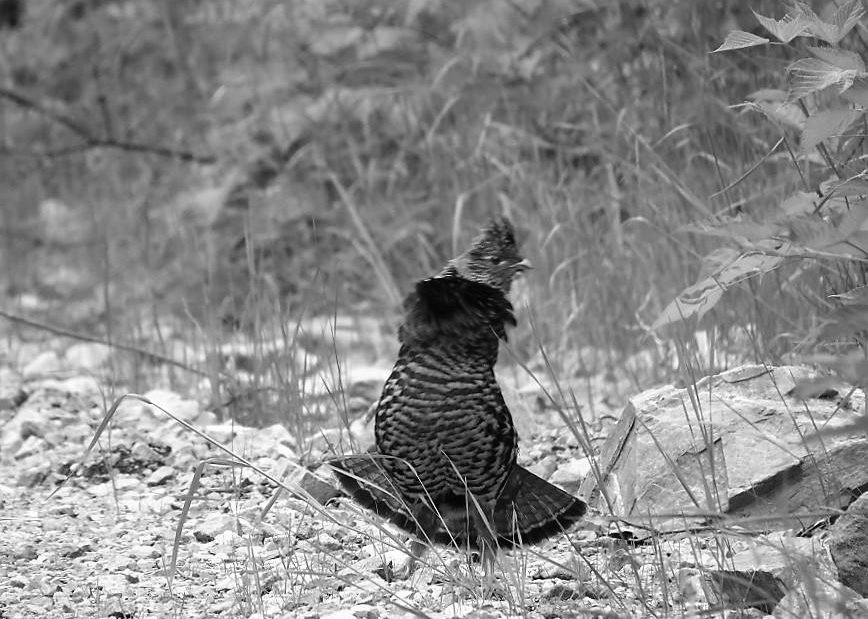
Along with fishing for trout, there were plenty of grouse, which are very tasty. We often made freshwater clam chowder, gathering the clams by diving to the bottom and grabbing them by the handfuls. Did you know that freshwater clams can live for more than 100 years? I did not at the time, or maybe I might not have eaten so many. I was ashamed that a creature that may have been around for perhaps a hundred years might have ended up in a bowl of soup.
On the other side of the lake, where the highway runs, there was an awesome little restaurant. We would sometimes go for coffee and one of their world-famous carrot cake slices; they were so good. They used to serve all kinds of awesome food and pastries. Sadly, this place is now closed. My family had been stopping there since the 60’s.
When I was a lad, the old guy who owned it had this gravity fuel pump, you would tell him how many gallons you wanted and he would operate a hand lever on the side of the pump to load up the glass container on the top, it had gallon markers on it, he would then put the nozzle in your tank and open up the tap allowing the gas to flow into your car. Although no longer used, the pump is still outside the store to this day. I bought gas here for several years before the pump was shut down.
He also had a museum on the property, built out of logs with so much cool stuff on display. They owned both the Cable Cafe in Sayward and Roberts Lake Resort. This museum used to be beside the Cable Cafe in Sayward, but the Salmon River had flooded in a big way, and the building was underwater. So, after drying out, it was moved log by log to the Resort at Roberts Lake.
We had been at the lake all summer; the days were getting short, and fall was upon us. I had missed my callback for work, so I needed to find a new job. It had been an incredible time spent with good friends. A summer of hiking, fishing, canoeing, and endless adventures up on Menzie’s Mountain. But it had finally come time to say farewell to Roberts Lake and find a job. So we packed up our gear and headed back home.
Nootka Island
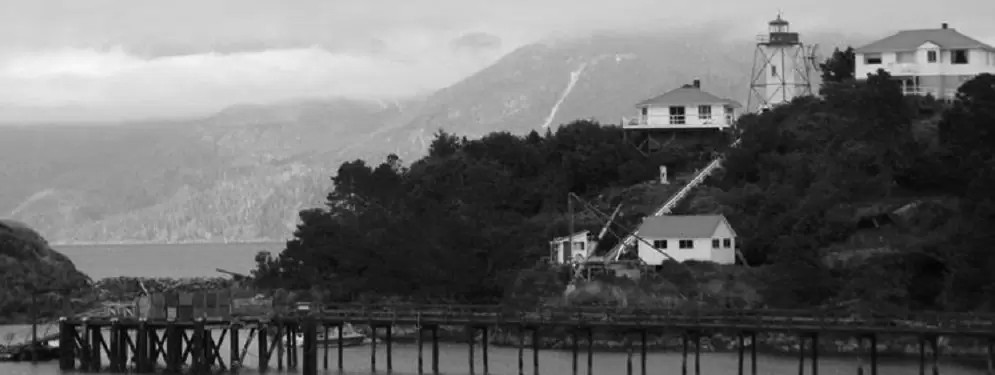
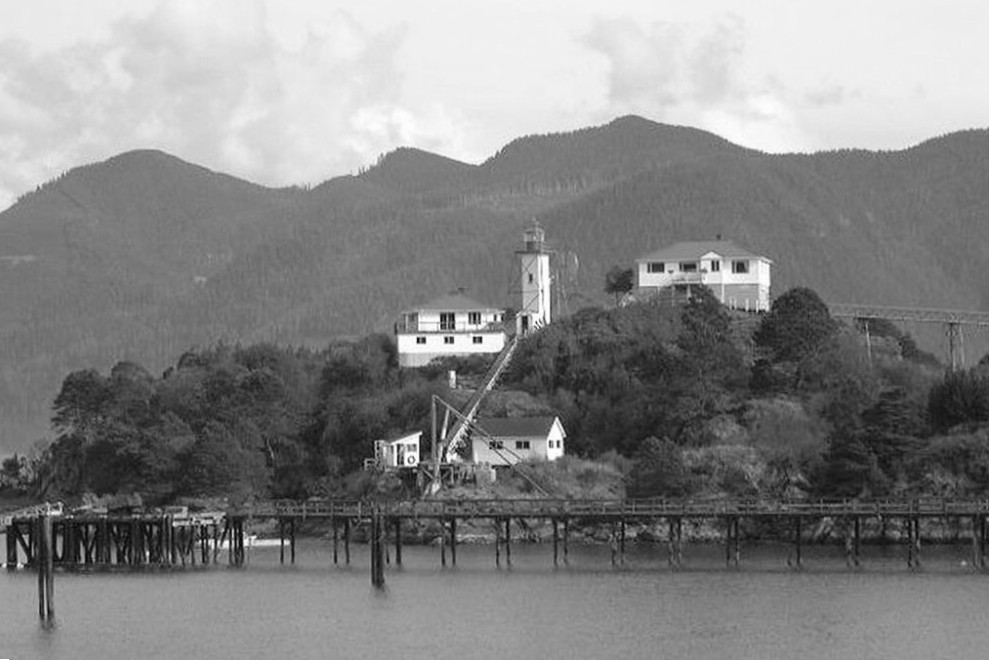
Then off I went to the logger’s employment office. This was the logger’s place for employment; they were in contact with most logging outfits on the coast. The service was free for us loggers; the companies would pay them for securing workers for them when needed. I walked in and said I needed a job, and was offered work logging on Nootka Island. They said it was a 15-and-6 shift. ” Sounds good to me,” I replied. When the job was confirmed, I was told to be in Gold River the next morning at 11:00 am, where a flight was booked to take a few other loggers and me into camp. The flight was uneventful, and after a bit, we arrived at camp. This was the main camp, which was in Kendrick Inlet. As the plane pulled up to the dock, the other guys grabbed their gear and headed up to the bunkhouses. The boss came down onto the float and said, “Leave your gear beside the crew boat that was tied up to the float and head up for lunch at the cook shack”. Sitting by the boat were a bunch of boxes filled with food. I placed my bag there and sauntered up to the cook shack.
As I was eating lunch, one of the cooks asked if I was heading to the outer camp, Seems like it I said. “That’s tough,” said the cook. He told me I was heading out to the West Coast of Nootka Island to what he described as a very rustic camp.
As I was finishing my lunch, the boss came in and said to head down to the boat, load my gear and the food boxes, and he would join me in a minute. I got everything stowed away, and we headed out. I asked him where we were going, and he said they had a small camp on the edge of a huge tidal flat, on the outer shores of Nootka Island.
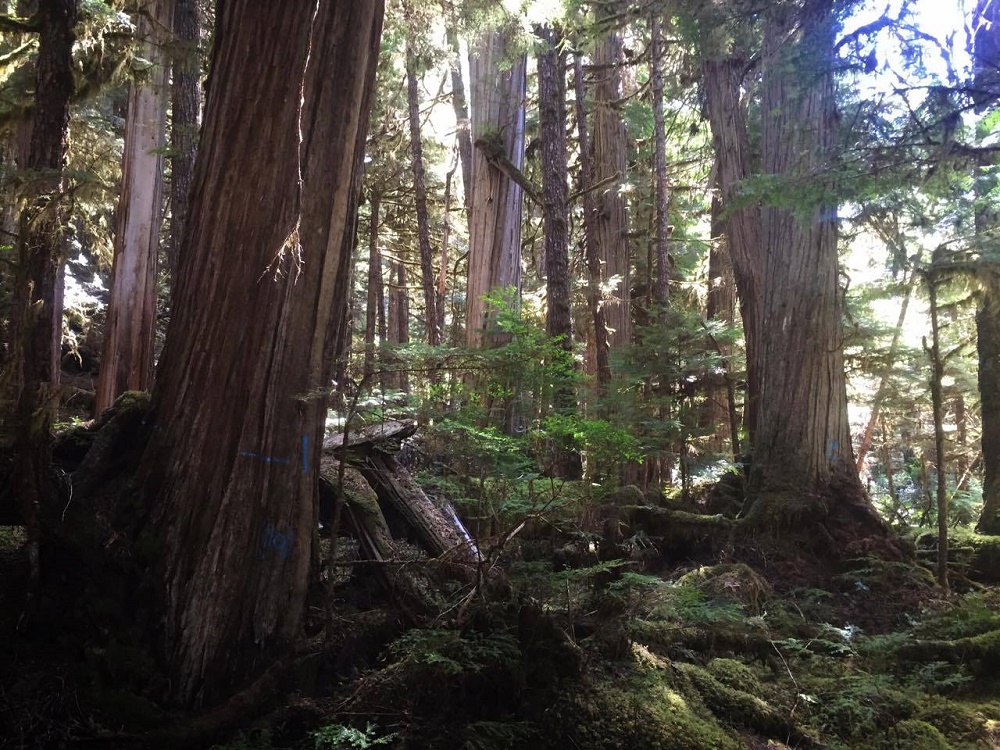
I enjoyed the view as the boss navigated the boat to the outer camp. I had heard that Nootka Island was one of those wild places that was full of natural wonders. I could see that it was a land of big trees and rocky bluffs. In between these craggy precipices were small bays filled with spectacular sandy beaches. I saw numerous sea caves along the shore. I have always felt the need to see what is around the next corner, so I was having a wonderful time on this ride. There is so much history on this Island, from the days of Spanish rule until the Nootka Sound Accord was signed on Oct 28, 1790, at Yuquot, along with tens of thousands of First Nations histories.
Once we rounded the corner at Yuquot and were looking straight out at the Pacific Ocean, the sea was getting a bit rougher. We finally reached our destination, stopped offshore, and dropped the anchor right where a tidal flat met the sea. There was a small shack that had been dragged up on shore, and it looked like they had tried to level it off, but with not much success. The boss blew a blast on an air horn, and out of the shack came a muscular young man wearing a dirty apron and sporting a thick red beard that reached down his chest. He grabbed a pretty big wooden skiff from the upper beach and pulled it to the water’s edge.
3-foot waves were hitting the beach, but he just pointed the skiff into them and, with some powerful pulls on the oars, he beat his way through. Once in the rollers, he easily pulled up to the boat. He was the cook. He had not been out of camp for a while and was a bit bush crazy, but a nice fella all the same. We loaded the food, my gear and myself into the skiff, said goodbye to the boss and headed to the shore. On the way, he told me that we had to surf our way in on a wave and that we needed me to jump ashore as we came in and help pull the boat as far up-shore as we could. The cook jumped out with me, and we both pulled the boat higher to avoid the waves. I began to wonder just where I had gotten myself. I felt like I was on the edge of the world. The boss had waited to ensure we made it in before he pulled out. Seeing him leave and disappear around the corner was tough; all I could say was “Damn, there goes my ride.”
We packed up the supplies and my gear for the bunkhouse/cook shack. There were only 4 of us in camp. The shack was not very level, but by putting your bed on the lower side of your room and pulling your mattress partway up the wall, it was not too bad for sleeping. One end of the old shack had our rooms. The kitchen, wash area and dry room were on the other end. There was the cook, our hook tender, the tower operator, and I staying here.
The rest of the crew lived in Yuquot, and they were picked up daily in a sort of crummy. I say sort of, as it consisted of the back wheels and rear compartment of an old crummy. Our yarder operator would use a 404 Timberjack Skidder to hook onto the front of this and pull it up with the winch. He would run this contraption to Yuquot over a very rough and muddy trail to pick up the rest of the crew. When we got out to the yarder on the first day, I saw it was a Madill, but it had a rigged wooden tree for a pipe. There was no loader. There was a deep fog out on the water. I looked out to where the rigging was going. I saw it ran through to the middle of the lagoon, and then just disappeared into the fog, and I wondered how we got out to work.
One of the boys choked a log in the landing, and the engineer lifted the butt rigging until the choker was tight, and pulled it out to the water’s edge, at which time he hopped onto the log and held onto the choker. The engineer slowly pulled him across the lagoon, disappearing into the mist. The engineer brought it back for the rest of us. While we were waiting, I was told that we only needed to do this when the tide was high; the rest of the time, we could walk across where it narrows down by the beach. About a week later, the tide was high at day’s end, and we were required to use the log technique to get out of the bush. The log was choked, and we began our trip across the water. When my time came, I was pulled out to the middle, where the engineer stopped. He then started to lift the log up and down, trying to knock me off. He could not shake me off, so he just lowered the rigging down until I had no choice but to fall in. Apparently, this was something they did to all new guys; it sucked at first, but as it was quite hot, it turned to humour pretty quickly.
The boss was a religious man, and he would not let any crew work on Sunday, so it was a day to relax. There was a nice lake about halfway to Yuquot, and one Sunday, I took a walk on the Yuquot trail to see this lake. It was a warm day; the water looked inviting, so I had a swim. It was great. On the way back, I walked along the gravel beach where we would drag our logs down and coal-deck them until we had enough to fill a boom bag and take them to the booming ground in Kendrick Arm. A tug from main camp would pull a string on boom sticks out to us; we would attach these to the shore on either side of our coal deck logs. Then with the skidder we would push the logs off the beach at high tide. Then the tug would close up the bag and haul them away.
There were about 10 feet between the logs and the water. The water was flat calm; I sat against a big cedar butt and pulled out a book I was reading, which was Dune. The sun was shining, and there was a warm breeze blowing; it was a beautiful day. Then, all of a sudden, the ocean exploded right in front of me. It was like the kraken himself was reaching up to drag me into the sea. Turns out, it was a Grey whale running along the edge of the beach, just at the drop-off. I think they do this to ease an itch, but don’t quote me on that. I got soaked in the process; the whale was only about 3 meters from shore due to a sharp drop-off. Scared the shit out of me. After a bit, I began to laugh over this. The whale was so close that I could have jumped onto his back.
This developed into a story I used to tell tourists in the bar back in Campbell River. It was a story of whale riding. The story got good over the years, and some of my friends knew it so well that they could join our table halfway through the telling and step right into the story. The gist of the tall tale was how we would wait at a whale rubbing beach, wearing cork boots and carrying a gaff. When the whales ran along the beach, all you had to do was run up the side of them until you reached the blowhole. You would use the gaff hook to hold it open. The whales would not dive until you released the blowhole. I suspect the book Dune I was reading had a big influence on this story. The story was total bullshit, and I sure hope no one tried this.

The following Sunday, I hiked out to Bajo Point and found a broken-down cabin. The walls were stuffed with old newspapers from the 20s; they were quite fragile, but we could see the dates on some of them. There were a few crosses still on the wall and a bit of other stuff scattered about, including an old bible. Maybe a missionary had built the cabin. I had hiked out to the point to see if I could make it to Calvin Falls in a day, but decided that was not possible and did not try. I had once seen the falls from a boat. There is a trail that takes you right past them now.
Whenever I was in town from camp, the first thing on my agenda was to see my Mom. Ever since I was a child, my mom cared for me; she worked very hard to keep me healthy despite all the health issues I suffered that came with being a preemie baby. As far back as I can remember, I have visions of Mom holding me in her arms as she sat in her big wooden rocker, softly singing to me as I would fall asleep. Sometimes when I was having a bad bout, Mom would sleep on our big old sofa, holding me in her arms. I loved my mom deeply, and we had a real bond.
One of my best mom memories was running into her room as a child in the mornings, where she would hug me tight and tell me she loved me. I would answer with an “I know you do,” and she would always say to me, “How do you know that?” and I would reply, “Because you just told me so”. This was a ritual we went through every morning. It kept us bonded.
After Mom and Dad had moved back to Vancouver and Dad had passed on, I would go home to visit Mom as often as possible. She was suffering from dementia and quite often would not know which one of her sons I was. I would prompt this ritual, and she would realize that I was her boy buddy, and she would hold me tight and say, “I love you”. Mom died from a heart attack not long after my dad passed.
The doe-eyed girl

When my parents lived in Campbell River, my mom had befriended a young First Nations mother who worked with my older brother Bob. They both worked at the fish processing plant that was located at the bottom of Peterson Hill. Mom took her under her wing and helped her with life issues. She took many young ladies under her wing. My wife remembers my mom and how her mother would always send her down to see my mom (Dot), who would help her shop for new clothes. My mom worked at Robinson’s clothing store at the time, and many people loved her for her kind ways and friendly smile.
On my days off from Nootka Island, I was home visiting my mom. She asked me to check on a young 6-year-old girl, whom she was babysitting. She was in our backyard, and Mom just wanted me to check and see if she was OK. When I stepped out on our back porch, I could see she was on our swing, but not swinging. Her head was down, and she was shuffling her feet on the ground. As I looked in her direction, she lifted her head, and her image touched my heart with such sorrow as I have never felt before. She was such a forlorn-looking little thing; she had big doe eyes that you could see had just been shedding tears, with some still running down her cheeks. I felt a connection to this child, almost like she was someone I knew; it was quite disconcerting. As she looked up at me with those sad eyes, my heart went out to this little one. Her tear-covered face was forever imprinted on my memory. It was the first time that I had felt this much empathy for anyone.
I walked back into the house and asked Mom what was going on. Mom then told me that her parents were divorcing in court that day, and that was why she looked so upset. She told me that the mom had been beaten almost to death by her dad in a drunken rage, right in front of the child, and she was confused, frightened and feeling lost. She had to run to the police station, which was several blocks away, to get them to come and save her mom. This child of 6 watched her mom get loaded into an ambulance and taken to the hospital with lights and sirens blaring. Her dad was put in cuffs and hauled off to jail. As my mom was narrating this story to me, she started to cry, with tears running down her cheeks. For years, that image of her on my swing haunted me; those dark eyes holding back tears got to me. I always thought of her as the doe-eyed girl. I worked up on Nootka Island right up until logging was shut down for fire season. During this time, I booked back into my parents’ home.
The Fire

One Friday night, I came home around midnight. I had been drinking, and I saw my dad sleeping in his chair in the living room. My twin sister was in bed, my mom was in Vancouver, and my older brother, Howard, was still out. I was hungry and decided to pan-fry some chips, so I loaded up the pan with oil and sliced some spuds. While I was waiting for the oil to heat up, I went to the washroom, sat down, and started reading a magazine. I forgot about the oil and was only reminded of what I was doing when my twin sister started screaming. The house was on fire; she was yelling. I quickly ran out, and sure enough, the pan was in flames, and the cupboards above the stove were burning brightly. I told my sister to call the fire department and then get out while I went to wake Dad. Funny, but I seem to have sobered up and become clear-headed in that moment.
I could not wake Dad, and as he weighed close to 300 pounds, while I was just a bit over 100 pounds, soaking wet, there was no way that I could carry him. He was not just sleeping; he was passed out drunk. So I pulled him from his chair onto the floor; flames had now entered the room, and the smoke was burning my eyes, causing me to cough harshly. I thought for a moment about just running out. But this was my dad, and I knew I was getting my dad out or dying in the process. Then my adrenaline kicked in.
I grabbed my dad by his wrists and started to drag him across the room toward the front door. The flames were now all around us, and the heat made it very hard to breathe. The higher I held my head, the hotter it was. I was struggling to get him across the room. My head was almost floor level, where there was still some breathable air. That was when the windows blew in, and all hell was unleashed into the house; the ceiling tiles came crashing down, all except right over us at the door. The past winter, we had sprung a leak there, and Dad had to replace a patch of tiles in that spot; these stayed up, giving me time to get the door open.
Flames were shooting out the door just above my head as I was crouched down trying to get my dad out the door, but I was having a hard time trying to get him over the doorstep. The flames seemed to be alive. The house had become an inferno. My hair, face and arms were getting burnt; the heat was very intense, the air was hot, and it was hard to breathe. My dad’s pants were beginning to catch on fire from the heat. Just then, I heard a car come to a squealing halt, and a young man came running up to the door and took hold of my dad and me, and we half-carried, half-dragged my dad to the other side of the street. My dad had some burns, and my hair had the frizzies. Thanks to this teen, Dad was saved. His name was Fred, and because of him, my dad was safe.
As we got my dad across the street, my brother came home and, not realizing that Dad was safely out of the house, he tried to enter, fully intent on saving Dad. The Police and firemen were holding him back, but he was fighting to get free and into the house. My brother was a pretty good scrapper, and some of the police and firemen sustained black eyes and bloody noses before I was able to get through to him that Dad was safe. At this point, we were able to calm him down. No charges were brought against him, as he was just a 22-year-old man trying to rescue his dad.
Mom was going to be home the day after the fire, but we had no way to contact her, so we waited for her to pull up in a taxi. She never fully recovered from the loss of all her memories, and I still feel the pain of being the one to have caused it all.
Later that week, Tony Simnett, editor of the Islander Newspaper, ran a full front-page story about the fire with the title in large print that said: “sixteen-year-old boy dashes through raging flames to save sleeping father.” It would have been more honest if it said, Drunk son starts a house on fire and nearly kills his father. I was no hero that day. I still have nightmares about the fire and how I almost killed my dad. Mom and Dad moved to the Fraser Valley after the fire, taking my twin sister with them.
The Accident

During the 72/73 winter layoff, and after Mom and Dad had moved away, I took a room with the parents of a buddy. I had gone to school with him, and we were pretty good buds. His mom and dad took me in with no problems. Another friend of ours came over one day to invite us to go for a logging-road trip in his ’64 Ford Meteor.
He had just done a brake job and wanted to test them out. This sounded like a good idea, so 5 of us, plus the driver, all piled in the car and off we went. It was Dec. 1, 1972. We had fun, smoked a few joints, and had a few beers while we raced around the logging roads behind town. Then, on our way back into town, on a downhill section of road, the brakes failed. We were whipping along pretty fast when we noticed an off-road fatboy logging truck turning up the hill toward us. When he saw us, He tried to stop, but could not. We met him on a one-lane bridge that crossed a pipeline, and we were doing about 60. We hit him head-on. The car went right under him. It was crushed pretty badly, but all 6 of us survived, 3 of us not so well, and 3 almost walked away. I broke a few arm bones, shattering my left leg in numerous places, along with serious compound fractures; my skull was cracked open. I was pretty messed up. My buddy, whose house I was staying at, broke his back in a few places, and the driver dislocated his hips. We were lucky that it was a fat-boy truck; if it had been a highway truck, we would all be dead, I suspect. More room under the fat boy.

As we were flying down the hill at breakneck speed, only one thought was on my mind; I was sure we were all going to die. I was thinking this as I watched the driver pop the gear into reverse, and hoping it might help. There was a loud ping, and we just kept going.
I was in the middle of the front seat, and at this point, I was ready to jump out and take my chances on the road. But I was blocked by two guys who appeared to be frozen; I was yelling at them to jump. When I realized they would not, I got on the floor to keep my head down. I was kneeling on the hump where the driveshaft ran under the car. My brain was sending me images of the car being sheared off by the truck bumper, and I did not want to lose my head. Instead of this, the car engine was pushed back, with this putting so much pressure on the driveshaft that it just buckled and twisted its way in the car’s front seating area, like it was a pretzel, going through my leg on its way. The car roof was pressed down to the seat tops, and the engine was almost in my lap. I must have blacked out, because all of a sudden, the lights were flashing and people were trying to figure out a way to extract me.
They had a hell of a time getting us all out, as we were lodged between the front wheels of the truck, and the truck was loaded. Once they had us extracted, they stacked us up in the ambulance one over the other and off to the hospital we went. Three of the boys were released from the emergency ward. The other two got out of the hospital in a few weeks, but I was there for quite some time. For a while, I was in a coma.
When I came out of the coma, I was standing in a hospital hallway, screaming. I must have come to and, in a daze, ripped the IV’s out of my arm, and there I was, walking down the hall, wondering what the hell was going on. People looking out from their rooms saw a mostly naked young man with wires and shit hanging off him, screaming with a look of terror on his face.
The last thing I remembered was watching TV at my friend’s house, and then it seemed like I blinked and the next moment I was in this freaking nightmare. I had a cast on my leg, I was covered in blood, one arm not working, and my head was full of stitches. Then I looked down the hall, and all I saw were doctors and nurses running towards me. It was like some old horror flick. It took me a while before I was able to remember the accident.
Several weeks later, I was put in a 2 man room beside a taxi driver whose feet had begun to rot. He had black wounds all over them. It was a staphylococcal infection. I had open wounds under my cast that were open to the bone. I got the infection, and it went into my bone marrow. I did not know I was infected until the gland at the top of my leg swelled up like a baseball.
I called one of our young nurses to come check out my swollen gland, as I began to pull my blankets down so she could look. She ran out of the room. I was not sure why until the head nurse came in; she was a real battle-axe lady, and she began to yell at me about the whole thing. It seemed they thought I was being rude until I finally got it across about which gland I was referring to. Everyone had a bit of a nervous laugh. They then brought in a bone saw and cut a window into the cast to take a look. As they pulled the cutout away. You could smell the infection; my leg was rotten. The flesh had to be removed right to the bone in the worst area; this was done to stop it from spreading. I was put in isolation and on heavy antibiotics being administered intravenously for weeks. After getting out of isolation, I had to take medication orally for more than a year to stop this infection that had moved into my bone marrow. Never understood why they would put me in a room where this type of infection was. Sure slowed my recovery.
I did not enjoy my stay, but the nurses and staff did their best to keep me happy. The pain was pretty intense, so there were nights when I could not sleep. There was one nurse, a First Nations elder from Campbell River. I remember her name was Mrs. Gray. On those pain-filled nights, she would come in with tea and toast for me, along with a shot of Demerol, and we would talk as I ate my toast. She was pretty cool. She was like a mom. Another highlight of my day was this young girl who was maybe 7 or 8; she would ride past my room in the afternoon and always say hi. She was in a pedal car and was always sporting a big smile. She always brought a smile to my face and always cheered me up. There was something about her that I just couldn’t put my finger on.
Dads Passing
My parents had moved to Vancouver after the fire, and my twin sister left with them. My brother Logie and I stayed in Campbell River. Both Logie and I were logging out of Campbell River. When my dad passed away in 1974, I was logging up at the head of Bute Inlet for Butler Brothers Logging. Logie was logging for Mac & Blo in Sayward. Dad’s death happened in the fall. It was a wet and windy day, and due to this inclement weather, I was unable to get a plane into camp so I could get to Vancouver in time for the funeral. I had just started working there, and my family did not know where I was, so it took a few days to track me down.
It was a cold October day when I got the message about Dad’s passing, and it was snowing hard just up the hill. Down at camp, it was raining heavily, and the wind was screaming through the trees. It was one of those days that makes you wonder why you ever became a logger. The camp was located up along Cumsack Creek, just below Mount Waddington on the BC Coast. Cumsack Creek flows into the Homathko River just up from the end of Bute Inlet. There were more than 300 workers in the camp.
The head foreman came up the hill to bring me back into camp. He did his best to get a plane into camp for me, but Bute Inlet is a pretty dangerous place for a plane during a big storm. A pilot did give it his best shot, but could not make it in. They managed to get a plane to come in the next morning, but by the time I got to Campbell River, the morning flight to Vancouver was long gone, and I needed to wait for the afternoon flight. I missed Dad’s funeral, as it was in the morning that day. All I could think of was how my mom would feel not having me there; my heart hurt.
When I arrived at my parents’ place, my brothers and sisters were pissed at me, and they started in on me right away about missing Dad’s funeral; they all said I did not try hard enough. They stated that I should have made sure to keep the family informed of where I was, and yet none of them would ever pick up the phone if I called. When I was hospitalized for months after hitting the logging truck, only one of my siblings visited me, once. I was sorry that I could not get there to say goodbye to Dad.
I left after spending some time with Mom, and I went back to camp. I told Mom I would visit her soon. She knew I was the black sheep who always seemed to come up short when my siblings compared me to them, at least in their eyes. I did write a story to honour my dad.
“Spirit Island”
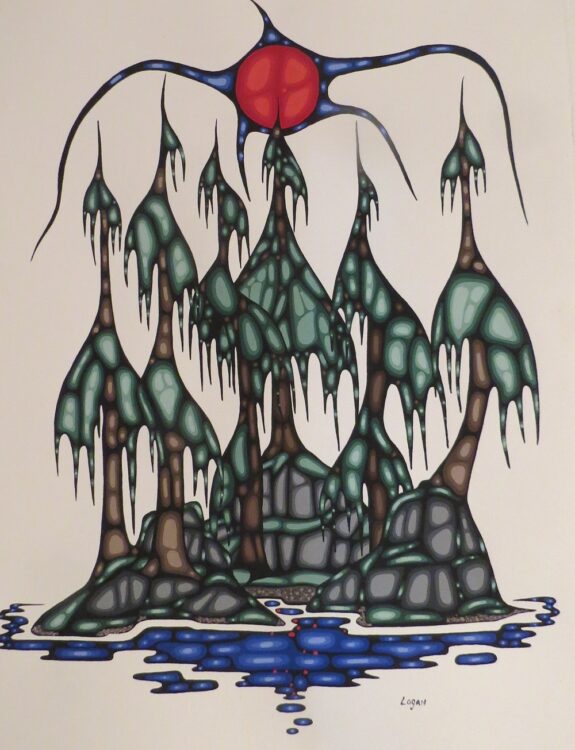
A time of sadness had come to my village. A respected Elder had set his prints on the spirit trail. He had been a wise and honest man. His kind and generous ways had earned him many true friends, who would mourn his passing. Myself included. For as long as I can remember, he had taught me the old ways and customs. I had thought we would be together forever. Now he was gone, and he had left me with a void that would be hard to fill.
I contemplated that as I stepped out into the early morning light and looked upon the lake Gichi Gami. There was not a breath of wind, and the water was as smooth as jade that had been polished by the winter waves. The dawn’s mist shone with a golden light in the glow of the rising sun. One might think the Great One himself was present today. As I glanced at the forest, it seemed, for just a moment, full of shadows slowly moving among the giant lakeside trees. They seemed to be spirits of my people coming to guide one of their own back home. But as I watched, I saw it was but the morning’s mist rising with the coming of the day’s warmth. I turned my eyes back to the water and searched for the Island that was out in the bay in front of our longhouses. By squinting, I could just make out the giant trees that stood facing the village from the island shore. The swirling mist made them appear to come alive and dance.
The Elder was at the beginning of his greatest journey, for today, we would take him to the Island. I was to be honoured with saying his farewell. I could see the canoes were loaded, and the men were patiently waiting for me as I walked down to the beach. I reached the Elder’s birch bark canoe and was placed in the bow at the head of his burial box. I shed silent tears during the passage to the Island. My mind was full of thoughts about this Elder, and all the things he had taught me during the time we had spent together. Including the stories and the legends he had told me. The healing plants we had gathered together. The endless days during which we had studied the ways of the animals.
The last words he had spoken to me from his deathbed were echoing through my mind as we arrived at the Island. He had reached up from his bed to take my hand and said, “Always follow your heart, for the truth lies there”. “I will try”, I had replied; then he was gone. The Elder’s box was lifted from the canoe by six of his children and carried to the burial place on the Island. They placed him there in silence. They each then placed a gift in the grave. It was now time for me to say farewell. As I went down on one knee and bowed my head, I silently placed an eagle feather among the other gifts to aid his flight to the forest of the Great Spirit. I sang a song of goodbye to this elder, and as I looked up through my tears at his place with the mother, a great sorrow overwhelmed me, and the farewell words began to flow from me like a river rushing to the sea.
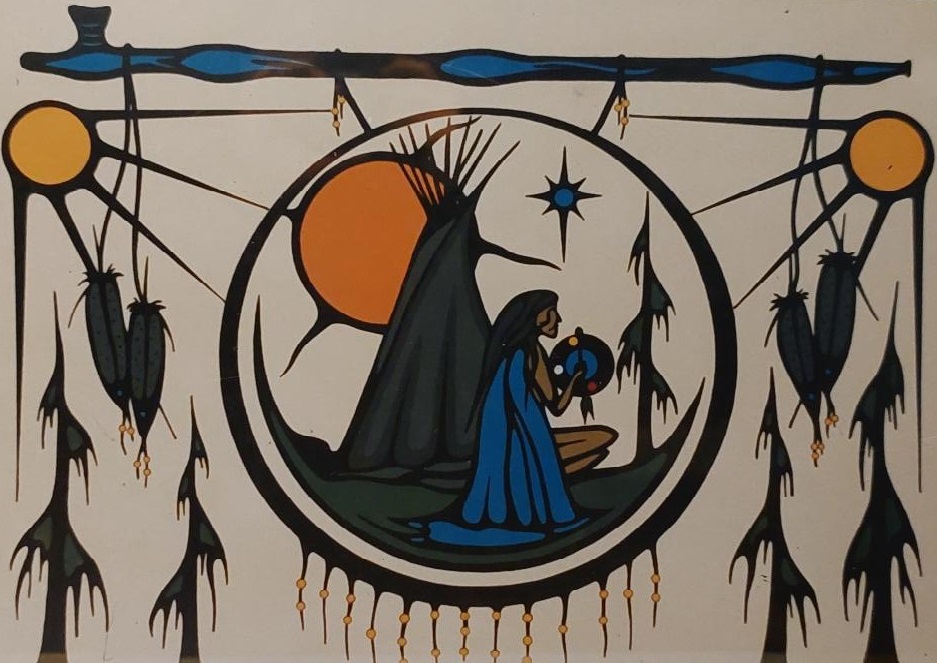
I tried to honour him with my speech, though in truth I had little knowledge of what I was saying. All I could think of was his last words, “Always follow your heart, for the truth lies there”. The mist was in my eyes as I spoke the final words of my eulogy to him. “You are in the forest now, and my heart is with you. I will miss you; I will always honour you, Father.”
I was still a teen, and he left far too soon. I do miss my dad. I still get teary-eyed when I read this story, as I wrote it from my heart.
When I was back in camp, I did a lot of thinking about my dad. At first, I was mostly thinking about how Dad would beat me and how, even though I always tried to live up to my dad’s standards, I always failed miserably at this. I remembered how he would always say, “Why can’t you be more like your brothers?”, or how he would say to me whenever I screwed up, “You’re never going to amount to anything,” and it brought tears to my eyes. Eventually, as I lay on my bunk thinking of these things, tears ran down my cheeks. I came to understand that they were not just tears of shame but that they were also tears of loss, the loss of my childhood and the loss of my dad.
I began to remember all the good things about my dad. Right from the time I was a toddler, my dad would take me out and about with him and always introduce me as his little buddy, thus my nickname. Sometimes he would take me to the horse races and tell me that if I were able to stay small, I could become the greatest jockey in the world. This was a real dream of my dad’s. He loved the track, and I loved horses. But to our dismay, I just grew too big. Even though I never became that famous jockey, I did cowboy for several years and made a living from the back of a horse. I think my dad, if he were still with us, might have been proud of me because of that.
Dad was only mean when he got into alcohol; I will admit that was pretty common. But there were all the other times when he was sober and teaching me about the forest, about medicine, about the animals and about who we were. It instilled in me a true sense of our history, about our ancestors, and this was a gift he gave me. When he talked about the animals, plants or medicines, it was always fascinating, and he would tell me the other kids had no appetite for this learning and how I always seemed to absorb it with great anticipation. It was my connection to my Dad. I would like to think that the reason Dad was so tough on me was due to having higher expectations for me.
Gilford Island

I left the Bute Inlet camp in early November after my dad passed. I had a problem with the timekeeper. It was over something stupid, and I threw away a good job over it. My cousin Larry and I were running a chokerman school using a mini tower. They were hiring so many green guys that we needed to teach them the basics of logging before sending them out to work on the big towers. It was a good job.
The Sumner Brothers offered me a rigging job up on Gilford Island. They were good guys to work for. It was a small operation and a decent camp. I was a rigging handyman. The crew was always joking around, and we all got along well. One day, I was working as the landing man; it was a wet and windy day, and I was soaked. I was tight up against the yarder that one of the brothers was running, trying to stay out of the driving rain. As I was huddling there, I saw that there was a golden fluid hitting my hard hat. All I could think of as I leaped away was how he would come out and take a piss just about where I had been pressed up against the machine. I looked up in horror only to see him holding a half-full cup of tea that he had just been slowly pouring over my hard hat, grinning a big grin.
Earlier that day, I had to trim the ends off some 7/8s wire that had been cut with a torch, and I needed to get him back. So I started fooling around with one strand about 4 inches long. I spread the wires out, and it started to look like a spider. He hated spiders. So I took some thread off my coat and tied some roughed-up cedar bark on as a body, and damn if it didn’t look like a big scary brown 7-inch spider. The lunch kits were in the crummy, so I took his lunch box and put this spider in it and closed it up again. Come lunchtime, when we were all in the crummy staying out of the wind and rain. I watched him out of the corner of my eye as he lifted the top off his lunch box and, for about 10 seconds, sat there just looking at his lunch box. Then all of a sudden, he threw the lunch kit up, with its contents flying about and jumped back before realizing it was not real. Payback is a bitch.

Partway through a shift, one of the guys had to go to town, so I was put pulling rigging on the sidehill. It was early morning. I was standing on a small rock outcrop, fighting a big cedar hangup. As I turned to say something to my chokerman, I slipped and went sliding down, catching a rock outcropping with my left knee. The pain was so intense that I was feeling dizzy and felt like throwing up.
My chokerman ran down to see how badly I was hurt. I told him that I banged my knee and would need to take a rest for a few minutes. I asked him to help me up the bluff, as I put my arm around his neck and went to take a step with my left leg; the pain was excruciating. That’s when I blacked out.
There was a faller in camp who was a big fella. He was twice as broad as I was at the shoulders. When I came to him, he was packing me in his arms up to the road; he was saying, “Hang in there, little buddy”. He was packing me like a child. When he got me to the road, they put me on a stretcher, loaded me in the ambulance and raced me down to camp.
Once in camp, they took me from the ambulance and tried to get me into the first aid shack. There was a door with a porch going into the shack, but it was a 90-degree entrance, and they almost dumped me trying to get the stretcher around the corner. The stretcher could not make the turn. So they took me into the cook shack and laid me out on a table. A plane was called, and a stay in the hospital ensued, and a knee operation would be required. They booked me with the bone doctor. Dr. Leet said it was going to be the spring before he could make it happen.
Shotguns And Race Cars

I was going to be off now right through next spring. Once I was out of the hospital, I booked in with a friend at his parents’ house. They were such nice folks. They were quite outdoorsy and loved to fish and hunt. They also loved shooting traps, and after trying it, I was hooked. I went right out to the River Sportsman outdoor store. I purchased a nice Browning pump-action 12-gauge shotgun. Then we all chipped in on getting a reloading kit, and I started to reload shells that I gathered after gun meets. I would gather shells after each shoot. I would sell half of our boxes of reloads at shoots, and this covered buying the shot, powder, casing, wads and primers.
I rigged up a shop out in the backyard and set up a reload station where I would sit for hours loading shells. I kept all the stuff out there and could go anytime I wanted and reload. The more empty shells I had, the more boxes I could load. They would all sell at the trap shooting meets, as I charged half price for them.
Shooting trap was a blast, and when you were at a meet, you could have your abilities recorded. During a competition shoot, you would shoot a total of 100 shots. When you hit 100 clay pigeons out of 100, you get a pin saying you accomplished this. I got 99 out of 100 so many times without getting the elusive 100 pin. All in all, though, it was such a fun pastime, and you would meet so many other folks.
Five concrete sidewalks fanned out towards the pigeon launcher building. Each had four spots for shooting, each 5 feet further back from the pigeon launcher. The first round was shot from the closest end. You would shoot 5 times, then move across to the next sidewalk until you shot from all the points, then move back and do it again. When you had moved through all the stations and distances, you would have shot 100 times.
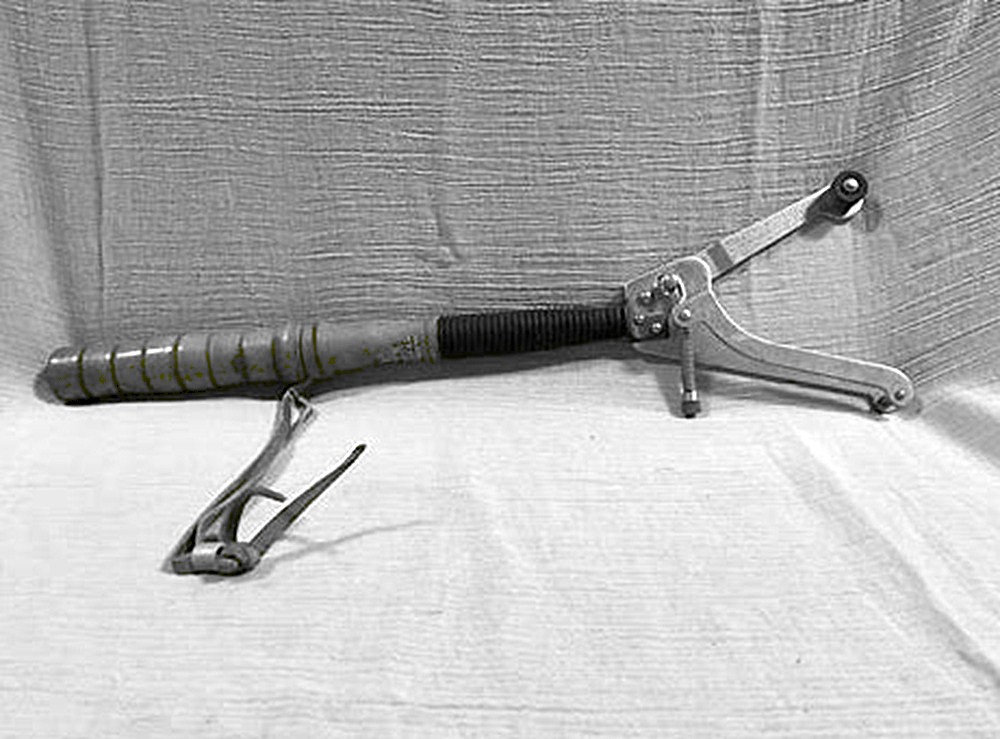
When we were not at a meet, we would go to the range and practice. We had clay pigeon hand throwers made of metal put out by Winchester. Today, they use rubber throwers, but back then, a metal thrower attached to a wooden handle was used. My friend, his dad, his little sister, and I were up at the gun club one day practising, and there was no one else around.
I was throwing pigeons from the front of the auto launch hut. As my friend was shooting his round, he turned towards his dad and sister to say something, with his gun pointing down. As he turned, his trigger came into contact with a set of keys hanging off his belt. The gun went off, hitting the concrete and then ricocheting up into their legs. They both went down, and then the dad jumped up, grabbed his daughter in his arms and started to run to the car. My friend was in shock until he saw his dad fall on the way to the car. Dad had been unaware that he had been shot as well, and it was adrenaline that took him that far. They both fell again.
I picked up the girl, and my friend grabbed his dad, and we got them to the car. They both were bleeding quite badly. My friend had a pretty hot car that went like stink, and he just hit the gas. He had no concerns about speed limits. Right away, he blew past a cop going in the opposite direction, who pulled a U-turn and started to chase us, and then we began to pick up more of them as we flew through town. By the time we reached the hospital, we had a long line of police cars, lights flashing and sirens screaming behind us. We were racing with the cops. It must have looked pretty wild, like something you would see in a movie. Our town was not very big, and this was not something you would see. All in all, even though it was terrifying, it was pretty exciting.

When we turned into the hospital, they realized there must be a reason for the high rate of speed. My friend jumped out of the car and ran into the emergency ward for help while I talked to the police. They were pissed off and blasted my friend for driving so fast, but they did not charge him with anything. Dad and daughter both had some of the pellets removed and wounds wrapped at the hospital before being sent home. They picked more pellets out of their legs for quite some time. They both had full recoveries, although they did have scarring on their legs.
Darcy Point

During the winter, I was dating a girl who was quite pretty, extremely adventurous and maybe a bit wild, kinda like me. I thought her dad had a strong dislike for me until he offered me a job as a camp watchman at Darcy Point, up in Loughborough Inlet. I was still waiting for my visit to the bone butcher, and this was something I could do with my bad knee, so I took it. The thought of spending the winter holed up in a coastal camp with my girlfriend was cool.
He flew his daughter and me in, and we got the gear and food offloaded. He showed me the diesel generator that was attached to a big freaking engine and told me to make sure I fuelled it up at least once a week; it had a big tank right beside it. We filled up this tank as the generator had been running for several days. There was a hose running from the main fuel storage tank, and he showed me how to use it to fill up the generator.
The camp radio-telephone and heat were all electric, and if the generator ran out of fuel, there would be no contact with the outside world and no heat. It was a big diesel, and he told me it would need to have all its pistons primed to start again if I let it run out of fuel. So I would be on top of this for sure.
He took me up a trail along the creek to show me where the water line gravity bag intake was located and how to keep it running. We fired up the propane stove, and then he called his daughter and told her it was time to go. For some reason, I had thought she was going to stay with me. I stood there, on the dock, watching them fly off. I was all alone, just the camp cat and me. It was then that I realized it was his way of keeping us apart.
At least I had a truck, 30 miles of road, my Marlin 35 and a fishing rod. I took a drive that first day to see if any lakes, rivers or creeks looked like they might hold some fish. From the moment I fired up the truck, I realized there was a serious problem with the front end: there was about half a turn of slack in the steering wheel. The roads were never level; as they twisted and turned, the slope would go from one side to the other, and you would need to catch the slack by spinning the wheel quickly. I found that by reading the road ahead, I could keep the truck going straight, sort of. It was no big deal as I would be the only truck on the road all winter anyway.
I got back to camp and proceeded to look over supplies and put things away. My food supply was incredible; I had several deep freezers filled with frozen veggies, various types of meat pies, ice creams and as much meat as I could eat. The cupboards were stocked full of everything else. On the kitchen counters were huge containers of various flavours of cake mixes, pancake mixes, and gravy powders. There was a camp cat, but no cat food. Jack had said to just feed him from a case of canned sardines. I fixed up a meal of steak and eggs and then headed down to the wharf to sit back and watch the boats go by.
Right away, I saw a guy I know from Quadra Island, who owned a converted tugboat called the Widget. He seemed to be heading my way, and as he came up on the dock, he noticed it was me. He tied up, and we had a good chat. It seems he was contracted with fisheries; he would stop at all the creeks to count how many spawners he could see. When he found out I was to be here all winter, he asked if he and a few others I knew could stop by for showers and rest, and I said for sure. The following week, Dev and his wife, who were the original owners of the homefree commune on Quadra Island, dropped by on their sailboat for a few days. Dev’s wife baked bread and several pies for me and a load for them. She also made me a big cake. I was sad to see them go, but they said they would be going by every couple of weeks and would stop in for a few days.

When we flew in, I had noticed an old cabin about a mile down the beach from camp, so one day at low tide, I took a walk to investigate. It was an old logger’s shack, and out back was a logging road that headed off into the forest with a very old logging truck sitting on it. It was so old that it had solid rubber tires. This truck was a GMC from around 1910-1920.
There was a door in the back of the cabin that I had trouble getting open; as I dragged it through the duff, it rolled up a grizzly skull and bones. It was then that I saw there were a couple of bullet holes in the door.
In the cabin, you could see stains on a counter where sandwiches had rotted right beside a couple of old leather lunch kits. There were cross-cut saws and other logging tools scattered about. Looks like they were having grizzly problems and had to shoot the bear through the back door, then just left out the front door and never returned. It appears that I am likely the first person to visit the cabin since this event. About 15 years later, I was back at Darcy Point working for the BC Forest Service. It had been logged where the cabin once stood, and there was no sign of it or the truck now. A coastal story that almost remained untold.
The winter rains came, and the creek was flowing pretty badly, and it washed my water line down and tangled it in a bunch of flotsam. Took me forever to get it loose again. I had to lay it out and up to where I could reset the gravity bag. Once I had it all laid out and hooked up, there still was no water. Had no idea what the problem was. There were two connectors along the line. I thought maybe one had stuff plugging it, as this is a PCP black waterline; the only way to check was to undo each connector. So I undid the one closest to the gravity bag; water was flowing there, and I got soaked hooking it back up again. Move on to the next one. When I pulled it apart, there was no water, but I could hear water up the line working its way down. Then it came out, hitting me in the belly, soaked again. It was tough to get it hooked up again. But still no water in the cookhouse. So undo the line where it goes in under the cookshack, soaked again. After that, we had water in the cookhouse. Noted the need to get three-way valves for these connections. So you could bleed the air from the line to easily get water flowing without getting soaked.
Winter was in full force with plenty of snow at camp, so I was sticking close to home. The cat was giving me trouble; he was always letting loose with a runny shit in the cookhouse, and no matter how many times I would rub his nose in it, he would just do it again. It was quite a dilemma; I could just leave the cat out, or clean up after him. I had no idea why he was so fluid until I tried a can of those sardines. I quickly got really sick and could not even get out of bed except to get into the washroom; sometimes I had to crawl through the snow to get there. Then the generator died. It had run out of fuel. I was in and out of delirium, and I am not sure how many days it had been since I ate those sardines. I was still getting sicker. I wanted to call someone, but the radio phone was out of commission. I knew I had to get to town, so I took the truck down to the wharf, and when a tug or fishboat would go by, I would use the lights to signal S.O.S. I had learned how to do this from being in the Sea Cadets. But it was to no avail; they would just flash their light back at me as if to say hello.
I figured my only hope was to get the generator up and running. It was tough, but I did it. I then used the radio-telephone to call a friend to come and replace me while I went to town. Had our pilot bring him in, and then he flew me out. They kept me in the hospital for a few days with a bad case of food poisoning. I lost a bit of weight but made it through the ordeal. When I got out, I headed back to camp, and I took a big bag of cat food with me. The cat recovered as well, and all was good.
The hospital contacted my sister to give her my operation date. I left Darcy Point at the end of the shift. My knee operation happened shortly after. It went fine, and after 6 weeks, I found a new job and moved on. In the meantime, the boss’s daughter had found a new love, and we were done.
Hardwick Island

By the fall of 75, I was employed by a logging company on Hardwick Island. I had been in a few camps by then, mostly modern trailers set for the various needs of the logger. This camp was different and was pretty cool; it was old school. It was like being in the forties. For example, in the wash house, there was one set of taps. Then there was a long wooden counter that ran down along the wall. There were round holes cut into this countertop with mirrors on the wall above. On the other wall were metal wash basins hanging. You took one down, filled it at the taps and moved to one of the holes in the board that fit these basins. When you were done with your washing up, you poured the contents down the drain at the taps and rinsed the basin before hanging it back on the wall.
You were called to meals by a big triangular steel plate that hung outside the door, where you were always served up man-sized meals. I was just a kid of 20 during my time here, but I still remember the old guys, upon seeing my plate at dinner time, quite often commenting about where the hell I put it all.
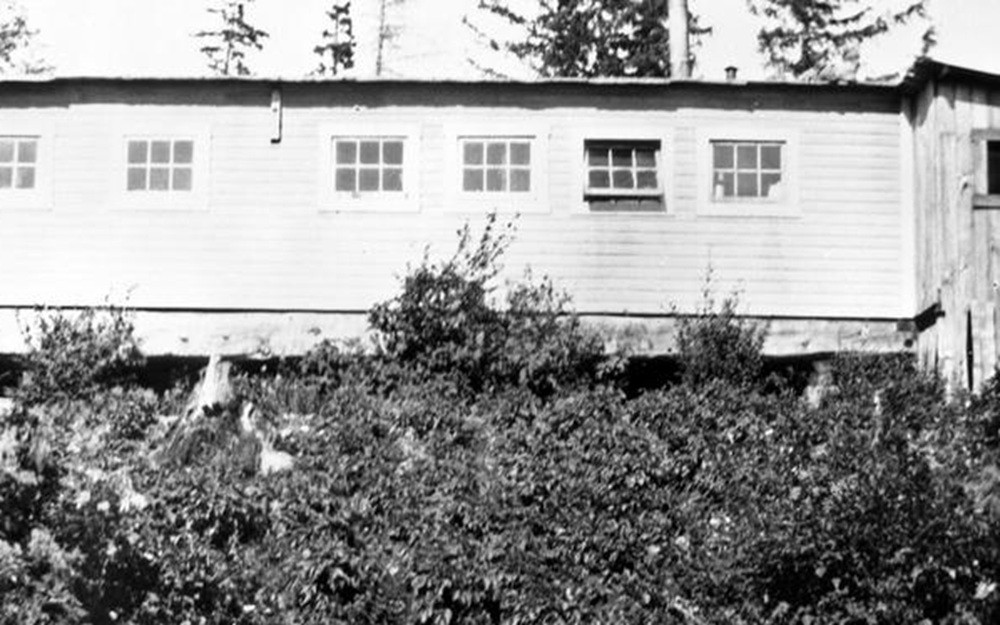
Our bunkhouses were big, octagonal buildings. All the bunks were on the outside, by the walls, with tables and chairs arranged around a central stove, making up the inner part of the room. My first night in camp, I got some really bad leg cramps around 2 am. All the men in my hut were old-time loggers. They all woke up from my groaning, and they gathered around me, telling me how they would beat these cramps. Several told me that they would wear pantyhose, and this worked well. I never tried the pantyhose, but in our crummys was a dispenser for salt tablets. I started using them, and the leg cramps were gone. I can still see the oldtimers as they gathered around me that night, and from then on, they just called me the kid. Seems to be my nickname wherever I went.
One day, as we were heading up the hill to go to work, the fellers came careening around a corner hell-bent for leather and came to a sliding halt beside our crummy. Your donkeys on fire, one was hollering, so we picked up the pace and got up the hill as fast as we could, and sure enough, there was our yarder, burning out of control. The chaser had built a fire the day before in the landing to keep warm, and although he had put it out before we left the site, it must have gone underground and come alive during the night. Landings were usually just pushed-up piles of wood and dirt. It was a total loss. The insurance company only covered the machine, but not the pipe, as it sustained very little damage. I assumed we would all be laid off until the new machine made it here, and the pipe moved onto the new rig. Instead of laying off the crew, they put us to various jobs. Although I was not involved with the job, it must have been quite the project, putting the new yarder onto the old pipe.
I was put in charge of operating the rock crusher at the pit. This quarry consisted of a big rock wall at the end, where we would blast rock loose to feed the crusher. This jaw crusher could crunch up rocks as big as trucks and put out any size of gravel that was needed with just one adjustment.
It was a scary old machine built back in the days of crank starts. The first thing you had to do in the morning was start an old Model T motor by cranking it over by hand. Now, this crank could take your arm off when it kicked back, and the crank handle sometimes would come flying off and bounce around in the engine room, and it was always tough to start. Once it was running, you would use it to turn over the big diesel engine that ran the crusher. There was a small flywheel on the diesel engine and a big one on the Model T. There was a belt between the two that was slack until you used a tensioner pulley that was on a lever; you would hold it tight to turn over the crusher motor, a pretty cool system. Sometimes the Model T would stall, and I would need to do it all over again. After getting the big motor running, you would slacken the belt and turn off the Model T until the next day, when you would go through the same process.
If a big rock got stuck in the jaws, I would go out to the bin and, using a full-length rock drill steel, I would move the rock around until the jaws started to grab it. You had to do this quite often. Most times, it was uneventful. There was one time when I was doing this that the jaws caught the steel, pulling the steel forward. This caused my fingers to get caught against the edge of the hopper and the steel. As I let the steel go in pain, it came back and hammered me in the forehead, damn near knocking me out. I fell onto the rocks that filled the crusher receptacle. It’s amazing how fast I got back to my feet and out of the hopper. I retrieved the drill steel, but my hard hat went through and was pretty mangled; it was my favourite tin hat. As I said, this was a scary old machine. This old machine was retired not long after I was running it. From my understanding, you can still see where it rests along the road going out of camp.

One day, A road-building contractor who was contracting for the logging company asked me to come to work for him on his rock drill. This was an awesome job. Drill holes for a few days, load with powder, and blow the shit out of stuff. always did enjoy blowing things up, so this appealed to me. So I jumped right at it. Over the next few months, I got pretty good at it. Blew up a lot of rock faces. Built a lot of roads. I can remember times of sitting out on the boom, which was extended out and up, right against the rock face where we had drilled holes. I would have several cases of dynamite between my legs and blasting caps in my mouth. I would then load and wire up holes to blow the rock away. It was a pretty awesome job. I worked there until the winter shutdown.
Rigging Back Spars

In the spring, I returned to logging and spent some time rigging back spars on grapple yarders up in Knight’s Inlet for the German. It was tough work, but I liked it. By the time I was 21, I was working on Haida Gwaii in a place called Juskatla. I was throwing tongs on a chunk truck.
The first day I arrived at camp, I was standing in the door of my room in the bunkhouse as the crews came home, looking to see who I knew. One would always find others whom you have logged with in other camps. Across the hall from me was a giant of a fella, a Haida man. He was about 6 ft 4 and as wide as a house at the shoulders. As he ducked to enter his room, he asked me my name, and after I told him I was Bud Logan, he said, “Any relation to Howard?”, and I said ya, he’s my brother. Now it turns out my brother had been working here just a few months before I arrived; he had gotten into an altercation with this Haida man, and my brother had to use a 2×4 on him; beat him pretty bad was the word in camp. Thankfully, the man did not decide to take it out on me, and we became friends. His name was Tiny.
Juskatla was a big camp, more like a small town, with large married sections with houses and bunkhouses for those who were single. Huge cookhouse, and we ate like kings.

The scenery here was fantastic; the deer were so plentiful that there was no limit to hunting them when I arrived on the islands, but shortly afterwards, they put a limit of one deer a day. These were Sitka deer and were about as big as a mid-sized dog. But there was another animal that was hunted here, one you could only get 1 tag a year for, one that could fill your freezer. These were Scottish long-haired cattle, or as I liked to call them, hippy cows. It seems that at the turn of the century, a man attempted to start a cattle ranch on Haida Gwaii to raise beef for the sailing ships that stopped here. It was a complete failure and was soon abandoned; however, the cattle were left to fend for themselves and, over several generations, had become wild. Now they could be hunted as food; could you imagine a whole beef once a year? The people ate well. Not sure of the status of these cows now.

When my 2 sons became men, they were both compass men on timber cruising contracts. They worked up on Haida Gwaii, and I got to see the islands again through the photos they sent home. I enjoyed this. They said nobody knew much of anything about these cows. Although in 2021, a car was totalled after hitting one.
Smiths Inlet
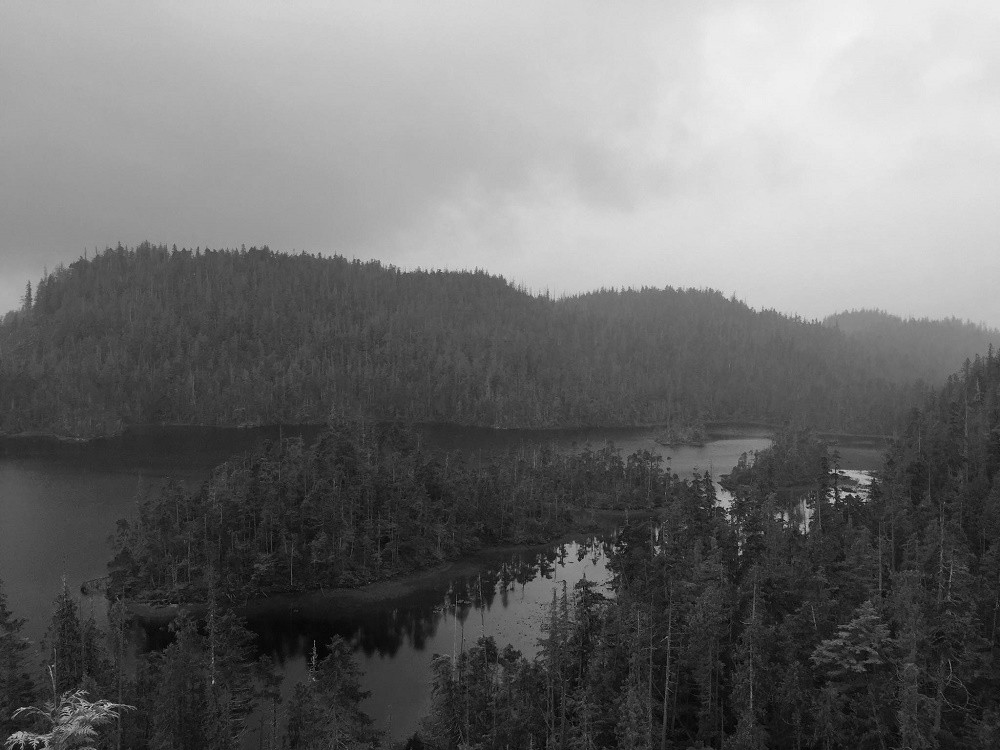
In the winter of 1975/76, a few friends and I rented a house in Campbell River, and we were all working in the bush. I was logging for a small Gypo outfit up in Smith’s Inlet. This area of the coast is not for the faint of heart; it has to be the steepest ground I’ve ever logged on. It is a long flight to get there, and if you get on the milk run, it is an all-day trip. The worst thing about Smith’s Inlet was the black flies. These guys are hungry. I know that after this, I would never hire out to any camp up there again. My boys both got the chance to experience Smith’s Inlet, and they both feel the same way about this coastal hellhole. My youngest was so badly bitten that his face and neck were dripping blood. Even though he was wearing a bug face and neck screen. With all this being said, the whole area is beautiful. It’s the land of the ghost bears.
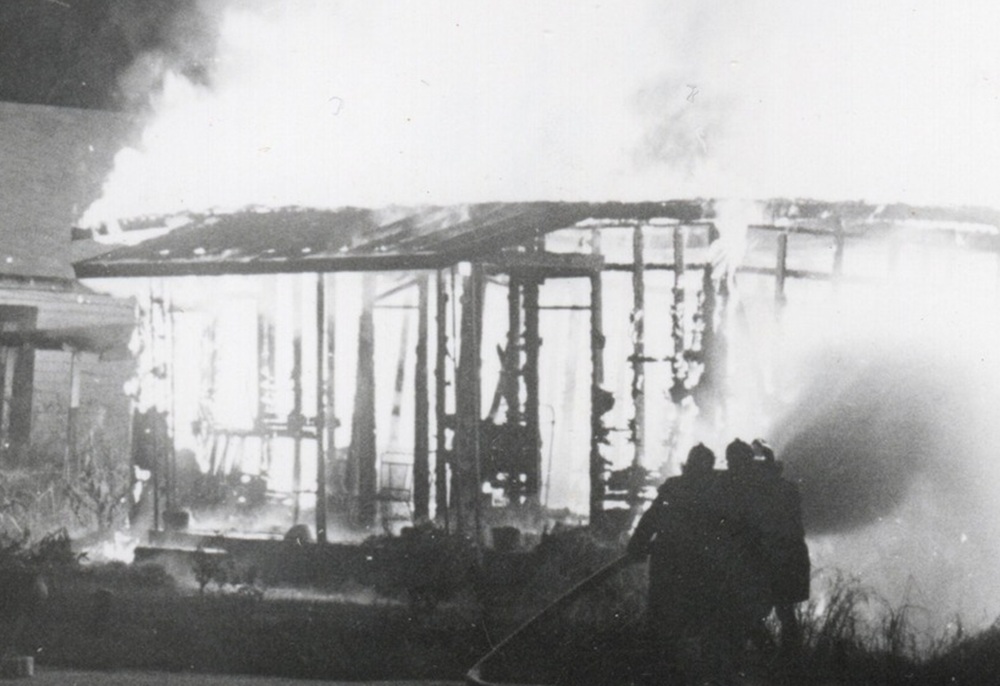
On a hot Friday night, while I was home between shifts, I had gone out to the bar for the evening and was pretty drunk by the time I got home. I flopped on the couch and passed out. This couch was close to the hallway where our bedrooms were located; the back faced the hall. Not sure why, but during the evening, there was a huge explosion, and it blew the back of the house to smithereens. It sent a blast of flames down the hallway, hitting the couch where I was sleeping, with such force that it threw it across the room with me on it. I woke up from my nap as I was flying through the air.
I landed on the floor by the front door, and I saw the flames go back down the hallway, and then they came back with a roar just as I was diving out the door. My stuff was still in boxes, and now I had just lost everything I had. The flames were kissing my butt as I landed on the grass. As I lay there in bewilderment, I noticed my car was on fire where I had parked it by the house. Everything was gone, even my car. I had to run across the road and down to the public phone at the Duncan Bay store, shirtless and with no shoes.
At the time of the fire, I had no idea what caused it and when the fire department arrived, I told them that it could be my roommate who was the cause, and he could still be in there. The others were in camp. As they were fighting this inferno, I realized that if he was in there, he was toast, no pun intended. But not long after this, he came home.
I phoned my lawyer to see if he could do something to make them change their minds. He just told me to come to his office, where he gave me a check for 1000 bucks and said to get some clothes. He was a pretty awesome lawyer.
I went shopping, got some new duds and shoes, ate and paid for a week in the Quinsam Hotel. I still had 500 left to eat with, so it was OK. Things always seem to get better, and they would this time as well. My brother came by to see how things were going and said maybe we should go on a road trip. I said to him that I was in.
Heading North

My brother, along with a couple of other friends, got to talking and decided they would take a road trip to the Northwest Territories. With nothing holding me back after I lost everything to the fire. I said that I would join them. It was an adventure to get out and see Northern Canada. The trip north was awesome; the scenery was beautiful, but it was cold; it was still late winter, and the land was frozen.
The second night found us staying in a fancy hotel in Edmonton, out on the white mud highway. Around 9 pm that night, I felt like having a sauna, but the sauna door was locked. I asked at the front desk if we could use the sauna. The desk clerk gave me a key to unlock the door, telling us to lock up when we finished. We all went in. After maybe half an hour, an elderly gentleman, about 70, came in and joined us, thinking it was an open sauna for all. My brother and the others decided to leave at that point. As a joke, my brother grabbed the key before he locked the outer door. There was just me and this old guy left.
This other gentleman decided to also leave and headed into the change room. About 10 minutes later, the old man came flying back into the sauna from the changing room, screaming that we were locked in. I told him it was not a big deal; someone would let us out; just knock on the door. The other gent, however, was claustrophobic and went into a rampaging panic, screaming to high heaven that he was going to die. By the time someone heard his pounding on the door and his screaming, he was not in good shape. I thought he might up and die of a heart attack.
When we got out, he followed me to our room, where my brother was. He was pretty feisty for an old guy and attempted to fight my brother. My brother defended himself. The police were called, and we got kicked out. The police told us not to come back to Edmonton. We found a cheap motel on the outskirts of the city and spent the night. The next day, we continued our way to the Northwest Territories.
After we crossed the border from Alberta into the Northwest Territories, we stopped at the Alexandra Falls trailhead on the Hay River and hiked in to see these falls. The falls drop about 33 meters straight down into a deep, straight-walled canyon that runs as far as we can see. Now in the summer months, these falls are pretty impressive, but the best time to see them is during the cold winters. What we saw was a river locked in ice with the falls shooting out of a frozen cone that stuck out over the falls by at least 15 meters; the river was coming out the end like water from a hose. It went out and down in a big arc and shot into what looked like a very large ice volcano, disappearing back under the ice to continue its run to Great Slave Lake. It was an awesome sight.
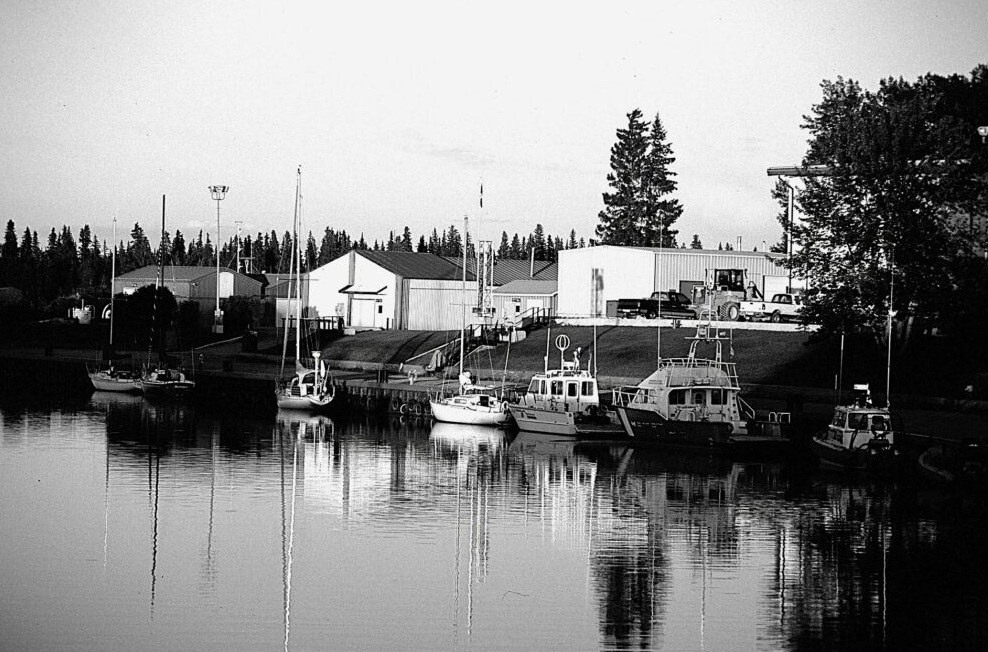
After seeing the falls, we headed down the road and into the town of Hay River, a small town right on the shores of the Great Slave Lake; not much to see when we got there. One thing that stood out to us was when I attempted to purchase some beer, I had to sign an affidavit stating I was not First Nations, and I was not buying for First Nations members. It was like stepping back in time; it made me uncomfortable. We got our beer, but thought this was pretty strange. We then headed towards Yellowknife, but the ice road was starting to deteriorate and was shut down. The ferry that runs during the warmer months has not been able to operate yet because of the ice. This happens in spring and fall; there can be weeks with no access to Yellowknife. So we turned around and headed back south. After we got back into Alberta, we headed towards the Peace River area and back to BC. Then we headed south.
The trip back to the coast was a great adventure; we stopped at many places, including McKenzie, which at the time was a new town. It was built to house the employees of the mills that had sprung up after the W.C.Bennet Dam was constructed. I had family there that I was able to visit. Then we stopped in Prince George and Quesnel, where we took a side trip out to Barkerville. Billy Barker’s discovery of gold ignited the Barkerville gold rush. Many thousands of hopeful prospectors headed to the area. Barkerville quickly became an active gold rush town. Its population reached 10,000. It’s a rustic tourist ghost town these days, and it was pretty cool.
After leaving Quesnel, we headed to Williams Lake. For some reason, this town just appealed to me. The whole feel of this town was western. This could be because cowboys have always fascinated me, and Williams Lake is a true cowboy town. I had been an avid reader of Louie L’Amour books since I could read, and like most kids, the life of the cowboy had always been my dream from a very early age.
We booked a room in the Chilcotin Hotel and spent the next few days exploring the area and all it had to offer. We went out west as far as Sheep Creek Hill. Explored some caves located there and found cave art within one cave. We then went east to both the little towns of Likely and Horsefly. Both of these towns are very small but have such rich histories. Our last night in town was spent at a pretty wild dance hall/drinking establishment. It was called Squaw Hall. It had a stage where the bands played; this stage was fully protected by wire fencing. All through the night, people would throw beer bottles toward the wire screen that would fall down in a pile of broken glass at its base. A few would break on the wire, sending showers of broken glass at the band. Fights seemed to be quite common.

As we headed out of town, we stopped at the rodeo grounds. It was not open, but I got to walk around. It would be cool to actually be here for a rodeo. I told my brother that one day, I was going to come back to this area for a longer visit. Then we headed back to the island.
Once I was back on the island, my priority was finding a place to live. I rented a small cabin across from the Ideal Cafe; it was a one-bedroom unit with the kitchen and living room combined, and you cooked on an oil stove that also heated the cabin. It wasn’t much, but it was only 75 bucks a month. It was set amongst some big trees and was pretty private. Now to find a job.