
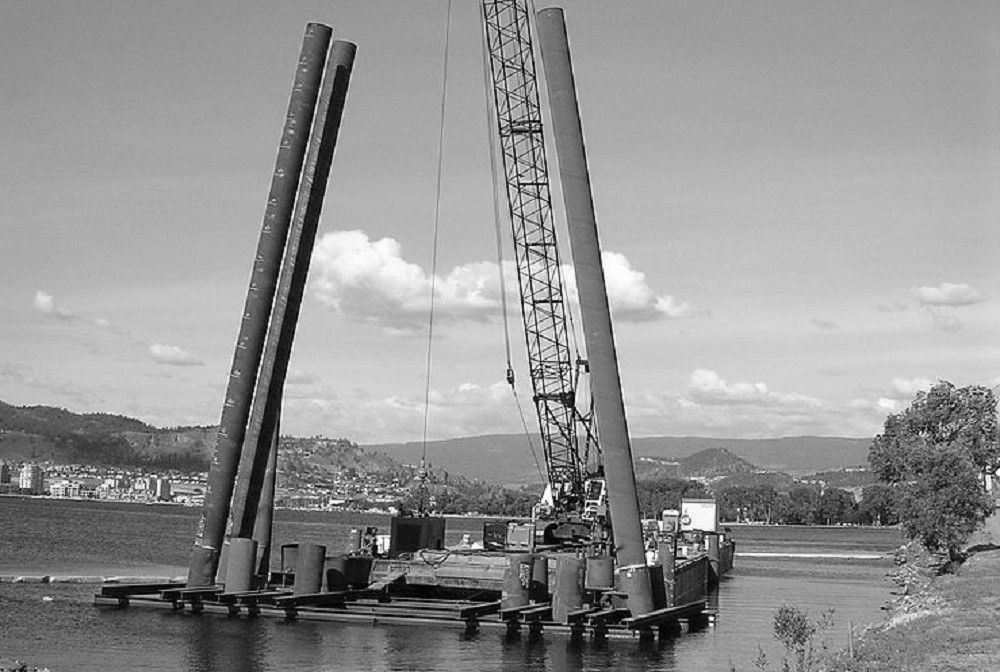
After I chose to try welding for a new career, I figured I might as well approach Workers’ Compensation to see if they would cover the tuition. But I was told no. So I took a $14,000 payout on a pension I was receiving for an old knee injury, and went to welding school. I had decided to take all three levels at once, so I signed up for my “C,” “B,” and “A” tickets. It was a two-year-plus course. One of my classmates turned out to be a cousin of my wife’s named Mel. Mel and I talked during class about how expensive it was to go to school. We decided that they could move in with us, share costs and Mel and I could go back and forth in one car. This was great; we all got along very well. Mel was only going for his C ticket so that he would be in school for about 10 months. After getting his “C” ticket, they intended to move to Coal Harbour, where Mel would work for Cheryl’s dad.
Initially, the course material was pretty boring; I was doing things that I knew quite well. But I finally began to learn more once I was on my “B” ticket. I learned how to TIG weld both stainless steel and aluminum, and I loved the whole process. Here, I also began to learn fabrication. My “A” ticket training was all fabrication with a bit of the aluminum pound gun. One day, while training to TIG weld, my welder shorted out just as my elbow touched the table, making a circuit. I came to my senses out in the hall outside my booth. The power of that shock blew me 3 meters and rattled my teeth.
On another occasion, I was helping a classmate set up his welder when, as I peeked over the machine to see if it was working correctly, I arc-flashed both my eyes. I managed to get up to the hospital on my own, although my eyes felt like they were filled with sand. Once there, they had to freeze my eyes and then bandage them, telling me I needed to keep my eyes covered for 48 hours. I had to phone my wife’s mom to bring up Dad so he could drive me and my truck home. For the next 48 hours, I was blind. Just to have a pee was tough. My wife had to cut my food and place it in a bowl so I could eat with my fingers without losing too much. This was the longest 48 hours of my life.
During my time in the welding school, I had specialized in stainless steel and aluminum. I loved aluminum welding and had dreams of working for a shipbuilding company. My instructor thought I was pretty good at welding both aluminum and stainless steel. He had me stay after graduating so he could teach all he knew about these processes. He was a great teacher.
After graduating, I sent in applications to all the boat-building companies I could find, but the only job I could find was on a pile driver as head welder. The job involved putting in dolphins in booming grounds. Welding on the pile driver was a wet job, and getting shocked was a daily experience. It was not bad work, though, and they paid me extremely well. I had a young welder working under me, and he was quite helpful. He later got married to my niece and is now my nephew. The crew was a great bunch of guys, and the head guy was the spitting image of Kiefer Sutherland, so I just called him Kiefer. Then there was a turn in the economy, and the jobs began to have a lot of space between them. At least I had the ticket for future work.
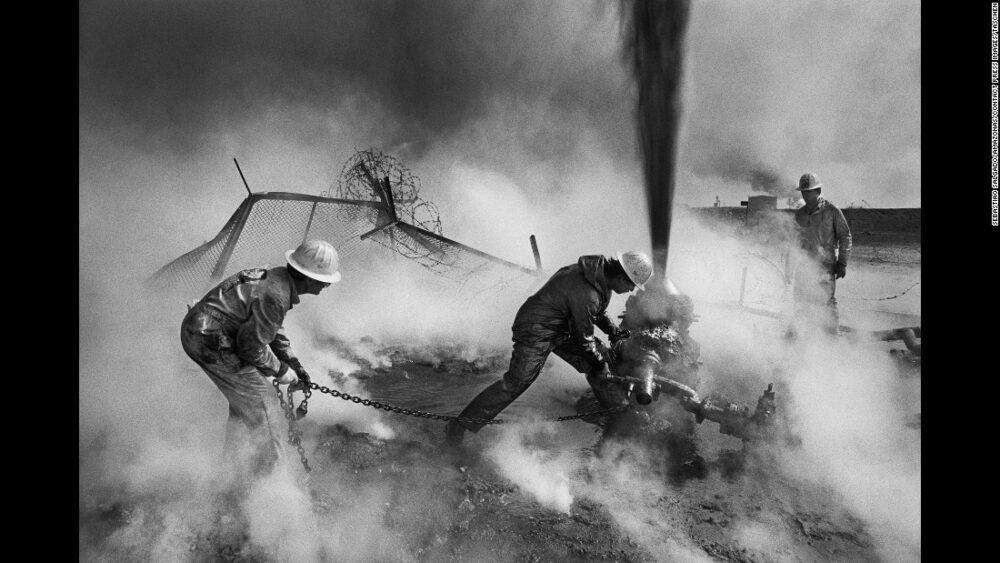
Brown and Root, a construction company out of Texas, offered me work in Kuwait, welding oil pipelines back together after Saddam and his army had a meltdown and set the country on fire. This was to have me working with a crew of professionals who would extinguish the fires and cap the wells. This sure sounded exciting, and the pay was to be more than I ever made before if I signed on for a year. I was told that I would come home with a check for 100,000 and my wife back home would receive a check every two weeks. There was one catch: some of these workers were being shot. I had a wife and young kids that I wanted to see grow up, so I said no.
At this time, friends of ours were going through a divorce; they were joint owners of a construction company. The wife took that for her share of the settlement. She hired me as a commercial building’s insulation subcontractor, not my favourite type of work, but it paid the bills. I was grateful for the job. One project had me insulating a new Husky Gas Station/A&W in Courtenay. There was an on-the-job accident that resulted in my right foot getting damaged, leaving me with severe nerve damage, and they needed to remove a neuroma. This consisted of a disorganized growth of nerve cells at the site of the injury. A neuroma is very painful. After the operation, my foot still hurt, and I could not work for quite some time, and found myself back on and fighting compo again. After another round of appeals on my claim with the board, I was awarded almost 35000.00. This was wonderful, as I had heard about a government program to retrain people who had been injured on the job. This money would help me to pay bills while at school.
I applied and got into the program. I was looking to get my grade 12 and perhaps get into university. I liked to write, and photography was a big hobby of mine, so I thought perhaps journalism would be a good choice. After all, it’s not new to our family; my uncle Terry had been a war correspondent during the Vietnam War, and after that, he signed on with CBC Radio, eventually becoming the Executive Director of CBC Radio International. A position he held until he retired. His wife, my aunt Anna, was an ambassador who had been deployed to several countries as our Canadian ambassador. Her last posting was to the new (at the time) Embassy in Outer Mongolia. I grew up on the stories my mom told us about my uncle. I thought that if he could do this, so could I. The program leader gave me the go-ahead for this, covering all costs.
I challenged the exams for grade 12, then studied and wrote the first-year university tests and passed them both easily. A particular piece of the exam had me write an essay about something that changed the course of my life. This was easy; I wrote about my childhood, my dad’s alcoholism, and how even after having gotten away from it. It still changed me in profound ways. I was truthful and did not leave anything out; it was pretty gritty. My teacher called me into her office to talk about my tests. She had my essay on her desk, and she was teary-eyed. She said that I needed to get some experience working at a newspaper so I could learn the different cogs of journalism involving newspapers and magazines. She felt I had what it would take to be a writer or editor.

It was up to me to find a newspaper willing to give me the training. The Courier-Islander in Campbell River offered me the training. The first thing I learned was darkroom development. I was responsible for developing all film, both mine and other reporters’. I loved this, but was at first terrified: what if I screwed up developing photos of one of the photographers? I got good at it; I even learned to manipulate the light with my hand to improve areas of photos. After this, I was put out as a photographer, getting photos for the various stories. I purchased a new professional Rico Camera, and it was a wonderful experience taking and developing my own photos.
I then got the chance to write, and it opened up something inside of me. Putting into words the best way to tell a story was an incredible experience. While working on a story that was quite interesting by another writer, I drew a graphic to go along with it. My editor liked it and put it in with the story. I started doing more for other stories; next thing you know, people were calling in to try to buy the drawings. I soon realized that I could make a living selling my art. They let me be a graphic artist to finish out my time on the job training. Seems a new career opportunity had just presented itself. Then the course was over.
There were forty of us who graduated from this course, and I had become friends with them all and was going to miss them. I had tried to help each of them the best I could in achieving their goals, and when graduation came, I was informed that I had been voted valedictorian. It was both frightening and an honour, frightening because I would be giving a speech to and about my fellow students, who would be joined by family and friends. And an honour because all my fellow students voted for me. My teacher told me that I was the only one they all voted for. This left me speechless.
I began selling tons of art after my internship at the newspaper. I had somehow just become an artist; I did not see this coming. I never knew I was an artist, and it was a complete surprise. I remember as a kid how Dad loved art and would always share how Norval Morrisseau was his favourite artist. When I started doing graphics for the newspaper, Norval’s art always came to mind. I, too, loved his art and would have loved to create art in his style, but there was one big problem: I am colour-blind in a big way. For the first couple of years, I only created black-and-white art. I was painting as many as 15 pieces a month and selling them for as much as 250 dollars apiece.
An owner of a local First Nations gallery took me on as my agent. She got me a contract with a clothing business that would take my art and embroider it onto limited edition pieces of clothing; the company was out of Alberta. A year after signing with them, they phoned me up and asked if they could use one of my designs to create some special leather jackets to be presented to the Calgary Stampede Queen and Princesses. I thought this was pretty cool and said to go ahead; this was not for money, just a very great honour. She also lined me up with a company in Victoria that produced a line of clothing with my images.
Another company in Victoria contacted me about doing a series of art prints, but they felt that all black and white would not work and requested that I send them some colour images. So there I was, sitting in front of a canvas, looking at various containers of paint in colours that I could not see well. Then I thought, what the hell, I can see the names of the paint, so I knew what colours they were, and my wife said she would help. So I just went for it. The print company was quite impressed and expressed how the yellow sky and green oceans worked together. I sent them various photo slides for them to choose from, about 200 in total, but I never got those slides back. They printed 10 images from the collection. I stayed with them for several years until I was contacted by a person in Germany who had seen my prints for sale in a gallery and was interested in buying an original. He sent me a couple of photo samples of the art he had seen to let me know what he was interested in. These were images other than the 10 printed from the slide collection. They were printed and sold without my knowledge. It took me a year to stop these sales, and it would have taken more money than I had to sue them. I marked it up as a lesson learned and began using a couple of different silk screeners to produce my own prints. After that, I was in full control of marketing my art, and as such, all profits were mine. The downside was a lot more time on the road, away from my family.
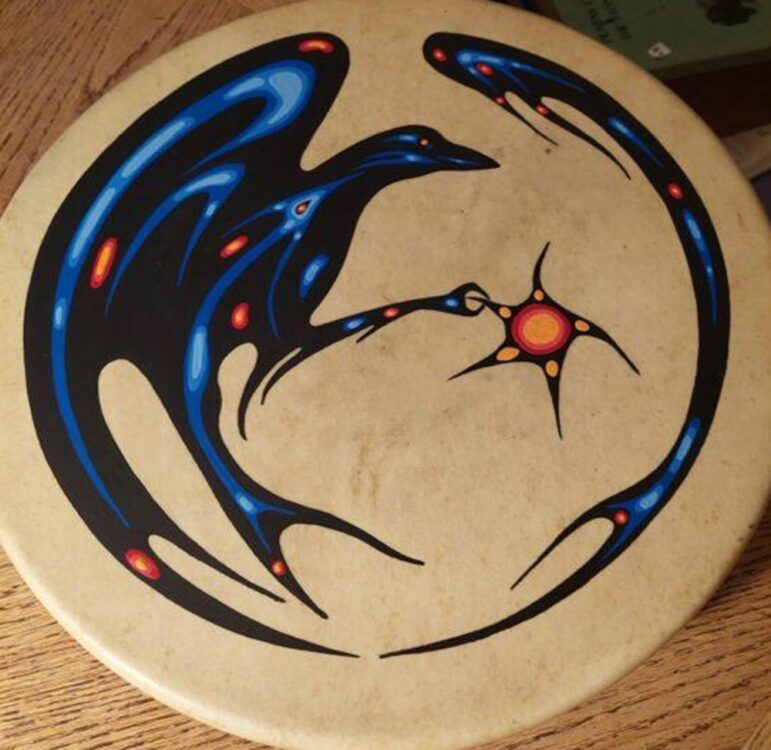
I began to create drums, and then I took up carving paddles. The creativity was flowing out of me, and sometimes I would get into a painting or a drum and work right through the night. I was literally on fire. It was all very exciting. I built a 4-foot powwow drum and got it entered into the BC Festival Of The Arts. I made it through the preliminary bouts and wound up in the BC Finals.
By the time my drum reached there, there were 7 of us First Nations artists who were working together, not just in art but had created a dance troupe and were performing at various venues around the island. All 7 of us made it into the finals of the BC Festival Of The Arts. One of us won first place, and the rest of us took home various other awards.
This was the year of the Commonwealth Games in Victoria, and the top 10 winners in the BC Arts Festival were also invited to be the Commonwealth Art Show Artists, and our dance troupe was asked to perform during the ceremonies. It was 1993. Things in the art world had been progressing along quite well, and I was getting my art silk-screened by several private pro printers. My pieces of art were being picked up and sold in galleries across the province. My drums and paddles were sold before they were finished. England and the rest of Europe were beginning to notice my art, and I was selling art overseas regularly.
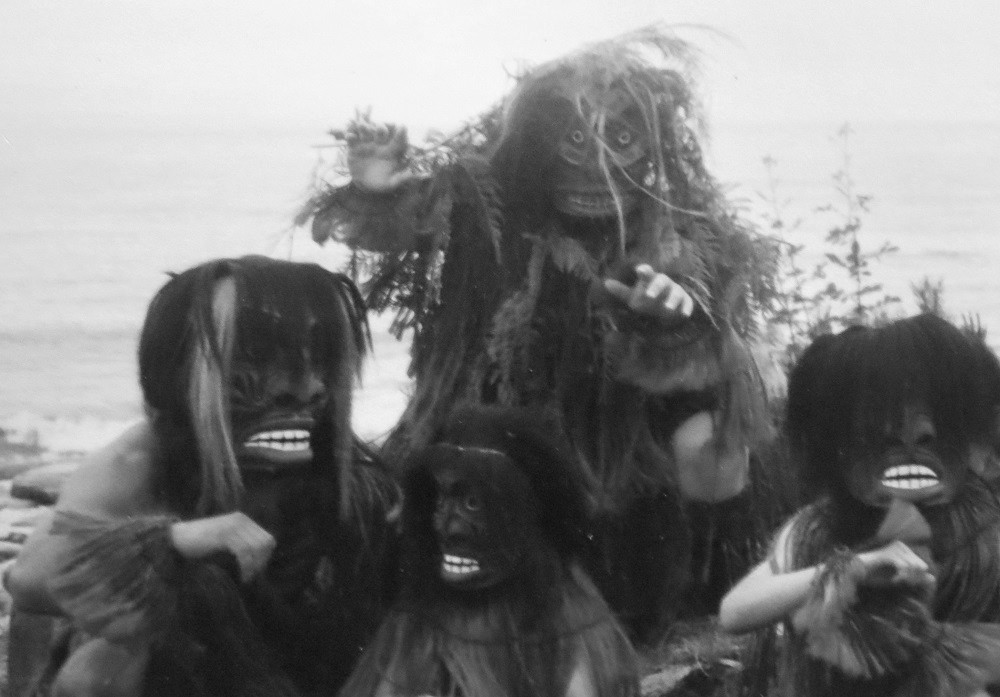
The Box of Treasures Dance Troupe was in demand with almost weekly performances. The man in charge of the troupe, Winadzi (Simon James), was a great one at promoting the troupe and was the driving force behind us. Simon was also a well-known carver who created a number of the masks our troupe used. Simon would go on after this to create the animated series, Raven’s Tales. I just love these videos and own them all. Simon is now a master carver whose works are phenomenal. Simon is my wife’s cousin.
Winadzi called us all together one day to tell us he had booked us for 2 performances at the theatres in Campbell River and Courtenay. We were going to be the opening act for Susan Aglukark. This was an amazing chance to perform. We were all very thrilled.
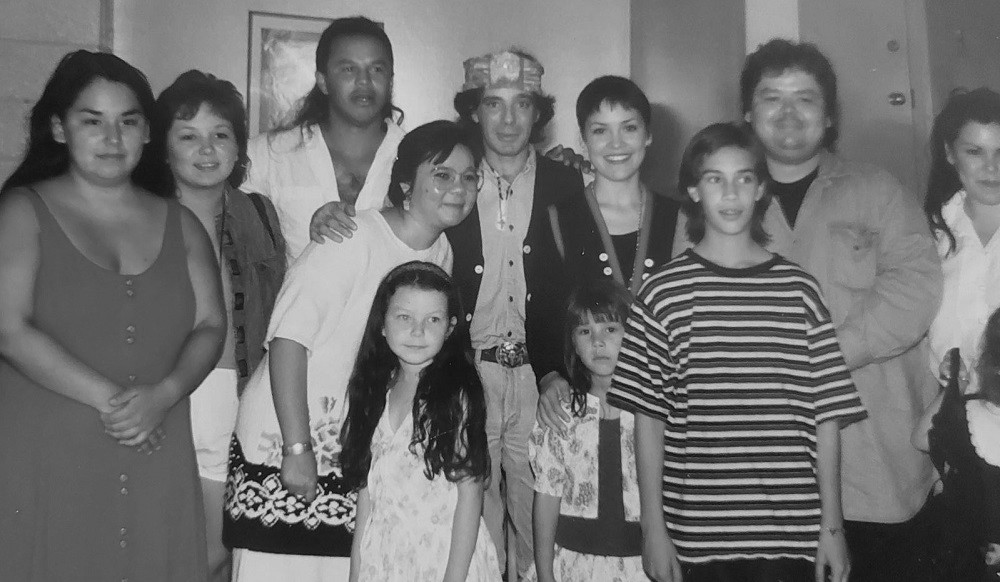
Susan is a Canadian Inuit singer whose blend of folk music and traditional music of her people, combined with modern songwriting, has made her a major recording star in Canada. She began to perform as an Inuit singer and quickly became a well-known name in the north. The Canadian Broadcasting Corporation noticed her and included her in a compilation of northern singers. Then, in 1992, she released her first independent album, called The Arctic Rose. By the next year, she had signed a contract with a major record company. Her most successful single is “O Siem”; this song reached No. 1 on the Canadian country and adult contemporary charts in 1995. Overall, she has released seven studio albums and has won three Juno Awards. She is a wonderful young lady.
Here it was June 1993, and we would open for her on two occasions; what a thrill. I was the lead drummer and narrator for our troupe. I had 2 young fellas from the Cape who drummed with me. Our dancers were from Campbell River and Alert Bay. We started to do regular practices to get us all in top-performance mode.

We would perform several dances, but my favourite to perform was the half-moon/full-moon dance. This dance would start with a half-moon coming out to dance while I would tell a story about how the ooligans would spawn during the half-moon. As I would be telling the audience this story, a full moon would dance out onto the stage. Neither of these dancers spoke, and instead had buzzing noisemakers in their mouths that they both were loudly shrilling at me with. I would pretend to understand their meaning and try to get them to agree to one or the other. Finally, after failing to reach an agreement, I would ask whether a member of the audience could decide which was right. They would mutually agree.
Then I would pick someone close to the stage, and they both would go down and help them up. We would ask them to pick which one was correct. After their choice was made, they would lead them back to their seats. I would finish the story as they finished dancing, then the one who was chosen as the winner would take a small gift out into the audience and present it to the member who came on stage.
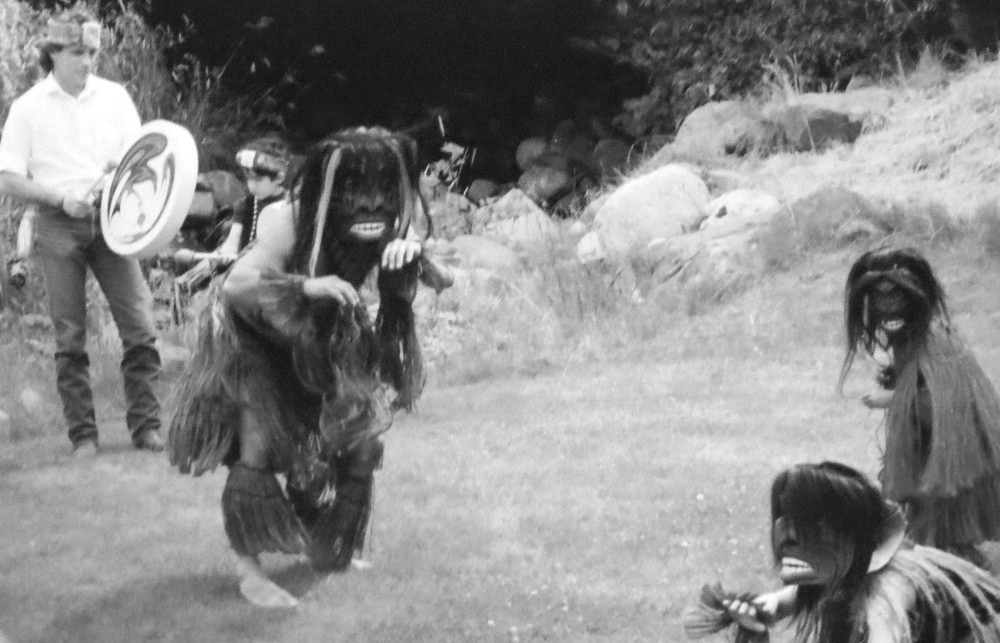
We would do other dances like the Grouse Dance and the Wild Women Dance, and my son Robert Would Drum on some occasions with me. He was young but full of enthusiasm.
After we left the stage, Susan and her band would perform. When she sang, it was like listening to the harmony of the universe. On the second night, Susan asked me to join her on stage and drum with her. I jammed out, and to this day, I wish I had the guts that night to take her up on her offer.
In August 1993, my family and I travelled to Waglisla for a Qatuwas. The translation is a people gathering. Visitors arrived from as far away as Alaska and California for this gathering; people arrived by canoe in the thousands. Many more came by ferry or private boat. We went by ferry, and as we arrived, we could see my wife’s uncle dancing on the wharf as we docked. We asked him if he was dancing for the folks on the ferry, but he said he was dancing to welcome his family.

The gathering was 7 days long, and each night there was a feast presented by one of the nations gathered there, followed by traditional dances telling stories of days gone by. The nation doing the feast danced all night; sometimes the nights would go on until daylight, with dancing still happening. It was incredible. On the 2nd day, Roy Vickers asked me if I could set up a chance for him to meet Uncle Toby informally. I talked to Toby, and he was excited, so Roy came over the next day with his wife and son, and we all spent the afternoon visiting. Roy is related to my wife, and this was my first time meeting him; he was such a gentleman.
On the last night of the Qatuwas, at the end of the traditional dancing, a huge dance screen was set up, and much music from the hit TV program was there, playing modern dance videos and music; this was for the youth in the village. It was quite surreal as most of these youths were still in their regalia, but now we’re dancing to modern music and songs. Hundreds of teenagers, in regalia, dancing to the likes of Peter Gabriel and Tom Petty; I will never see something like this again, and I had run out of film.
The Heiltsuk First Nation lives in the village of Bella Bella (Waglisla), which is located about 160 km north of Port Hardy and about 120 km west of Bella Coola. The Heiltsuk traditionally occupied 21000 square km of land and sea on B.C.´s coastal Inside Passage. Bella Bella is the Government name for the community; Waglisla is the largest of the 23 reserves set aside in 1913 for the exclusive use of the Heiltsuk. The village located on Campbell Island is amalgamated from all Heiltsuk tribes who occupied numerous large winter and spring villages and associated sites spread throughout this traditional territory.
There are approximately 1500 residents in Waglisla. The primary industries for the Heiltsuk economy are forestry and seasonal fisheries, including shellfish, groundfish, herring, salmon and other marine resources. For many decades, Heiltsuk people have had a thriving fishery to rely upon, with employment in commercial fishing, fish processing, and a salmon hatchery. Due to dramatic changes in the fishery in the past several years, the entire fishing-based economy is now extremely fragile and threatens this traditional way of life.
Many artists in the community do quite nicely with the tourist trade, and Eco-tourism is gaining popularity, with the Great Bear Forest being the biggest draw. The chance to see a spirit bear is very exciting to these new-breed tourists. Whale watching, kayaking, and diving are 3 other burgeoning industries that are becoming common in the area.
Basketball is easily the most popular pastime in Bella Bella due to its all-year-round playing season following the construction of the new Community Hall. The men’s and women’s teams travel year-round to various tournaments along the coast.
Over the next year and a half, I partook in many art shows in both privately owned galleries and public Shows. One show in Victoria was pretty cool; we had a feast for the visitors, and then there was dancing by our family members. My wife had brought her jewellery along, and she made enough to pay for the trip, lodging and food. She would laugh and say it was a good thing we took her along.
Then, in September 93, I was invited to be part of a First Nations group display at the 94 Vancouver Christmas Show to be held in Canada Place in early November. We split the costs for our display and each paid around 1000 dollars. This was a week-long show. There were 8 of us and 1300 exhibitors altogether.
A good friend was going to be my helper at the show, as Mom was ready to have our baby. We had trouble finding a room; we wound up in the hotel that has the revolving restaurant on its roof, not cheap, but we needed it. It was $75.00 a day just to keep our van in the basement parking. We all arrived the day before to have time to construct our display, which included a small longhouse. We worked until late in the evening to get it built. The first morning of the show was wild; there were tens of thousands of shoppers, and my prints and cards were doing well. This was good; it was costing me 1000 to be in the show and around 600 a day for food and lodging.
On the first day, Norm Groman came down to the weather with us; one of our dancers snuck up behind him in a grouse mask and scared him. They cut the feed, and then Norm tore a strip off the dancer. I thought it was quite humorous myself. By the second day, most exhibitors had gotten into a routine, and the show was drawing in many people. Our dancers were performing 4 times a day, and with each dance, the crowds were increasing. People were enjoying the show. To tell you the truth, I was having a blast.
It was always too late to find dinner each night unless you went into the East End. The nightlife there was pretty wild. Every third car was a cop car with lights flashing and sirens blasting into the crowds. On the first night, we found a mom-and-pop-run Chinese restaurant that had great food. They were a nice old couple whom we chatted with every night. When I would get back to our room, I would call my wife to see how she was doing. It was tough being here with Gina being so close to giving birth.
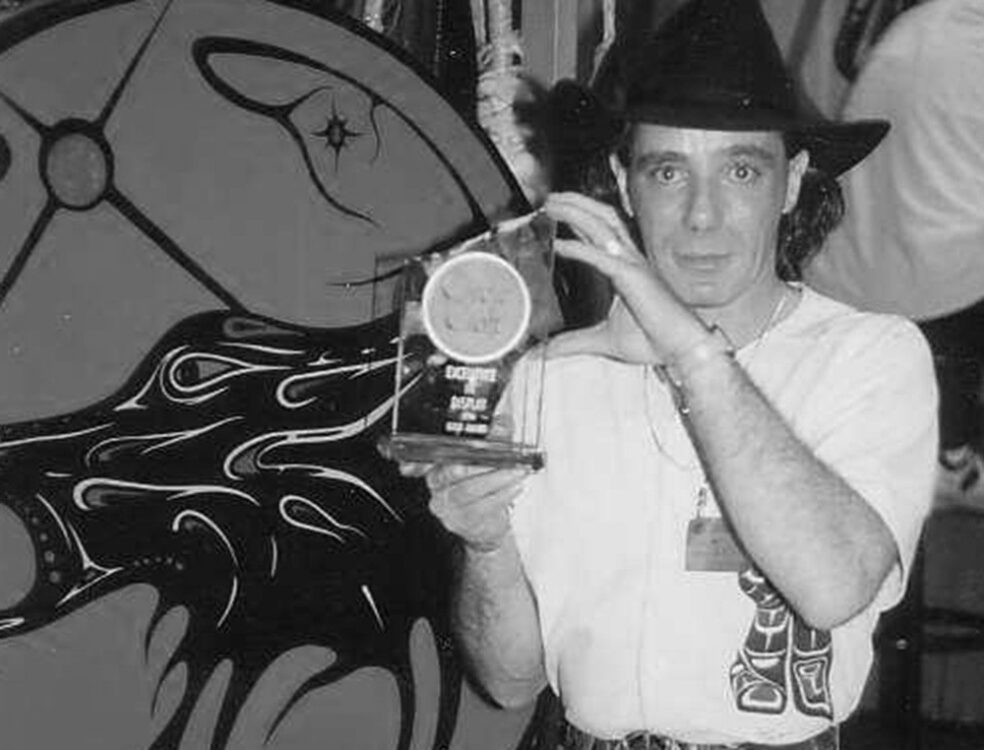
On the 5th night of the show, they announced the winners in Best of Show and Best Display. Although there were 1300 to choose from, we got Gold for best display and Silver for best of show. We all got our entrance fees back as a result.

Our doctor was fighting to save both my child and my wife. He was doing his best, and finally, he got my newborn son out, but my wife was still bleeding profusely. The placenta was tangled up with other organs. He kept telling her to push, but she was almost ready to give up; I could see it in her eyes. Then she just pushed with all her might, and all of a sudden, the placenta came loose. Gina blacked out. I was so afraid she had died. But the monitors all said she was not.
The blood flow subsided, and after the doctor put in a few stitches, my wife was safe. I looked over at my wife’s mom, and she was crying; she was so afraid that she was going to lose her daughter and possibly, her grandson. He was named Forrest George-Henry Logan after his grandfather, George Henry. A wonderful and strong name for a boy who barely made his way into the world, a child we might never have had the pleasure to meet. He is our miracle child.

His Grandfather was the man who, back when my wife was just 6, had almost beaten her mother to death. I met George just before my first child was born. George was a man who, I believe, was haunted by that night he went into a rage. From what I saw in the 6 years I knew him, he was a man who had spent his life trying to become a better man. He was sober and was known as a kind and generous man. I held him in high regard and respected the man. He had passed on the year before due to complications from diabetes; he had a stroke that put him in a coma, and he never recovered. He passed on a few weeks later, and I would miss him. He had become a good friend. So we decided to have another child and would name him/her after George. She became pregnant again, and a new adventure began.
After the birth of Forrest, our home was no longer big enough for all of us. A lease became available in Oyster Bay. It was a home sitting on an acre, right on the beach. This house was massive, 5000 square feet and the views were incredible. The living room was 40 feet by 60 feet, and one of the features was 13 huge picture windows that looked out over the ocean. These windows each had a 3-foot-deep windowsill where you could sit and watch the world from. The room was as big as the house we were moving out of. Off this room was a 10-foot by 15-foot entrance area where a big staircase led upstairs. The two doors were both huge. Another room was 20 feet by 40 feet, which I set up as my studio. On another wall was a big opening that went into a dining room that was 15 feet by 30 feet. I built a table that was 15 feet by 5 feet out of cedar that could seat more guests than I had ever invited to dinner before. The highlight of this room was a huge river rock fireplace on the far end, where we would have winter dinner parties with this fireplace burning brightly. You could look through the big glass doors that led to a big deck where you could watch the snow falling. Off this room was a fairly large bedroom that we set up as a guest room. Beside the fireplace was another door that led into the kitchen, where there were several wall-mounted ovens and an island stove top with 6 burners. There was a staircase beside the kitchen access to the bathroom, which was narrow. It went upstairs and also led to the basement. The upper stairs were almost like a servant staircase that led up to 3 more bedrooms. Past these rooms and around a corner, you come to the top of the front staircase and the master bedroom, a huge room with a walk-out balcony that had glass rails so your ocean view was not impeded. Just beside this room was the master bath with the largest tub I have ever seen; it fits both my wife and me with plenty of room to spare.
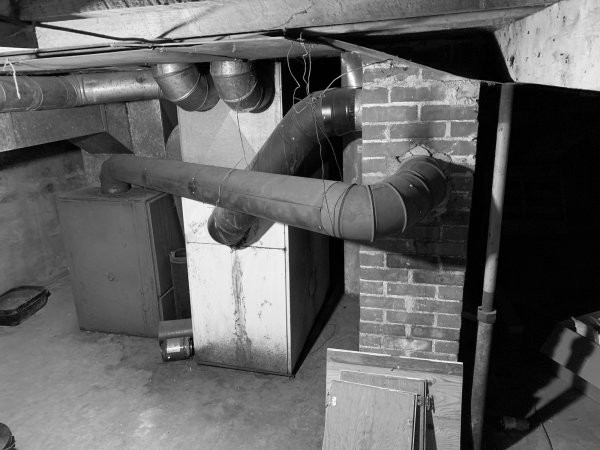
The stairs that went down took you to a furnace room that held a huge wood/electric furnace that heated the whole house with ease. I called it the beast. Off to the side was a wood storage area that could hold 3 or more cords of wood. This room had a chute that went through a door where you could pull up your truck and load the wood down the chute. There were also 3 shops and a 2-car garage downstairs. There were 55 windows in the house and 75 light fixtures. We had to buy bulbs in industrial-size boxes.
Outside was a lawn on the ocean side with many large trees, and there was a stream that went past the house and emptied into the sea. On the other side of the house were fruit trees that during the season were loaded with apples, plums and cherries. The apple tree had high-sugar-content apples that would ferment in the fall from the sun, and we had a bear that would come by to lie under this tree to eat these fermented apples. The bear would get quite drunk and, after feasting, he would stagger back into the forest to sleep it off, returning night after night until the fruit was gone. This was quite entertaining to watch.
We had over 200 feet of private beachfront where we would spend warm summer days watching the whales and dolphins swimming by. Sometimes, we would see hundreds of dolphins all leaping out of the sea as they swam by. Sea lions quite often hauled out on the beach, allowing us some incredible close-up views of these large creatures of the sea. Our kids were young, and this was a paradise to them.
Not long after moving in, I was sitting by a window in the living room. As I sat there, I just happened to look out, and as I did, I saw my youngest son, Forrest, just over 2, hanging out the upper-floor bedroom window. I ran through the living room, up the stairs and down the hall to this bedroom. I reached it in time to pull him back in. After this, I put childproof locks on the upper windows.
Larry
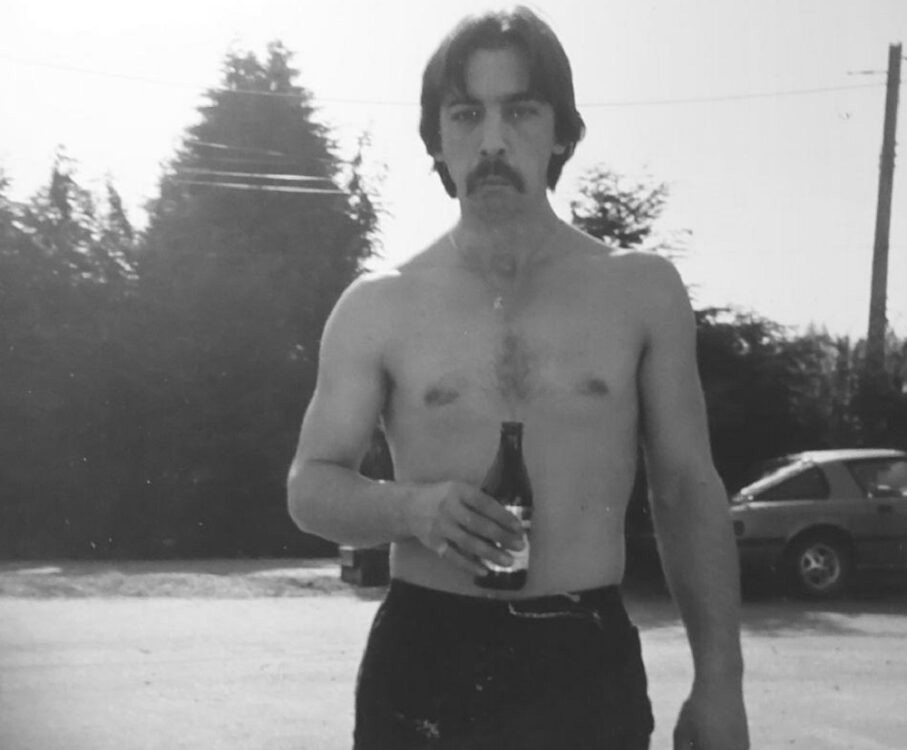
At Christmastime, my best friend spent a couple of weeks with us. Not only was Larry a good friend, but his family was closely connected to my wife’s family; his mom and dad were Gina’s older brother’s godparents. Larry’s dad was the pastor up in Alert Bay, where Gina’s dad was from. It was great to spend time with him and his fiancée. My oldest boy was born on Larry’s birthday. I mean, how cool is that?
When Larry went back to Chilliwack, he was informed that the position as the official fundraiser for the Harrison Lake Pow Wow Association that he had applied for was his. He called me that night to tell me the news and ask my advice on proceeding with this. I had done fundraising before. We talked for quite some time as I tried to give him advice. He was so excited about this, and his enthusiasm got me excited as well.
The next morning, around 11 AM, Larry’s brother called me up to tell me that Larry had died in a car accident earlier in the morning. I was devastated by this news. I could not get my mind around it. I sat in my basement and just cried. He was my best friend, and I would never see him again. Death comes to us all, but this was just too soon. When we were not yet teens, when Larry and I met. As I sat there, tears running down my cheeks, remembering all we had done over the years, I realized I had never told him he was my best friend.
When Larry was with us, he had gone to his parents’ place for 2 days; they also lived out where we lived. His family had always treated him like he was a loser; this time was no exception. He came back very depressed. They had also treated his girlfriend with the same scorn. When they had his funeral, I was asked to be the speaker. I was honoured but had to turn it down, and I did not even go to the funeral as I was afraid of what I would say to and about them. Over the years, I had seen how they treated him and had never thought much of them. Both his mom and dad were ordained ministers, but I felt they were not good examples of being Christ-like. On the day of his funeral, I sat on our beach with a fire and thought of all the good times we had during the years we knew each other. I smiled through the tears from these memories.
I buried myself in my art, and this helped me deal with this loss. At this time, I was doing well with art sales and had picked up some contracts with clothing manufacturers and print companies that mostly covered the lease and hydro bills, so life was pretty good. The next year was pretty good.
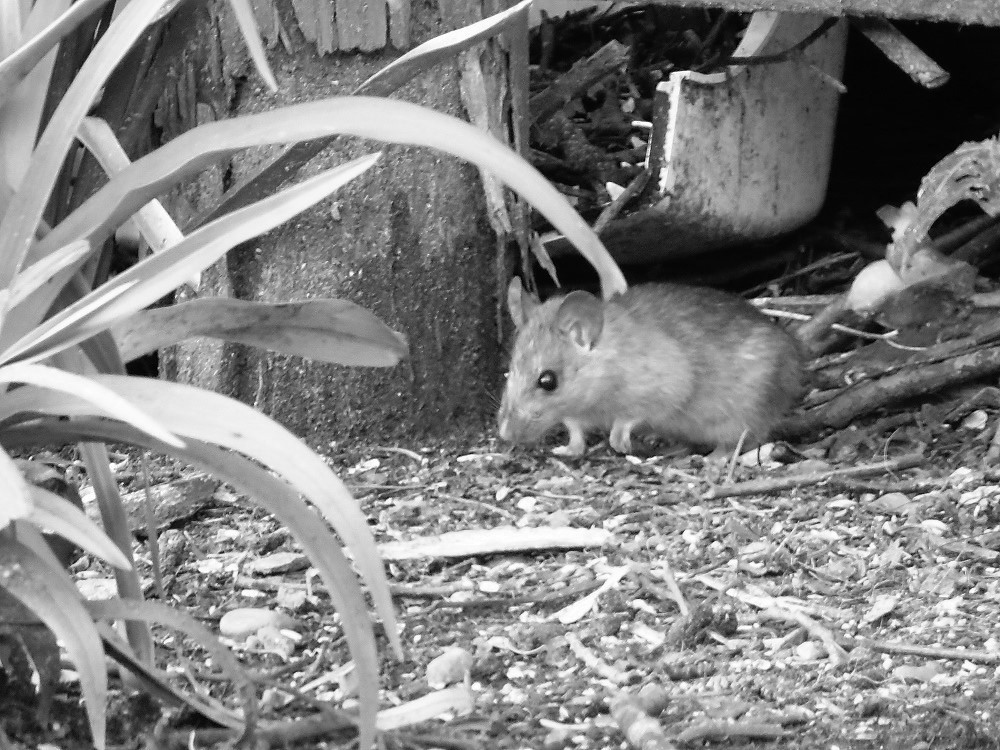
Then we began to have some trouble with the house that involved rats; we hardly saw them, but the basement would constantly have droppings on the floors, and sometimes you could hear them in the walls, chewing away. I began to search these rats out and discovered that all the insulation in the basement walls was full of droppings and urine. Lucky for me, these walls were only framed in, so it was easy to remove the old insulation. After pulling the insulation, I could see many ratholes leading in and out of the basement. I filled close to 50 garbage bags with insulation, and I must have swept up over 100 pounds of rat droppings.
For some stupid reason, I did not wear a mask, and my health started to go south. I was having trouble catching my breath, so I went to see the doctor, and he discovered that I had an infection in the sac that encircles the heart, which caused it to swell. And it was putting extreme pressure on my heart. I got sick. Being sick harmed my ability to create art, and we found that we could no longer afford this place. My doctor said I would be ill for more than a few months and recovery would be slow. We found a smaller home, a town house, where the rent was something we could afford. I spent the next few weeks just trying to beat this infection. They had me on some pretty powerful meds to fight the illness. I did finally get control of it, and eventually, they could not find any signs of it. It’s a good thing my heart was strong. The medication had another effect on me, though. I began to get fluctuating blood sugars and was diagnosed with diabetes.
After many tests and trips to both local and regional hospitals for everything from ultrasounds to CT-Scans, it was determined that I had pancreatic cancer. A third of my pancreas had shrivelled up and was no longer working. My doctor, who was always blunt with me, told me I had cancer. I then asked what the prognosis for me was. He said it’s terminal. My Oncologist told me the same thing. I was quite destroyed by this news.
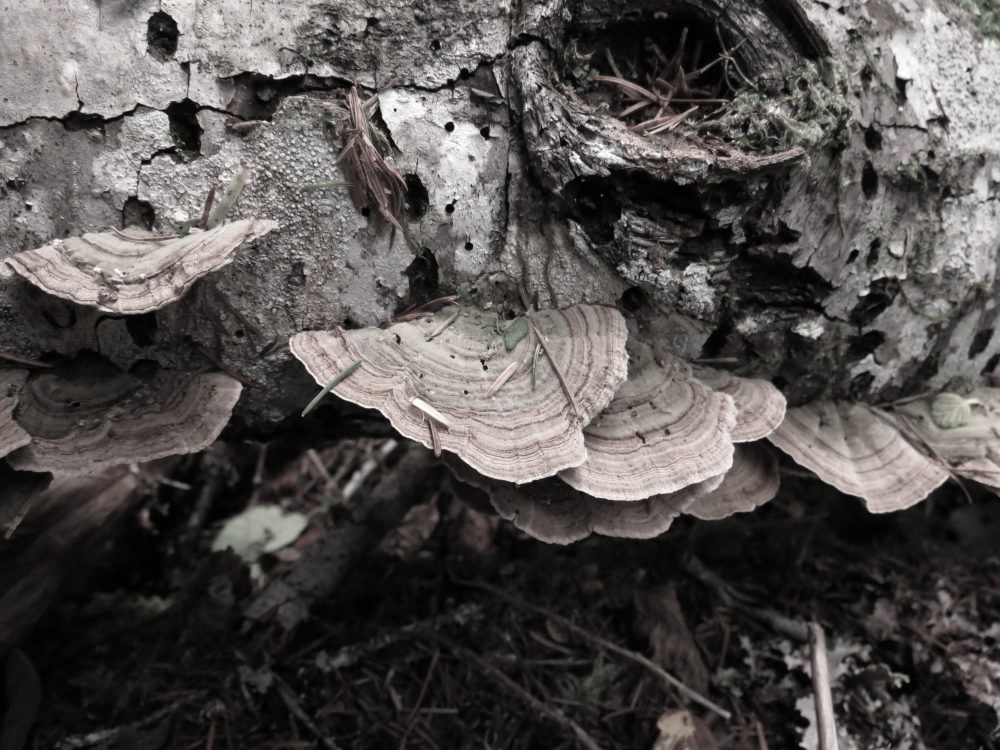
When I was young, and Dad and I were out in the woods, he would always point out turkey tail fungi when we would see it. He always had lots to say about this fungus. Dad would say it could stop any cancer, but then he would say that the fungi would not fight the cancer. He said, ” This fungus is an immune booster; it beefs up your immune system so it can kill the cancer”. “You just need to make a tincture, he would say, a dual extract tincture.” I had made other tinctures, so I understood the process.
I went on a hunt for it and found a big patch. Turkey tail fungi can be found all through the year, but are more easily found and of higher quality during the cold months. You can find it on deciduous trees. It grows in profusion here on Vancouver Island, and it is a beautiful fungus.
A dual extract tincture of the turkey tail fungus is fairly easy to produce. First, you need to clean and dry them. I use a brush to remove all debris, then a dehydrator to dry them. You can just place them in a paper bag to dry them; it takes quite some time to dry them in this fashion. After drying, I use a big blender to break the dried mushrooms into small bits and then a small coffee grinder to finish. Do not take it down to a powder, though, as this makes it difficult to filter it. Grind it just so it’s in minimal particles.
It can at this point be used for tea or cooked with food, but never take the powdered form without processing it by cooking or brewing in hot water. This could make you quite ill.
From here on in, it is a fairly straightforward process. First, you fill a mason jar about 1/2 full of the dried fungi, then add alcohol to fill the jar; use at least 100 proof, as this works well, or you can use an organic cane or grape alcohol. I use a 151-proof “Everclear Brand” alcohol, which is a grain alcohol. Let this sit for about 6 weeks, shaking it once a day, then, using a cheesecloth filter, strain the fluid out. I run it through the cheesecloth several times, then use a small basket strainer with a coffee filter in the basket until clear. I will go through quite a few filters to do this. Put the mash that was left in a pot of water and bring to a boil, then simmer for at least 3 hours, adding water as needed to get the same volume as the original strained fluid. Remove from heat and cool. Then filter this in the same process as the first batch. Filter until clear, mix with the first batch and place in a cool dark space.
Medicinal uses of turkey tail include the treatment of many kinds of internal organ infections. In China, turkey tail has been used as a preventive and curative agent for liver infections and liver cancer. In Japan, it is considered a panacea for various cancers. Overall, the mycelium and fruiting body of the mushroom are considered to have immune-simulator and anti-carcinogenic activities. Clinical research with PSK began around 1970 and has focused on its immunotherapeutic efficacy in stomach, colorectal, esophageal, nasopharyngeal, lung, and breast cancers. In Japan, it has been approved as a pharmaceutical-grade medicine for cancer treatment and has been used for more than 30 years with consistent clinical efficacy. The average dose is 10 drops twice a day.
One day, as I was walking into the doctor’s office (after being on this medicine for 3 months), I felt something funny in the area of my pancreas. It was like something came loose, almost like I was pinched inside. Soon, I began to feel better. After some more tests, it was determined that my pancreatic tube had had a blockage that came free. My blood sugars became normal. So, was it cancer? Or just a blockage? All I know is that a third of my pancreas has shrivelled up from whatever it was, and this would affect me later in life. But my health, for now, had returned, and life was good.
When my youngest boy was 10, he began to pressure us to quit smoking; it was a daily event. My wife finally said that she was quitting smoking, and I said, “Me too,” before really thinking it through, but with those words, I was committed. We set a date a week from that day; we got the patch kits and other various items like mints and gums, and we were ready.
I went to the store a couple of hours before the time we had set and bought a pack of smokes, came home and gave Gina half of them, and we sat there and smoked 10 each, finishing just before our quit time. I quickly put on a patch, not thinking about all those smokes I had just smoked. Damn near blacked out from a nicotine high.
I had a big bag of bunk (homegrown pot) that I could roll up to smoke, and I bought wagon wheel cookies by the case. The bunk helped me wean off the habit of having a smoke in my hand. The patches were giving me my nicotine in continuously reduced amounts. The wagon wheels were my reward. I ate them by the boxfuls. Both Gina and I quit and have not smoked since. The wagon wheels tasted so good that over the next year, I gained almost 50 pounds.
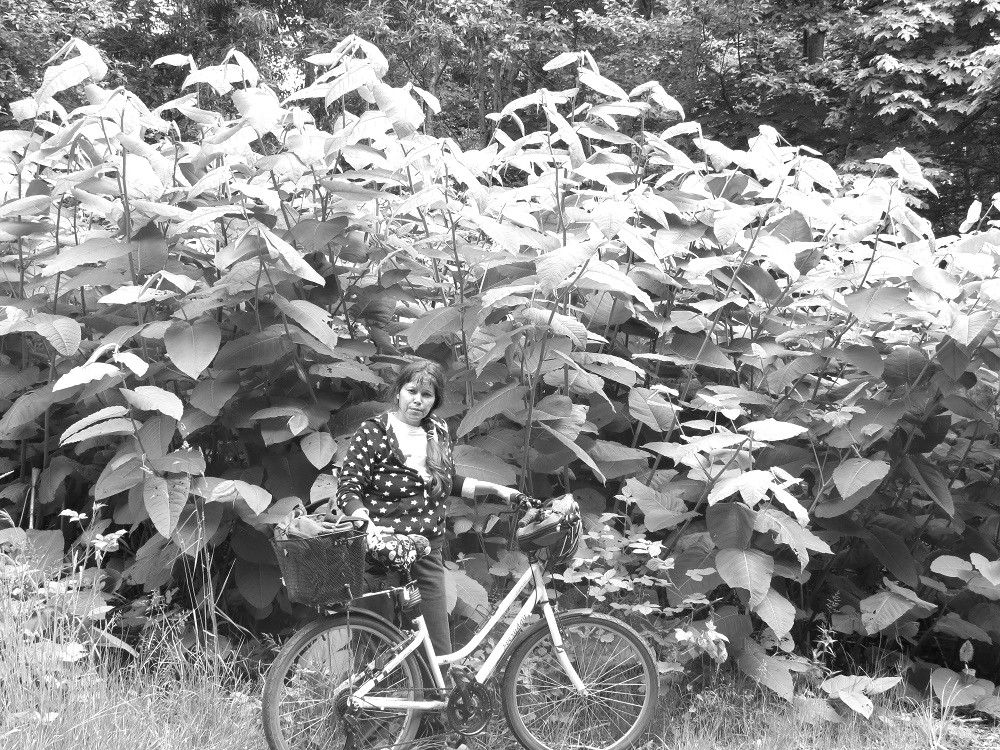
For most of my life, I have been in top shape, and yet I now find myself quite round in the belly area. So we sold our car and bought bikes. We rode them for the next 5 years. I dropped those 50 pounds and got my health back.
At first, my wife and I rode 10-speed road bikes with 28-inch tires, and we would ride out on the highways as well as around town. We had a blast, but if we wanted to go off pavement, we would need to be careful, as they tended to slip on wet or muddy corners. I slipped once at high speed on mud and broke a rib in the fall. We eventually purchased mountain bikes and took our adventures off the road. We never looked back.
We loved biking and thought nothing of 30 km bike rides, but we wanted to get out further. I bought a couple of gas motor kits to adapt our mountain bikes into motorized bikes. After we built those 2 and tried them out. We built 3 more so that all the kids had one. We could travel at around 25 km an hour on the logging roads, and we would head out on family trips into the backwoods. It was pretty awesome. The bikes began to get noticed, and we got numerous orders for them. Bikes and kits cost around 300.00; I could build a bike a day, and we sold them for 650.00. Not too bad. Then the government made them illegal, and we could only ride them on the back roads, which was fine for us, but sales died completely as people wanted to ride them in town. It had been awesome while it lasted.
Eventually, the RCMP began to hassle us about the bikes. There was this one time my wife had just left a friend’s house, where we had purchased a big bag of skunk weed. I put that weed in my pocket as we headed to the grocery store. As we pulled into the lot, they saw us, but we did not see them. Our bikes were loud, and we did not hear them behind us; we just kept riding, oblivious to the sirens and lights of the police car behind us. Two cops hopped out of their car as we pulled to a stop and rushed up to us. I slowly looked around, and everyone in the parking lot was looking at us. It took a second to figure it all out. These members of the law were not very impressed and said they would be impounding our bikes. The lead cop said he knew the law on these bikes. I got into a pretty heated argument with this Police Officer, filling his head with Transport Canada rules on these bikes; it was mostly bullshit that I was laying on him, but it was enough to confuse him. During the argument, I would move in close to get into his face, but then I would smell that weed in my pocket, and I would need to back off, almost losing the argument because of this. I could see that this cop was having second thoughts and finally agreed not to take the bikes. We sold these bikes not long after this and went back to just riding mountain bikes with no motors.
Around this time, I started to notice my eyesight was beginning to fail, and it was coming on fast. My doctor made me an appointment to see an eye specialist, but it was going to be a year before I could get in. My eyes kept getting worse. I started to not see well enough to drive, so my wife would come with me to read signs and watch for things I might hit, you know, like people on a crosswalk. When I had to go out by myself, like when I would pick up the kids from school. I would take our cockatiel; he loved the kids. His name was Buddy, and he would ride on the steering wheel, where he would squawk if I was going to hit something. When we were waiting for the kids, I could not tell one from another, but Buddy would be watching, and as soon as he saw them, he would get all excited. Sometimes when driving alone, I would hold a big plastic spoon with holes drilled in it over one eye; this would, for some reason, allow me to see better.
When I went in to see the eye doctor, he was surprised at how bad my eyes were. These were a new type of cataract that was showing up more often, something to do with the environment. He said he was seeing them in a younger group of workers who were predominantly employed in the outdoors. He was going to book me in some time shortly, and if I wanted, he would put me on a cancellation list. I would need to be on notice. I agreed, and a week later, I got the call for the next day.
2 types of lenses could be used; the old type required some cutting and a few stitches to insert them. As they were solid lenses, the only good thing about them was that they were free. Or I could have the new ones that come rolled up. They only require a small hole through which they are pushed in and then rolled out. No stitches. They would be 300.00 per lens, paid before the operation. I opted for the rolled ones. On the day of the procedure, I was brought in and had some stuff put in my eyes. I was then taken into the operating room, with my town clothes and boots still on. They put me on the table and stuck a needle in my eyes to freeze them. Then the doctor hit my eyes with sound waves, which shattered my old lenses, and then vacuumed the pieces out. I instantly could only see white, damn scary. He then put the first new lens in, and as he rolled it out, I saw him, and he was so damn clear looking down at me that I let out a yell. I could not believe how clear things were. Dr Shaver had a good chuckle. I began to call myself the 600-dollar man. (Some of you will understand the term) My sight was awesome after this.