
Handlogging

After arriving back in Campbell River, I figured I would rent a house and look for work. First, I booked a room at the Quinsam Hotel for a couple of days. I then had a beer in the pub, and while I was there, I ran into an old friend of mine, Jimmy Morgan. We had been pretty good buds when we were kids; we both loved canoeing and camping and had shared many adventures. He was looking to do some hand logging along with old Jimmy Sumner and his son Mark. I had known old Jimmy for many years; he was a drinking buddy of mine. Both the old timer and I would get whiskey drunk at my place on occasion. He was a tough old guy and liked to fight. One time, we were drinking at my kitchen table, and my friend Roger was there with us. He was leaning back in his chair, almost passed out. Old Jimmy seemed to have fallen asleep with his hand holding his chin up. Effectively, I was drinking alone. So I knocked Jim’s old elbow off the edge to wake him up. But his head just fell face-first onto the table, getting a bloody nose. He came up ready to fight and looked at me. I just pointed to Roger. Roger came to as the old timer’s large fist hit him in the nose. After this, we drank some more. Both these guys are dead and gone now, but we did share some good times.
Anyway, Jim Morgan said they needed a cook. He also said that it was good clam-digging in the area, and I could dig clams under his license. I had made good money clam-digging in the past. So I signed on for the adventure. Jimmy had this awesome trawler, the Aladdin; it was heavy and great for pulling wood to the beach, a good boat for logging. Sumner’s boat was far too light to pull logs to the beach, but the old timer and his boy would use it to boom and sleep in. The old-timer was going to be the boomer; my buddy would be yarding wood with his boat. The young fella was going to look after all aspects of falling and logging. I would help out wherever needed and do the cooking. Along with this, I would be commercial clam-digging on all the good tides. It was October 5, 1979, when we headed to the Blunden Harbour.
Blunden Harbour is a place of waterfalls and rivers, of deer and wolves, of birds and seals. A place of windy forests gently covered in a blanket of mist. A place where dreams come from. The Harbour is located on the mainland, directly across from Port Hardy, at the entrance to Bradley Lagoon. Before 1964, the village at Blunden Harbour was still inhabited; not sure why they left, but the government was in favour of amalgamation. Many remote communities were emptied in this manner. The village site has mostly returned to the forest and the sea now. The old chimney is all that is left of the house that was tucked around the corner from the village site. It is amazing how it took just 15 years for nature to do its work.
The old timer had brought up a float with a small house on it a week back and secured it to the beach just where the outflow of Bradley Lagoon flows into Deep Bay; the bay is part of Blunden Harbour, and there was a stiff leg set up for this. The float had a 12-volt generator system along with a propane fridge and stove; it would be our cookhouse. The power system was a series of 12-volt Cat batteries, hooked up to a 12-volt gas generator. I would fuel up the genny, start it and let it run until the fuel ran out. It would run for 3 or so hours, charging up our batteries; this was all that was needed to keep the lights on.

On arrival in Blunden, the first order of business was offloading the boats, hooking up the propane, lighting the pilot lights, firing up the generator to charge the batteries and stowing away the food. The old timer told his boy, Marc, who was 16, to get the propane going, and the rest of us went about other jobs. The young fella was gone for a bit before he came and said he could not find a match to light the pilot lights. He was given a pack, and back into the cabin he went. Then there was a big boom that shook the float and blew open some windows. As we all turned to look, the young man flew out of the cabin, all excited. Seems that while he was looking for a match, he had left the pilot light going. We all had a good laugh after ensuring he was alright.
Later that day, Jimmy was checking out the saws, making sure they were ready to work. One of the saws was a 090 STIHL; this was a big saw with a 4-foot bar. They needed this saw as there were quite a few big trees on the claim. These saws are never easy to start. Manual starting without the decompression valve’s assistance is virtually impossible. The young fella came along, and I thought he was going to struggle with starting it, and perhaps did not know about the decompression valve. I was wrong; he just picked up that saw and fired it up like a pro. He was a tough lad after all. I had worked for a couple of his uncles on Gilford Island, and they were highball loggers. Seems his young man was cut from the same cloth.
They hoped to bring out six sections of wood by Christmas. But from the very start, it seemed that reaching this goal was going to be tough. Every day, the boys would start with high hopes. But by day’s end, they would look back on saws that wouldn’t run and brand new lines that would break. Logs that would hang up where there was nothing to hang up on, and when they would finally get logging, the wind would come up out of nowhere and force them into hiding. Here, it was the morning of December 15th, and they barely had 3 sections of wood in the water.

Over breakfast one morning, Jimmy said he felt today would be different. He didn’t know how right he was. They started to log at high tide and had only a few logs in the water when the wind began to pick up. I had just taken the skiff over to the logging show to help out when the wind started to blow. It was a funny sort of wind; it would start like a child’s breath, barely moving the hairs on the back of your neck when burped, but would build up until it seemed to be a thousand voices screaming at us through the rigging of the boat.
The wind was hitting the boat from all directions, and Jimy was having a hard time keeping it straight to the beach, so he gave me a shout and told me to take the skiff to shore to bring the youngster and his gear to the boat so we could get back to the float house. By the time we got his gear on board and the skiff stored away on deck, the wind was howling at us from all sides. If we didn’t make it into the harbour soon, we weren’t going to make it at all. Getting into the harbour is a bit tricky when it’s calm out; it’s nearly impossible when you are fighting storm-force winds. The entrance to the protection of Deep Bay is a narrow channel between a reef and a sandbar. Jimmy thought that if he could stay as close to the reef as possible, we might make it.
We were about halfway in when the wind hit us broadside with a blow that tore loose anything that wasn’t lashed down. The skiff just got picked up by the storm and disappeared into the night. The wind seemed to be a living thing as it picked us up and slammed us down on the sandbar. We tried to back off, but we were stuck fast. I ran below deck to check for damage, and the other two went out on deck to look the situation over. We had water coming in from a couple of spots, but the auto pumps should handle it. The story outside was a whole lot worse. I got back on the deck just as a wave crashed over the boat and rolled us hard to the port side.
It was just starting to get dark, and the wind was still increasing; you could almost hear it laughing at us as it screamed through the rigging. Then it began to rain. The kind of rain that, when pushed by 100-knot winds, leaves welts on exposed skin. Every wave that crashed over us rolled us a little farther towards disaster. If the boat went over, the waves would break it up, and that would be the end of us.
Jimmy hollered that we would have to cut up one of the stabilizer poles to brace the boat. So we lowered both the poles and cut the leeward pole into two pieces. We left the windward pole out for balance. I took a piece of the pole and jammed it into the sandbar while they climbed out on the windward pole to roll the boat back as far as it would go. I got the pole lashed to the side of the boat. We put the other piece in the same way.
The danger of rolling over was taken care of, but we were still stuck on the sandbar with the waves crashing over the boat; anything that wasn’t tied down was washed away. The skiff was gone. The rain was so heavy you couldn’t see one end of the boat from the other. All we could do was wait and hope the waves didn’t break the boat up. We spent the next little while securing anything that was left on the deck. The young feller was working the hand pump out on the deck. This young man impressed me with the way he was just taking it all in stride.
I have a history of being in challenging situations, and this certainly was one. When you are put in survival mode, your adrenaline gets pumped. I was thinking about this as another huge wave smashed over the boat; you could hear the bottom grinding against the sandbar. My buddy went below to see how much water was coming in. When he came back, he said we would have to take turns on the hand pump out on the deck, so the boat could float better. There was so much rain that it was finding its way below decks. You could only handle the wind, rain and waves for about 15 minutes before you had to come in, so we took turns on the pump.
The wind felt like it was trying to drag you loose from the boat when you were out there. Over the next few hours, the winds slowly decreased, and with every gallon of water we pumped out, the boat sat a little higher in the sea. By 11 pm, the wind had died down considerably, and the boat rose high enough with the incoming tide to let us pull off and limp into Deep Bay, half frozen, dead tired and soaked to the bone. Old Jimmy was happy to see us when we arrived. He said he had been worried that he had lost us all to the storm.
We pulled out late December with the 3 sections of wood. But our adventure was far from over. The first night was one of those incredible times that are remembered with awe; the moon was full, and there were no clouds in the sky. The sea was flat as a mirror. Jimmy was sleeping, and I was at the helm. The old timer and the kid were at the back of the boom, pushing with their boat while we were towing, and it was a pretty cool night.

Hard to believe that just a few days before, we had been fighting for our lives as we were stranded on a sandbar in hurricane-force winds. Jimmy woke up early and took over the helm, and I went to create some breakfast. We turned on the marine weather, and they were calling for another storm packing winds up to 100-plus knots. We were not far from Broughton Island and decided to duck in and tie the boom up in Ralph Bay and head across to Port McNeil empty, as we wanted to make it out for Christmas.
By the time we had the boom secured and gear stored below deck, the winds were getting pretty wild. When we pulled out from the bay and entered the Queen Charlotte Straight, the storm was blowing so hard that the top several feet of the 8-meter waves were blowing off with the winds. We would ride up a wave and then drop into the trough between to be covered by the next wave, then bust up through the next wave only to drop into the trough again. At times, we had green water flowing past our windows. Things were flying about the cabin, and broken glass and plates littered the floor. Then one of the support cables on the remaining stabilizer pole broke loose and was whipping around outside with a coupling on the end. If it broke a window, we could sink. My buddy hollers, “You have to get out on deck to secure that cable, Bud”. So I tied a rope around my waist. He knew if he heard me hollering, he would need to pull me back to the boat. I then went out on the deck, and damn it was pretty wild out there. I quickly tied myself to the boat before trying to grab the cable. I was lucky and got hold of the line right away. I proceeded to secure it back to the boat. Every time a wave rolled over the cabin, I would hold on with all my strength while it washed over me, then get right back to the chore at hand. So much water was flowing over me that I was surprised I did not see any fish swimming by. I got it done and back inside. I quickly changed out of my wet clothes to warm up. It was not easy getting the wet clothes off; I fell over more than once.
I spent the next few hours with my head on the radar looking for logs, boats and whatever else that was floating out there. The other boat was running over with us; we had secured a heavy steel 45-gallon drum to its deck. I watched it fly up into the air and then disappear sideways into the storm.
The rest of the journey across was wild but uneventful, except for the need to slow down to allow an out-of-control sea span tug and three barges that were out of control in the storm right in front of us. When we finally pulled into Port McNeil Harbour, I think we all ran up to just put our feet on land. We had made it; the rest of the way home was by road.
It had been a great adventure for both me and my dog Cody. My pup enjoyed the times we got out in the middle of the night to dig clams. I had a pole with a hook on it that I would stick into the beach and hang my Coleman lantern on; this provided a circle of light. I would dig out the area illuminated and then move my light. The digging was great. Outside the lit areas, you could sometimes see the shine of sea wolves’ eyes in the glow of my lantern and hear them talking to each other. Cody would stick pretty close to me and growl back at them. These nights were majestic, and the experience was just awesome. One moonless night, Cody and I were getting ready to head back to float. I had a 10-foot skiff with a 2-horsepower gas motor for power. As I pushed off the beach to get far enough out to start the motor, my boat spun around from a bit of wind. I looked around, and everything was black. I could just see a bit of the tree skyline, but not enough to figure which way was home. There were a group of Islands between us and the float house. If I got going in the wrong direction, I could wind up anywhere. I sat back, took a big breath and let my instincts guide me. Half an hour later, while rounding a corner, the float house lights came into view.
After Christmas was over, they went back and picked up the boom. After dropping off the boom at the sort, I was paid out, and I was back to being unemployed.
Knights Inlet
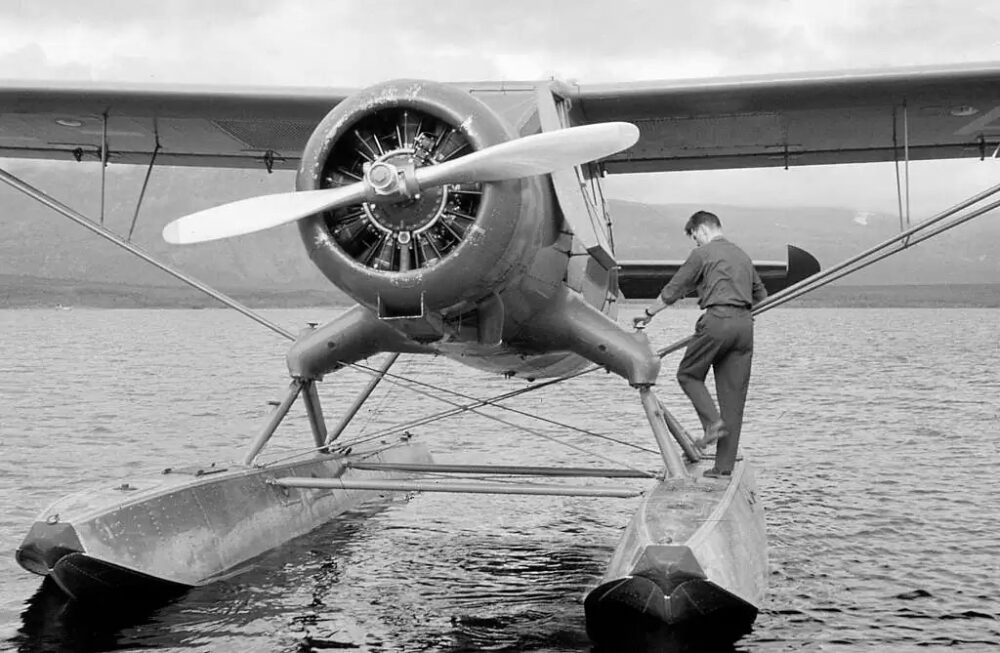
I spent the next year logging in various camps, fishing and hiking in between. By winter, I was employed at Protection Point, up in Knights Inlet for a heli-logging outfit. I was working as a chaser in the landing; it was pretty tough work. The landing was almost half a km long and knee-deep in mud caused by the winter rains and machines running through the site. I was looking forward to getting out of here for the winter shutdown. The only thing that kept me going was the fact that the Minstrel Island Lodge was only a 5-minute flight by helicopter, and they had off-sales. We made the run more than a few times. It was a beautiful lodge, painted a light blue colour. It had a clientele that hailed from all parts of the world. I hear it is closed now and being reclaimed by nature. The pub here used to get pretty busy with loggers and fishermen. I recently heard it’s been bought, but no info on whether they plan to open it again.
When Christmas was just around the corner, and we were about to shut down and head to town, we got hit by very dense fog. There were just seven of us left in camp at this time, and we all wanted to get out for the holidays. The airline tried to get a plane in for several days but could not beat the fog. The pilot finally made it in. He said, said this would be the only flight, so all seven of us had to cram into the Beaver plane.
It was tight, and I, being the smallest, had to sit on top of our gear behind the back seat, in the tail of the plane. The plane was overweight, and the pilot found it difficult to get airborne. It was a long flight out as the pilot had to keep low over the water to stay out of the fog. When we were just a few minutes out of Campbell River and flying past Deep Water Bay on the north end of Quadra Island, the fog dropped to the water’s surface, and we could not see anything. The pilot was doing his best as he tried to navigate blind, when all of a sudden, we hit the water at full speed. We almost flipped, but the pilot kept us level. It was so wild that we all screamed out in fear as the plane bounced from one float to the other. The pilot got us stopped, and we all checked our drawers; damn scary that was.
We were in deep fog and could not see more than 10 feet. The pilot said we would have to taxi the plane the rest of the way, and we still had to get through Seymour Narrows. The pilot told us to watch for boats as he was attempting to avoid any whirlpools and back eddies. Lucky for us, it was almost slack tide, and the waters were fairly calm. We did pass quite close to a seiner, though, and we could just make it out in the fog. To them, it would sound like we were flying extremely low, and they must have wondered what the hell we were doing. We could just make out the crew on deck, waving their arms about, trying to let us know we were so low. We finally made it to the dock.
Over the years, several planes have flipped locally, and they usually sink in as little as 90 seconds, with the occupants unable to open the doors due to water pressure; most go down with no survivors. We were lucky to have a great pilot that day.
Coombs

In 1981, I was offered a job in Coombs and contacted a buddy who had a lease on an old farmhouse along with 10 acres to see if he had room for me. It seemed a few old buds were living there; they had a spare room I could have, so I took the job. The community was named after the Army’s Canadian Commissioner, Captain Thomas Coombs. Coombs is a wonderful little hamlet full of people who live a more laid-back way of life that can only be found in a place like Coombs. It is an artist mecca with more galleries, studios, and artists per capita than anywhere else in BC. Coombs and the surrounding area are full of wildlands containing waterfalls and mountains, and I had plenty of adventures while spending time there.
I was hired as a saw mechanic on a spacing contract that would employ 40 people. This was a government-sponsored UI (Unemployment Insurance) make-work project jointly run by BCFP and the Government. Workers on UI who were employed in this project would see their UI raised to the max allowed and their claims extended to the end of the job. It was scheduled to run for 10 months. It was a cold spring, but I was supplied with a truck with a large cube box that was heated. My job was to keep the saws running. I would repair saws daily, and if I had no broken saws, I would go out and walk the line, listening to their saws. Most of these workers had no formal saw training and had no idea how to tune their saws. Yet, most would try to make their saws run better and actually end up with saws that would not start. When a saw sounded like it was running rough, I would tell them to take a break while I tuned their saws. The guys liked this as they would get a smoke break while I worked on their saws.
One day, as I stopped to check a guy’s saw, he asked if I had light, so I quickly gave him a light and just as I was lighting his smoke, a forestry checker came upon us. He fired us on the spot. It seemed that the smoke I lit for this guy was not tobacco, but a joint, and it looked like we were going to smoke it. I had no idea. I challenged my firing and won my job back. After this, I did not walk the line anymore and only worked out of my truck. Over the duration of the contract, I met quite a few forestry employees who were overseeing various aspects of the job. When the contract ended, I was once again looking for work.
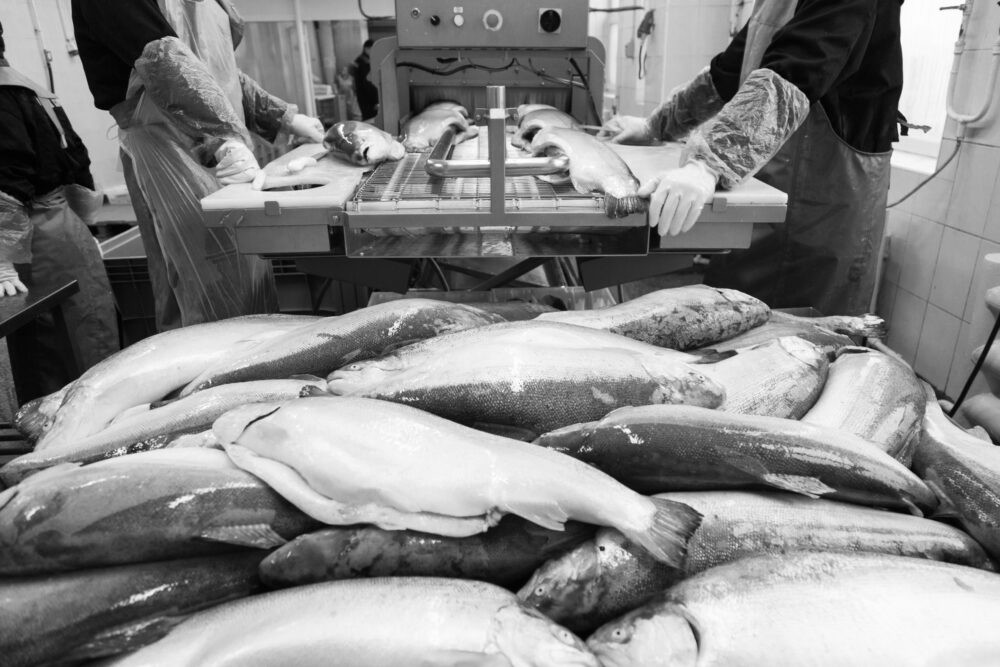
I was offered an interesting job in Parksville, working at the Kingfisher fish plant, where we processed everything from prawns to herring roe. We would work 5 days a week. On the weekends, the owner and I would work creating handmade seafood sausage, which was sold to local Vancouver Island stores and always sold out. Up to 50 ladies were working on the floor; some had been working there for years. They were all much older than I and took me in like a son. Not long after being there, I became their foreman. The boss was having health issues and was gone for days at a time. He needed me to keep things going, but eventually, the boss passed away, and the plant closed. I had only been there for a few months.
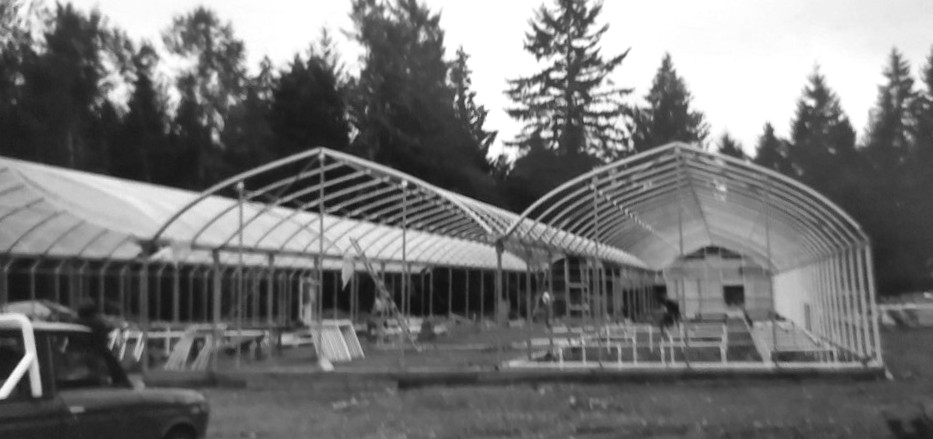
I then secured a job as a foreman on the construction of a huge commercial greenhouse system for Errington Greenhouses. This new system was created in China, and UBC was funding part of the costs. All the boxes came marked on the outside in big letters, “Red China.” We built 5 separate greenhouses that automatically controlled the heating and cooling systems. The tables were on rollers where the product was grown. Each greenhouse could be managed by 1 person. It was an interesting job; I learned a lot. The job lasted several months.
Firefighting

After the greenhouse job was finished, the Forest Service asked me to try out for fire suppression. I thought it was something that sounded pretty awesome. I had met a few forestry guys while I was working on the spacing project. They felt I was a good match for firefighting. I could still remember seeing the fire crews working on a fire when I went to Port Alice as a youth, and how I thought that was such a cool job.
So off I went to Port Alberni for a series of physical tryouts. There were around 30 of us there; only 6 of us passed the early version of the ramp test, as they were pretty tough. I wish I could say that I breezed through these tests, but I must truthfully admit that I barely squeaked through them. The leg I shattered in the logging truck accident made it tough. After this, the 6 of us took a fire suppression course in Port that ran for 6 weeks, and 4 of us stuck it out to the end.
This was in the spring of 82. I moved back to Campbell River and signed up with the local forestry as a grunt for the upcoming fire season. I worked many fires through the spring and summer, and then a major fire began burning in Strathcona Park. I got on as a crew boss. This was a big fire; it had a 5-mile front and over 300 men fighting it. It was in big timber on steep ground with plenty of rock bluffs; it was in Strathcona Park. I learned a lot from this fire.
My crew was used as a water delivery team, and our job was to set up systems to get water to the various areas of the fire. We set up all kinds of systems where we could; we set up gravity flows. On one side of the fire that lacked a water source, we set up pumps at Buttle Lake and pumped water uphill through a series of large relay tanks until we got water to where it was needed. If a creek were available, we would set up a pump and put a man there with a radio. We laid out many km of hose.
One of the gravity systems we set up involved over 3 km of hose running down a valley to get water to a particularly hot burning area of the fire. Just as we had it set up, the wind shifted, and the fire came rolling right up the canyon toward us. It was pushing thick smoke ahead of the flames, making it hard to breathe.
The fire was crowning through the treetops right over our heads. We had no choice but to run up as fast as we could while the fire raced up the hill behind us; the smoke made it hard to see where we were going. I started to think that maybe we were not going to get out of this, but we managed to just get over a ridge and out of the way. We lost a lot of the hoses, various other tools and equipment to the flames, but my crew was safe. From here on in, I was always scoping out escape routes when working a fire. After a while, it became second nature.
This fire was in a national park, and there were huge trees and cliffs everywhere, making it tough to battle this blaze. My crew fought this fire for 3 weeks to get it under control and contained. Then my team stayed on for another 3 weeks of fire patrol and mop-up. A total of 6 of us spent this time living in 3 separate wall tents, 2 to a tent, spaced along the fire front up on the mountain. We would do patrols along each section of the fire front, cold trailing and putting out hotspots as we went along. We would also melon-roll hose lengths and long-line them off the mountain using cargo nets and Choppers. This was a daunting job as there were miles of hose.
A newsman asked me as I stepped out of our heli; I had just been in the shit all day and was black from head to toe. He asked, “What’s it like in the fire?” I replied. “It’s hot.” Then I just looked at him as he blocked my way for a moment, then pushed past him. Being in front of the camera was intimidating.
Zeballos
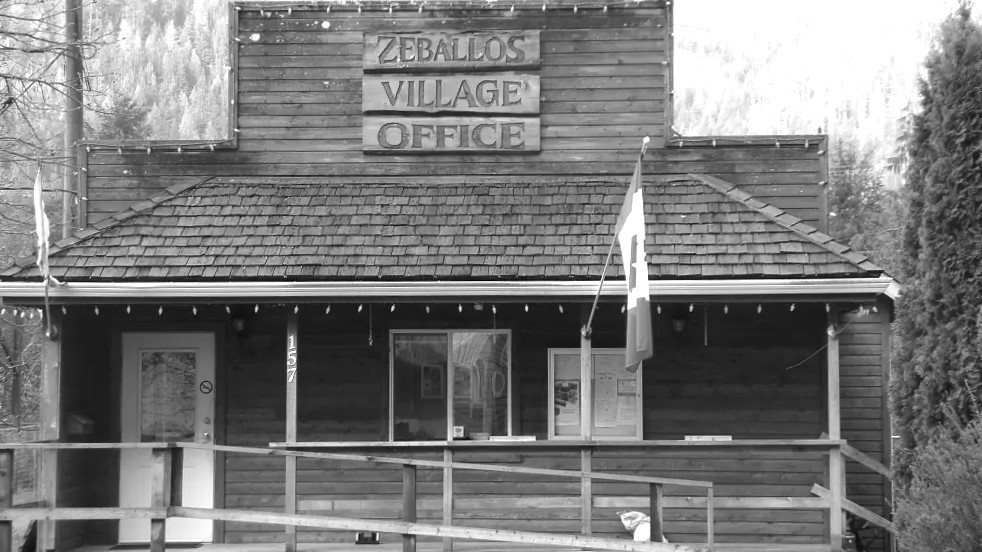
Several of the foresters who looked after us during that summer of wildfires offered me more work in silviculture with the forest service. I took it up, and over the next couple of years, I worked for the silviculture, recreation and protection departments. I was employed almost exclusively in Zeballos—a wonderful little town with such a rich history. I would spend Monday travelling in, then work 3 days and spend Friday driving out. Weekends were mine. Working for the BC Forest Service was great.
Zeballos was a small west coast fishing village until 1924, when gold was discovered. The village soon sported 3 hotels, a brothel, a general store and a hospital. Today, it is once again a small village with most of the mines closed and logging almost done; tourism is the new source of income now.
When gold was discovered, the village soon sprang up into a small city with 3 hotels, a brothel, a general store and a hospital. Over 1500 people called the town home. The town even had a newspaper. Zeballos was a buzz with people from all around the world arriving to be part of the excitement. The harbour was full of ore ships, freighters and float planes.
In 1939, World War II broke out, and many of the men left Zeballos to fight overseas. When they returned at the end of the war, gold prices had fallen to $35.00 an ounce, and this was not high enough to keep the mines going. Within a few years, the town had far fewer folk, with only about 200 remaining, mostly sustained by logging and fishing. Logging remained the main industry and still is today. However, tourism is gaining ground for employment.
In 1962, with high iron ore values around the world, an ore mine was opened and ran for about 7 years, boosting the population and adding a new cash source to the community, but iron prices fell again, and the mine closed in 1969.
Today, the village is a small West Coast community with a resource-based economy, but tourism is starting to be a driving force as more and more visitors are looking to Zeballos as a destination, a gateway to the West Coast. The village is becoming a favourite place for kayakers, sports fishers and nature lovers who want to leave the crowds behind and experience the wilderness of Vancouver Island. Comfortable accommodation and several cafes welcome visitors.
The road to Zeballos turns west off Highway 19 just north of Woss. The 40 km gravel road is usually in good condition and is looked after. Watch for bears, deer and elk crossing the road and eagles soaring overhead as you drive in. The village is very beautiful; it is located at the head of Zeballos Inlet.
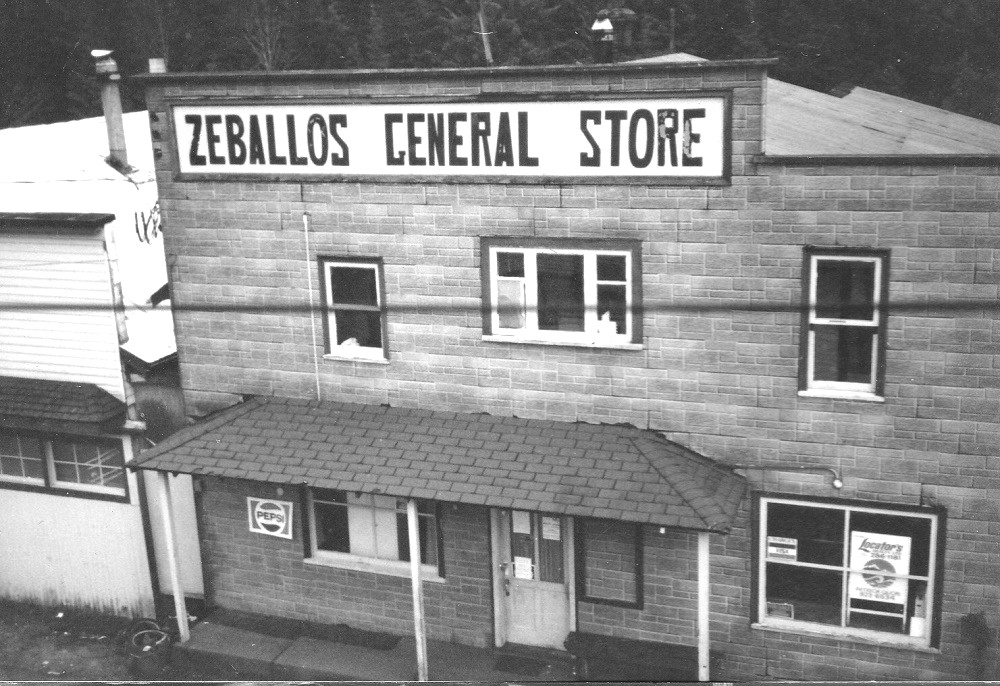
During the early 70s, I logged out of Zeballos for both Crown Zellerbach and Onion Lake logging. The village at that time had a fairly large population of around 300, plus another 350 men across the river in the two logging camps. There was even a small theatre that showed movies a couple of times a week. The problem for us who lived in the camps across the river was that there was only one bridge to the other side, and it was 5 miles up the road, making it a ten-mile trip to get across to a town you could hit with a rock.
I can still remember how we would get all gusied up and head to town on a Saturday night. We would remove our shoes and pants at the river’s edge and wade over to the other side, fairly easy to do. Then, after a night of drinking, we would head back to camp; sometimes, there were quite a few of us. Now getting back across was not as easy since most of us would have quite a stagger. So many would lose their balance and get wet. Two young native brothers had a house beside the camp and would head out in a rowboat to pick up the loggers that chose not to wade across. $20.00 for a lift to camp was the deal, and they would make a fair bit on a Saturday night. Turns out these boys were the father of my wife’s adopted sister.
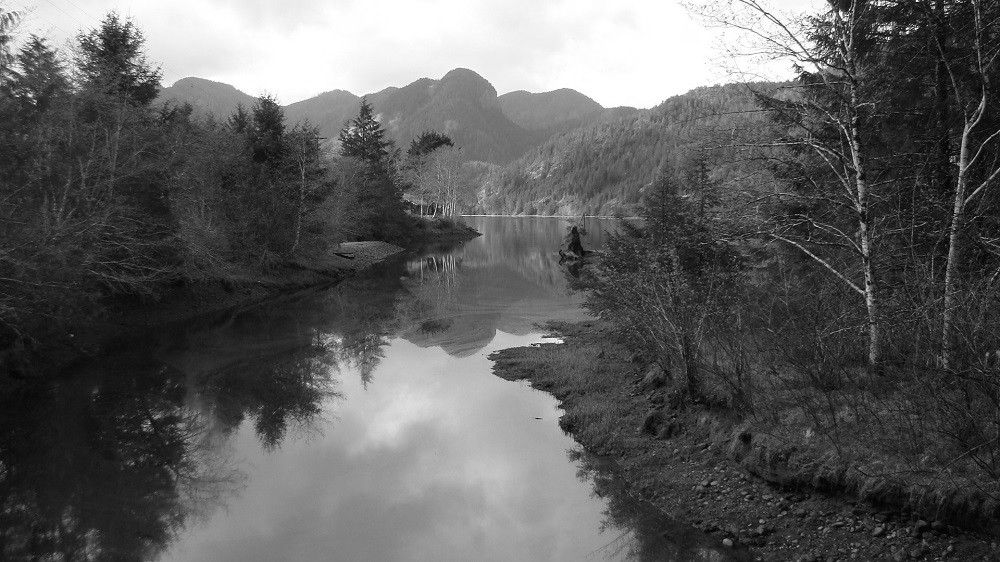
The natural settings around the town are just breathtaking. There is a wildlife viewing platform located in the centre of town, and the estuary is easily accessible and is a great place to view birds and sea life.
Fall, winter and spring are best viewing times for waterfowl, which include many kinds of seabirds and ducks. In the fall, back bears come to feed on the spawning salmon, and many other birds and animals use the area throughout the year. Some great trails run through the estuary, full of picnic tables, boardwalks and a great campsite for your stay. In the 80s, I was again working in Zeballos, but for the BC Forest Service. I was a part-time non-union member. There are humpback whales in the inlet quite often.
And He Killed Me

During the weekends, when I was in town, I liked to head to the bar on Saturday night, and then later in the night, I would head to one of our clubs to go dancing. As my buddy Kerry and I were walking into Bobo’s nightclub one night, I instantly saw the bouncer was straddled on top of a girl and actively punching her in the face; she was a bloody mess and not moving. One look in his eyes showed he was not about to stop. He looked crazy.
When you walk into this club, you first come into a small room where you pay the cover cost and get your stamp from a girl in a ticket window. You would then walk through another door into the club. This was a small room, and the bouncer was a big fella. The ticket girl in her booth was screaming. I was fairly inebriated and did not properly take into consideration the situation. Instead, I took 2 steps toward him and, with all my might, I kicked him in the side of his head with the heel of my cowboy boot, hoping to put him down. This should have rendered him unconscious, but to my horror, this seemed to do nothing more than piss him off.
He turned toward me and knocked me out with one punch from his giant hand. I saw it coming up, but could not dodge it. That hand looked like a ham roast, but it felt more like a baseball bat when it hit me. My friend who was there says he then got off the girl, grabbed me by the hair and dragged me outside, where he proceeded to smash my head on a cement abutment. Everyone was screaming, but he just kept slamming my head against the cement. After a bit, he left me there and went back to work in the club as if nothing had happened. I was covered in blood, my lips were mushy, my nose was broken, my teeth were a mess, my eyes were black, and I was dead. You hear tales of people who died, and they have all sorts of fantastic experiences, but I had nothing; I just lay there dead and unaware of anything.
Someone had called the police, and they arrived along with an ambulance. The bouncer was arrested by the cops, and he was not very friendly with the police, from what I heard. The ambulance attendants then dealt with the girl and me. The girl was in bad shape and would need numerous surgeries to put her face back together. She was air-lifted to Vancouver, and I lay on the pavement deceased. The two attendants worked on me until they pulled me back. Apparently, it took some time to get me breathing again. I know this because one of the attendants came to see me the next day in the hospital to tell me the story. I thanked him for saving my ass.
Once the ambulance got me to the hospital, they stitched up my face as best they could and then put me into a room for observation. I was made to wait for pain medication, and I was not allowed to fall asleep because of the damage my head had sustained. They had a nurse sit beside me throughout the night whose only job was to keep me awake; she was an old schoolmate whom I had thought of as nice when we were young. After shaking me for most of the night, I was not very happy with her. I got over it, though. She was only doing her job. Got pain meds by morning and a chance to sleep.
I heard the girl received numerous facial reconstruction surgeries and was hospitalized for some time. She fully recovered in the end. I never met her. I think I would have liked to see her once and chat a bit about that night, but I never had the opportunity. Maybe she wanted to never think of that night; not sure how it started, but she could have wound up dead.
My injuries were messy but pretty minor. When I got out of the hospital, the inside of my mouth had over 100 stitches holding it together, and my face was covered in bruises. My broken nose would take a while to heal. I was off work for a few weeks. My face was sore for quite some time, and for months, any bump to the nose would bring on a nosebleed that would always take time to stop.
The Doe Eyed Girl

About a year after my death, on a Friday night, I was sitting in the Quinsam pub having an after-work beer with my buddy Roger when a beautiful First Nations girl walked in and sat at a table with a girlfriend on the other side of the bar.
I looked at Roger and told him that my future wife had just walked in. He laughed at me, but I just got up and walked over to her and said Hi, my name is Bud, and I am your future husband, She laughed as she turned to look at me. At that moment, her eyes held me spellbound, and I knew she must have fallen from the stars as I could see the universe come alive in them. Her eyes sparkled. She was the most beautiful girl I had ever seen. I asked if I could join her, and she said yes. This was September 7, 1984. After that first meeting, I knew I wanted to spend the rest of my life with this stunning young lady; she had me completely spellbound.
On February 14, 1985, after a whirlwind courtship, I married this girl who had stolen my heart. It was a private wedding in my riverside apartment, just some friends and family. We were married by a justice of the peace. My wife almost fainted during the ceremony. It was almost comical as we sped up the service to get it done before she went down.

A few weeks after our wedding, we were up at her parents’ place. My wife pulled out some old photo albums, and as we were looking through them, to my surprise, I saw that little one with the big doe eyes who my mom looked after all those years ago. I suddenly realized that I had married that girl. When I said to my new wife that my mom had looked after her. A look of surprise came over her face, and she said to me that she remembered that day and the handsome young man who had looked at her from the porch. What a wonderful turn of events to have married the doe-eyed girl. There was a picture of her driving a pedal car in the hospital. So she also was the little girl with the big smile who would ride up and down the hallway. It was a magical moment to realize who my wife was.
Right after we got married, we discovered that Gina was pregnant, and it was pretty awesome. We were excited. But four months later, she began to hemorrhage, and we lost the baby to a miscarriage. We were devastated, and my wife was very distraught. There was nothing I could say to console her; all I could do was hold her in my arms and hug her tight. Not long after this. We took on looking after a couple of children for 4 days and nights a week while their single dad was at work. This was good for Gina. Jenifer and Steve became as much our kids as their dads. They stayed with us for several years. They were the first of many youth who found themselves living in our home.

After taking on Jen and Steve, a full-time work position came up with the BC Forest Service, and I was offered an interview to be held in a couple of weeks. I was newly married, and the thought of being a union member appealed to me. I would be on a salary, and that means a more stable paycheck. I told them that I was very interested.
Just before my interview was coming up, Jen and Steve came down with chickenpox; their dad asked us if we had already dealt with this when we were kids, and we both said yes. I seemed to remember having them, but apparently, I was wrong, and I came down with them a few days before my interview.
On the day of my interview, I had pox scabs all over my body and a temperature of 103. I did not want to miss my interview, though, so off I went, kinda delirious, beads of sweat pouring off my forehead, and looking like hell. After taking one look at me, they took me into a boardroom with a long table, told me to sit at one end, and they sat at the other end. They fired a couple of questions off to me and then said if I was willing to come in as sick as I was for the interview, the job was mine. I had already worked on various projects with them. They knew my abilities.
Over the next few years, I worked for the various forestry divisions, but as an FT2, where I learned how to basically grow trees. I took to this like a duck on water and loved the job.
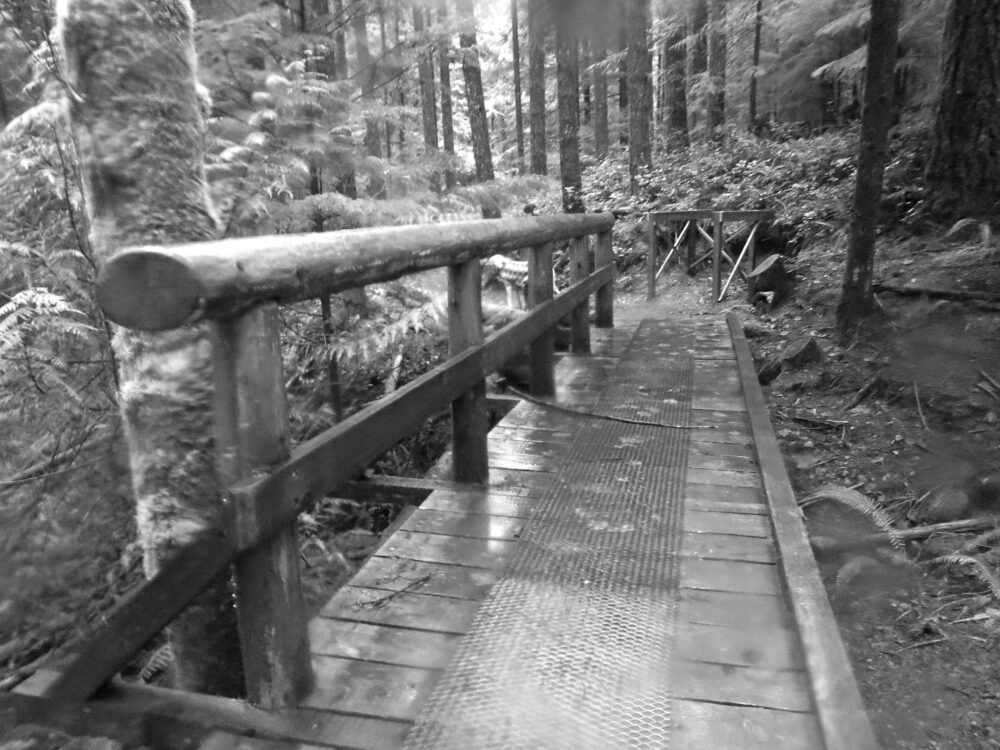
After this, I went to work for recreation, which was awesome. We would look after trails, campgrounds and repair picnic tables and outhouses. One of the great projects I got to be involved with was building the Sayward Valley Canoe Route. It was a winter project, and the trails were mostly built using canoes to access them. It was a canoe route after all. There is not much left of the original trail that we built, but it does show up here and there.
We had 2 teams of 4, and we spent 2 months building the original trail. Cutting these trails out of the forest was pretty tough work; the trails had to be big enough to allow people to move their canoes and gear through from one lake to the next safely. We did a pretty good job, but since then, it has been upgraded. I have walked sections of it and am quite impressed. While building a section of the trail that runs from Twin Lakes to Mohun Lake, we found a white pine that is the biggest I have ever seen. I mean, it was massive. The white pines that grow on the island have been dealing with a tree disease called rust, which has been affecting most of the trees on the island. This particular tree was rust-free and pretty impressive. I have tried to find this tree again, but so far it has eluded me.
After working for recreation, I got the chance to work with a science officer who had a class 5 position. His name was John, and the job entailed the study of different forms of logging as well as the study of the impacts of this logging. We processed plots from different stages of forest growth, from ancient forests to fully logged settings, and recently processed blocks. We would create a soil profile of the various layers, looking deep into the mineral horizons. We studied the microbial communities of fungi and bacteria. We listed all plant and insect species as well. I was in my glory.
We were looking for a direct link between mycelium and tree/plant growth. John felt that this mycelium works as a superhighway to transport nutrients from one tree to another. I had always believed in this as well. There were many organizations and individual scientists who were looking into it as well.
It has now been proven that mother trees help their offspring to grow. We also looked at old trees and how they are carbon sinks, holding on to vast amounts of carbon. One thing that surprised me was how stands of young trees can offset more carbon than stands of old-growth trees per square area of ground. I spent a year with John, and my interest in plant species, uses, and soil compositions and my love of fungi was born. This has always been of interest to me. This was an amazing project to work on, and I thank John for the year of discoveries. I recently watched a TED talk by Susan Semard that explains how this works; it’s called How Trees Talk to Each Other.
After working for the science division, I moved on to protection. This was a great division to work in. Because of my firefighting training and the fact that I had already worked as a faller, I was allowed to grandfather in and fall for the Forest Service. I would go into a logged area that was scheduled to be burnt and fell all snags up to 100 meters from the edge of the burn. Once we had this done, we would set a perimeter hose line to catch any fire that escaped. Then we would bring in the helicopters and use the pinball system to do the burn. We would first get a big burn going near the center, then set the outer edge on fire. The main fire pulled this in towards the center, building an outer guard of burnt ground.
I was a heavy drinker in those days and still would fight at the drop of a hat. I was going up for another assault charge, in a long line of assaults. I took time off from work to deal with my issues. I quit drinking and got help from a government program. I had one-on-one counselling and joined AA. Quitting drinking was pretty hard. This one was bad; it was for assaulting my wife.
My wife and I were drinking heavily one night and started to fight, yelling at each other loudly. She got pissed off and started to punch out some windows in our back door instead of punching me. I slapped her pretty hard to stop her before she really hurt herself. She was bleeding on her hands. Someone heard us fighting and called the cops. She grabbed me by my T-shirt, so I pushed her back. She fell to the floor, tearing my shirt down the front. Just then the cops busted through the door. They found me standing over my wife with a blood-stained, torn shirt; it looked like I just beat the hell out of her. My hands were blood-covered. Don’t get me wrong, while drunk, in the past, I have struck my wife with my fist. We were both alcoholics, and both would strike out when drunk.
I was promptly arrested without the usual struggle to get me in cuffs. Hauled off to jail for the night. When they released me in the morning, I only had socks on. It had snowed about half an inch, and my feet were pretty cold by the time I walked the 2 blocks to our house. Ginna was gone; she had gone to her mom’s. My house was cold. I went to my fridge and grabbed a beer. Just as I lifted it towards my lips, I had a vision. I came to see that every time I lifted a drink, I would do something stupid. I poured that beer down the drain, plus all the others that were in the house. Cleaned myself up a bit, walked down to the drug and alcohol office and asked for help. I also joined AA. Gina and I started to talk on the phone after a few weeks, and after she saw I really was quitting drinking, she started to visit, or we would meet for coffee; she eventually moved back home. I had taken a leave of absence from work.
I had been charged with spousal assault. When my court date came up, I was convicted of assault, and as the judge slammed down the gavel, he said, ” I sentence you to 2 years, less a day”. As he said those words, I was thinking, shit, two years were going to be hard. Judge Anthony Sarrich waited a minute before continuing, saying: ” You have quit drinking and cleaned your act up, so I am going to suspend your sentence. I will put these conditions on you: no drinking for two years, and you must continue your treatment with the government program. You must also keep going to AA for the two years.” I thanked him for the leniency and said I would follow all his rules. I have not had a drink since that night.
My Hunny comes to camp
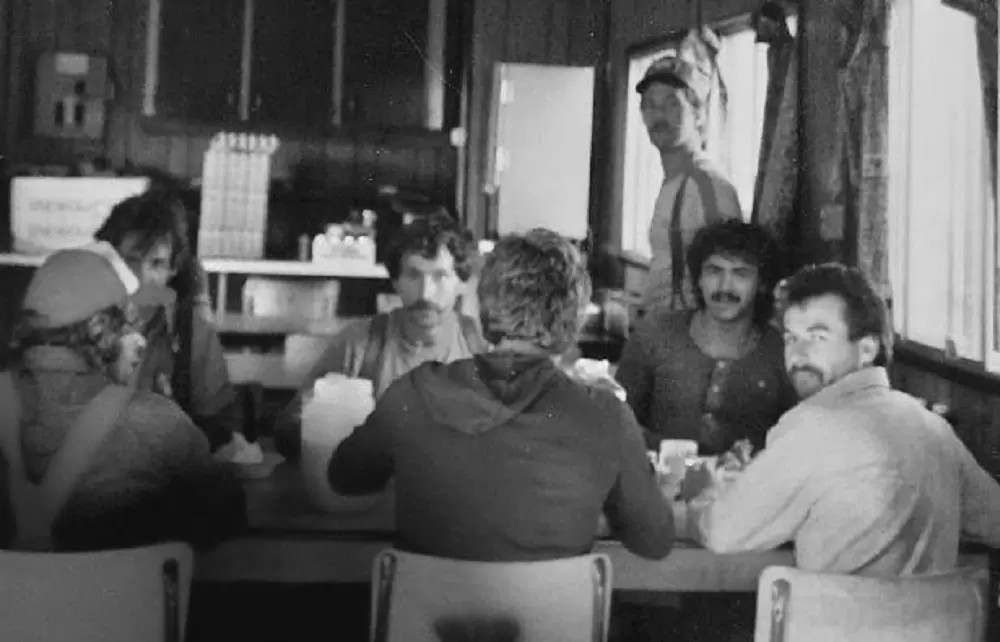
Bills had piled up while I was going through all this, and I needed to work again. The Forest Service said they had something coming up in the fall. Then another outfit on Gilford Island offered me a job cooking in camp. The camp was about 20 km inland from Scott Cove. I had never been a camp cook before, but having been on the other side for years, I knew what to do. I was a pretty good cook; I even cooked all our meals at home. It was a 15-6 shift. Gina came in with me. The camp had a modern cookhouse and wash/shower rooms, but our cabins were wall tents. They had plywood floors and walls with the tents set up over them. They had proper beds, and each had a wood stove. The camp was being sold, and we would be doing an inventory as well.
We had a full-size diesel generator and full power in all the cabins. I would turn off this power at 9 pm and fire it up around 4:30 to get things ready in the cook shack. My wife, Gina, was a beautiful young lady of 20 years, and the boys all wanted to talk with her. I have never seen such a group of loggers act so politely in all my days. My wife gave them all haircuts, and they came to supper each night in their go-to town clothes. Hair slicked back, and fingernails and necks scrubbed of dirt. It was almost comical.
Halfway through our shift, one of my deep freezers gave up the ghost. We were a long way from town, and this freezer was full of food that would go bad before I could get a new one in. We took a drive down to Scott Cove and put the word out. I was surprised when a man said he had one at his float house, but it was across the cove, and we would need a boat to pick it up. The only boat that I could locate was a 16-foot Boston Whaler owned by a local First Nations lad who guided the tourists that visited the bay during the summer months. The freezer was a full-size unit.

So, the young feller and I head across the bay to bring it back. We tied the boat tightly to the dock with some rubber bumpers between. We then very carefully and slowly slid it across the boat sideways. He worked from the back of the boat, and I from the front. When we got it loaded, it was hanging over each side by a foot or more, and we had about an inch of freeboard. It was a slow trip across, but the water was like glass, and we made it. My crew were waiting to unload it. The young feller and I held the boat steady to the dock while this was done. Then it was just a matter of getting it into the truck, back to camp and installed in the cook shack. Sometimes things just work out.
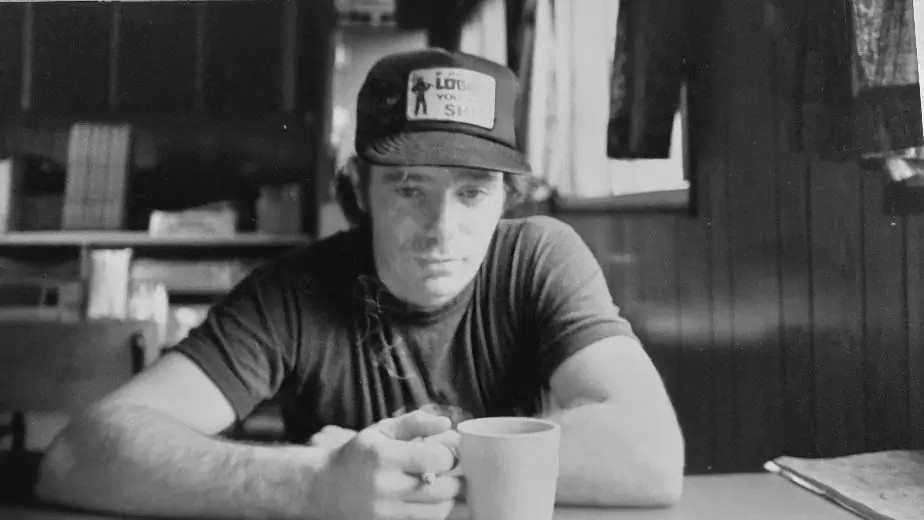
One morning, Gina and I were sitting at a table in the cook shack, relaxing. We had just finished cleaning up the morning mess from the boys, and Gina had helped me make six pies for the crew that were on the counter, cooling. We were sitting right beside a window, having a coffee. There was a wild thunderstorm going on, and we were watching it. Then all of a sudden, we were blinded by a bright flash that filled the room. Then almost instantly, the trailer shook from the thunderous boom that followed. Lightning had hit the ground right outside the window. I found it very exciting, but Gina was terrified. Did you know that if lightning hits sand, it will form beautiful glass sculptures? At the time, I did not know this. I wish I did, as the whole area was sand.
When the shift was over, and it was time to leave Gilford Island, all the boys begged Gina and me to stay on, but one shift of cooking was enough for me, and besides, I think all the boys were falling in love with my wife. We headed back to town with a check in hand.
The Bears

To get to our job site, you had to first take a boat to the back end of the lake, where we would hop into our work truck. We were doing pre-harvest assessments in the next 5-year plan. One day, not long after we had started working here, we had parked at the end of the road and were hiking in to do a pre-harvest assessment. As we were moving through the forest, we came upon signs of a grizzly bear fight between two large boars. One could see that this fight had been at least a year ago. The condition of the ground showed it must have been an incredible battle between two equally sized bears. By looking over the area, you could tell that one of them had killed the other. He must have been seriously injured, as you could see where he had lain down and also died from his wounds. It must have been an epic battle. Bones were scattered about from scavengers feeding on the remains. Looking about, I saw that both skulls were still there, with the teeth intact. I pulled the four upper incisors to take home. Three of them were made into necklaces that my two sons and I now wear; the fourth was given to a friend who was of the bear clan. He was a good friend and, over the years, had presented me with many wonderful gifts of a spiritual nature. Now it was my time to have the ability to return something of wonder to him. After telling him the story of the fight between these two titans of the deep forest, he was overwhelmed. His was the hug that was given between two brothers.
Some of the many bears we saw were massive, but they fit the territory. This land was primal and pristine. We were working up along the Machmell River. The forests were almost prehistoric. Each tree was a mighty giant. Walking below these mammoth trees made one aware of just how small we are. One day during lunch, we stopped at the end of a road that almost reached a canyon. This canyon was on the Machmell River. If you have ever seen a King Kong movie, this looked like something you would see in the production. It was so deep that it looked almost bottomless. As we sat at the brink of this chasm, you could see it going around a corner from our position. At the corner of this yawning crack in the land, you could see a waterfall flowing over the lip; it was a big waterfall. It never reached the river below; it would turn into mist and float down the river, settling on the rock walls. This abyss was only around 100 metres across, and yet it was unfathomably deep.
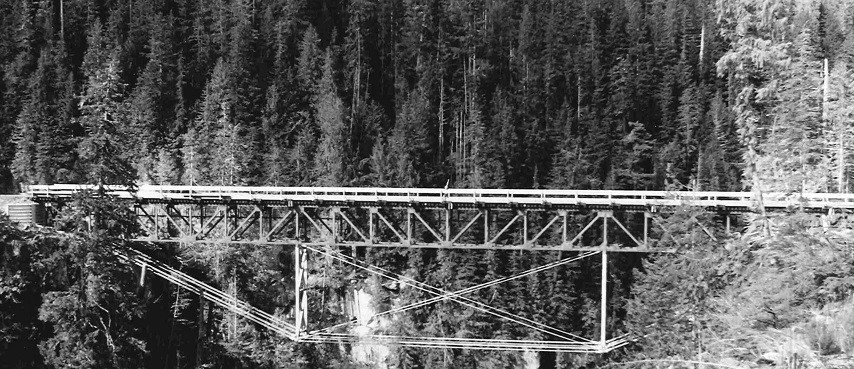
Just up the road from here was the Pashleth Creek bridge crossing; this was the highest logging road bridge in the world. I understand that it was very difficult to construct. I got out and walked across; the first time I saw it, it was pretty awesome. I took a rock out onto the bridge and dropped it. There was a good amount of time before I saw it hit a pool below with a tiny little splash.
In 2005, the Machmell River logging operation was shut down and dismantled. Environmental laws had changed regarding where logging could take place. Everything had to be removed, I mean everything, and the camp area was to be cleaned up. The bridge, on the other hand, is still there, I hear. Pretty tough to reach, though; I suspect more animals cross this span than humans these days. It would be cool to see it again, maybe one day.
By the time fall came, the contracts started to have some space between them, and I told my boss that if he wanted to keep me on, there would need to be more work. I had not worked for more than a week when the forest service called, offering me my falling job back. I told my other boss that he had to replace me; he was not happy, but that is just how it is.
Snag Falling
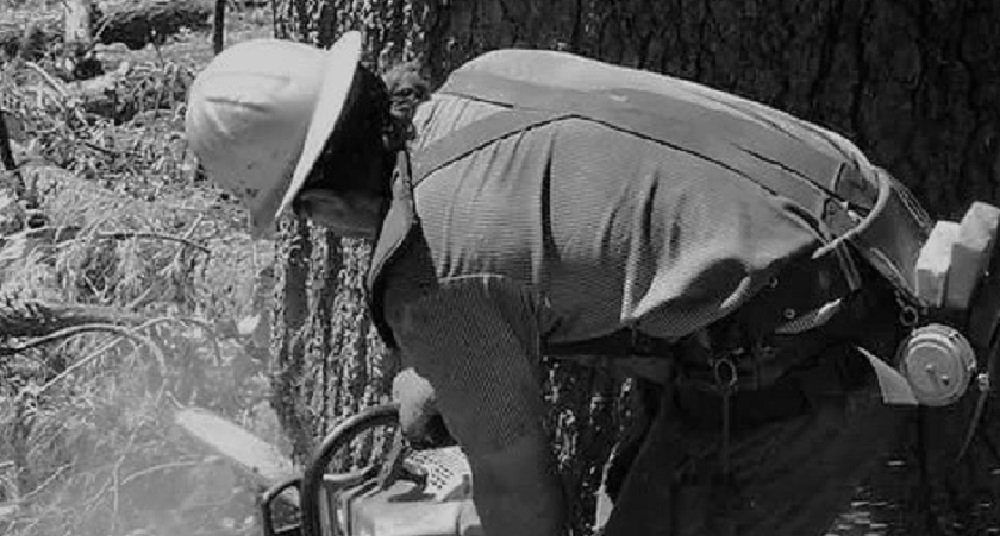
BC Forestry gave me a position as a snag faller on slash burns, and they gave me a partner. Snag falling was something I enjoyed doing, just figuring out how each one would react and then do your best to not get killed as you fell it. I was felling a particularly difficult half-alive snag that was 6 feet at the butt out in Little Zeballos when it just exploded, and barber-chaired up the tree for at least 50 feet. I was running back from the stump hoping it missed me as it went by. Scared the hell out of me. Took a coffee break.
We were working on future slash burns. There were always some big snags that needed to come down. These snags were scary, mostly fir and rotten; huge chunks would break off and come crashing down. You had to be quick to avoid being killed and, at the same time, save your saw.
I was still dealing with not drinking, and it was a daily battle; it had been more than a year since I quit. We were working on a block in the summer, and it was hot, getting it ready to burn in the fall. We would start work at 6 am and quit at noon, then stay another two hours on fire watch.
I had an awesome water jug that I would make Kool-Aid in and put in the freezer overnight to freeze. This was so good when the day heated up, but for some reason, I had left my jug at home. It was the hottest day yet. We were going to be shut down after this day, so we were giving it. All I could think of was that jug of Kool-Aid. We finished the project, and both headed to the truck. As my partner, Dan, arrived, he leaned over the truck box, exclaiming how much he needed a beer. I realized that even in such heat, I still only thought of that jug of Kool-Aid. It was a great feeling.
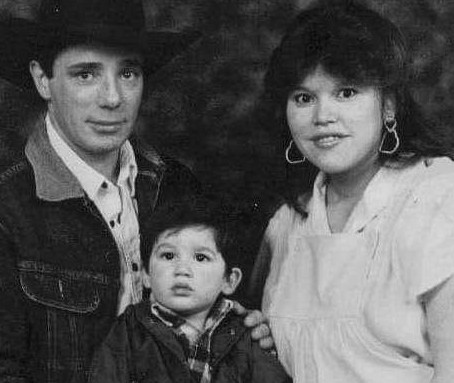
Gina became pregnant again. We both were very happy and perhaps a bit worried about it. But through her first two trimesters, all was going well. We spent a lot of time outdoors, hiking easy trails and getting fresh air. I made sure our diet was healthy as well. One day, we headed up to a short trail that ran alongside a section of John Hart Lake. As we walked along, Gina all of a sudden said she was feeling faint and needed me to hold on to her.
Her skin went pale on her face, and she began to get a cold sweat. I was holding onto her. Then she lost consciousness, and I could not hold her up, so I gently laid her down in the moss at our feet. It was about half a mile to the car. I did not know what to do. I began to panic. I realized that I had to get a hold of myself. I knelt to hold her head on my arm and slowly rubbed her face while talking to her. She finally opened her eyes and smiled up at me. She was shaking and told me that she had seen herself being laid down by ladies all dressed in white; “they could have been angels”, she said. After she began to feel better, we made our way to the car. That was the first time anyone ever called me an angel.
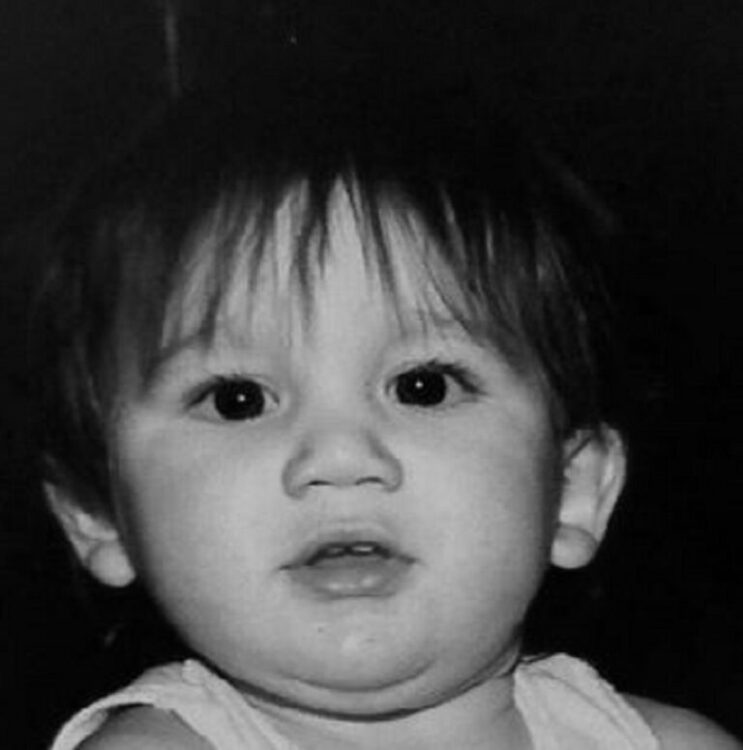
During this time, my wife’s father came back into her life. He had been sober for many years and now spent his time commercial fishing and volunteering at the Victoria Friendship Center. I found that, contrary to all the stories I had heard about this man, he was a true gentleman. We became friends. He was up from Victoria visiting when Gina went into labour. I took her to the hospital, where her mom would join us. Dad stayed at our house. Gina’s two brothers came to keep him company. They would wait at our place to hear about the birth; we did not want her mom and dad together at any point.
The labour was long and, from what I was seeing, quite painful. Damn, I had no idea what to expect. Every time a contraction came, she would squeeze my hand so hard I felt she was breaking bones. At one point, she said to me in a very dark and deeply demonic-like voice, “You will never touch me again”. At this point, I would not have been surprised to see her head rotate around. At 2:30 am, my child was finally on his way into the world. They were telling her to push, and the baby came halfway out. I still could not tell if it was a boy or a girl. Another push, and it was a boy; he came forth completely covered in shit and sporting a boner. My son Robert joined the world. He was beautiful. They quickly took him away to clean him up. I looked at my wife, and she was sleeping. When they brought my boy back, I was reaching out for him. My mother-in-law was quicker and jumped up to take him in her arms before I was able to. So I had to bite my tongue, hold back my words and wait my turn.
I got home at around 4:30 a,m and to my surprise, Dad was still up waiting to hear about the birth, and both my brothers-in-law were still there. We all sat at my kitchen table while I regaled them with the tales of my son Robert’s birth. The boys rolled a bunch of joints that we smoked while we chatted and laughed. The joints kept going past Dad’s face, and he got pretty high. I took a look at him, and he was smiling like high heaven. His mouth was grinning, and his eyes were all a sparkle. The boys eventually went home, and Dad was already sleeping on the couch. All in all, it was a great day. I went to bed dreaming about my son. At 8:30 in the morning, the phone rang. It was my wife calling to say she was ready to come home. Damn, that was fast, but she is a tough young lady. So it was off to bring my family home. Robert was born on March 29, 1988. This was the birthday of my best friend Larry; how cool is that?
Merlin The Crow
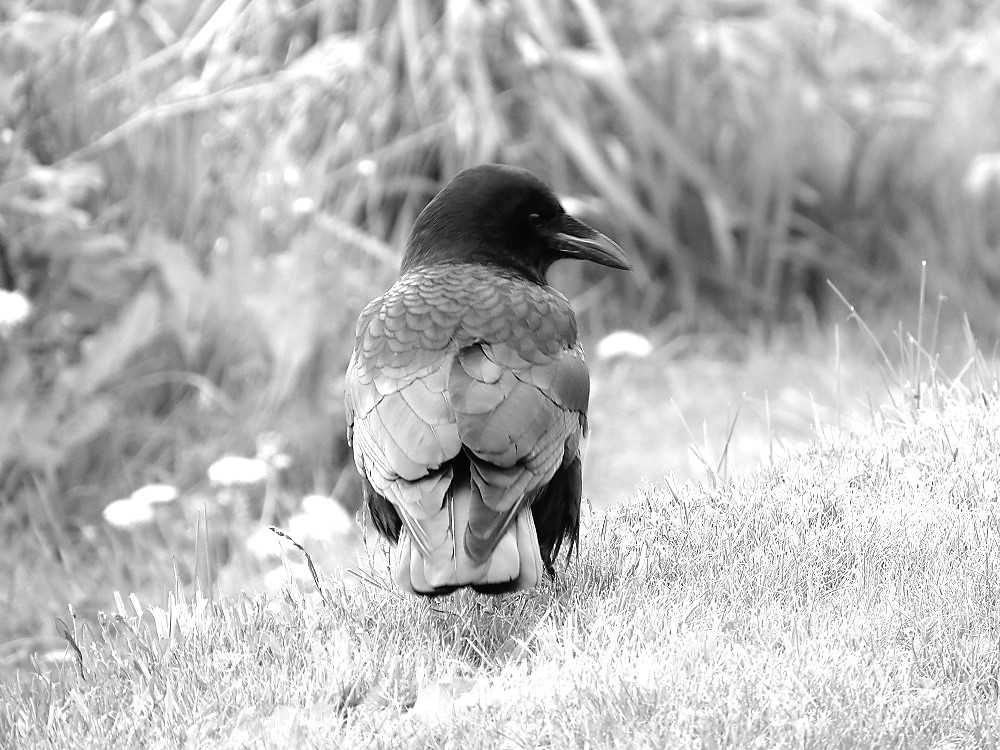
In May of 1988, just after the birth of Robert, my wife and I were doing some spring cleaning in the yard. Picking up paper and raking up winter debris. My wife reached down to pick up a small bundle of pink paper that was lying at the base of one of our big fir trees. When she touched it, it rolled over and gave her a tiny but startling squeak. My wife screamed and fell back onto the ground. She called to come see. My curiosity was piqued, and I rushed over to see this tiny little bird who did not even have feathers yet.
You see, the pink paper turned out to be a baby crow that must have been born this morning and pushed out of the nest by an older sibling. It looked so weak and helpless just lying there. My first thought was to get this bird back in its nest. I looked up our giant fir tree and realized I was never going to get him back there.
My next thought was, let’s raise him. So the bird whose name became Merlin was moved into the house, and a great adventure was started. I had no idea what crows ate in the wild, so I got on the phone and got hold of every organization and bird society that I could think of and asked them what I needed to do to feed and care for this little bird. Most told me it was too young and I could never keep him alive.
I then phoned the Ministry of Environment office in Campbell River and got a man on the line who understood crows, and he helped with many things. He had a great knowledge of crows and told me what the wild crow’s diet consisted of and how a mother crow would feed it to her young. This involved the chewing up of insects and bugs; thank god for little food processors. I don’t remember the name of the fish and game guy, but he was awesome.
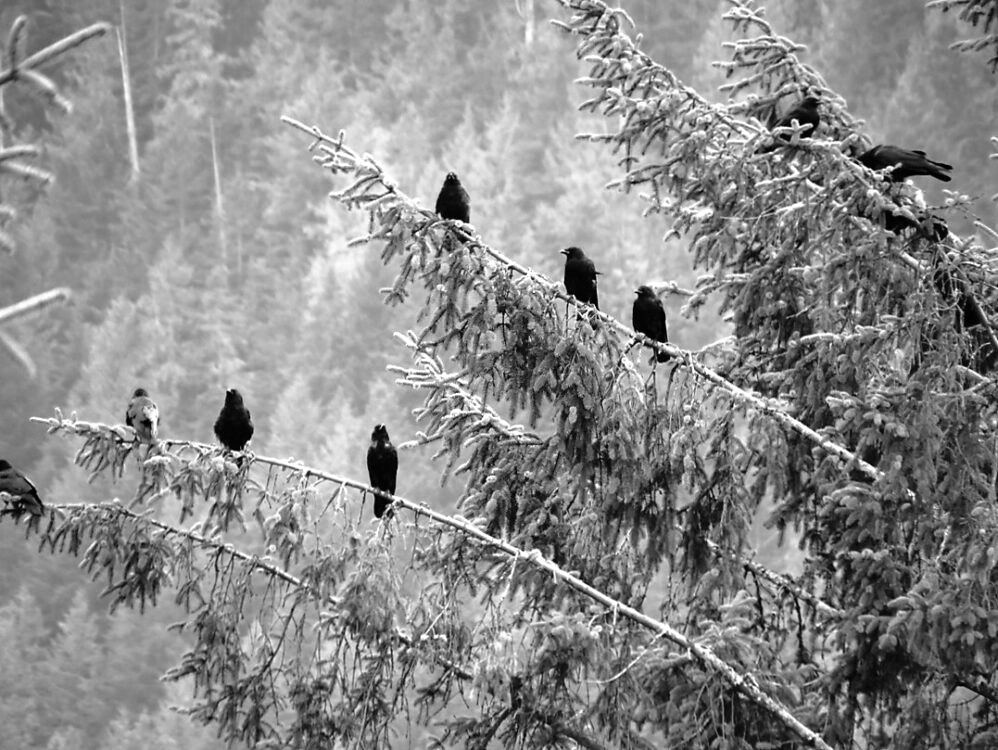
So, Merlin, the crow, got a nice warm nest area right beside the wood heater where he would be warm at night, and he got constant care all day long. We kept Merlin comfortable, and through much trial and error, we got him to eat, and over the next few months, he grew into a young crow. He lived on a perch in our living room and was very inquisitive about everything. If a person he had not seen before walked in, Merlin would tilt his head from side to side, checking them out, and then, with a loud caw, he would launch himself towards the visitor and, with flashing wings, would land upon their head for a better look. This came as a great surprise to many of our visitors. This suited my humour.
Merlin was very curious about Robert and would sit close if Rob was on the couch; he seemed to almost smile as he remained close. To this day, Rob has a connection to crows; some come right up to him and let him pet them.
By the time Merlin was 2, he went everywhere with me, both in the house and out in the yard. He loved being outside with Robert, chasing him around and tripping him up. We would spend hours hanging out in the yard. As his second winter was getting close, Merlin asked me to take him outside, where we were greeted by many Crows in our fir trees, all cawing and making other crow sounds. Merlin was cawing back and getting very excited, then all at once, the other crows flew into the air and started to fly away, and Merlin flew up to join them.
As he was leaving, Merlin flew around our yard a couple of times and then flew off with the other crows cawing away, almost like he was saying goodbye. He visited several times over the next few years, then we moved, and I lost contact with him. I hope all is well with Merlin; he was a true friend of mine.

In the fall of 1989, my wife became pregnant again. This was something we had been trying for. The hope was for a girl, but it did not matter that much. I thought it would be cool for Mom to have a little shadow to teach her stuff to. They say that to have a boy and a girl makes it what they call a million-dollar family.
Gina had one of those perfect pregnancies, not a single problem during the whole time. When she began to feel contractions, she asked to go to the hospital. Gina asked me to contact her mother so she could be there. I said OK, but in my head, I was thinking, Yup, as soon as the birth happens. I still remember not being able to hold my son after he was born. Is this petty of me, maybe, but I felt strongly about this.
The labour was short, and after watching our first baby being born, this one was a breeze; my wife even joked during it. When the baby came, it was one push, and my baby girl arrived. I was the father of a little girl, and I could not have been happier. I held onto her for an hour before I called my wife’s mom. Telling her the birth happened so fast that I had no time to call her. It was a little lie, but I felt good telling it. It was May 4th, 1990.
Before the birth, we had many aunties who felt that if we had a girl, she should be named after one of them; they all made sure we understood how upset they would be otherwise. My wife and I realized that this was quite a situation. I figured the only way to get past this was to name her Georgina Ann Logan after her mom. Not one auntie showed any displeasure about this, and to the contrary, I think they were all impressed with how we got out of it.

Before her birth, I speculated how a little girl would be great for mom. A little one she can share all her craft skills and jewellery-making with. This is not how it played out, not at all. My little girl became a daddy’s girl. It did not matter what needed to be done; Daddy had to do it. You could never know how many Barbies I dressed. If little Gina got a boo-boo, only Daddy could make it better. I took to this role wholeheartedly as she was my little girl, and I loved her.
Now, when I am working on one of our trucks, she will come out and get right under there with me; she is pretty handy, too. You see, she has small hands and can get them into spots where my hands don’t fit. Don’t get me wrong, my little girl is a lady; she looks after herself with care and is very pretty, but she can also do a bit of mechanics work with her dad and is not afraid to get dirty.

At the end of 1988, a position came up on the initial attack fire team, and I was invited to apply. I got the job and never looked back. I loved fighting fires. We were 2 teams, 1 foreman for each and 3 crew members for a total of 8. The guys were pretty well-trained, really tough and awesome to watch in action. During fire season, all we did was fight fire, work on fire gear and practice working with our gear. I was a firefighter, but mostly I would just fell trees and build helipads. Quite often a big snag would be hit by lightning, and I would need to drop it to put it out and the surrounding fire out. Then I was in my glory.
I did love my job, and a chance to drop a burning tree was pretty awesome. If you have ever got a stick burning and then waved it in the air at night, you will know what I mean. This was like that, but on a scale so much bigger; as the tree fell, the flames would roar, and then it would almost explode when it hit the ground. We would then make short work of the fire and be on our way home.
We did not start work until 10:30 am. Each morning after arriving at the base, my crew and I would do a 5-mile run, then we would do the 500 sit-ups and push-ups that were a requirement, but we would usually all do 1000 of each, and then we would head off to work. When the weather was wet, we would do slash and pile burns. This was good practice for firefighting. If the weather were hot and dry, we would be working around the base. Sometimes in really hot weather, they would keep us on standby at the base for another 4 hours at the end of the shift.
After 2 seasons, I was promoted to a team foreman, with better pay involved and more opportunities for upgrading my skills. I took every course I could get. Over the years, I was trained in fire weather, hiring of crews and equipment, fire cause investigation, air control, dangerous goods fire suppression, and numerous other certificates. I was the guy who, every year, certified personnel in hover exits for both the forest service and logging personnel from various companies.
When we would be involved in an interface fire, the local fire department would come to me and ask where I needed them to deploy. Campbell River Fire Chief Larry Lunigan and I would be involved in fires occasionally, and we worked well together. He called me up one time and told me to apply for a full-time position in his firehouse. I did, as they pay well and have awesome pensions. He called me up to give me the bad news that my age was too high; they only hired guys under 25. Damn eh. I was a man in his late 30s but looked much younger.
During the off-season, most of my guys would be back at university, and the couple of us left would do various jobs, mostly involving slash burns and trail building. Each year, they gave me a recreation project; one winter, it was exploring caves in our district to look for potential tourism opportunities. I love caving and dropped into my first hole when I was just 7 years old. It had become a lifelong passion. My objective in these missions was to look for potential recreation opportunities at these cave sites. Getting paid for several months to explore caves was a great way to spend the winter. Another year, I was given a chance to go fishing in as many lakes in our district as possible. I was to register how good the fishing was and if there was campsite potential, or perhaps trails that could be built in the area. These projects were awesome. There were many projects. I had my choice of who to hire for these jobs. I always hired my buddy Norm, who worked well with me.
In the spring, I would be put to work getting our firefighting gear ready for the upcoming season. I loved firefighting, but it could be dangerous. As I was getting our first aid gear ready, I got to thinking about the various injuries that we had all suffered. Most were minor ones like stitches, burns, twisted ankles or bruising from falls. Some injuries ended careers in firefighting. During one tough and steep fire, we had a rock slide come rolling down the mountain toward us, and most of my guys got behind big trees. One of my guys had to jump behind a smaller tree than he would have liked. One rock caught him in the hip, shattering it, and his firefighting days were over. I, too, had suffered a few injuries, a few of which led to some time off.
We had to hire a new guy after losing our team member to the rock slide. I sat in on the interviews and was quite impressed by one who had his first aid “A” ticket and had been a volunteer firefighter. With my urging, he was hired. He turned out to be the most useless tit to ever fight fires. One afternoon, I had him fuel up all our saws. The next fire we were sent to was a large burning snag that was on fire after lightning struck it. It would need to come down to put this fire out. After dropping from the heli, I grabbed my saw to cut it down. No matter how hard I tried, I could not start that saw. I looked in the fuel tank and, to my horror, I saw it was full of oil, so I looked in the oil tank, and there was gas. I dumped them out and put a bit of gas in, shook it around and poured it out. I did this several times. Then I filled the fuel tank, and after much pulling and moving the choke in and out, I got it to start, and as long as I worked the choke, I could keep it going. At one point, I needed to use a wedge but needed someone else to pound it in, so I could work the choke.

This dickhead was all I had, so as I was working the choke and cutting the snag, he pulled back the axe for a swing and lost his balance, swung around and stuck it in the side of my frigging knee. I had to pull it free. He started to run to and fro, yelling to shut things down so they could get me off the mountain, and then he came at me with his first aid kit. I told him to get the hell away from me and just throw me your first aid kit. I wrapped my knee to control the bleeding, and my other crew members were arriving to see what was going on. I got the snag down, and with the help of my guys, we got a helipad built so we could get off this hill. It was my wife’s birthday, and I had plans to take her out to dinner, and nothing was going to stop me. We got home, and I got my wife out to dinner. In hindsight, I should have gone to the hospital instead. The next morning, my knee was twice its size, and off to the docs I went. He had to give me a bunch of needles right into the wound and peel all the scabbing off to stitch it up. 7 stitches and a week off work.
After we laid off our guys in the fall, I talked to my boss about getting rid of this employee, and he informed me that it was tough to just fire a guy; the union would fight it, and we would need a pretty good reason. So I put that on the back burner and just did my winter jobs. Come spring, it was cold, and I was still wearing long johns at the start of June. The boss called me in and asked me if I still wanted to get rid of the guy who stuck an axe in my knee. Hell, ya, I said. He told me that if it stayed cold for a bit longer, we could stall calling back the crew until after the time when we were required to hire all the guys from last year. We made it past that time and had no reason to call him back. We hired a new guy to replace him, and all was good.
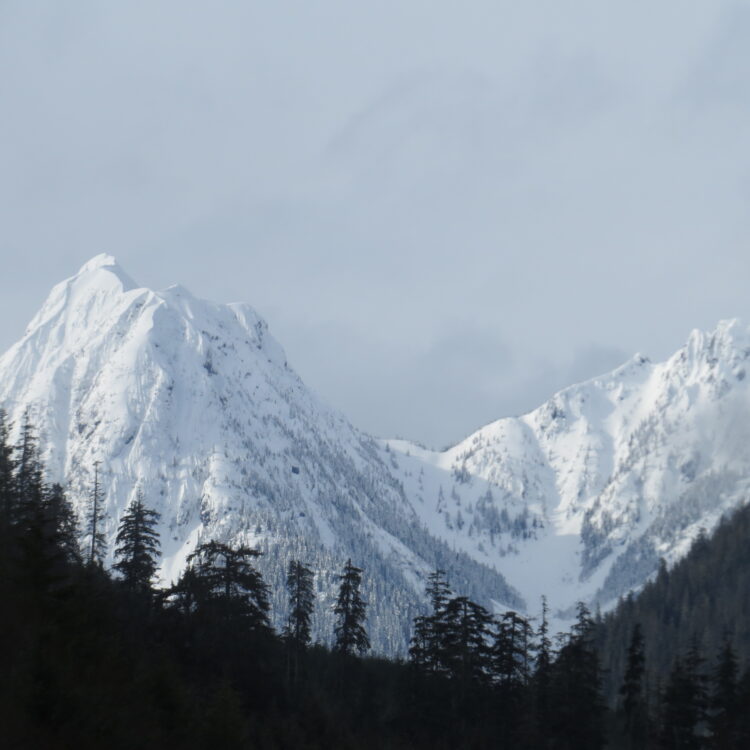
One day, during late summer, we were up on a fire on the slopes of Victoria Peak. While we were fighting the fire, I had longlined in some gear that had been brought in by truck to a marshalling area below. After the pilot dropped it in a clearing, I began moving it closer to where it was needed. I had a trapper Nelson pack loaded with hose on my back and a Gorman-Rup pump in my hands, and was crossing a large natural fallen tree, heading towards a small creek. My pack shifted, and the next thing I knew, I was tumbling down the slope. I could not get myself to stop; the slope was steep and consisted of a hard layer of duff covered in small hemlock cones, and only when I crashed into a tree did I stop. As I took my bearings, I saw that the tree was on the edge of a 50-meter-high cliff. I had been pretty lucky to hit this tree, or I would not have stopped till I hit the bottom below the cliff. Upon the realization of how lucky I was, I turned to jelly and had a hard time controlling how shaky I was.

I may have been fortunate not to have gone over the edge, but not so lucky in damage as the trapper Nelson pack crossboard had seriously herniated a couple of discs in my back and as I was getting my bearings, the pain began to set in. My crew had to get me down below the cliff to a flat area where a chopper could land and haul me off to town. I feared my firefighting days were over.
My back was at least not broken, but I had several herniated discs. I spent more than a week in the hospital, but suffered severe pain for over a year. I kept wanting to see a bone bender, but the workers’ compensation board refused me, saying that I would give up all rights to my claim by going to one.
After several verbally high-strung arguments, my adjudicator from compo and I were not seeing eye to eye, and he closed my claim early, so now here I was hurting like hell, not able to see a bone bender and needing to appeal my claim to feed my family. I was a married man with a 2-year-old and a newborn baby, not able to work and no pay coming in. I appealed the decision, and I won. My adjudicator was called out for treating me in the manner he did. My claim paid out just over 50,000 dollars in back pay. Bills were paid up.
Sometime after this, my wife and I were shopping for groceries, and I had one of those big sneaky sneezes that sometimes catch you unaware. It dropped me to the floor from the pain, and I had to go to the car and wait for my wife. But you know, every day after that, my back felt a bit better. If I had been allowed to visit the bone bender back when I first got hurt, I might not have had to go through all this bullshit. My back was never the same, though, and I knew firefighting was out.
This was something I had not anticipated. I had planned to continue my firefighting training with hopes of working in the fire control center at some time in the future. Firefighting was my life; I loved it, and I did not know how to respond. I was in a slump and was lost. The way Compo had treated me left me in a depression. So, what to do? I had always liked welding and thought it might be a good career change. When I was in school, welding was a class that appealed to me, and I was pretty good at it, so I decided to go for it.