
Heading Back North

With the cabin rented, I now needed to find work, but the logger’s employment office was no longer in operation. So if you were a logger looking for work, you would go to the Quinsam Hotel pub, which was what all the loggers called the office. This was a logger’s bar and the best place to find out who was hiring. Lots of times, you would get phone calls from outfits that were interested in hiring you personally.
I had been looking for a job for a few days when I got a phone call. I took the call, hoping it was for employment. It was not an employer; it was my good friend, Larry. He had moved up to the interior, and he wanted me to head up to join him there. I asked him where he was living, and he told me it was a place called Wildwood, just north of Williams Lake, and I said, ” You bet ya, man, I’ll be up as soon as I can make arrangements.”
I went home and packed my stuff, and informed the landlord that I was not going to stay. He was surprised, as I had just paid my first month’s rent a couple of days ago. It was only 75 bucks; I told him to keep it. The next day, I was on my way back to this town that had been so attractive to me. This was an awesome change of events. I was going to travel by bus; it would be a long trip. I arrived at 3:30 am, and as the bus pulled into the empty parking lot of the Chilcotin Hotel, I saw not just Larry but two other good friends, Roger and Paul. They looked tired but happy to see me. These were good friends; we had logged together and lived together for several years; we were family in all but name, and we considered ourselves like brothers. The reunion was great.
Canoeing The Cariboo
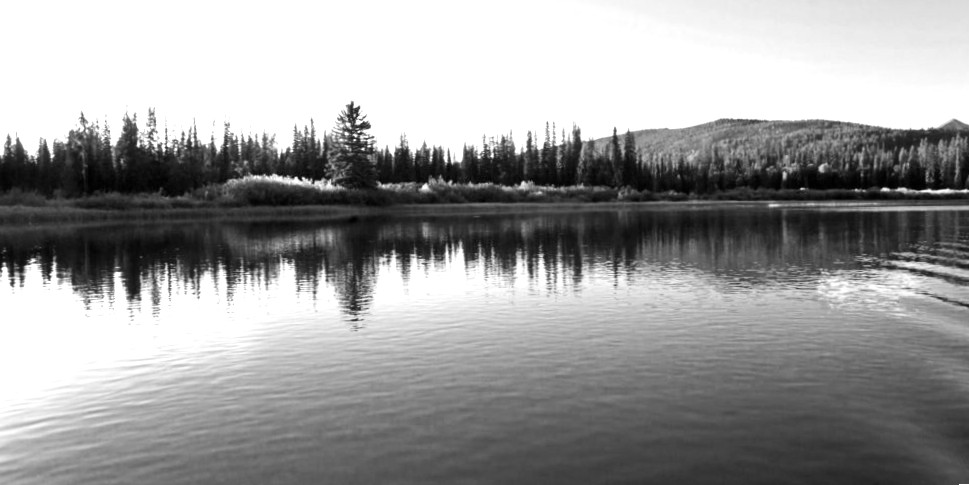
That first summer, I had many adventures with these buds. Everything was new to me, so there was no end of new territories to check out. My friend Roger and I took a canoe trip up the Cariboo River into the Cariboo Mountains. This was a trip I had dreamed of doing for years, and now I was loading the canoe. We planned on getting as close as possible to Cariboo Falls, which was just below the outflow of the Cariboo River at Sandy Lake, before heading back again. Sandy Lake is part of the Bowron Lakes Canoe Route. We figured it was going to take about 15 to 20 days to complete.
We put in at the lower end of Cariboo Lake and canoed up through to the Cariboo River. Once in the river, and right from the start, there were plenty of rapids to contend with. Below each set of rapids were calm areas where we would camp and fish. We saw many moose along the way, and grizzlies were pretty common. A very large boar charged us just after we left Cariboo Lake, and we had to paddle as hard as we could to get away. It took getting into the middle of the river, where the water was deep, to put some distance between the bear and us. Being charged by a large grizzly boar who seemed pissed off at the world was pretty intimidating. He was in a bad mood about something, and he chased us for a fair distance before giving up, growling all the way. That night, we slept on an island in the middle of the river.
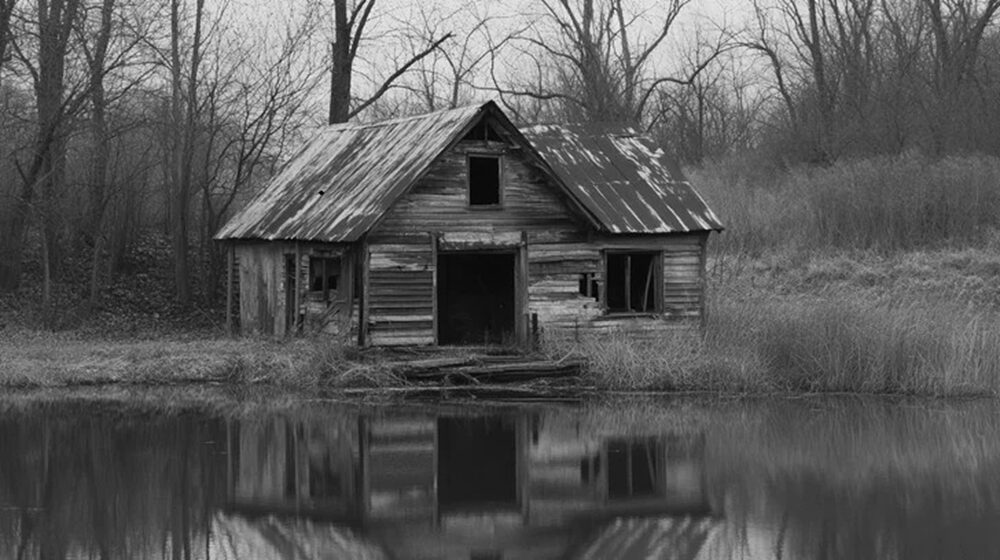
As we paddled upriver, we began to see numerous old homesteads, abandoned now, but we could see that they once were awesome homes that had been hewed out of the wilderness by pioneering families. At the time we investigated these old cabins, most were beyond repair, but some would not have taken too much work to make them livable again. Lots still had woodstoves, and a few were still in use by trappers. One of these old homesteads we saw still had an upright piano in it, although none of the keys still made a sound. Must have been quite a journey getting it to the cabin. These homesteaders were a tough lot, that’s for sure.
By the time we reached Kimball Lake, we were already 10 days in and still had quite a way to go. Our food supply was getting low; meat was not a problem, there were plenty of grouse, and fishing was phenomenal. But coffee was low, eggs and bacon were gone, and we were low on bread. So we decided to head back out. The trip back down the river was much faster as we were running with the flow.
I believe we ran into the same grizzly on the way back; at least he looked like him. He was on the island where we had camped after the first encounter. He was standing upright on the riverbank, arms in the air, growling at us as we went past. Just as we were out in front of where he was standing, he charged. It happened so fast, we barely had time to react. It is amazing how fast one can paddle when chased by one of these bears. This fella really did not like us much, and he was quite frightening. As we pulled away from him, he stopped, stood up and growled at us until we went around a corner.
The Beer Races Of Likely

On the way back to Williams Lake, we stopped at the Likely pub, had a couple of beers and got invited back the next weekend for the beer races. This sounded intriguing. We told the other guys about the Likely beer races. We all went back the next weekend to see what this event was all about. It turns out it’s a timed race where you run through a bit of a course, then into the pub, where you navigate around a few tables to the end of the bar, where there is a draft beer waiting. You drink this beer as fast as you can, then run out the side door, around a corner, back to the starting point, and ring a bell. After each run, the one with the longest time was eliminated from the race. If you fall, it’s an instant ejection from the race. My 3 roommates and I all signed up. There were quite a few contestants. All went well at first, but the more beer you drank, the tougher it got. Soon, contestants began to stumble and fall on the corners. There were some incredible crashes both in the pub and in the outdoor portion. After about 11 or 12 beers, they were down to just two racers, a big cowboy and our buddy Larry. This fella was standing far steadier than Larry; he was twice his size. He did his run successfully. Now it was Larry’s turn, and he was giving it his all; the crowds were cheering loudly as he made it through the first course and drank his draft.
Then, as he came out the side door and attempted to round that last corner, he stumbled, and though he tried to keep upright, it was a fool’s attempt and down he went. Fun was had by all that day; I never laughed so hard. It was a good day.
Spent quite a bit of time in the Likely area. There were many places to fish there. One place was a series of beaver ponds. Where, with little effort, you could canoe for what seemed like miles on these ponds. They were not very deep; you could see the bottom in all the ponds. The fish, on the other hand, were huge, trout the size of salmon. We would fish with light gear, trout rods, and when they hit your lure, you could look forward to an amazing battle. Sometimes schools of these fish would glide under the canoe, giving us a good idea of the average size of these rainbow trout. To reach these ponds was a bit of a journey; first you had to travel down a narrow rough track off the likely road to a parking spot where the road turned into a grassy trail. From there we would slide our canoe easily along the grass for about a mile before you get to the first pond. Then it was fishing in sunshine.
One time my good friend Paul and I stayed late fishing at the ponds, and it turned dark just as we got on the trail to the truck. We had my dog Cody with us; he was about 6 months old. We began sliding the canoe out. On the way, we began to hear and see coyotes walking just beyond our sight; they were on both sides of the trail calling to one another. A few began to move in closer, and we had to yell to keep them at bay. We had no flashlights. Sometimes you could see their eyes glow in the moonlight. It was pretty intense; I think they were hoping to get my pup. But he was stuck to me like glue, though, so not much chance of that. Paul was visibly shaken by this ordeal. We got to the truck, fired it up and turned on the lights. The coyotes headed back into the night. I kept my cool, but to tell the truth, I did fear for our safety; it was quite disturbing to say the least.
The Williams Lake area was grasslands and giant firs, and big ranches. The likely area was only 100 km east of town, and yet the terrain is more like the coastal forests with the same coastal thick underbrush. I can remember the first time I drove into the area; I was surprised to see sahal, huckle and salmon berries growing on the roadside.
Shortly after arriving, I worked for a logging outfit up the slopes of Mount Stevenson, where the trees were so big they had to use coastal logging equipment, including a steel spar, grapple loader and off-highway trucks to haul out the wood. All the guys that I worked with were from Vancouver Island; several of them were men I had logged with before. It felt like being in any coastal camp. And yet there were grizzly bears and moose that said otherwise.
The Club

One time, after closing, a few band members had come to our house to play. Seeing Jefferson Starship playing in our living room was pretty cool. So many of the bands that played the club would party at our place afterwards. It became a thing. We loved it, but the parties could get a little wild at times. The city did not take a liking to our gatherings, although the landlord was fine with it all. One afternoon, a police car pulled up, and an officer, along with a couple of city clerks kinda protecting themselves behind him, walked up and handed us an eviction order. This was not from our landlord but from the town of Williams Lake. We were no longer welcome in Williams Lake. It appears they found a way to deal with us. It was time to move.
Forestry
We took to doing forestry contracts of one kind or another around the interior. At one point, we were doing a spacing project out in Cottonwood, where we worked with troubled youth who were close to timing out of group homes. We were teaching them how to use the tools for doing forestry work. This would help them secure a job. Then we bid on and won several spacing contracts out in Bella Coola, where some of the youth joined on as full-time workers.
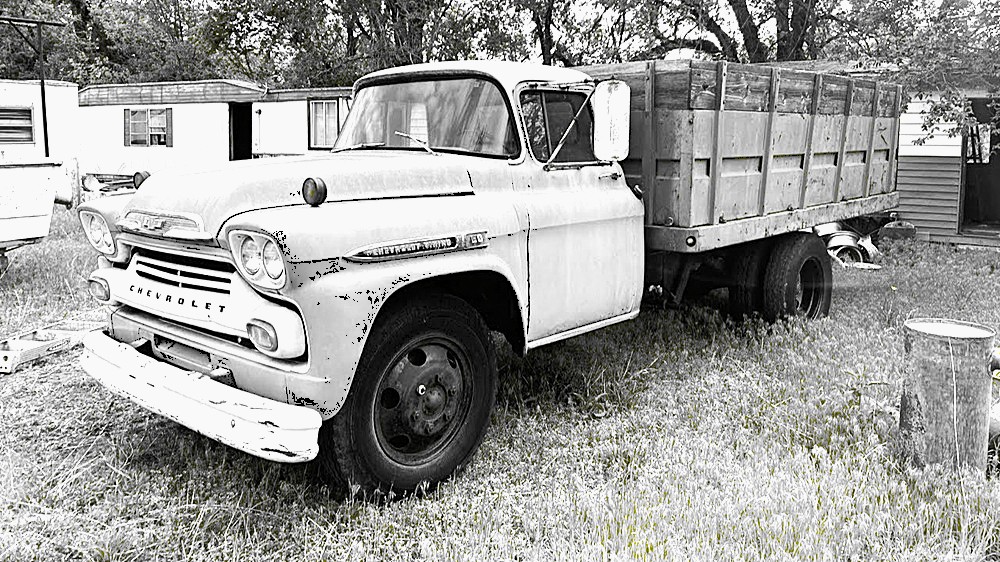
A trip to the bank to secure a demand loan was the first thing on the agenda. To get this loan, we had to sign an agreement to have payments go through them first, where they would take their agreed-upon payment. Once the loan was finalized, we began buying and loading up the gear needed: new saws, rolls of chains plus gear, stoves, large cook tents, smaller wall tents, food stocks and other supplies to get these contracts started. Paul and I were to make the first run to the valley. It would be our first trip to Bella Coola. We were in a 1963 2-ton Chevy truck that was loaded with most of the supplies. We were heading in to put up the camp; others would begin arriving over the next few days. The whole area was incredible. The mountains seemed to go straight up from the river bottom to touch the sky; the valley is not very wide but is full of small farms, with log cabins surrounded by farm animals and gardens. The air is fresh here.
The road from Williams Lake was long and dusty; it’s 454 km of gravel road to get from Williams Lake to the top of Freedom Hill. It was mostly gravel then, but I hear most of this is paved now. When we saw this hill for the first time, we could not believe what we were looking at. The hill road is 11 km long, and over that length, it drops 1.3 km in elevation. It took us just over 5 hours to drive the 454 km from Williams Lake. It took us 4 hours to drive the 11 km to get down the hill. Our brakes kept overheating on the way down, and we had to stop at all water sources to use hard hats to splash water on them to cool them down. The brakes would be red hot. This is an incredible hill. The first trip was pretty scary.
There is a story going around about the creation of this road that goes something like this: The road was built to within a mile of the top from Williams Lake and almost reached the bottom as you head out of the valley. The military had agreed to complete the road, but the valley people had to survey the route. With only one day to post it in the mail or lose the military aid, a rider got on his horse and rode up the steep ground, going back and forth. He ribboned the route as he went along. They got it in on time, and the military did its thing. I have heard this story many times, and it’s a good one; the only problem is that this story is not true. The real story is that the government only intended to build the road out to the Anahim reserve. Then out as far as Hagensborg up the Bella Coola valley.
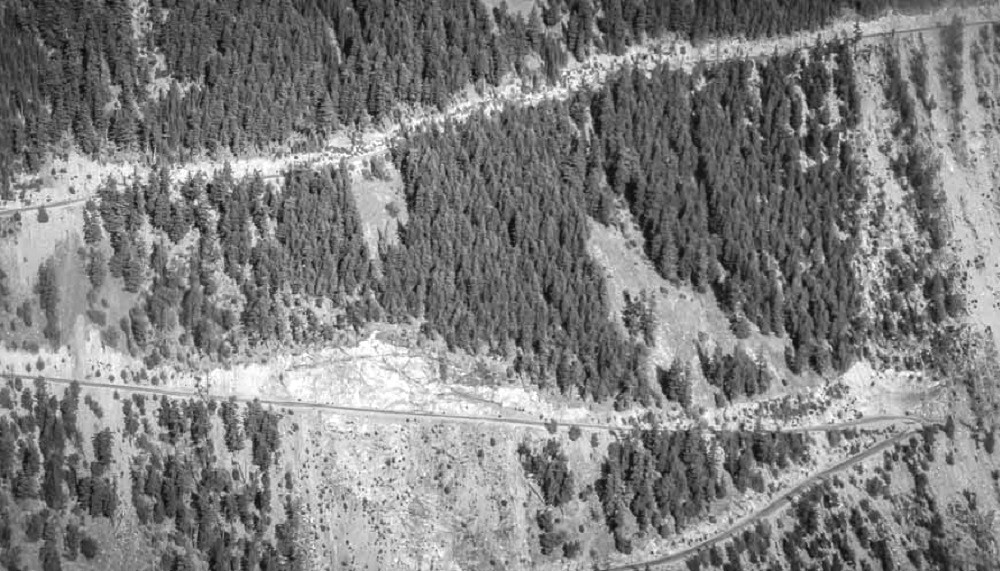
The locals in Bella Coola would not be satisfied until the road was complete, though, so they formed a volunteer road-building crew and began to complete the road themselves. They started with bulldozers at the bottom and the top and quickly had the road from Anaheim to the top of the hill constructed. This caught the eye of Phil Gaglardi, who at the time was the Minister of Highways. He was impressed and thought they just might have the gumption to build this road, so he offered to help cover the costs, even though the government engineers stated it could not be done. This was a good choice, as these boys did indeed build the road. This section is known as Freedom Hill. He only paid some of the costs, but it was enough for the boys to get the job done.
I must give kudos to the residents of the Bella Coola Valley and congratulate them on the construction of Freedom Hill. Although there are 11 km from the top to the bottom as the crow flies. The full road that needed to be built was more than 60 km long, covering the area from Anahim Lake to the Bella Coola Valley.

The bulldozers met 88 km from the Pacific Ocean; they touched blades as the last of the boulders were pushed aside to a jubilant shout from the volunteers. This was the third route to the coast in B.C., after both the Lower Mainland and Prince Rupert routes. Another route had been proposed that would go from the Cariboo down to Bute Inlet. This was proposed by Alfred Waddington, who was a surveyor for the Canadian Pacific Railway company. This route was eventually abandoned.
I have often wondered if a road could have come in from Tatla Lake and connected with the Atnarko River valley. This valley is home to Lonesome Lake. If you have not heard of this lake, look up Crusoe of Lonesome Lake. It’s the story of Ralph Edwards and how he settled in this lake area to build a ranch out of the wilderness. I have not been to the Atnarko Valley and only know about this valley’s travel possibilities from books and stories. As I looked at Freedom Hill for the first time, I thought that a road through this alternate route could not have been as difficult to build as Freedom Hill was. The Bella Coola valley is narrow with mountains on either side that seem to reach right up to the stratosphere.
After arriving in the valley, we set up the camp on Noosgulch River, just up from where it joins the Bella Coola River. This is a very long river that flows straight from the glaciers on Mount Collins. The River is east of Hagensborg and about 20 miles up the valley from Bella Coola. We had 35 employees. They were a great bunch of guys; they all worked hard and got the jobs done right and on time. Everyone got along.
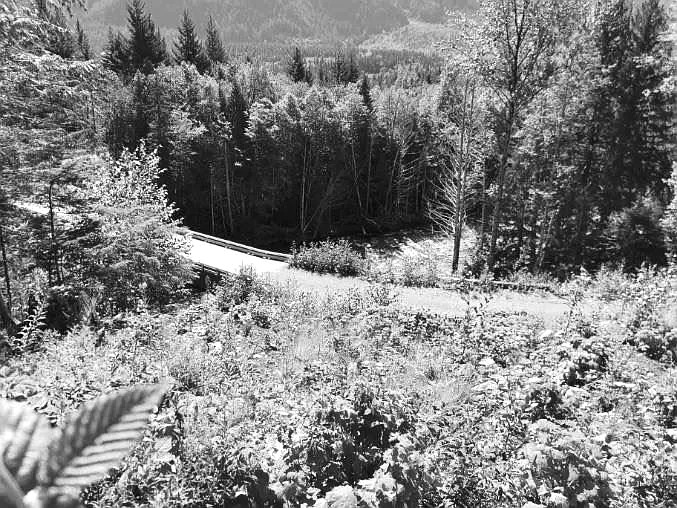
Right out in front of the camp, just below a bridge, there was a slow-moving deep pool where you could fish. Later in the year, we would swim here to cool down; this water, even in late summer, was extremely cold. We used this river to bathe. It was still early spring when we first started to use it. You would jump in with a gasp from the cold and quickly get out; then you would soap up before throwing a bar of soap back in, where it would sink to the bottom. Then jump in again to get the soap, rinsing off as you do. During the spring, there was a First Nations elder who came every day. He would strip down and lie in the river for hours. One of our boys told me he was doing a cleansing ritual.
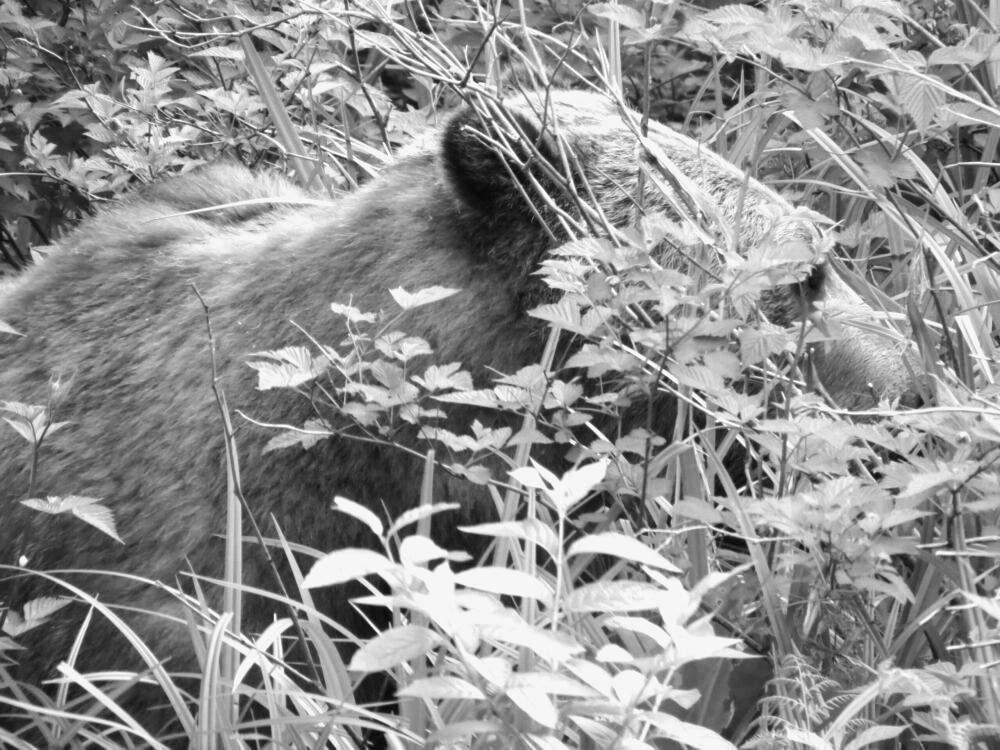
Our camp was set up right where the Grizzlies travel, and tracks could be seen in the morning by late-night travellers. One day, I heard our dogs barking loudly somewhere in the thick underbrush, so I wormed my way through the salmon berry bushes and salal to where the dogs were barking up a tree. I looked up to see a very small grizzly cub hanging on, and it was calling for its mommy. The brush was so thick that you could not see more than a few meters. The hair on the back of my neck got stiff as I gathered up the dogs and got out of there before the sow returned from wherever she was. My heart was pounding.
One sunny day after work, one of the boys and I were walking up the road, past the area we were working in, to see if there might be a fishing hole to test out. The river had big old-growth timber that you hike through as you walk along. The road used to reach this spot was a temporary skid road cut into a steep hillside; there were sparse but big trees growing here, and plenty of sand and scrub grass in between. It was steep. We were sharing a joint as we made our way along the road, and just enjoying the day, when all of a sudden, we heard a noise up the bank. As we both glanced up, we saw it was a big grizzly bear. It saw us. It was coming down the hill when it saw us. As it turned to head up the hill, it slipped and started to tumble down the bank. The bear began to roll down, head over heels, until it fell off the steep upper edge and landed on the road with a thump, and a very loud grunt coming from the bear. He stopped rolling right at the edge of the road and was having trouble retaining his balance. He looked just like a man, standing on his legs, arms flailing around, trying to catch his balance. Then he slipped over the bank and continued to roll down the hill toward the river in a noisy and undignified fashion; he just rolled right out of sight. I looked at my companion and asked him if he had just seen what I saw. With the joint still in his hand, he said he had. I felt sorry for the bear. The river was as far as we could see, way down from the road and would be very difficult to reach for fishing. It was a great walk though.
Later that week, at lunch break, when all my guys were down on the road, getting ready to start a new section. A couple of white hats from Crown Zellerbach came driving along and said they were here to inform us that they wanted us to move our camp. I informed them that the contract we had from the BC Forest Service said that this was where we could set up our camp, and as it was Crown land, we informed them that we would not be moving. Kinda got some sour looks on their faces, and then one of them noticed that we had quite a few First Nation boys working for us and had the gall to say, ” You’re not paying them as much as the white boys, are you. At this moment, one of our Nuxalk boys, a big lad, was walking past the truck, and I heard him say, What the fuck and he started back. I told the white hats that they had better take off while they can. They did. Now, our boys started to voice their anger over this, and I, too, was pretty pissed off about it, so Larry and I headed to the CZ office to chat with the Company.
When we talked to the head guy, he tried to brush it off as a misunderstanding, but we were not buying into that. We told him that we were going to bring our entire crew down the next morning, and we expected to hear an apology from the white hats. He said it wasn’t going to happen, so we said we were going to send our story to the Vancouver Sun to let them do an article about it. The next morning, we showed up with all our boys and the company bigwigs, and those white hats came out. The boss stepped forward to say he was sorry that we had misunderstood what his boys had said. My crew started to yell at him that that was bullshit and to get his boys out front and have them speak for themselves.
Finally, they came forward and said the words. “We are sorry for what we said, and it goes against company policy”. We left to head back to work; our crew was pleased that we had gone and done this for them, and I heard a while later that those white hats had been fired, probably not for being idiots, but more likely for causing so much embarrassment to the company.
We had started working here in the early spring; it was now October. Our camp had become pretty big, with large wall tents, off-the-ground cots and a great big cook tent. But with the rains that had started to fall daily- heavy rain- we were in the process of renting enough rooms in the hotel in town to house us all. A couple of more days, and we were going to move the camp gear to a friend’s barn, and everyone into the hotel. I had headed to bed early that night, but was jolted awake by yelling at around 3 am, wondering what all the noise was about. I stepped out of bed and came ankle-deep in ice-cold water. It was a flood. I quickly threw on my clothes and ran out. Sure enough, the river was running right through camp. Damn, a lot of stuff was already washed away. We started to salvage what we could; several of us had ropes tied around our waists and were trying to get stuff before it washed away. We took everything we could salvage to a high spot by the road on the other side of the river.
A crew of boys got the big cook tent moved and set up so they could start the stoves to cook some food and begin to dry things out, while the rest of us were back at camp fighting the river and saving as much as possible. You could see the cook tent up on the hill, across the bridge, where they were making coffee and some food for us; it was a nice sight. Then all of a sudden, the light in the tent got really bright just before bursting into flames. It seems a tent peg had torn loose in the wind, and the corner of the tent fell onto a stove. By the time daylight came, we had salvaged what we could; we had lost quite a bit of shit, a couple of saws had washed away, and we had lost our big tent and stoves, along with plenty of clothing and other gear to the fire. We moved into the hotel and finished the last couple of contracts before shutting down.
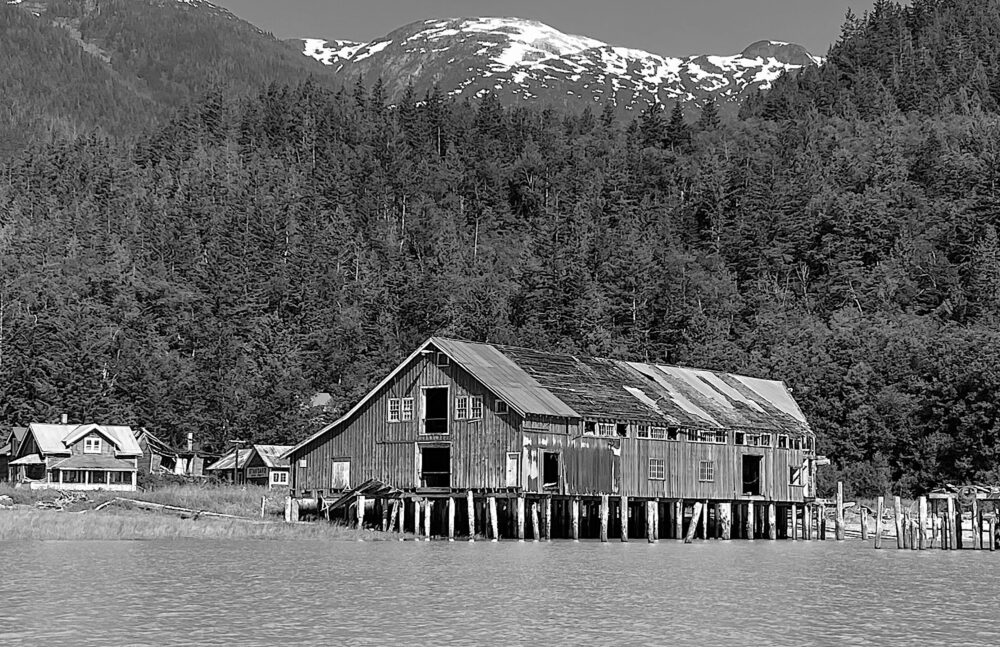
I loved to hike. Over the year I spent in the valley, I got to see so much. One day, my buds and I went across the Bella Coola harbour in an old inboard/outboard clunker some friends kept docked in town. We were headed to the old Tallheo Cannery. At one time, canneries dotted the west coast of BC; there were hundreds of them. Workers would be hired from the local communities when possible, and more would be brought in to fill the ranks as needed. Those brought in would stay in bunkhouses on site. Over 300 worked seasonally at this cannery. Most were from Bella Bella. As refrigeration started to be more common, many of these canneries died out. Although fish processing was over here long before my visit, the cannery building was still used as a net loft. When we went over, the fuel dock and store were still in operation. We spent a wet and windy day exploring the area.
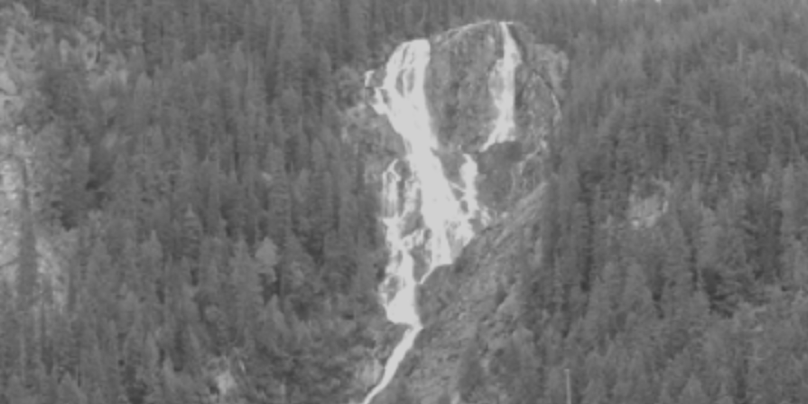
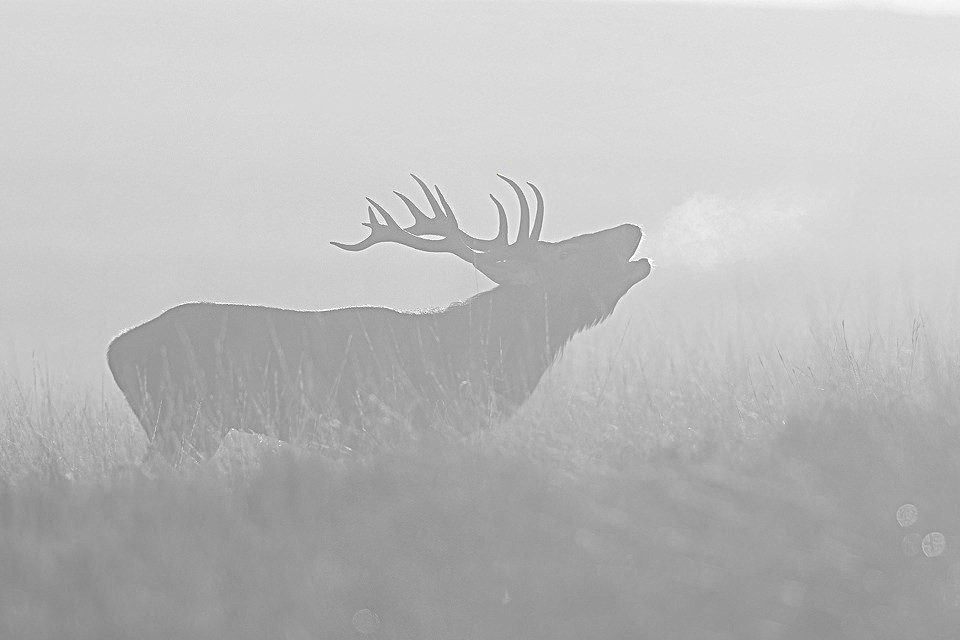
One afternoon, we were all up fishing in the Bella Coola River, just above Firvale. The trout fishing was good here, and it was a nice place to just sit back and enjoy the scenery. All I could see were mountains covered in glaciers in all directions. Flowing down the sides of these mountains was a sea of green speckled with so many waterfalls that I lost count. Although the sky above was blue, there was a fog rolling down the river; it was cool watching this slowly block our visibility to where we could just barely see the other side of the river. I first heard it: an elk bugling; it was haunting, and as I looked across the river to where a small grassy meadow was. I saw him, a young bull elk, sporting a nice set of antlers. As he moved through the fog, head held high, his antlers caused the fog to swirl behind him, and all the time, he was bugling to his herd. It was very cool.
I was invited to spend some time with a family whose boys worked for us. Their mom and dad were pretty cool. One day, the boys and I were chilling in the basement living room, listening to tunes, when all of a sudden the door flew open with such force that the door handle went through the wall. Their mom stood there panting in a stooped position; she had a crazy look in her eyes. One of the boys softly said, “Oh, oh, it’s Mary”. Then her eyes focused on me. She slowed, stood upright as she turned towards me. Then, so suddenly that I had no time to react, she leaped across the room to jump on me. She was pounding on me mercilessly all the while yelling “the anti-Christ” over and over. I mean, what the hell. I was unsure what to do. At that moment, the eldest son pulled her off me. As she turned to face him, he slapped her hard. She looked at him in what seemed like confusion. He slapped her hard again. Then she turned and walked out the door as if nothing had happened. The whole thing took maybe 60 to 90 seconds.
The boys told me that on occasion, she became this other person who was quite insane, and to get her back to their mom, you had to slap her face hard. I knew it was time to get out of there. She had put the willies on me. I am surprised she never crawled across the ceiling to jump on me.
The Ranch
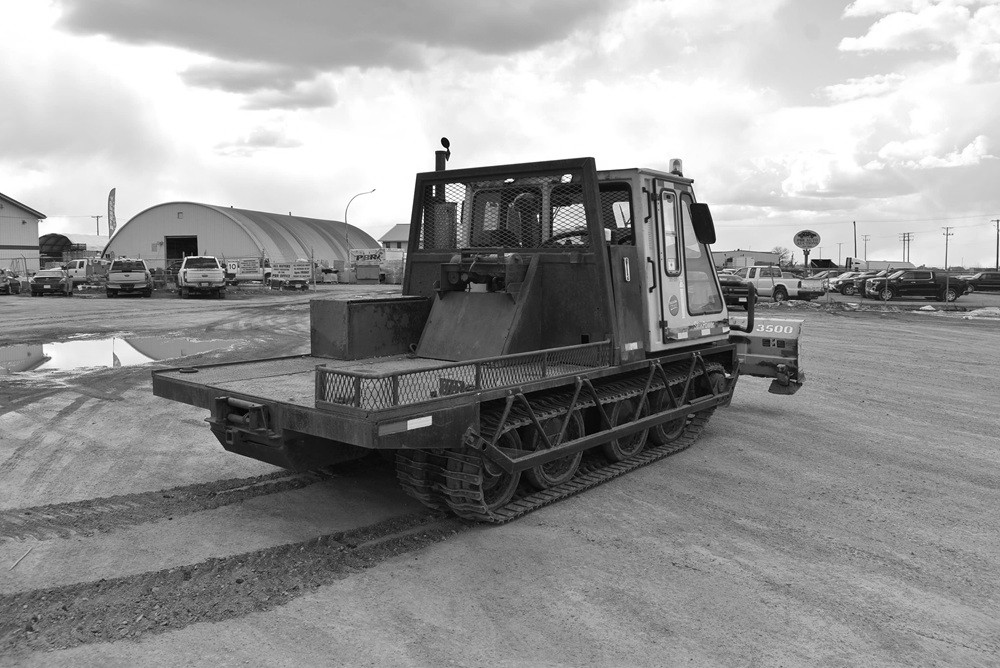
I called a friend in Williams Lake to see if he had room to put me up for a bit. : Yup, come on up,” he replied. Once in Williams Lake, I got a job rebuilding an old Bombardier for a local rancher; it had tracks instead of wheels. It was for a ranch up in the West Chilcotin. I replaced the motor, added a hydraulic pump to the cabin and a three-point hitch to the rear deck to attach a backhoe. Then, I added a front-end blade for plowing roads. After adding new tracks, it was good to go. There is no steering wheel in this beast. Just a shifter that had forward, neutral, and reverse, and a gas pedal to go. To steer, you have two rods with handles that come out of the dashboard; these are individual brakes that, when applied, allow you to steer. You want to turn right, just pull the right side brake. I had met a few ranch owners while building this rig; they had heard about the project and came by to see it. One offered me a job on a remote ranch. It was spring, and a new adventure was about to begin.
Over the years, I had read many Louis L’Amour books. Always wishing I could have lived the cowboy life, ridden the same trails as my cowboy heroes. Now I was to do just that. The ranch was a substantial spread, covering thousands of acres. Most of this was a lease. The owner had bought the natural hayfields that were in a line along a 15-mile valley; then, as he had the only source of hay, he was able to lease the entire valley. I would be working the back end, about 15 miles from the main ranch.
The turnoff was at Alexis Creek; the pigeon store would direct me from town to the road out. I knew the owners pretty well from stopping there on my way in or out of Bella Coola. I drove out on the Bella Coola Road until I reached the small community of Alexis Creek. I stopped at the Pigeon General Store, grabbed a drink and snack. Then followed their directions to the road I was to take. Drove for 6 hours over a pretty rough track. At the end of the road was the ranch. This was a working dude ranch; it was located at the end of the rough road, and my truck barely made it in. I stayed the night at the ranch, where they put me up in the bunkhouse so I could get an early start the next day.
This old guy was pretty tough. I remember when he was 83, he gave himself a bad hernia clearing land, but he also had hay that had been cut and was drying in the field that had to be put up. He was too proud to ask for help. So he took an old inner tube, wrapped it tightly around his belly and spent the next week putting the hay up. He then headed by horse and wagon and truck to Williams Lake to see a doctor, and he was immediately sent to the OR for a hernia operation. Like I said, one tough old guy. Sad to think that this old-timer, whom I had the pleasure of meeting, was from another era and is long gone now. All the oldtimers I met on that adventure are gone now.
The ranch was pretty cool, and the owner and his wife were awesome folks; they were First Nations. Their cowboys were a great group of young folks of both genders. The spread was a working dude ranch; people would come stay and get to do cowboy stuff, and they would pay well to do this. The owner’s wife was a guide for these folks. She told me many tales about taking guests out. One tale had me laughing pretty hard. She used to buy large orders of fake arrowheads and scatter them in the creeks around the ranch.
Then she would take the guests out looking for them, and when they would find them, she would say they were so lucky to find an arrowhead. The guests would take these trophies home and display them for all to see. She was a real hoot.
In the morning, I was told the ranch had left a horse and a pack horse for me to use. After breakfast, I saddled up the horse, packed the other with my gear and headed into the ranch, just me, the horses and my pup. No drivable roads led from here on; only an old, winding wagon road. The wagon road was now quite overgrown and had sections of corduroy road through the swampy areas. You would go over ridges and down through wetlands as you made your way along. In the high country, you rode past majestic giant fir trees surrounded by grasslands, and travelling through the wetland valleys with their beaver ponds and pine trees was incredible. Ducks and geese were abundant, and there seemed to be at least one moose in each pond.

Just past dark, I reached the main ranch, where I was fed dinner while my horse was cared for and my packhorse unloaded. The ranch house was huge, a two-story log mansion with a full basement. There were bunkhouses, outbuildings and shops built around the house. The next day, we headed out to my cabin by buckboard, with three riding horses in tow. It was a one-room cabin with a sod roof, a wood stove, and a spring outside the door for water. A corral for the ponies and a small outbuilding for the goats and chickens to spend the night in. They did need to replace the roof, which was done before I arrived. A table, a couple of chairs, a jug of kerosene with a lamp, a metal frame bed and mattress, and several supply boxes had been brought up by wagon from the main ranch a few days before, and all was good to go. There were a few cases of jarred food in the supplies. Two types of canned moose meat: one just meat and one meat with veggies. There were dried stuff as well: flour, coffee, sugar, a few spices and several loaves of bread. They had brought up a few goats for milk and some chickens for eggs. Butter and bread would be brought up weekly from the main ranch. There was a good supply of firewood stacked up against the cabin wall. All was good.
Through the spring and summer, I got myself familiar with the valley and got into a routine of caring for the cattle. I got to know some of the cowhands from both our place and some of the other spreads in the area. There was a kind of routine you get into, from daylight to dark; it mostly never changes. But there are two exciting times of the year: calving in the spring and the branding that comes after was pretty awesome. All the cowhands would be involved. By this time, I owned my own gear, having bought most from other cowboys; this involved a saddle, reins, a saddle slicker and a pair of chaps. I was given a rope and used it every day; funny thing is, I have no Idea where it went.
Then there was the fall roundup and the gathering of the cattle going to market. This was a cool event; our ranch would gather up ours and begin to move them to the railhead. Along the way, we would be joined by the other area ranchers until we had a pretty large herd. It was a weeklong drive. There would be lots of cowboys and impromptu rodeos in the evening among the younger riders. We would drive our cattle to a big Ranch out of Alexis Creek; the cattle from all the ranches in our area would be shipped out alongside theirs, and all would receive a percentage of the sale based on the number of head shipped.
The meadows where the hay fields were located had beaver ponds that kept them wet; this produced some pretty nice hayfields. A couple of weeks before it was time to hay, a couple of cowboys from the main ranch would show up with a few cases of dynamite. They would blow holes in the beaver dams to drain the fields to harvest the hay. I was to help. This was fun, but I had concerns about the beavers. I was assured that the beavers would rebuild the dams after we finished. Flooding the fields for next year’s crop of feed. There was a haying crew heading into the ranch that contracted out to not just our ranch but several other spreads in the area.
When they arrived a couple of days later, I saw it was an extended family of Tŝilhqot’in People. I was surprised to see a friend of mine with them; Randy’s family owned a horse ranch north of Williams Lake. Turns out he had married one of the ladies since I last saw him. They arrived by buckboard wagons and quickly set up camp. The next morning, they began haying.
Everything was done using horses; they pulled the cutters and rakes, and when the hay was dry and ready to pile. The horses pulled special wagons where the sides would drop down. They would lay out these homemade nets with long wooden supports on the deck of the wagon. These nets had all the ropes from the ends pulled into rings. They would pile the hay as high as they could, then pull the wagons over to the haysling. The sling consisted of three long poles set up as a tripod. There was a pulley system at the top with ropes running through. You would pull the two main lines down to hook onto the rings; one of these lines had a quick release that was operated by a hand line. The whole thing was quickly lifted by a team of horses. They would then swing it over the pile and pull the release when you wanted the hay to drop. The younger members of the family would be ready to use their feet to flatten the hay down. These hay piles would get quite high before they were covered in big tarps and then used as winter feed for the various ranch herds. It was fascinating to watch them do this.
I had never used horses and wagons to hay; actually, I had never hayed before. It was hard work. We would work all day putting up hay, using a hay sling to pile up loose hay in very large piles. We had lots of fields to hay, and they were there for a couple of weeks. They then put up a feast that involved big steaks, baked taters and various other tasty complements of traditional foods. After the feast, a fire was lit, and out came the guitars and drums; they would dance for hours.
One evening, I was sitting by Randy around the evening fire, and I noticed a couple of elderly women were gesturing my way and giggling, talking to me in their language. Sitting next to them was this young teenage girl who was kinda cute, but damn, she was pretty big. I asked Randy what they were saying. He looked at me and said in a soft voice, “They are arranging your marriage to the young lady.” I did not know how to react, but they all quickly had a good laugh at the look on my face. They then let me off the hook. This family would come every year and hay our fields. I got to know most of them fairly well, even learned a bit of their language. I can not remember how to speak it now. That was the last time I saw Randy. I heard he was in a helicopter crash and did not survive it.
One really cold winter, second year in, it had been 40-plus below for weeks, snowing every day, and the snow was deep. My meat supply had been eaten, and getting down to the main ranch for supplies was not in the books until this winter storm ended. It was getting serious, and I was thinking I might need to butcher one of my milk goats for meat. I had been out hunting every day, looking for a moose, but could only cover so much ground on snowshoes. Then one day, I opened my cabin door at first light and there, right in front of me, not more than 50 feet away, was a moose. It was eating hay with my horses; one shot with my Marlin 35 repeater, and I once again had meat. I quartered it, hung it up and left it outside to freeze.

After feeding them and letting them warm up around the stove with a hot cup of coffee, we got to chatting. Seems they were not here over the moose but were out trying to find out if any of our cattle had been rustled; it seemed some rustlers were working in the area. They had come up from Redstone, stopping at each spread along the way.
The reason the game warden was there was that he was also the range manager for our area, and he knew all the ranch locations. While the constable was writing up his report, the game warden and I were standing on my porch chatting about the extreme weather. I told him we had been snowed in for a while and things were tough. I pointed at the moose head and remains, casually saying, “We were out of meat and had to butcher one of my goats.” He smiled and replied, Yup, I can see that; that’s all that was said about that moose. They got back on their snowmobiles and off they headed to the next ranch.

He thought it was too late and said I should stay the night. But I wanted to get home, and with the ground being snow-covered and a full moon coming up, it was like daylight, and the ride would be easy. So I got up on my horse, called my pup and off we went. We got back after midnight, and it was good to warm up. It was good to see someone.

Not long after I started working on the ranch, I had to journey to town on court business. After taking care of my obligations, I headed back to the ranch, and as I arrived at the lodge, I saw that the old cowboy who lived past our spread was there loading up a wagon with supplies. He said he was heading out the next morning. He hoped I would travel with him, so I said sure. When I bunked down for the night in the bunkhouse, I had pulled off my 2 pairs of wool socks, but then did a stupid thing and did not separate them. The morning temp was about -25, and I just pulled those socks on as I dressed, had breakfast and then hitched my horse to the old timer’s wagon, and we headed out. About an hour out, my feet began to hurt. It seemed my inner socks were still a bit damp from driving into the lodge in my truck with the heat on.
The old cowboy stopped right away and built a big fire, had me remove my socks, and we dried them by the fire. My feet were white and all wormy-looking. As they began to warm up, they began to hurt. Each time the pain was too much, he would have me stick them in the snow. Eventually, they stopped hurting and got some colour back; my socks were put back on, dry and warm, and we headed on with our trip. If I had not been with this old cowboy, things could have been pretty bad. I had been thinking I was a real cowboy, but this made me feel like a real greenhorn.
The fall is the time to get out hunting birds, like grouse, geese and ducks. When the geese would migrate in the fall, sometimes thousands of them would stop for the night in the meadow in front of my cabin. I would go out before daylight and quietly lie down at the edge of the meadow, where there was a flat spot, and if I lay just right, I could aim for head level, fire and bring several geese down with one shot from my Marlin 35. I would wait till I could see before taking the shot. As soon as I shot, the geese would fly up in one huge flock, honking loudly and flying off. Lying in the field would be enough geese for a feast, all shot through the head by the same bullet.

Later that winter, I was out moose hunting on a series of natural meadows not far from my cabin, and the snow was so hard that I could walk on it without snowshoes. As I walked along, trying to make as little noise as possible on this crunching snow, I kept my eyes on the meadow edge, looking for signs of moose or perhaps a whitetail deer. When all of a sudden, the frozen surface directly in front of me exploded with a burst of noise and flying snow. Then I felt a grouse’s flapping wings as it flew past my face. I fell back, and my rifle went off. The whole event scared the crap right out of me. Turns out it was a pair of grouse that had been startled by the sound of my boots on the snow above. I found some pretty good humour in this and still laugh about it. Grouse will build tunnels in the meadow’s long grass that become trails for them to travel once the snow covers the meadows. Allowing them to find feed.
In the spring, I was down at the main ranch. I used the outhouse and realized it was ready to cave into the hole. I decided to construct a new outhouse for them. I built it out of logs, and it was skookum. I had dug a new pit a few meters from the old one and used the dirt to fill in the old hole. Then I built a log deck over the part of the floor that was not over the pit hole. I covered this with boards. Next came the log structure and roof, which I covered in tar paper. I then added a proper toilet seat for comfort. As I said, it was pretty well built.
Later that night, the rancher’s daughter, who was 13, went out to use the new outhouse before bed. I was in the kitchen having a hot drink before I hit the bunkhouse, where I would spend the night, as it was too late to head back to my cabin. All of a sudden, there was loud screaming coming from the outhouse. I ran out with my gun, thinking she was being attacked by a cougar or bear, as the scream was quite bloodcurdling. As I rounded the corner of the goat house, she was standing in front of the outhouse, shaking. I asked her what was wrong. She said something very cold had touched her butt while she was sitting on the seat. I took her lantern and looked down the hole, and to my surprise, there was one of the milk goats down there, and when she sat down, it reached up and touched her butt with its very cold nose. From what I could figure out, when I dug the hole, some roots were sticking out. I could see that the roots at the top of the hole had been chewed back, but the roots lower down were still sticking out. The goat must have found the door open and thought the roots looked tasty. She must have been reaching for some of the deeper roots and fell in.

There was always lots of fencing to do on the ranch, cattle to feed, hay to put up, and cattle drives. It was like being in one of the Western books that I liked to read so much as a young man. The ranch was a big place, and the fencing was only put around hay meadows; it seemed that by the time you had one meadow’s fencing repaired, another one needed work. There was a hay meadow about 6 km from my cabin that needed fence work. I was on my horse Dexter, a big horse, my favourite horse and had gotten off to open the gate. As I tried to lead him through the gate, he refused to go in, and as he was quite big, you could not pull him in if he said no. So I got up on his back to ride him in; he got to bucking, and the next thing I knew I was on top of the fence, ribs hurting like hell, and all I saw was Dexter running in a gallop in the direction of the cabin. Reins flying behind him. It was a long walk back with my ribs just killing me, and Dexter was waiting for me, looking all worried about how I was going to react. I let him know how ticked I was as I struggled to remove the saddle with my sore ribs. I spent a few days healing and then took my other horse, Penny, back to the meadow, looking around the gate. I could see signs of a grizzly bear and a recent bear scat, and figured out that the smell must have spooked Dexter.
Grizzlies could be dangerous, but there was another animal on the ranch that would always try to kill you. These were our mossyback bulls that would travel the backlands solo throughout the year. Come fall, these bulls would service our herds. These guys always seemed to be in a bad mood. You could be just riding along, minding your own business, when all of a sudden one of these guys would come crashing out of the forest, looking to gorge you and your horse. You always had to keep an eye out for these beasts.
Besides my horses, I had my pup Cody, a big malamute-wolf cross. He had been my companion all these years, and he was a good friend; his mom had been owned by my friends Larry and Laurel, and I had been there the day he was born. I was completely taken by this pup and claimed him on the spot; he was the runt, like I had been. But he grew up to be the biggest of the litter. At 6 weeks, he came home with me and was still a youngster when we moved to the ranch. After four years on the ranch, he had become a bit wild and would disappear for days at a time, sometimes for more than a week, thinking he might have been running with the wolves, as there were many around. I would go to sleep at night listening to them. We were both getting bushed, so my mind started to think that maybe it was time to head back to the world. It had been 4 years since I came to the ranch. It was spring. Perhaps we both had become a bit wild. So I saddled up Penny, packed up Dexter with my gear, and we all headed to the main ranch, where I informed the boss that it was time to head out. He was not happy but understood; he paid my wages out. Spent the night, and in the morning, I headed out. It was a day ride out to the lodge and the start of the road to civilization. I left my horses with the lodge, knowing they would be in good hands until a ranch hand could come by to collect them, loaded up my truck with my gear, and then Cody and I headed into Williams Lake to purchase some insurance for the truck so we could head back to the island and Campbell River.
My friend Roger wanted to head back to Campbell River as well, so we loaded up all our belongings into the back of the truck, then with me driving, Cody in the middle of the bench seat and Rog riding shotgun, we headed home to the Island. I had roof-high stakes on the truck, and it was loaded to the top. Somewhere around 100 miles, the front passenger tire blew out. Damn near lost it as we were swerving all over the place. Then I hit the gravel on the side of the road; this pulled us into a big pullout that just happened to be there. We came to a sliding stop, almost rolling the truck in the process; it felt like we were on 2 wheels for a moment.
We all exited the truck, unharmed but shaken from what could have happened. Then we looked the situation over and realized the jack-all was in my tool compartment at the head of the box, and all our belongings were piled on top. At least the spare tire was on a mount in front of the grille. The tire iron was behind the seat, where I should have put the jack-all before leaving Williams Lake.
The area had been thinned a few years back, and there were quite a few logs the right size to make a long pole. Someone had been cutting wood, and a few rounds were lying around. So we stacked a few up, just in front of the truck. Then Rog took a long pole we had made and used it to see if he could lift the truck. Success; with all the weight in the back, it went up easy. So we got the spare ready and loosened all the lug nuts on the flat. Then Roger lifted the truck and held it up while, as quickly as I could, I changed the tire. It was like we MacGyvered it.