
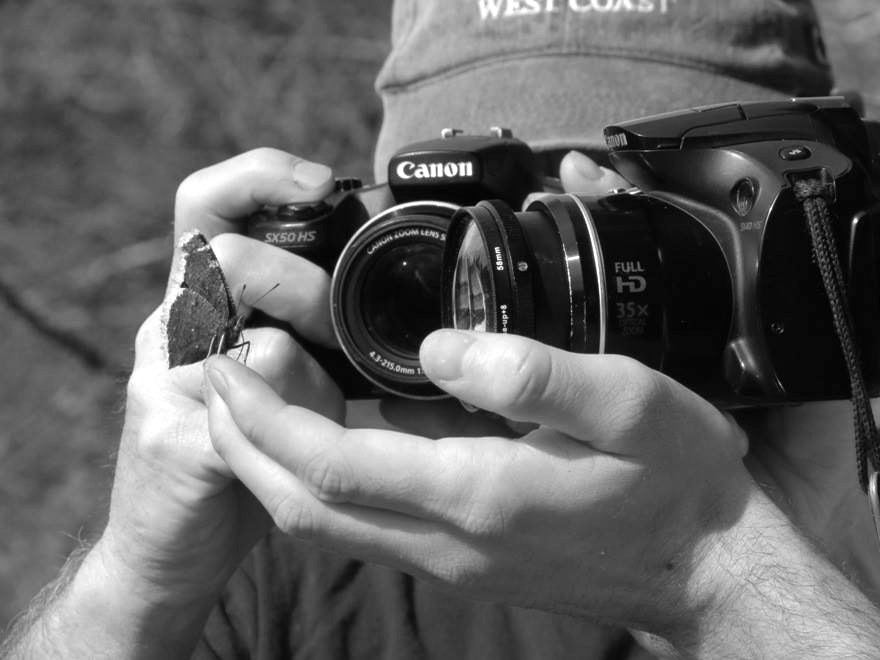
At the same time, my niece would constantly call me up to ask something about the island’s natural world, and I would answer her as quickly as I could. Eventually, she stated that I should build a website about the wildland and its inhabitants on Vancouver Island so others could learn. I told her that I wouldn’t even know what to call it. She said “askbud” because she always does that. I thought it might be fun and started into it right away. askbud.ca was born. It became a passion, and I worked on it day and night. My new camera provided the images needed. Both my boys bought Canon cameras as well, and we started to go out together on camera shoots.
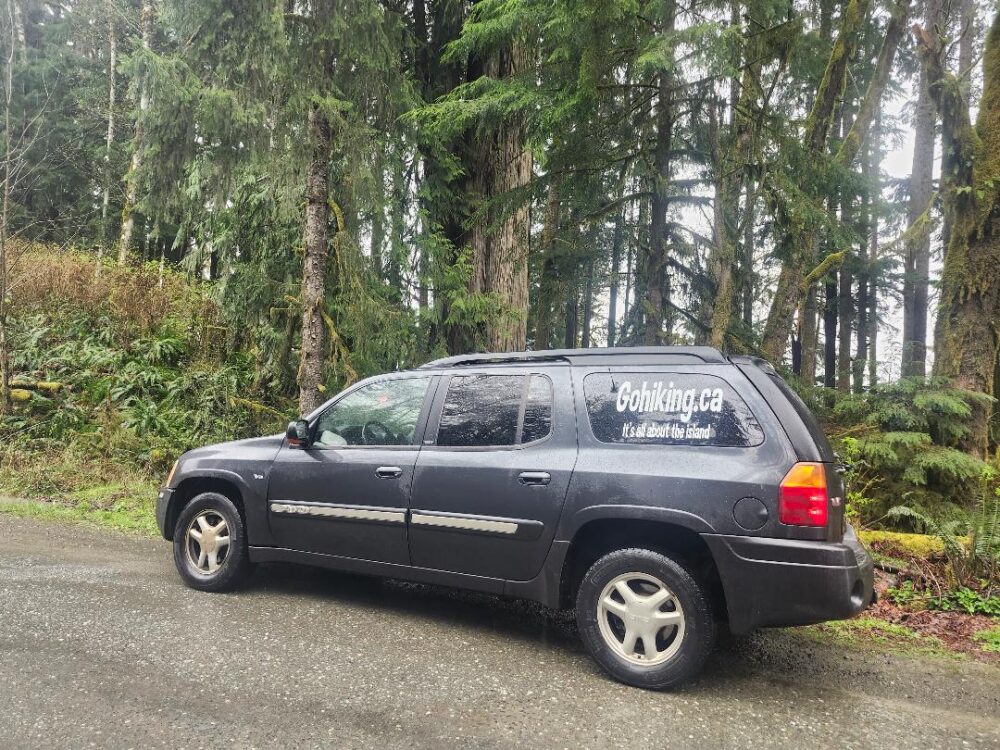
Over the next couple of years, the site started to get quite big. People began to discover it, and we were getting thousands of visitors a day. I would receive many emails daily from people with questions. I purchased a car, and we began to travel around the island to as many cool places as we could. My site became quite popular with schools, and they would use it in their lessons. Then, one day, I received an email from a teacher wanting to know what was going on at my site. She was very upset. I opened up my site to check things out and quickly found that all my links had been changed, and they all now went to Asian porn. It took us over a week to get my site back under my control. It had been a Russian group that had hacked it. Not just my site; they had hit thousands of other sites.
All I could do was make a hard copy and delete the site. I was devastated by the whole ordeal. Eventually, I signed up with a server company in LA called A2 Hosting. They have a much beefier security system and offered me the ability to host as many sites as I wanted on a shared server. I needed to buy a new domain name before loading my site back, and I was surprised when I looked up the domain name “gohiking.ca” and found it was not taken. The new site now had a name. Adding the pages back was going to take time, lots of time.
The Brain Bleed
One evening after working on the site all day, my neck was quite stiff and sore. I decided to go to bed and see how it felt in the morning. I just figured it was from bending over my computer all day. I had no idea what was in store, when all of a sudden, in a flash of almost visible light, I felt like I had been hit in the forehead by a baseball bat, or perhaps that I had been shot. The pain was the worst I had felt. I remember leaping out of bed and yelling at my wife to call 911, and then I collapsed onto the floor, puking my guts out. It was a brain bleed. I can barely remember the next 24 hours. Still, I do recall multiple brain scans in Campbell River, where they had trouble stabilizing me enough to transfer me to a brain ward in either Vancouver or Victoria. It was late the next morning before they decided to move me by ambulance to Victoria. They debated flying me, but decided to use an ambulance instead. As they were loading me up, my best memory of the whole event is still crystal clear in my mind: outside the ambulance, framed by the open doors, was not only my whole family, but several of our foster kids as well, all looking in with scared faces, all tear-stroked. I might have said that I would see them all soon. Then a nurse came and gave me a shot of morphine, and I don’t remember much after that until I woke up in the brain ward.
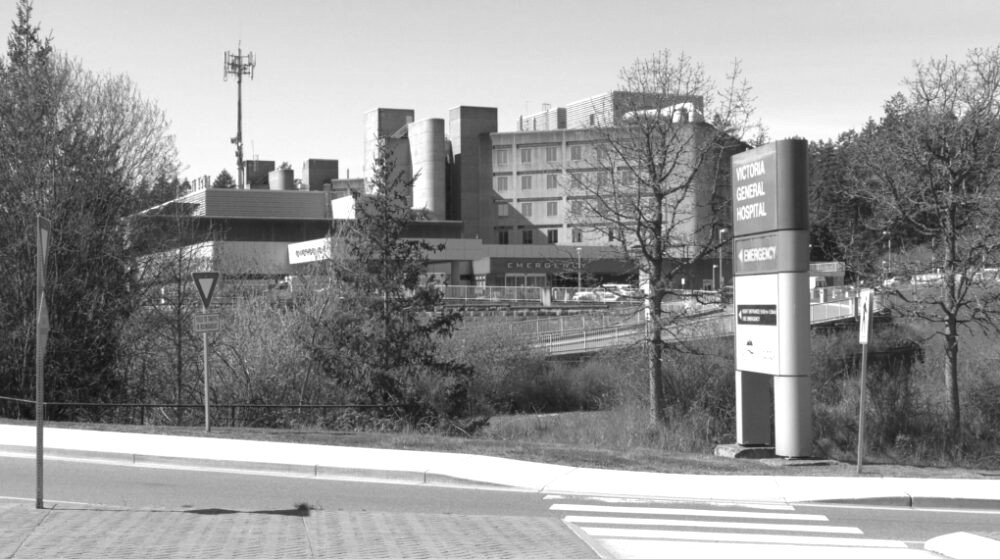
I was in a dark room, all by myself, when I awoke. I was hooked up to many machines that were all beeping away, and I could not remember why I was there or even where there was. I was quite dozy and in severe pain. A nurse came in to check on me and ran out when she saw I was awake. Several doctors came back with her. They asked me how I was feeling, and I said I hurt like hell and what had happened to me. They told me I was in the Victoria Hospital and that I had a massive brain hemorrhage. I was informed that I was very lucky to still be in the world, but that it was going to be a slow recovery. They gave me more morphine.
I was in that dark room for about 3 days, I think; the morphine made me unsure of this, though. I do remember my wife and kids came to visit me, but I was pretty screwed up. I must have looked really bad because they cried the whole time they were there. They had a jug by my bed where I was supposed to pee so they could measure the amount; don’t ask me what this has to do with a brain bleed. On the second day, they started to ask me if other people were peeing in the jug. They said there was too much in the jug. I thought this was silly; who the hell would come in and pee in the jug?
Then I was moved into a room with a window that let in some light. It was nice to have them open my window so I could smell the air and feel the breeze. I spent 4 days there before I was moved into a bright room with a TV.
Since this first happened, I had been suffering from horrific migraine headaches. The morphine was great at reducing the pain, but it was giving me terrible nightmares. I had demons running through my dreams, chasing, catching and eating alive little creatures that could talk with me. I saved as many as I could, but many were eaten. Sometimes I could see them while I was awake. They had on little tweed suits. My brain was pretty messed up.
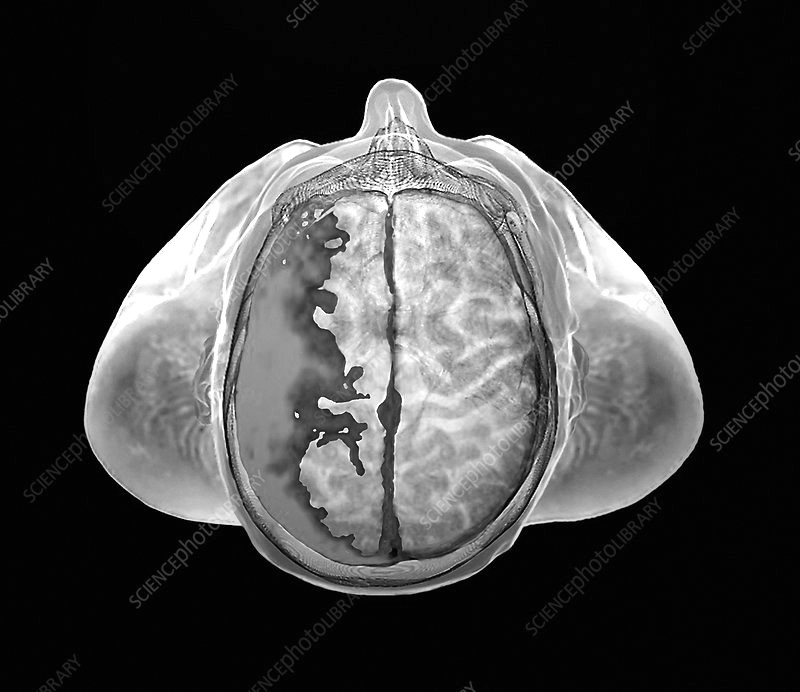
On day 9, a male nurse came in with a shot of Morphine, to which I said I did not want it. He began to start putting it into my IV; I grabbed the line in my arm and told him if he put it in, I was pulling the IV out. As I began to get upset, I told him that if he pushed it, we would be getting into it. He left to call the doctor, who said to see how it goes without the morphine. The headaches got bad; it was from the blood that had pooled on the surface of my brain. I still refused the shots, and my mind started to lose its haze and clear up. I began to remember things, but could not remember my family members’ names, and this scared me. After a couple more days, my memory mostly came back, and I was feeling pretty good, except for the headaches.

On day 12, the remaining wires and hoses were removed first thing in the morning, and I was free to move about. After breakfast, I asked the nurse if there was a Timmy’s downstairs. She said there was, so I asked her for a pair of slippers and a housecoat so I could go get a coffee. She said I could not go, so I told her this was not a prison and if she would not get me slippers and a housecoat coat I would be going down barefoot and in my gown that was open in the back. She brought me some slippers and a housecoat. A few minutes later, I was sitting outside, in the fresh air, having a coffee and a chocolate Bavarian cream doughnut, and it was good. When I got back to my room, my doctor was waiting for me. He told me that if I was able to go for coffee, I should be able to go home. I phoned my wife in Campbell River and told her to hurry before they changed their minds. It took 5 hours for her to get there, and she found me in my room, sitting on a chair with all my clothes on, including coat and hat, and a bag of other stuff on my lap. I was just itching to get out of there. I never did like hospitals.
I went to see my doctor the day after getting home, and he told me that he had never thought he would see me again. He was surprised that I had survived. He said more than half the people who go through this are dead before they hit the floor, and many more die in the hospital. Took a few weeks for my memory to return fully, and 6 months for the headaches to stop. I would need to be on numerous medications for the rest of my life.
The Website
My website was going full steam, with traffic increasing daily. I must say that I have enjoyed building the site and very much like the fact that there is no advertising on its pages.
My wife and I started a business that involved taking people on guided tours to many locations on the island, depending on what they were looking to see. Sometimes they wanted to see our west coast beaches, or perhaps chase waterfalls. Some trips took us out caving, while other journeys led us to remote townships like Bamfield or Zeballos. These trips were always one-day trips; we would often leave before daylight and return after dark. I was the driver and guide, while Gina would entertain our guests during the tours.
I was also taking groups of people out on nature walks. They could sign up for walks to learn about mushrooms, medicinal plants or forest ecology. I enjoyed these walks and sharing my knowledge about the wilderness with others. My wife, Georgina, would come along as a photographer on the hikes and help the elders who would join us. These walks were first initiated under the auspices of the North Island Meti Society. Over the years, I have been involved with this society on many projects.
Around this time, various production companies discovered gohiking online. I had posted the site on the North Island Film Commission. They began to hire me to do photo shoots of various island areas to help them find locations for movies and shows. The money proved quite lucrative, and as I was always up for any adventures in the outdoors, I jumped at all opportunities to be involved. So between the nature walks, guided tours, and working for these production companies, life was good.

One production company began to use me not just for finding locations but also for my knowledge of local history. Eventually, they hired me as a research contractor. I hired my son, Robert, to work alongside me. One project had us working on researching lost Spanish gold mines on the West Coast of Vancouver Island. Not only would we spend time looking for various old mines and locations, but we also pored over old documents and books in libraries and museums, searching for any tidbit of information on ship manifests to see where the gold was being mined and shipped from. Another part of our duties was to liaise between the production company, local communities, and various First Nations Bands whose territories could be possible locations for filming episodes for the series Deadman’s Curse. Over the next year, we worked for various producers and editors, along with a few projects for other companies. It was all very exciting for both of us. Then COVID hit with a bang, and all work came to a sudden standstill.
A month after this, I began to have pain in my right side, just below the ribs, so I went to see my doctor, and after numerous tests, he said that they found several tumours in my liver and they were cancerous. I took this quite seriously and knew that I needed to get my hands on some turkey tail mushrooms. I needed to make a tincture.
Cancer Rears Its Head
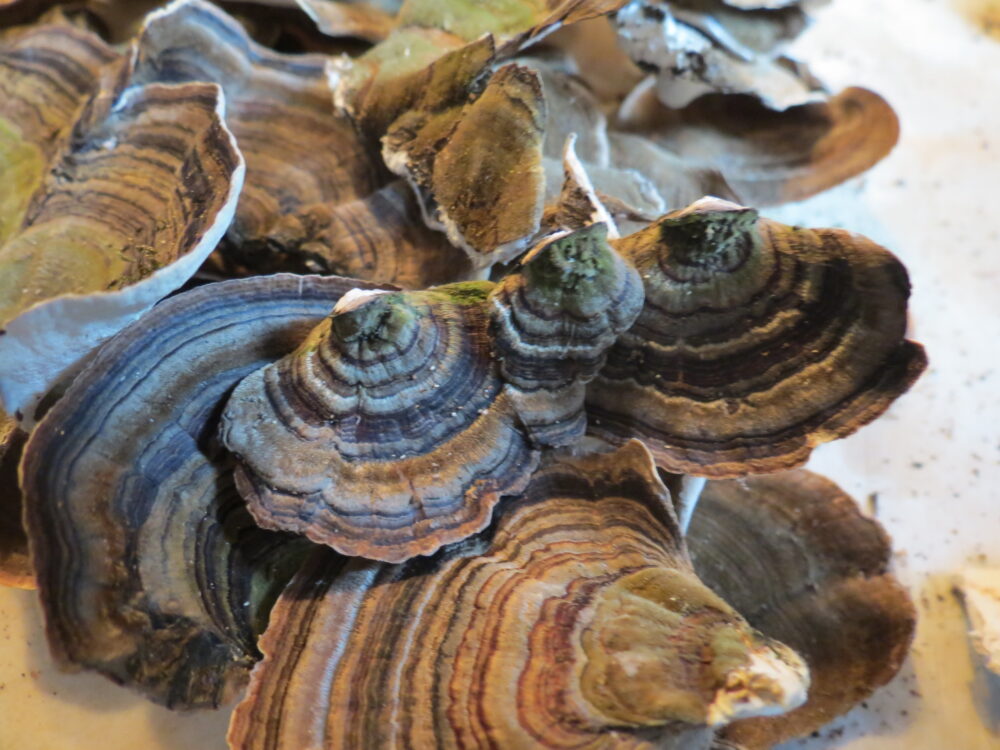
Medicinal uses of turkey tail include the treatment of lung and liver infections. In China, turkey tail has been used as a preventive and curative agent for liver infections and liver cancer. In Japan, it is considered a panacea for a variety of cancers. Overall, the mycelium and fruiting body of the mushroom are considered to have immune-simulator and anti-carcinogenic abilities. Clinical research with PSK began around 1970 and has focused on its immunotherapeutic efficacy in stomach, colorectal, esophageal, nasopharyngeal, lung, and breast cancers. In Japan, it has been approved as a pharmaceutical-grade medicine for cancer treatment and has been used for more than 30 years with consistent clinical efficacy. Turkey tail mushroom medicine is not a true cancer treatment, although it does have cancer-fighting qualities. What it is is the best immune system booster in the world. It beefs up your system, and this allows you to fight the cancer.
This mushroom is used in traditional Chinese medicine as a boost to the immune system, and studies are being done to see what anticarcinogenic properties it contains. Its polysaccharides are thought to be effective constituents. All I know is that it is a great spring elixir. It contains Antioxidants and Polysaccharopeptides, and it seems to help people with poor immune systems. It is well known for its ability to fight cancer. Although turkey tail mushroom tincture is fairly easy to produce, it requires 3 months to complete the procedure.
After getting the tincture made, I went on 10 drops, twice a day, for 6 months, then had my doctor retest me. Tumours were gone. This was good news. At this time, a friend who was in the final stages of throat cancer asked if I would sell him some of my meds. I am against selling this, so I offered to keep him on a regimen of turkey tail for as long as it takes to clear it from his throat. He is now cancer-free.
Garbage By The Truckload
I have always enjoyed getting out and hiking in the forests of Vancouver Island. We do live in one of the most amazing places on the planet. Our island is the largest island on the west coast of North America. It is a little over 32,000 square kilometres in size and is 460 kilometres in length, 35 to 80 kilometres wide. It is separated from the BC Coast by several straits: the Juan De Fuca Strait on the south island, the Johnstone Strait on the central island and the Queen Charlotte Strait on the north island.
The west coast of the island is a wet and wild land of wind, covered by (historically) ancient forests of giant trees; some of the world’s tallest trees can be found in these forests today. This side of the island is breached by many deep inlets surrounded by high mountains that seem to spring from the sea and go straight up to the sky. The average height of these mountains is 800 metres, with some reaching upwards of 2200 metres.
The Pacific storms that pound the west coast throughout the year, and more so in the winter months,s are laden with moisture that must be dropped to rise up and over the Island mountains. So the west coast receives much more rain than the east coast of the island. Truly a rainforest. The West Coast is spotted with small islands, hot springs, and many large rivers that reach the sea there. An incredibly beautiful place. A place of waterfalls and hidden lakes. A place of mists and trees. A place of wonder.
The east coast of the Island, from Campbell River down to the south Island, has a very different type of terrain with broad, gently sloping shelves that go from the sea to the eastern slopes of the Island mountains. Deep, slow-moving, nutrient-rich rivers that are teeming with fish empty into the sea, building deltas of rich farmland.
Most of the island’s people live from Campbell River down the east coast of the island to Victoria, including the south tip of the Island. Victoria is the Capital of B.C. and has an economy based both on Government employment and tourism, as well as a minimal amount of resource-based industries. There is a strong agricultural presence on the east coast of the Island, and dairy farms dot the South Island.
The north end of the island is still very much resource-based, with logging, mining, and fishing, and the spin-off industries being the main form of employment. Tourism is starting to make a marked increase in the tax bases of local communities, and I am sure it will continue to have an increase in these economies in the future. Some communities are beginning to fully embrace tourism with incredible results.

Before my brain hemorrhage, I was working independently as a wilderness guide. I would mostly take out photographers looking for a variety of subject matter. A problem I had not really noticed was how illegal dumpsites were becoming a big issue. That is, until these international visitors began to question me about the trash. The photographers that I would guide were always asking why we allowed this to go on. They would say how they could not understand how we could spoil such a wondrous place. I had no answer. No matter what logging road you took out to get to the forest, it was there, and in increasing amounts. People were coming out and dumping in the forests by the truckloads.
One day, I was riding my mountain bike on a logging road that was only a short distance from my house. As I rode along, I started to take a good look and was appalled at just how much trash there was. So the next day I went back with my camera and made a 15-minute video of the mess. I posted it to YouTube and was surprised to see that it had gone viral overnight with tens of thousands of views. I went back that day and redid the video, but with a request for help cleaning up the mess. I had always thought about illegal dump sites and cleaning them up, but life always got in the way. After having a brain bleed, I realized that there were no guarantees in life, and it could come to an end in a flash. It was time to stand up and get it done.
Once the video was out, help began to flow in. The Regional District offered dump waivers, a container company gave us two of their biggest containers, and a driver from the company provided delivery and the haul to the dump for free. Another company gave us the use of a front-end loader with an operator. Home Hardware gave us boxes of industrial-strength garbage bags and gloves. A local radio station had me on the air to inspire volunteers to come and lend a hand.

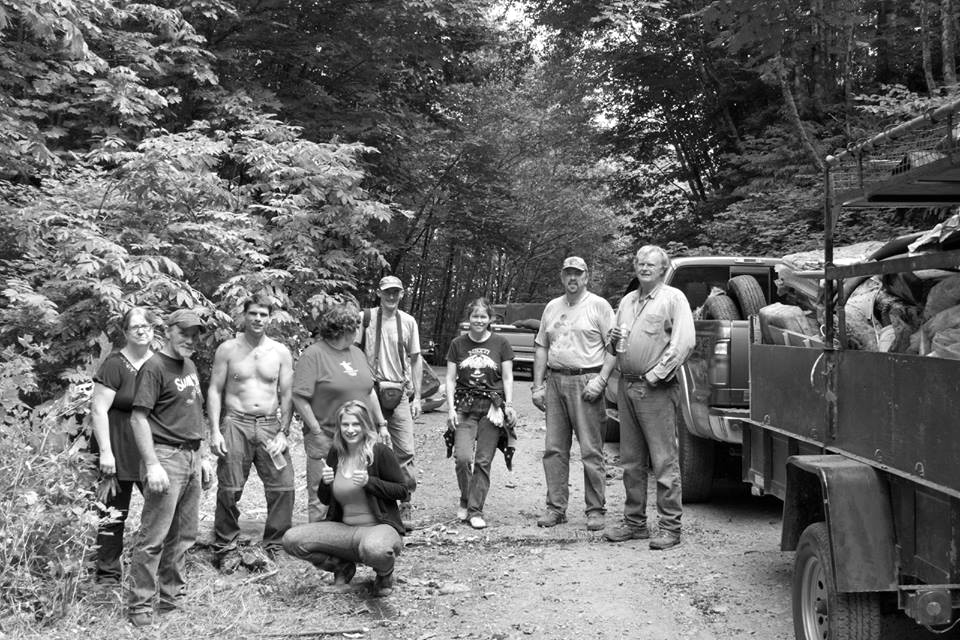
On the first day of the clean-up, so many people showed up to help us that I was overwhelmed by their generosity. Some of the volunteers were too old or unable to help, but they showed up with thermoses of coffee, juice boxes, donuts and sandwiches. There were people stretched all along the road; some were dragging items up the banks to the road, and others were loading trucks and trailers with garbage. This was quite the sight: my daughter was down in a creek, up to her knees in old baby diapers, loading up bags. My other boys were hauling up old beds and tires. Sometimes they would set up a Tommy Moore pulley and use a truck to pull up large machine tires and barrels. By the end of the second day, we had removed 88,000 pounds of trash. That is 44 tons. I was so proud of everyone.
After we pulled this off, I had meetings with some of the companies and organizations that were involved, and they all agreed to continue helping if I were to start a society to keep on doing cleanups. I talked it out with my family and friends who were involved. They all agreed to keep helping. So the Society of Island Forest Stewards was born. Over the next couple of years, we cleaned up many more tons of trash. The local newspapers and radio stations covered our cleanups, and this helped to keep our base of volunteers, which had now grown to 300. Not all would show up, but we always got enough to facilitate a good cleanup. We also started a rumour that we had hidden cameras set up at problem areas. We did try to get the funding to do this, but could not get it done. But you know, just the rumour had the desired effect, and we began to see a reduction in illegal dumping. In the fall of the first year, we were presented with a green award for our work by the regional district. This was presented to us on the late Roderick Haig Brown’s land in Campbell River.

In the fall of our third year, I got a phone call from CBC National News. They wanted to do a story on trash dumping; it would be about all of Canada, and my society would be for the West Coast segment. At first, I was very excited about the story; it would help so much with fundraising. Then I came to realize that they picked this area because it was one of the worst areas in our whole province. Then I was very ashamed.
They started our segment in my art studio, where I was painting a large painting, and we then jumped to my volunteers doing what they do every time we do a cleanup. The whole story is both inspiring, because of the efforts of these people and at the same time, disturbing because of the people who do the dumping. The news story was over 7 minutes in length and was shown on Thanksgiving at 6 o’clock on CBC National News, right across Canada. You can see it on Google, and search for “Trashing Canada”.
High School Reunion

After getting kicked out in grade 8 and starting my career in logging, I lost track of any friends I had from school. Never got to know most of them, so I was surprised to get an invitation to the 45th high school reunion of what would have been my graduation class. The tickets were 250 bucks. I wrote back that I would not be attending; after all, the thought of putting $250.00 to attend a reunion of people I really did not know seemed pointless. I had received several emails after this saying that I was in demand, they had seen the news reports, and a few were part of our cleanups, and they all wanted to have me come. I was also considered a well-established artist in their eyes. One of the success stories of students in my class. I wrote back to say no again.
They wrote back again to tell me that one of the attendees of the school reunion wanted to buy our tickets, and they said that now I had no excuse, so please come. At this time, my wife got involved; she was also urging me to go. The committee had started to write her as well and had gotten her in favour of us attending. I finally relented and said we would attend. I told them that as they were paying, I would do a painting that would be given out in a draw of a ticket number of all who showed up. Another classmate who lives back east commissioned me for a painting that was to be delivered at the same time. I agreed.
I was pretty nervous about this school reunion. I had been one of the bad boys in school, always fighting and getting into trouble. I felt I had only a few friends when I was in school. I was sure that I would only recognize a few people. Most of the guys I had kept in touch with had either been killed in logging accidents or had died from health problems due to excessive drinking. I was not in any way or form looking forward to this event.
The reunion was to be held in the Maritime Heritage Center in Campbell River, which is now a very nice venue that is well-used for various events and meetings. It is right on the water, just south of the wharves that make up our waterfront. Right out in front is the famous Campbell River fishing pier. When this pier was built, it was the highlight of the downtown core, tourism at its best. Many people fish off of it, and the fishing is always good. At the start of it, you will find a small but well-maintained aquarium that is chock-full of what is the sea life of our local waters. I go there at least once a year, and a lot of the entrants to my fish category on my website are from photos I took in this wonderful addition to our local waterfront. Inside the maritime museum is a full local fishing boat that has been restored.

This vessel is a true heritage boat. It is one of the oldest and best-preserved wooden Seine Boats on the coast. It is a true survivor of the local fishing fleet from the early days. It was also one of the first fishing boats to be owned by an Aboriginal man; before this, all native fishing boats were owned by canneries and captained and crewed by First Nations sailors. It was also on the Canadian five-dollar bill from 1972 to 1986. This boat worked as a cannery seiner for its first 14 years before being bought by a local First Nations family. It has been restored and is a beautiful example of the early days of fishing. The boat is inside, and there are verandas on the second floor that allow you to view the boat from above. The venue of the reunion is just back from there; there is a covered second-floor deck out the front of the building with views of the wharves and Quadra Island beyond.
When I was a young man, some good friends and I rented a house that was just above this center, but in those days, it was where our sewer treatment plant was located. We all called it the shit pit. Right beside the treatment building was a very large square cement tank, which had an open top. Inside this tank were agitators that would swirl the shit and other wastes around to make it into a slurry, which was then pumped out in a long pipe far away from shore before it was discharged into the Strait. We lived about 6 houses away, and when the wind was blowing from the north, our house was in its direct path. It could make you gag, so we would close all windows and light incense. Thankfully, the winds would only occasionally blow from the north.
In 1996, the new treatment plant was opened at the Norm Wood Environmental Centre for business, and the shit pit was shut down. Ideas floated around for a few years about what to do with this property. Then the District of Campbell River solicited ideas for suggested uses for the property. As the land had just recently been used for sewage treatment, there were environmental issues involved.
The Daybreak Rotarians proposed that we build a maritime heritage centre on the site. This could be used to bring the history of the local fishing community. The concept was approved, and the Rotarians facilitated the construction. The completed centre was then turned over to the City.
As we arrived at the center for the reunion, I noticed that there were many cars in the lot, and the dread of walking through those doors almost made me turn around and flee. My wife took my hand and pulled me to the entrance. I steeled my nerves, took a pull on the doors and entered. To my surprise, they all clapped as we walked in. As I looked around the room at the more than 100 people, I found that not only did I still know who they all were, but memories of every one of them began to return, and all I could do was smile. It was not unlike the show Cheers, where everyone knows your name.
We were directed to a table where 10 or so people were already seated. Three of them were ladies whom I had dated back in the day; they were now lawyers, hospital administrators and business owners. Two of the ladies told my wife how all the girls had the hots for me back in school. They told her it was because I was such a bad boy. Who knew? All in all. My wife and I had a good time. I made connections with most and still maintain many of these friendships. I was simply amazed at how many of them I remembered, and talking with these people had me laughing all night. My wife heard many tales of my high school days; some of the ladies even told her they had memories about me that they cherished. I, too, have fond memories of these ladies.

The drawing for the painting was done before dinner; they all gathered around with their tickets in their hands, and one of the ladies on the committee drew the winner. It was a lady I could not remember, or perhaps she moved to our community after I left school. No matter what, she was completely thrilled and teary-eyed with winning, which always makes me happy.
We then began to line up for dinner, and it was then that I discovered it was my cousin and good friend who was the caterer, and the eating was awesome. After the dinner, I had all the people go out on the balcony, and I went out into the parking lot, where I made a video of everyone cheering for the reunion. When I got home, I edited the video, inserted photos and sent it out to everyone. I did have fun.
Over the years, my knee has always given me trouble. Every few years, I would get the doctor to go in with microsurgery and remove a buildup of material. This would stop a large portion of the pain. But then I was told that it could not be done again; the knee was too badly damaged. I was told that I needed to get out of the forest cleaning business and stick to doing art. I had to pass the Forest Steward’s lead role off to another and stop my work in the clean-ups.
My knee was finished. I was also going to require a knee brace. After being fitted for and getting the brace, to the tune of 1800 bucks. I was able to do most things again. I could hike and mountain bike. I could walk again. I could not believe how well it worked; it was like having a new knee.
I kept at my doctor to get me an appointment with the bone surgeon. He would always say it was not bad enough yet. I would tell him that the only reason I could walk so well was the brace, but it had come to the point where I could not walk on it without my brace. One day, I twisted my knee pretty badly and had to see a doctor; mine was not on duty, so I saw another. He took one look at my knee and said it was pretty bad. This doctor made a referral to the bone surgeon. I was told it would be up to 2 years before my first visit. At least the ball was rolling.
I was told to take it easy on my knee, and things should go OK. I tried, but I was never very good at taking it easy. At first, I would just push it to my limit. After a while, though and with no real visible damage, I began to get cocky and would brag about how my braced knee would stand up as well as any knee. I was soon to learn differently.
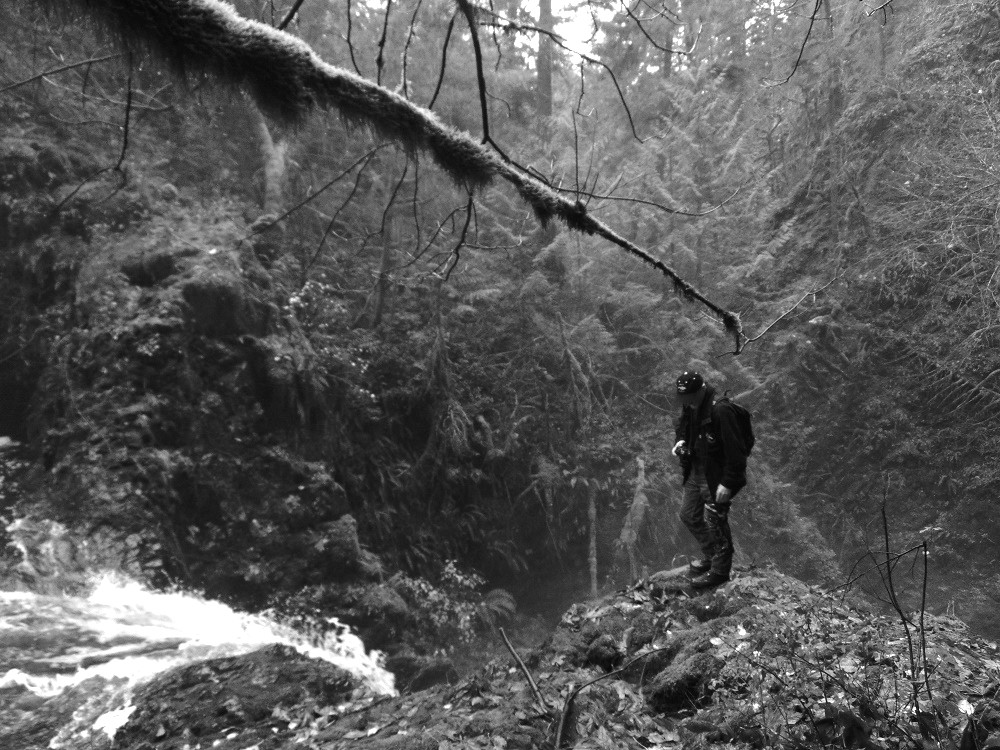
My youngest son, Forrest and I were going to hike into Bonnel Falls, which was located in the Nanoose Bay area. I had always wanted to visit them. It was late fall, and the creek was running high. The upper falls were pretty impressive. We dropped down by rope to reach the next few falls that were lower. All were just incredible. It was time to head back up. I started to haul my ass back up the ropes, and my knee just popped. There I was, two rope climbs below the trail, in pain.
I made several attempts to get up the first climb but was unsuccessful. Thankfully, I had my young son with me; he would get me to go up a bit, and then he would work his way up under me and put his hands where I could use them as footholds. We inched our way up both climbs until I was back on the path, which took over an hour. For the next few days, my son’s hands were quite painful. He is a tough young fella. I was back to easy walks on level paths, no mountain trails, no rock climbing, no caving.