

Dad’s mom was First Nations. I only met my grandma once, when she came out west for a visit. I truly remember very little of her. On her visit, I do remember listening to Dad struggle to speak his first language. As he had no one to speak his first language with, it drifted away. Gramma Lizzy was upset that he had forgotten so much. I saw my dad cry that day, the only time I saw him cry. I was only 7 or 8, and with all my heart, I wish he had taught me Gramma’s native tongue. That would have been good.
The year after I married Georgina in 1985, I received a phone call to inform me of my grandmother’s death. She was 104 years old. She was born in 1881.
My Grandfather was a tugboat Captain on the St Clair River when he met Grandma Lizzy. He fell in love on the spot with this beautiful lady and married her. They had quite a few children. I think there were 8 boys and 4 girls. My great-grandma Anna helped raise the boys when Grandpa and Grandma were out on the tug.
When Dad was not quite a teenager yet, he began working with his dad on the tug, as did most of my uncles. Then, prohibition in both Canada and the USA began; it was the start of a lucrative 13 years for tug boat captains. It was not just tugboats, though, but all manner of watercraft to cross. When the river froze, they would use horse and human-drawn sleighs; some would drive across the ice. Many old autos on the river bottom tell how dangerous this was.
In the United States, the Volstead Act made alcohol illegal and could not be sold or brewed. It was also illegal in Canada, but could be brewed and sold out of the country. The tugboats of the St. Clair River found new customers, the Americans. The American border was the center of the river. All they had to do was run across the river in the dark of night, drop off the load and get back to the Canadian side before the feds got them. Their boats were most of the time painted black.
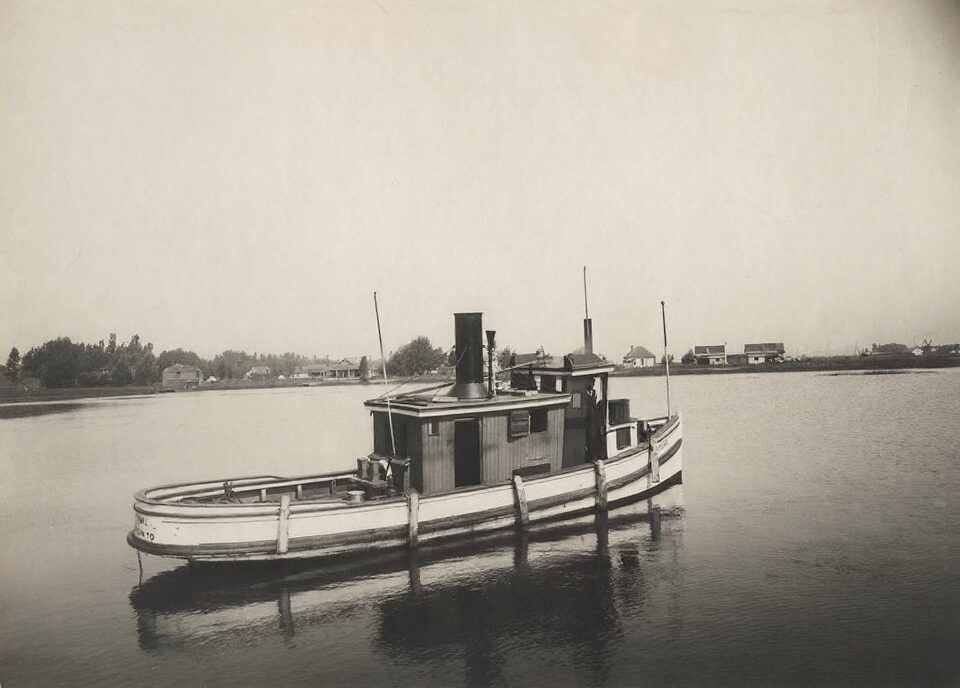
It all started on January 17, 1920. In February 1920, the North West Mounted Police set up a headquarters in Sarnia to get control of these rum runners. The Americans also created a special force to hunt down these smugglers. They brought in six boats for patrols. These boats were the fastest on the river, they declared. They also began nightly patrols along the river shore. But the money was good in a time when times were tough. So Grandpa set about being what they called a rum runner. My dad and uncles worked on the boat with him. After the patrols were beefed up, the price per load was increased, and my Granddad would be the owner of several tugboats by the time this all came to an end. It was all very exciting for my dad and his brothers.
My dad came from a very different time than I did; he had walked an old trail. He came from a place in time where you hunted for your meat, grew a big garden, and your medicines came from the forest. He gained much of his knowledge from his mom and grandmother when he was a boy. They taught him everything from animal husbandry to the gathering of edible and medicinal foods and plants. Sometimes it seemed you could sense their presence as you walked in the forest with my dad. It was a comfortable feeling.

My dad, without knowing it, was an environmentalist. Sometimes, as we walked among the giants of the forest, he would tell you to stop, put your ear to the ground, and then ask you what you hear. It was always the sound of a drumbeat. As you listened, he would say. That is the mother’s heartbeat. Look after her, and she will look after you. I was young and impressionable then, and now realize that it was my heartbeat I was hearing echoing in my ear. Long before we knew that the mother needed protection, my dad was instructing us to do just that. That is pretty awesome. I do try to look after the mother.