

As a teenager, if I were not out on the sea, you could find me canoeing our islands’ rivers and lakes, or hiking into the forest. Hiking in the high country was of particular interest to me. I still love getting out in the mountains, and hardly a week goes by without finding myself on a mountain trail. High-country hiking is more than a passion to me; it recharges my system, and it grounds me. I lived on an Island of wonders where adventures were just a step away.

I was introduced to canoeing at an early age, and I was hooked from the first time my paddle hit the water. Canoeing allowed me to travel without the noise others make. There is nothing like silently gliding along in the early light of a fall morning, sunbeams shining through the morning haze. You can sense the haunting pull of all things to nature, and it is very humbling. It can become a meditative experience.
I have had many grand adventures canoeing the rivers and lakes on Vancouver Island. Along with many places up along the coast and throughout the Chilcotin plateau. One of my pups, named Cody, grew up in my canoe; he could leap into the water while barely rocking the canoe and swim along for a while, or go to shore to take care of business. When he was ready to get back in, he would come up and put his front paws on the edge of the canoe. I would place my hand behind his head, and he would press back while at the same time pulling himself up and over the edge, again, barely rocking the canoe. Of course, he still had to shake the water loose. When I allowed others to join me in my canoe, quite often they would tip us over, an event that never happened with Cody. Cody and I had this 14-foot canoe, which was just right for the both of us.

I remember a winter trip down the Salmon River with a few friends. It had been raining for weeks, and the river was quite full. We had stopped above a wild-looking set of rapids. When my pup Cody decided to go across the river. As he reached deep water, he lost his footing and started to tumble down the rapids. My friend Dick started running down the river, actively trying to rescue him. I hollered out that Cody was fine and that he, himself, could get into trouble trying to save him. As Cody hit the bottom of the rapids and climbed ashore. He just ran back up the river and went in again, but this time he made it across. He loved getting out on the water. He was the best canoe partner one could ask for. Cody and I were inseparable. He was a big shepherd cross malamute.
When we were out canoeing or just camping, we seldom took a tent; a tarp was all that was needed. Mostly, we would eat fish or grouse gathered along the way, along with roots and various berries. In those days, fishing was good in most places, and there were always lots of grouse. A few cans of beans, some potatoes to roast in the fire, bacon and eggs for mornings. In those days, you could buy canned bacon, great for longer trips. Some salt and pepper to season meals, along with some coffee for the morning, were all that was needed. I used to mix instant coffee, sugar and coffee mate in a container. So morning coffee was easy.

When I was a young lad, we lived on St Ann’s Road, just at the junction of Alder Street. We lived above where the post office and Overwaitea Store were at one time located. Above us was the old St. Ann’s Hospital. This hospital was first opened in 1914 with 22 beds. Like most of the coastal hospitals in those days, it was funded by various logging companies, but it closed its doors in 1924 due to a lack of funds and was much missed. Efforts were made to bring it back into operation. They were successful. It reopened again in 1926, operated by the Sisters of St. Ann under the name Our Lady of Lourdes, but everyone just called it St. Ann’s. It closed its doors in 1959 when a new modern hospital opened up on 2nd Avenue, and the St Ann’s facility was turned into Campbell River’s City Hall.
Behind the post office and the Overwaitea Store was a hillside covered in a forest of big trees. At the top of this hill was the original three-story schoolhouse that was now a group of apartments. My sister Peachy and her family lived here in the mid-60s. This was a cool house, 3 stories high, and it had a big central staircase that went up the middle with units off each landing. Then the hillside was logged, and the old schoolhouse was torn down to build the Terrace View Apartments.
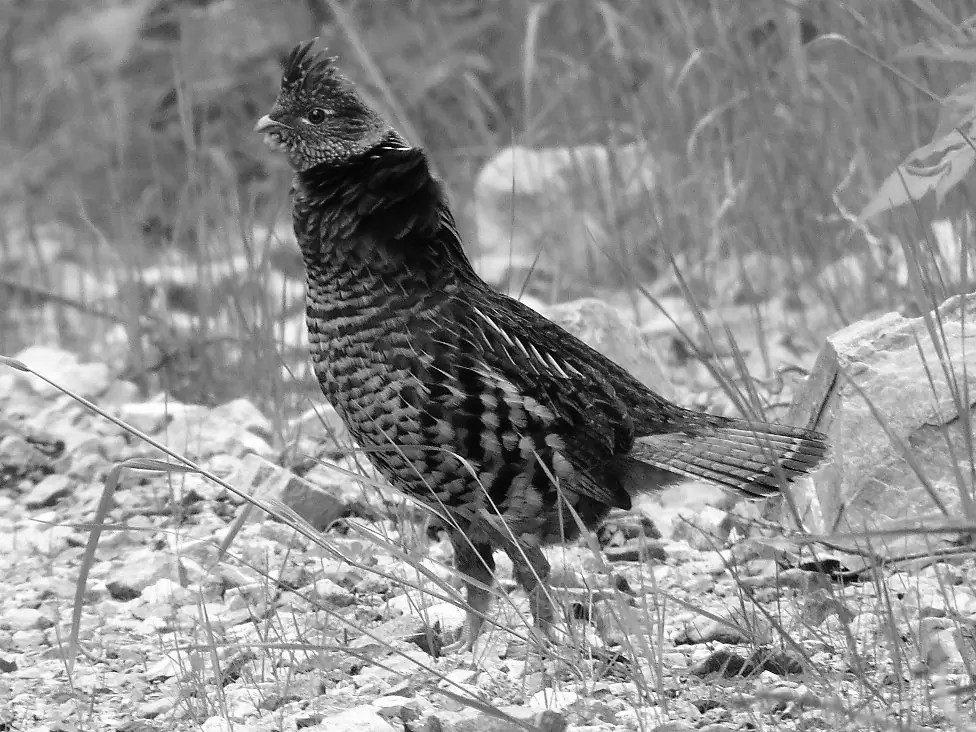
The forest below the old schoolhouse was my playground. My friends and I called it the hill. It’s where I acquired a taste for grouse; I used to hunt ruffed grouse with a homemade slingshot among the trees; my dad always called them forest chickens. My dad taught me to stand on the bird’s wings while pulling hard on its legs to separate the breast from the bird. It’s the only part that can be eaten without removing numerous tiny wing feather stems. Sometimes, when out camping, we would take a breast and cut it into strips like bacon and fry with eggs in the morning. I was always on the lookout for licorice fern when I was in this forest. I would find it growing up in the old maple trees, in the crotch of the branches. I could chew on this all day. At the bottom of the hill were some swampy ponds where I would chase frogs and salamanders, and then come home covered in mud. My mom would just shake her head as she cleaned me up.
Our house was a big place with a large yard that bordered this forested hillside. My brother Howard and I used to dig up worms at the edge of the forest, down by the ponds, to be used as bait on our many fishing adventures. One day, I dug up a monster-sized worm. I mean, it was a giant. It was at least three feet in length and almost as big around as a garden hose. It was so big, I thought it was a snake at first. I still wonder to this day why this worm was so big. I have never seen another. We went fishing on one of our favourite lakes, and that one worm lasted all day; we would only need to cut a small piece off each time we re-baited our hooks. The worm had a sweet smell, and the fish might have liked this. We brought home a good feed of fish for dinner and many more for the freezer.

When we were little, my buddies and I used to go down to the beach just below our house when the winter storms blew in. We would put a few logs together with found boards, bent nails and rocks for hammers and ride the waves as they rolled in over the sandbars. By the end of the day, we would be soaked to the bones and cold as one could be, but to us, young lads, we were surfing in California. My friends and I hung out at this beach quite often. It was our ocean playground. This beach has now been filled in to create more land.

Out behind the beach on the north side of town was the estuary, a place of twisted trees, bogs, and giant thatching ant nests, a place of fascination and magic. In the middle of the estuary, right on the river, was the Elk River timber log dump. It was a massive A-frame built out of logs that could lift huge loads off the fat boy trucks and deposit them into the river. Not very long ago, trainloads of logs would roll through here with the a-frame, dumping load after load into the river. It is fat boy logging trucks now that get their loads slung into the river. We often would ride our bikes down to watch this.
On the weekend, during the summer, we would go down and swim here. One of the guys who swam here was this guy named Charlie, who was quite a bit older than us kids. He had a childlike demeanour. He would climb to the top of the log dump. Then he would stand on the top and dive straight off. It was so far down to the river, and only about ten feet of water to land in. I thought he was crazy. He popped up every time unhurt.
Across the river was the mill pond, a log storage pool that had been dredged from the river. It was made for Raven Lumber Sawmill. In this pond, they had stored an old pile driver, which was tied to the shore. There was a gangplank used to reach it from a small wharf. We would occasionally hang out there in the summer. You could dive off into the twenty or so feet of water or just swing out on the cables and back. One day, as I swung out, the whole cable, winch, and all, came loose and down I went. All the cables came with me. I was lucky it was a muddy bottom, as I went into the mud almost to my waist. As I pulled myself loose, a thought came into my head of all the cables landing on me. I swam away from the pile driver as I headed back to the surface. Just as I reached the air again, all that cable came down where I had just been. Quite likely, this cable would have pushed me back under and pinned me to the bottom. My buddies had tried to stop it all from going over, which may have saved my life by giving me a few seconds to react. The old pile driver was pretty cool, but I never hung out there again.

Out behind the dump was the lane field ballpark. This was a great place, it had a covered two-story bleacher and a concession stand where you could buy hot dogs, hamburgers and other goodies during various events. The community would gather here not just for ball games but to do all kinds of picnics and other occasions. Just behind the ballpark, there was an old diesel storage tank where the remaining contents had turned to wet tar. I only went in once. Some boards on the floor looked solid, but they were actually floating. I thought I could jump onto another one, but I slipped getting myself covered in this foul-smelling black goop. My dad had to use gasoline to get me tar-free; it burned my skin. He kept hollering at Mom to get a feather pillow so he could see me tarred and feathered. He was joking, at least I hope he was. They removed this tank not long after.