
After the plane crash, we bid on and won several spacing contracts out in Bella Coola, what a place, so beautiful. The mountains go straight up from the river bottom to touch the sky; the valley bottom is not very wide but is full of small farms, with log cabins surrounded by farm animals and gardens. The air is fresh here.
Alexander Mackenzie, on his journey across Canada, ended his quest for a route to the Pacific in Bella Coola. Traditionally, Bella Coola was and remains the home of the Nuxalk People, once wrongly classified as Coast Salish. Today, the Nuxult are classified under their distinct category. In 1858, the valley served as a link to the gold fields in the Chilcotin.
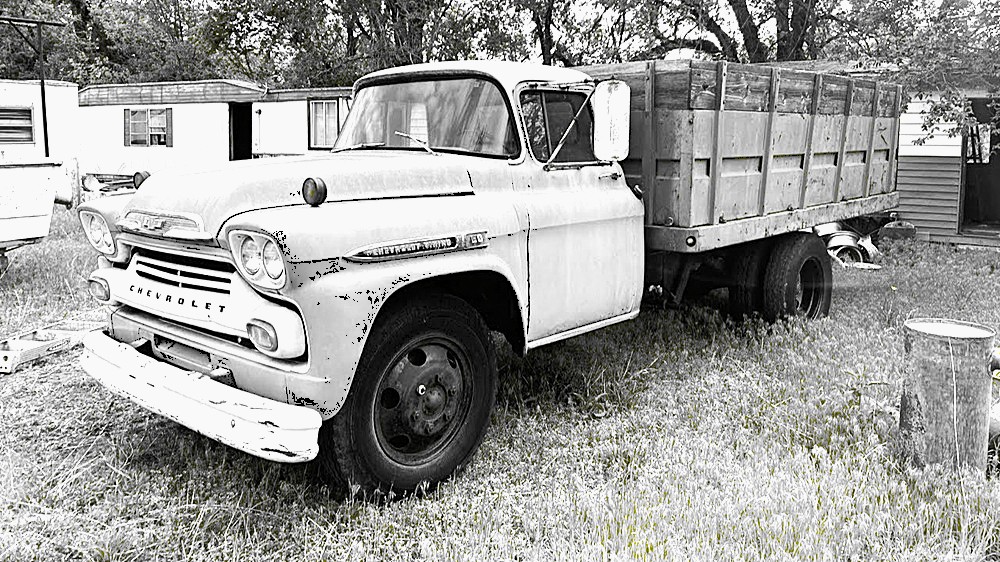
A trip to the bank for a business loan was first on the agenda. We began buying and loading up the gear needed: 10 new saws, stoves, large cook tents, smaller wall tents, and other supplies to get these contracts started. It was our first trip to Bella Coola. We were in a 1963 2-ton Chevy truck that was loaded with most of the supplies. Paul and I were heading in to put up the camp; others would be arriving over the next few days.
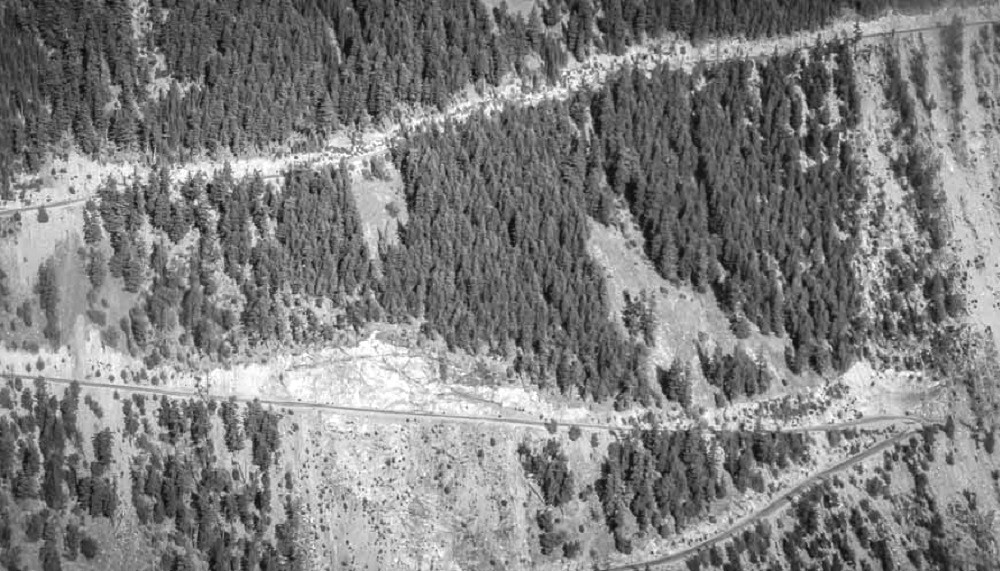
The road from Williams Lake was long and dusty; it was 454 km of gravel road to get from Williams Lake to the top of Freedom Hill. When we saw this hill for the first time, we could not believe what we were looking at. The hill road is 11 km long, and over that length, it drops 1.3 km in elevation. It took us just over 5 hours to drive the 454 km from Williams Lake. It took us 4 hours to drive the 11 km to get down the hill. Our brakes kept overheating on the way down, and we had to stop at all water sources to use a bucket to splash water on them to cool them down. The brakes would be red hot. This is an incredible hill.
There is a story going around about the creation of this road that goes something like this: The road was built to within a mile of the top from Williams Lake and almost reached the bottom as you head out of the valley. The military had agreed to complete the road, but the valley people had to survey the route. With only one day to post it in the mail or lose the military aid, a rider got on his horse and rode up the steep ground, going back and forth. He ribboned the route as he went along. They got it in on time, and the military did its thing. I have heard this story many times, and it’s a good one; the only problem is that this story is not true. The real story is that the government only intended to build the road out to the Anahim reserve. Then out as far as Hagensborg up the Bella Coola valley.
The locals in Bella Coola would not be satisfied until the road was complete, though, so they formed a volunteer road-building crew and began to complete the road themselves. They started with bulldozers at the bottom and the top and quickly had the road from Anaheim to the top of the hill constructed. This caught the eye of Phil Gaglardi, who at the time was the Minister of Highways. He was impressed and thought they just might have the gumption to build this road, so he offered to help cover the costs, even though the government engineers stated it could not be done. This was a good choice, as these boys did indeed build the road. This section is known as Freedom Hill. He only paid some of the costs, but it was enough for the boys to get the job done.

I must give kudos to the residents of the Bella Coola Valley and congratulate them on the construction of Freedom Hill. Although there are 11 km from the top to the bottom as the crow flies. The full road that needed to be built was more than 60 km long, covering the area from Anahim Lake to the Bella Coola Valley.
The bulldozers met 88 km from the Pacific Ocean, they touched blades as the last of the boulders were pushed aside to a jubilant shout from the volunteers. This was the third route to the coast in B.C., after both the Lower Mainland and Prince Rupert routes. Another route had been proposed that would go from the Cariboo down to Bute Inlet. This was proposed by Alfred Waddington, who was a surveyor for the Canadian Pacific Railway company. This route was eventually abandoned.
I have often wondered if a road could have come in from Tatla Lake and connected with the Atnarko River valley. This valley is home to Lonesome Lake. If you have not heard of this lake, look up Crusoe of Lonesome Lake. It’s the story of Ralph Edwards and how he settled in this lake area to build a ranch out of the wilderness. I have not been to the Atnarko Valley and only know about this valley’s travel possibilities from books and stories. As I looked at Freedom Hill for the first time, I thought that a road through this alternate route could not have been as difficult to build as Freedom Hill was.
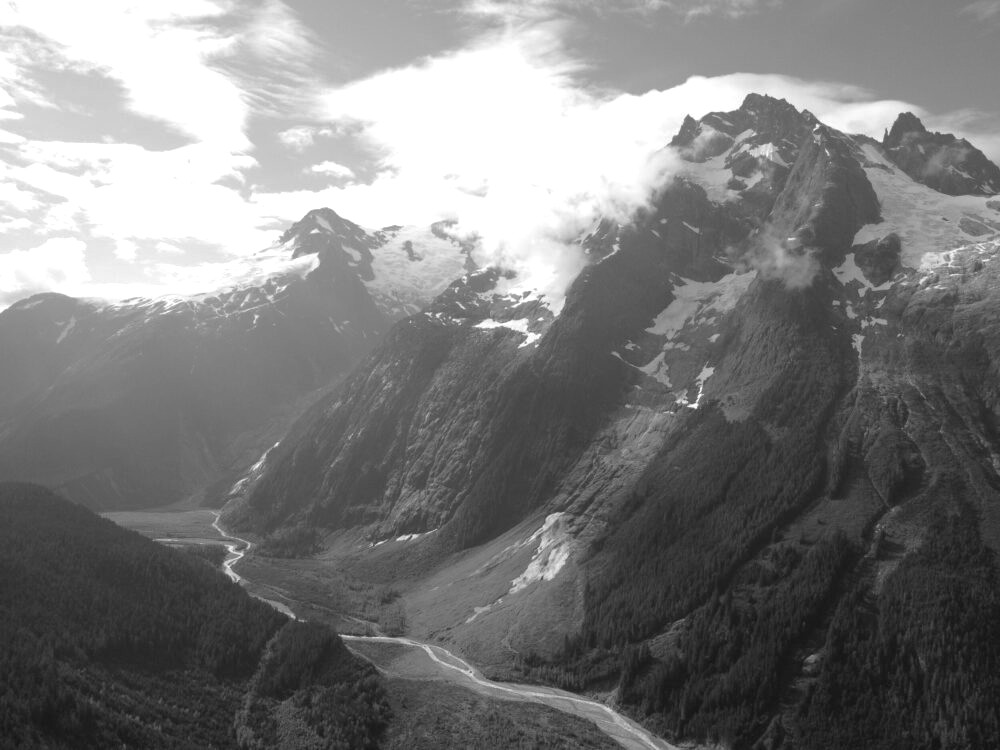
The Bella Coola valley is narrow with mountains on either side that reach the sky. After arriving in the valley, we set up the camp on Noosgulch River, just up from where it joins the Bella Coola River. This River is east of Hagensborg and about 20 miles up the valley from Bella Coola. We had 35 employees, most of whom were local First Nation boys, along with a few of the valley white lads. They were a great bunch of guys; they all worked hard and got the jobs done right and on time. Everyone got along.
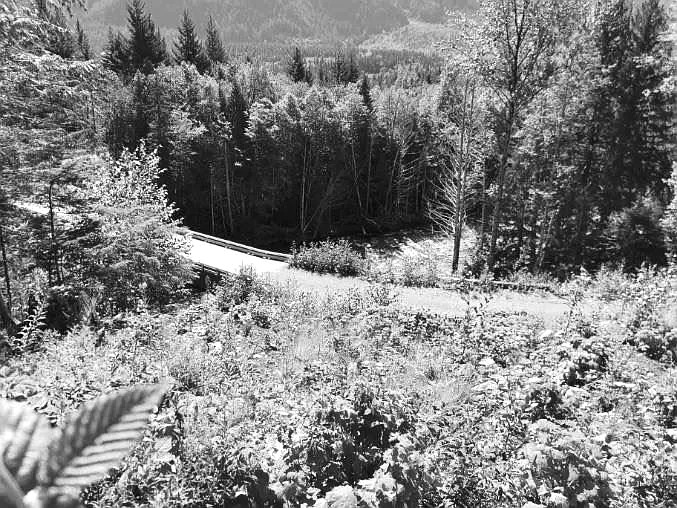
Right out in front of the camp, just below a bridge, there was a slow-moving deep pool where you could fish. Later in the year, we would swim here to cool down; this water, even in late summer, was extremely cold. We used this river to bathe. It was still early spring when we first started to use it. You would jump in with a gasp from the cold and quickly get out, then you would soap up before throwing a bar of soap back in, where it would sink to the bottom. Then jump in again to get the soap, rinsing off as you do.
During the spring, we would see a First Nations elder come every day, strip down and lie in the river for hours. One of our boys told me he was doing a cleansing ritual.
Our tent camp was set up right where the Grizzlies travel, and tracks could be seen in the morning by late-night travellers. One day, I heard our dogs barking loudly somewhere in the thick underbrush, so I wormed my way through the salmon berries into where the dogs were looking up a tree, barking. I looked up to see a very small grizzly cub hanging on, and it was calling for its mommy. The brush was so thick that you could not see more than a few meters. The hair on the back of my neck got stiff as I gathered up the dogs and got out of there before the sow returned from wherever she was. My heart was pounding.
One sunny day after work, one of the boys and I were walking up the road toward a pool on the Noosgulch River that was great for fishing. The river has big old-growth timber that you hike through to get to a slow-moving deep pool. This was not far from camp, and it was good fishing. We were looking to get enough for a good feed for camp. The road was a temporary skid road cut into a steep hillside; there were sparse but big trees growing, and plenty of sand and scrub grass in between. It was steep. As we were walking along this road, smoking a joint, and just enjoying the day, we heard a sudden noise up the bank. As we looked up, we saw it was a big grizzly bear. He saw us, and as he turned to head up the hill, he slipped and started to tumble down the bank. He rolled down, head over heels, until he fell off the steep upper edge and landed on the road with a thump, and a very loud grunt coming from the bear. He stopped rolling right at the edge of the road and was having trouble retaining his balance. He looked just like a man, arms flailing around, trying to catch his balance, and then he slipped over the bank and continued to roll down the hill toward the river in a noisy and undignified fashion; he just rolled right out of sight. I looked at my companion and asked him if he had just seen what I saw. With the joint still in his hand, he said he had. I felt sorry for the bear.
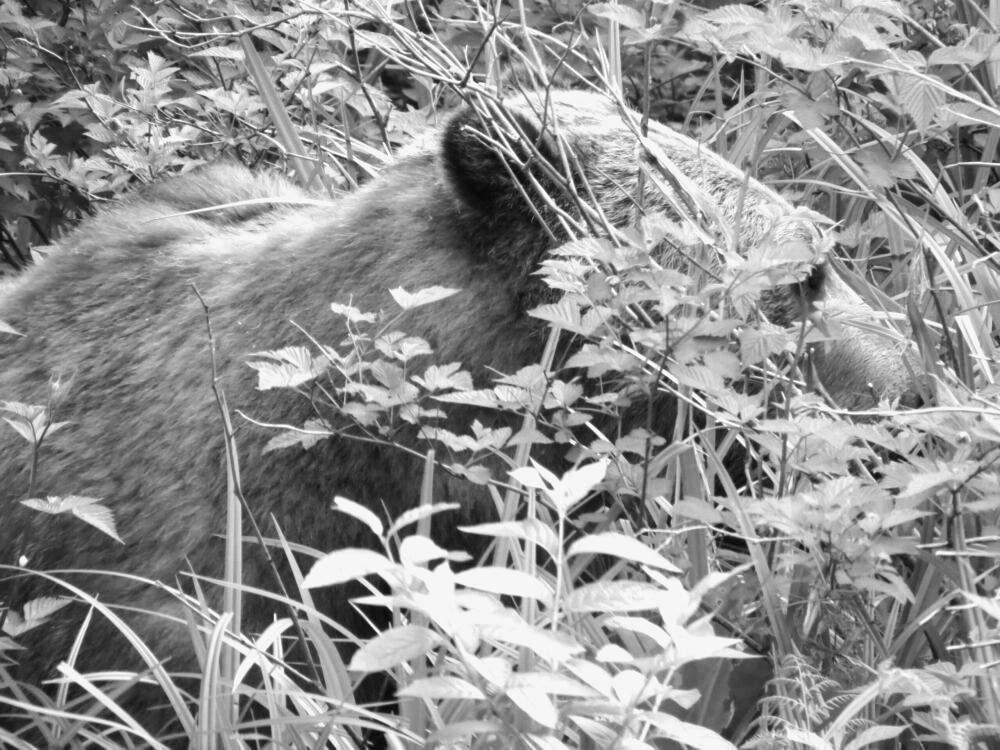
The valley is full of grizzlies, and we saw them almost daily. We were always very careful when down by the rivers during the salmon spawn. Watching these bears fish for salmon was always cool. These bears also loved apples, and most of the valley bottom farms had apple orchards. One time on a visit to a farm owned by some friends, I saw the biggest grizzly I have ever seen. They had a split rail snake fence separating their backyard and their apple trees. If I stood by this fence, it would be chin-high to me. I watched this bear walking behind this fence, heading toward a feed of apples. He was walking on all 4’s, and his hump was well above that fence. He was a common visitor to the farm.
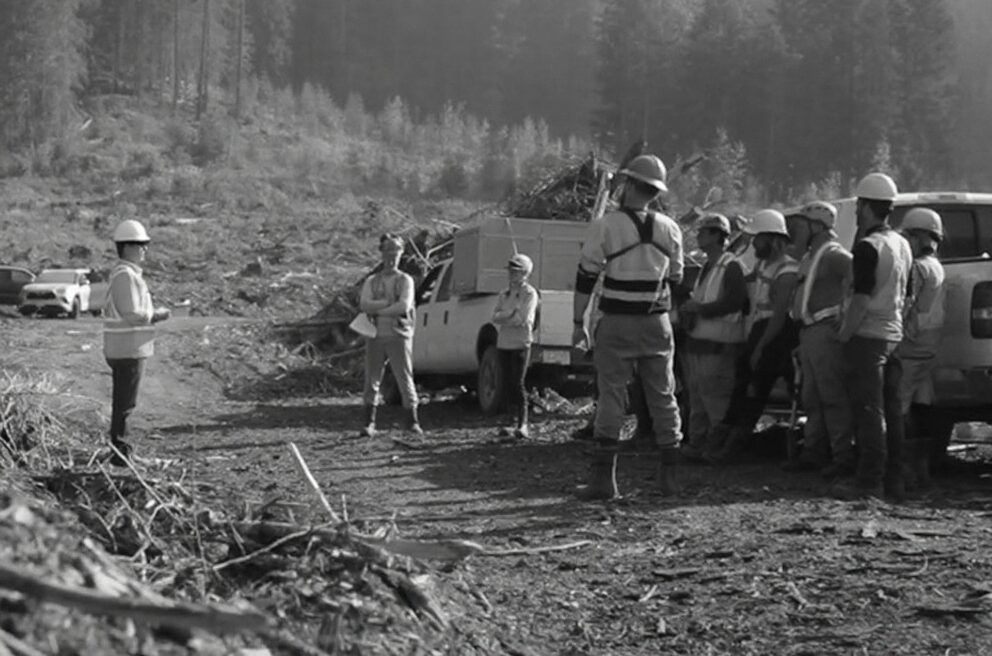
Later that week, at lunch break, when all my guys were down on the road, getting ready to start a new section. A couple of white hats from Crown Zellerbach came driving along and said they were here to inform us that they wanted us to move our camp. I informed them that the contract we had from the BC Forest Service said that this was where we could set up our camp, and as it was crown land, we informed them that we would not be moving. Kinda got some sour looks on their faces, and then one of them noticed that we had quite a few First Nation boys working for us and had the gall to say, ” You’re not paying them as much as the white boys, are you. At this moment, one of our Nuxalk boys, a big lad, was walking past the truck, and I heard him say, What the fuck and he started back. I told the white hats that they had better take off while they can. They did. Now, our boys started to voice their anger over this, and I, too, was pretty pissed off about it, so Larry and I headed to the CZ office to chat with the head guy.
He tried to brush it off as a misunderstanding, but we were not buying into that. We told him that we were going to bring our entire crew down the next morning, and we expected to hear an apology from the white hats. He said it wasn’t going to happen, so we said we were going to send our story to the Vancouver Sun to let them do an article about it. The next morning, we showed up with all our boys and the company bigwigs, and those white hats came out. The company headman stepped forward to say he was sorry we misunderstood what his boys had said. My crew started to yell at him that that was bullshit and to get his boys out front and have them speak for themselves.
Finally, they came forward and said the words. “We are sorry for what we said”. We left to head to work, our crew was pleased that we had gone and done this for them, and I heard a while later that those white hats had been fired, probably not for being racist, but more likely for causing so much embarrassment to the company.
We had started working here in the early spring; it was now October. Our camp had become pretty big, with large wall tents, off-the-ground cots and a great big cook tent. But with the rains that had started to fall daily, heavy rain, we were in the process of renting several rooms in the hotel in town. A couple of more days, and we were going to move the camp gear to a friend’s barn, and everyone into the hotel. I had headed to bed early that night, but was jolted awake by yelling at around 3 am, wondering what all the noise was about. I stepped out of bed and came knee-deep in ice-cold water. It was a flood. I quickly threw on my clothes and ran out. Sure enough, the river was running right through camp. Damn, a lot of stuff was already washed away. We started to salvage what we could; several of us had ropes tied around our waists and were trying to get stuff before it washed away. We took everything we could salvage to a high spot by the road on the other side of the river, just past the highway bridge.
A crew of boys got the big cook tent moved and set up so they could start the stoves to cook some food and begin to dry things out, while the rest of us were back at camp fighting the river and saving as much as possible. You could see the cook tent up on the hill, across the river, where they were making coffee and some food for us; it was a nice sight. Then all of a sudden, the light in the tent got bright just before the tent burst into flames. It seems a tent peg had torn loose in the wind, and the corner of the tent fell onto a stove. By the time daylight came, we had salvaged what we could; we had lost quite a bit of shit, a couple of saws had washed away, and we had lost our big tent and stoves, along with plenty of clothing and other gear to the fire. We moved into the hotel and finished the last couple of contracts before shutting down.
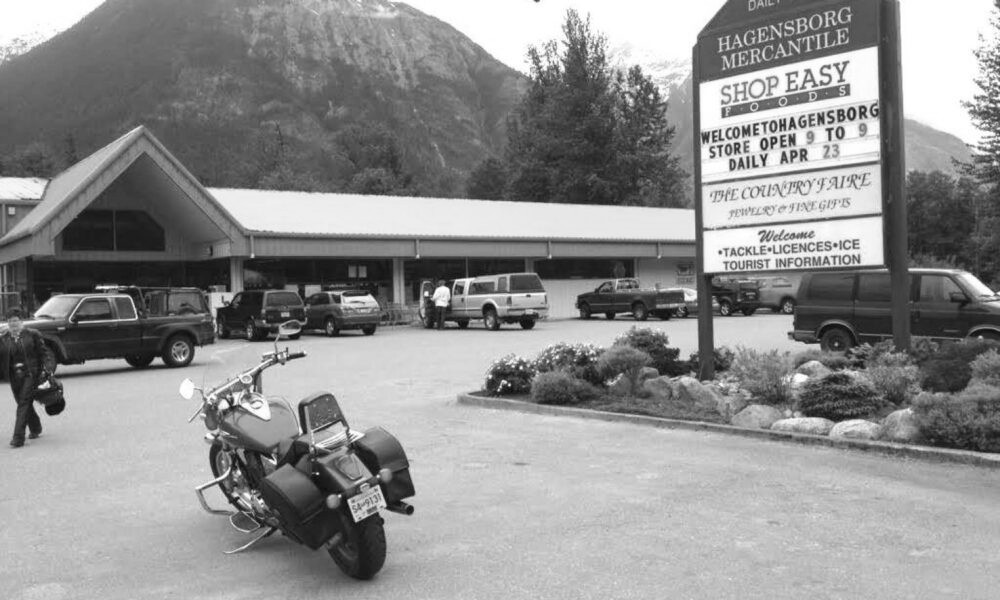
My friends all went back to Williams Lake, but I decided to book in with a couple of the guys who worked for us; they had become pretty good friends, and I was going to stay for the winter. Their parents had bought and converted a small sawmill into a pretty cool home. It was in Hagensborg. The parents lived in an upper area, and the 3 boys lived in a lower part, almost like a separate apartment, except it had no kitchen. Had lots of fun and did plenty of hiking in the valley. The fishing was awesome.
Their place was pretty private, with the closest neighbour living about half a mile down the road. Anytime we crossed paths with him, he acted like a privileged jackass; it seems he had a problem with us all being less important than he was. This guy had a big fancy house with a driveway that was cut into the ground where it went into his garage in the lower part of the house. This was lined by cement walls. As we walked by one night after a bit of partying, we noticed his big, expensive car parked in the driveway. There had been a bit of a thaw that day before it refroze again, and his driveway was frozen solid. We thought we might be able to angle his car a bit with the 4 of us pushing. To our amazement, we found it was easy to move it by rocking it up and down while pushing at the same time. We got it broadside with only 10 to 12 inches between the ends of the car and the cement walls. With the ice covering, we did not even leave footprints. Sure would have liked to have seen his face the next morning. He would have had to wonder how his car slid around during the night.
These guys knew their valley well and loved to hike. I got to see so much. I enjoyed a trip we took across the Bella Coola harbour in an old inboard/outboard clunker the boys kept docked in town. We were headed to the old Tallheo Cannery. At one time, canneries dotted the west coast of BC there were hundreds of them. Workers would be hired from the local communities when possible, and more would be brought in to fill the ranks as needed. Those brought in would stay in bunkhouses on site. Over 300 worked seasonally at this cannery. As refrigeration started to be more common, many of these canneries died out. Although fish processing was over here long before my visit, the cannery building was still used as a net loft. When we went over, the fuel dock and store were still in operation. We spent a wet and windy day exploring the area.
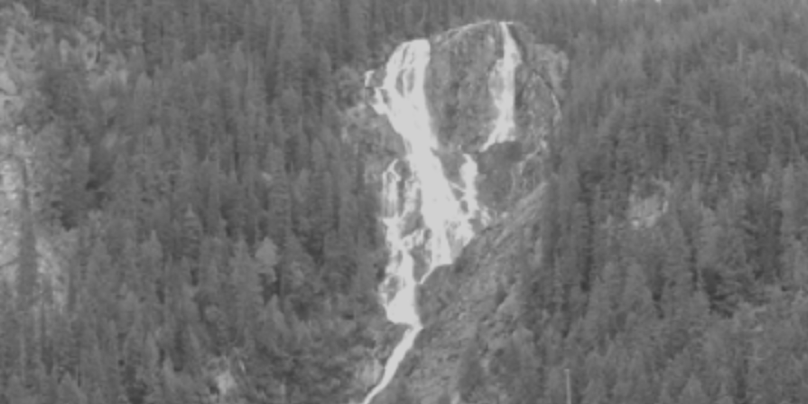
I have a love for waterfalls, and one day we drove up Blush Road to Odegaard Falls. At the time, it was a well-maintained logging road, although I hear it is pretty rough today. Blush Road begins in a tight canyon where the Nusatsum River flows almost onto the road. Then it’s a drive up a valley to the trailhead. We made short work of the drive, parked and hiked in on a rough trail. It was in the fall, and there had been heavy rain for days. I could hardly believe how active the falls were. I had been there in the summer and thought it was cool then. Now, after all the rain, it was pretty awesome. It was so loud, I thought it sounded like thunder.
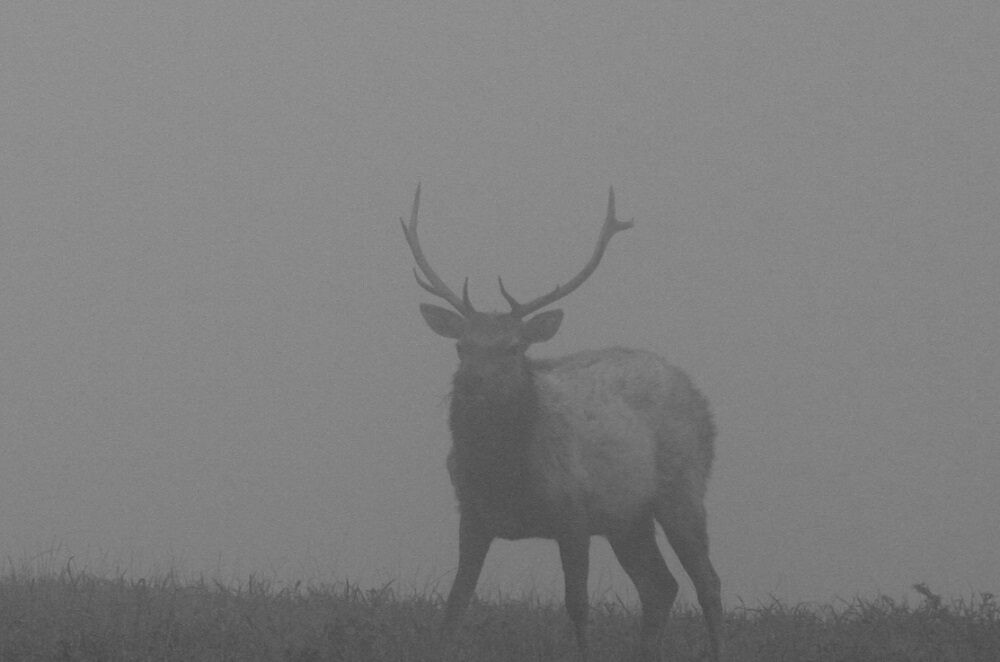
One afternoon, we were all up fishing in the Bella Coola River, just above Firvale, the trout fishing was good here and it was a nice place to just sit back and enjoy the scenery, all i could see were mountains covered in glaciers in all directions, flowing down the sides of these mountains was a sea of green speckled with so many waterfalls that I lost count. Although the sky above was blue, there was a fog rolling down the river; it was cool watching this slowly block our visibility to where we could just barely see the other side of the river. I first heard it, an elk bugling, it was haunting and as I looked across the river to where a small grassy meadow was. I saw him, a majestic old bull elk, sporting a huge set of antlers. As he moved through the fog, head held high, his antlers caused the fog to swirl behind him, and all the time, he was bugling to his herd. It was very cool.
After we got home. The boys and me were chilling in the basement living room, listening to tunes, when all of a sudden the door flew open with such force that the door handle went through the wall. Their mom stood there panting in a stooped position; she had a crazy look in her eyes. One of the boys softly said, “Oh, oh, it’s Mary”. Then her eyes focused on me. She slowed, stood upright as she turned towards me. Then, so suddenly that I had no time to react, she leaped across the room to jump on me. She was pounding on me mercilessly all the while yelling “the anti-Christ” over and over. I mean, what the hell. I was unsure what to do. At that moment, the eldest son pulled her off me. As she turned to face him, he slapped her hard. She looked at him in what seemed like confusion. He slapped her hard again. Then she turned and walked out the door as if nothing had happened. The whole thing took maybe 60 to 90 seconds.
The boys told me that on occasion, she became this other person who was quite insane, and to get her back to their mom, you had to slap her face hard. I knew it was time to get out of there. She had put the willies on me.
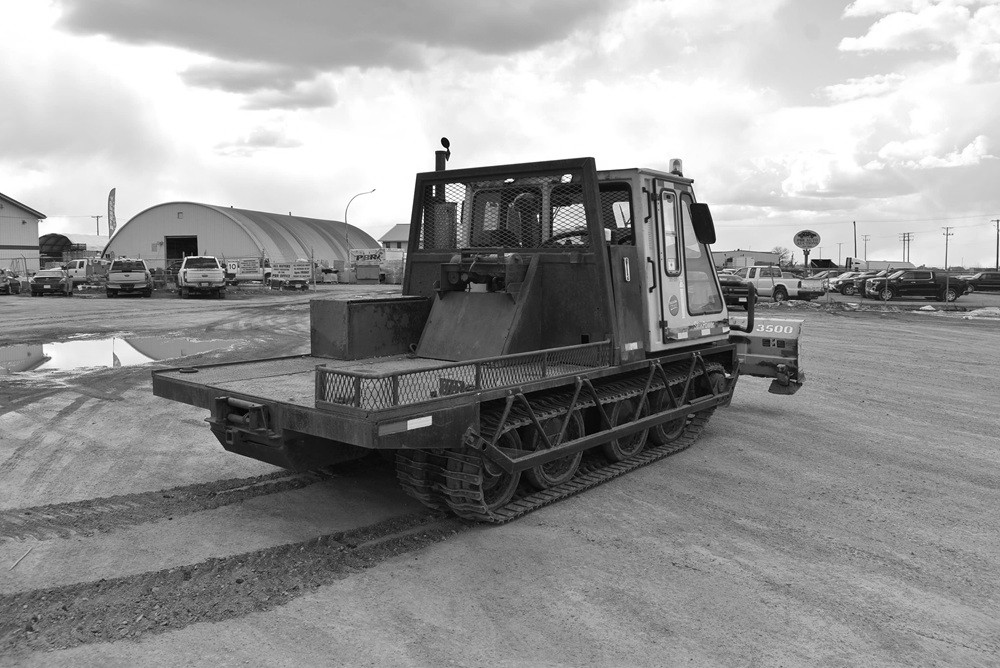
I called a friend in Williams Lake to see if he had room to put me up for a bit. : Yup, come on up,” he replied. Once in Williams Lake, I got a gig rebuilding an old Bombardier; it had tracks instead of wheels. It was for a ranch up in the Nazko area. I added a hydraulic pump to the cabin and a three-point hitch to the rear deck to attach a backhoe. Then, I added a front-end blade for plowing roads. After adding new tracks, it was good to go. When the job was done, I was offered a job cowboying. I took it.