
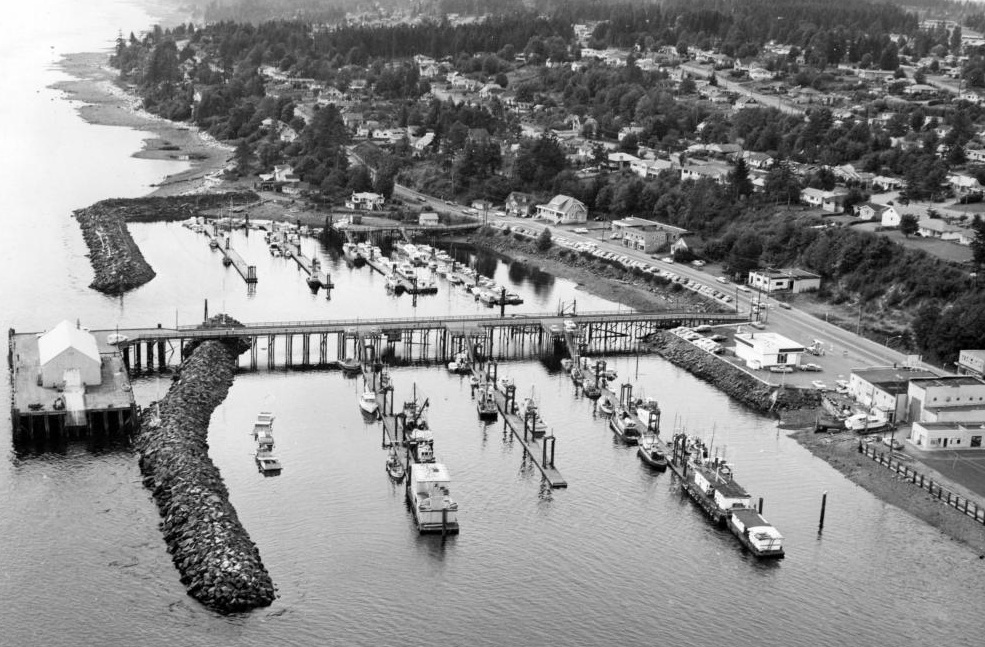
In 1961, Campbell River was a logging and fishing village, and it was not very big. We had the pulp mill, which opened in 1952, and was the largest employer. Many more worked at Raven Lumber. This sawmill began operation in the early 1900’s; it closed in 1998. The green chain ran 24 hours a day, and we all grew up with the sound of this chain dragging logs up to be milled. The sound was only occasionally outdone by the foghorn mounted on the Quadra Lighthouse on foggy nights. The saw mill and many more on the Island were fed by a steady flow of logs supplied by the various island logging outfits, both big and small. In those days, we thought that logging would be a sustainable industry and provide employment for future generations. We were pretty naive. I fear greed has ended those projections.
There was a large fishing fleet that operated out of the community. The township had quite a few wharves along the shoreline to hold all the fishboats. From our house, I could see all the boats and wharves, and further off was Cape Mudge and the Lighthouse, both of them located on Quadra Island.
It was just a 3-minute walk to the waterfront from my house, so I spent most of my time hanging out at the wharves. Most of the old fishermen who had boats berthed here had been born in the last century. The tales they told were filled with grand chronicles of behemoth fish that got away or of the storms they had survived against all odds. Other stories told of lost loves in distant villages or homesteading up the inlets of our coast. I would sit, immersed in these narratives, all the while watching them mend their nets and gear with their old, gnarled hands. I am quite surprised that I never became a commercial fisherman, although at 13, I did spend a few months working as a deckhand on a west coast trawler.
Across the road from the wharf was the two-story police station. I think we had 5 or 6 members in total, and the bylaw officer/dog catcher. Up from the shore was the main road that ran through town. This road held most of the businesses that were in town. Plus, the theatre, where we could go see a movie for a quarter, along with a drink and popcorn on Saturdays. The theatre is still in use today, but for live stage shows only.
The Thulin Brothers, Charles and Fred, owned a big section of the area down by the shoreline. They built the Campbell River General Store right on the edge of the beach, where you could purchase almost anything. It was sold twice over the years, with the Lavers family buying it in the late 40s and renaming it the Lavers Department Store. As a young man, I shopped here all the time.
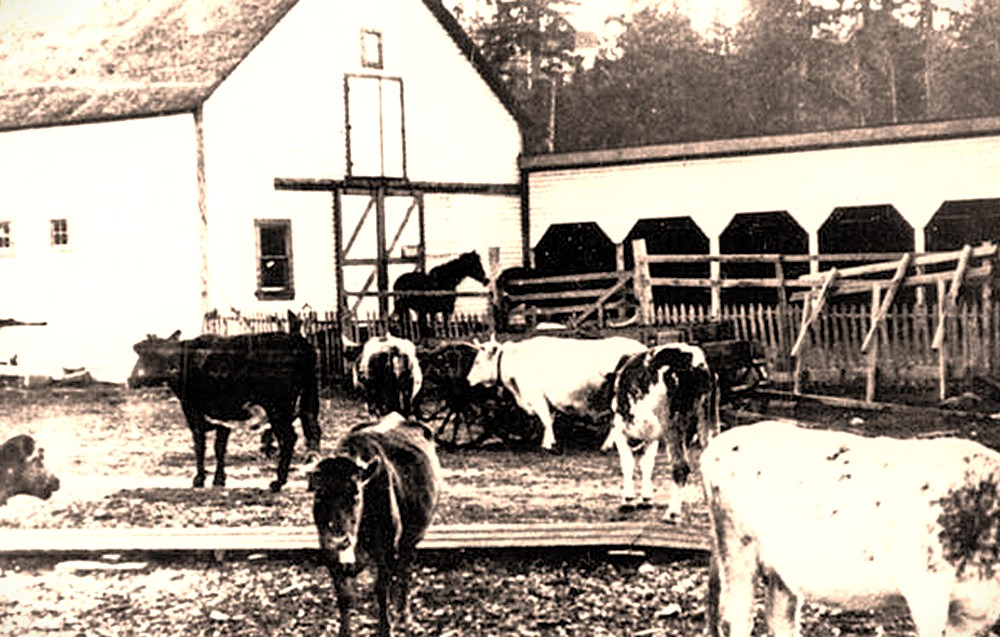
I remember the remains of the Thulin farm that sat right about where the community hall is today; they had this huge barn where I think they once ran a dairy farm from, which was before my time. I believe it was called the Strathcona Diary. We used to sled down Scout Hall Hill, which was right across from the farm. The hill would get slick from sleds, making it hard to stop. Sometimes you would slide across the road to stop in their driveway. We would have kids blocking cars while we went careening across.
When we arrived at the house Mom and Dad had rented unseen while we were still in Vancouver, we discovered it was very old, I mean, really old. It was on Rockland Rd. There were only 3 houses on this gravel logging road, ours was by far the oldest. Mom and Dad immediately began looking for another home. Mom wanted nothing to do with this ancient house. The area around the property had been logged, leaving a barren landscape, and there were bats in the attic. Mom did not like bats.
We were only there for one night, and that was all. We slept on the floor, in our sleeping bags, as our belongings were still on their way. Mom and Dad found a place in town just behind the Willows Hotel. It was 1961, the year before the hotel burned to the ground. Our new home was just one block away. It was a much bigger home with plenty of room. It was just below the city hall, which, up to just a few years back, had been the community hospital. I think our home housed the hospital nursing staff at that time. There were three extra rooms we did not need, so Dad blocked a hallway off so you could not reach these from our side of the house. Mom would rent these rooms out to mostly old loggers who stayed with us during the winter months; they had an entrance that was separate from ours. It was pretty common for people to take in boarders back in the day.

My mom would try to keep me away from them, but I always found a way to sneak in a visit. Some of these men were still logging on steam donkeys and using steam locomotives to move the logs to the beach. The tales they would tell were truly epic. There were tales of topping giant old-growth trees and rigging them as spar trees, or of using the steam donkeys that were built on skids to pull themselves up the hills. The tales of the oxen roads that would run for miles were amazingly cool to envision in my head. Years later, up in Blundin Harbour, early 80s, I was lucky to find an old corduroy oxen road that was in fair condition and followed it for miles with no end in sight. Never reached the end.
Some stories were told of the men who built the railway trestles and how dangerous this job was. There were stories of trains that ran away and of hidden hospitals up the coastal inlets that would repair these old loggers when they were broken. These hospitals were funded mostly by the local logging companies. One of the biggest was in the community of Rock Bay, where the town and hospital were built by the Hastings Mill Company to house and fix its workers when they were injured. At one time, Rock Bay had a population of more than 500.
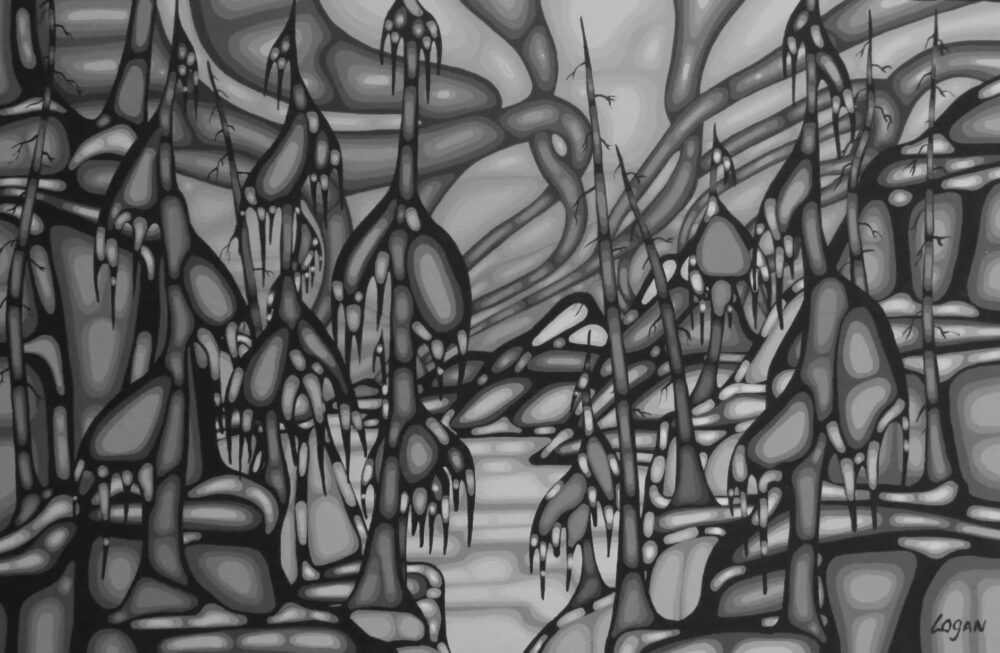
This village of Campbell River was still just a speck on the map of the world and was located in a vast hinterland of wonder. In those days, the forest that began at the edge of the village seemed to go on forever. This woodland was comprised of ancient old-growth fir, hemlock and red cedar trees, and speckled with huge maples that we would climb in search of licorice fern. The shadows that filled the spaces between these giants highlighted the wonderful colours that are hidden in the gloom, except when they were emblazoned on the beams of sunlight that penetrated through the canopy of green. If you were to look closely, you might see a variety of small creatures scampering about the mossy ground. The tree branches always seemed filled with birds of all kinds and colours, and squirrels scolded you as they jumped from branch to branch. There was an abundance of streams running through these woods of wonder, and some were studded with beaver ponds where we would fish in the summer, and during the winter months, we local kids would ice skate.
The ocean shores and tidal pools at the boundary of this forest of green were full of a dazzling array of fascinating creatures. I could spend all day looking into these little tidepool gems of wonder. They were like tiny little oceans full of life. Sometimes I would lie at the edge of the forest and the sea, listening to the voices of the animals, trees and rocks for hours. It was a melody of breathtaking beauty. To this young lad, it seemed I had landed in a place of wonder. Some might say I was in paradise.